
Reviewed · YPRES & WWI BATTLEFIELD TRIPS
From LIlle or Bruges, Christmas Truce to Passchendaele Ypres 1 day WW1 private
Street level WW1 is unforgettable. This private day around Ypres puts you in the right places, with a guide who helps you connect the dots between major events and the everyday ground where they happened. I especially like having a private guide to translate the chaos into clear stories, and I like ending up at the John McCrae site tied to In Flanders Fields.
You’ll cover a lot in about 9 hours, and one practical thing to plan for is that lunch is not included. You can absolutely manage it, but bring a snack mindset and plan your meal timing before and after the tour.
If you have family ties to this part of Belgium, you’ll likely appreciate the option to tailor the route to your interests. Hotel pickup and drop-off from Ghent, Bruges, Lille, and other nearby areas also makes the day feel simple instead of stressful.
In This Review
- Key highlights you’ll care about
- Why Ypres works best with private guiding
- Price and logistics: what you pay for, and what you do not
- Stop 1, Messines Ridge: mine craters, the Christmas Truce, and a grim crypt
- Stop 2, Hooge Crater Cemetery and the Menin Road line
- The Australian HQ ground in September 1917, plus earlier action
- Battle of Polygon Wood: woods, bunkers, and the Australian 5th Division mark
- Hill 60 and the tunnel war: mine at 3:10 am on June 7, 1917
- Tyne Cot: why the numbers matter, and why the names matter more
- John McCrae’s site and Menin Gate: words, absence, and the missing
- Sanctuary Wood Museum: original trenches you can actually see
- Who this day trip is best for
- Should you book this private WW1 day?
- FAQ
- How long is the Ypres WW1 private tour?
- What is the meeting time?
- Where does hotel pickup happen?
- Is this tour private?
- What language is the tour in?
- What is included in the price?
- Is lunch included?
- Are there admission fees at the stops?
- Can I bring a service animal?
- What is the cancellation policy?
- When will I get confirmation after booking?
Key highlights you’ll care about
- Private guiding for a route that makes sense, not just a checklist of sites
- Messines Ridge stops that range from mine craters to the Christmas Truce scene and the crypt tied to Adolf Hitler
- Hooge Crater Cemetery and the Menin Road views, including the nearby Australian gun pit positions
- Craters and tunnels at Hill 60, with the story of Captain Woodward and the 1st Australian Tunnelling Coy
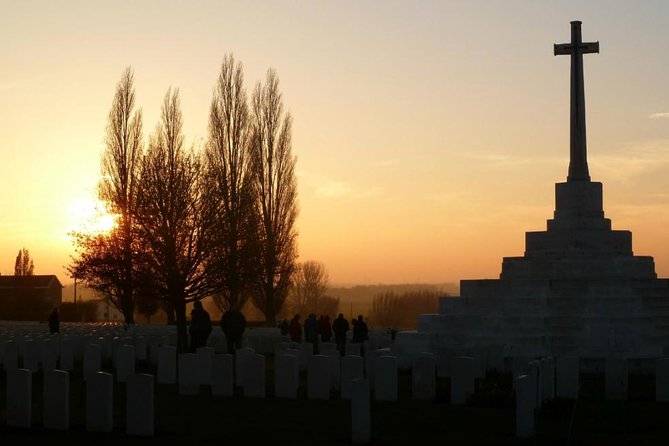
- Tyne Cot and Menin Gate scale, where the numbers explain the scale, and names make it personal
- Sanctuary Wood Museum with original trenches and an included admission ticket
More of the Flanders Fields battlefields:
- From IEPER Private 4-hour Tour of the Ypres Battlefield
★ 5.0 · 154 reviews - In Flanders Fields and Passchendaele Half Day Morning Tour
★ 5.0 · 117 reviews - Ypres: An exploration of the deadly salient battlefields
★ 5.0 · 76 reviews - From Ypres, The Christmas Truce to Passchendaele Ypres Based WW1 private tour
★ 5.0 · 29 reviews - From Ypres: WWI Battlefields Private Tour
★ 5.0 · 25 reviews
Why Ypres works best with private guiding
Ypres is not a museum city. It is a battlefield region, spread out in small corners that can feel disconnected if you are reading alone. With a private guide, you get a thread that holds the whole day together, from 1914 to the Passchendaele period.
I also like the tone a good guide brings here. WW1 sites are emotional, and you need someone who explains without turning it into a lecture or a performance. In this tour format, the guide is able to slow down where it matters, answer your questions, and keep your focus on what the ground is showing you.
One more perk: this is not a one-size-fits-all route. If you have family history connected to the Ypres Salient, the tour can be tailored to that. That can turn a “history day” into something more personal, without making it awkward.
Price and logistics: what you pay for, and what you do not
At $532.32 per person, this is not a budget hop-on, hop-off. You are paying for a private group day with hotel pickup, drop-off, and a guide who spends the whole time with you. For many people, the value comes from not wasting time trying to piece together rides between sites.
Pickup covers hotels or B and Bs in a 66 km radius of Ypres, and it also includes Ghent at Gent Dampoort Station and parts of France like Lille and Arras. Start time is 9:00 am, so you are not fighting late-day traffic and you get the sites earlier.
Bottled water is included. Lunch is not. Also, most stops have admission marked free in the tour plan, with Sanctuary Wood Museum as the one included ticket. So you should budget for your own lunch and plan around the short stop times.
A practical note: bring weather gear. This area is outdoors for much of the day, and Belgium can move from bright to wet fast. Pack layers you can handle on a long drive day.
Stop 1, Messines Ridge: mine craters, the Christmas Truce, and a grim crypt
Messines Ridge is where the tour starts getting real in a hurry. You hear the story of the Battle of Messines, then you visit mine craters and the surrounding ground where the fighting reshaped the area. The craters are not just dramatic scenery, they are a reminder of how engineered warfare changed the landscape.
One of the most striking parts here is the visit tied to the Christmas Truce. This is the moment that cuts across the usual battlefield focus, because it shows how human the war could feel before it hardened again. Seeing that story in the same region as massive battles helps you understand the emotional swings of the war.
The stop also includes the crypt where Adolf Hitler was treated for his wounds. Even if you already know the broad story, being in the exact site area changes how you process it. It is a heavy stop, so a good guide matters here, both for clarity and for respect.
Timing is about 2 hours, and the admission is free for this stop. You get enough time to absorb what is being explained without rushing from marker to marker.
Stop 2, Hooge Crater Cemetery and the Menin Road line
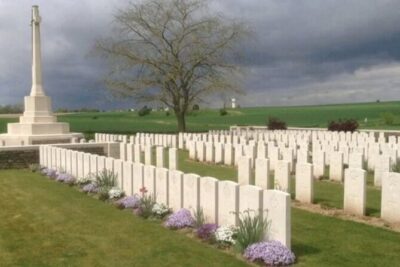
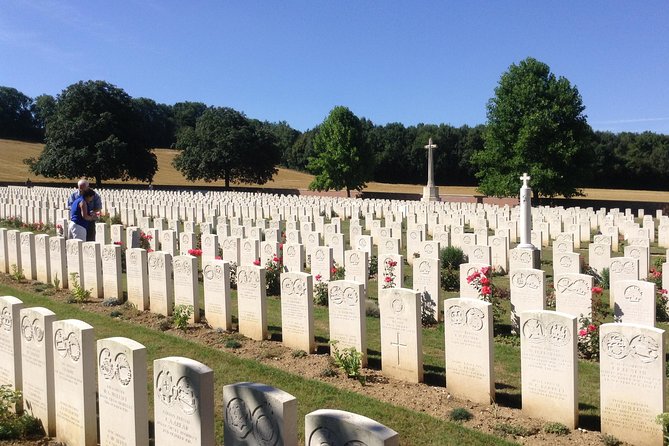
Hooge Crater Cemetery is one of those places where the names and the setting stick with you. You visit Pat Bugden VC, the 20-year-old recipient of the Victoria Cross. That kind of detail helps your brain anchor the story to a real person instead of staying stuck on dates.
Another reason this stop works is the view and positioning along Menin Road. You stand directly alongside where Australian gun pits were for the assault tied to the Passchendaele push. When you look at the road and feel the space between the trenches, the route stops being abstract and becomes tactical.
This stop is short, around 15 minutes, and the admission is marked free. Because it is brief, come ready to focus. If you spend your energy photographing everything, you might miss the guide’s key connections between the battlefield movement and what you are standing near.
More Christmas market evenings in Ypres:

The Australian HQ ground in September 1917, plus earlier action
Between the cemetery and the next trench-heavy stops, you are taken to a site described as the Australian HQ in September 1917. You also learn about earlier actions on the same ground in November 1914.
That pairing is valuable because it forces you to see continuity. This area did not “start” in 1917. It was being fought over, re-used, and reinterpreted across the war. A good guide helps you understand how the same terrain can serve different purposes as tactics change.
Because the itinerary lists this stop without extra timing details, treat it as a shorter, drive-by style moment where the guide’s explanation does most of the work. It is easy to underappreciate these pauses, but they often contain the link that makes the next stops click.
Battle of Polygon Wood: woods, bunkers, and the Australian 5th Division mark
Polygon Wood is a different kind of battlefield. Instead of just open views, you walk through the woods and visit concrete bunkers connected to the moment when Australian soldiers captured them. The structure here matters, because it shows how soldiers fought from engineered positions, not just trenches.
You also visit the cemetery and the Australian 5th Division monument. That combination helps you balance the tactical story with the human ending, and it keeps your understanding grounded. Monuments can feel generic if you read them too fast, but with a guide’s context, you tend to notice the specifics.
This stop is about 30 minutes, and admission is free. If you like walking and listening, this is a good one to enjoy without rushing. If you dislike woods and shade, you might want to pace yourself, because footing can be uneven in a trench-battle landscape.
Hill 60 and the tunnel war: mine at 3:10 am on June 7, 1917
Hill 60 is where the day gets technical in a very human way. You hear the story of Captain Woodward and the 1st Australian Tunnelling Coy, then you see the crater tied to a mine blown at 3:10 am on the 7th June 1917.
Tunnelling is not usually what people think about when they imagine WW1. Yet here it becomes visible, physical, and specific. You are not just hearing that mines happened, you are standing where the blast changed the ground.
The time you spend on this stop is about 45 minutes, and admission is free. That extra time helps, because the explanation usually needs a little mental setup: why tunnels were used, what a crater meant for movement, and how the plan fit into wider assaults.
Between stops, the tour also drives along the line of the Australian advance. Those car moments can feel like downtime, but they matter. From the road you can often get a clearer sense of distance and direction, which makes the next cemetery visits hit harder.
Tyne Cot: why the numbers matter, and why the names matter more
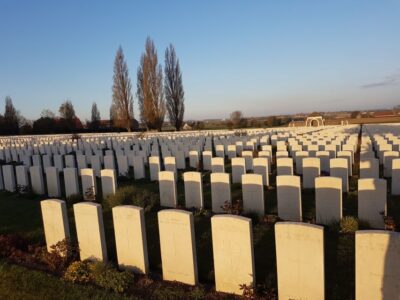
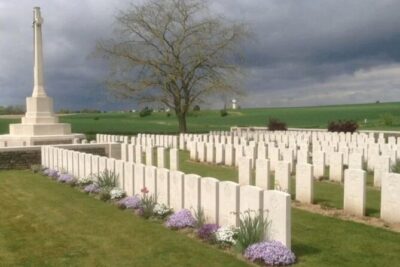
Tyne Cot Cemetery is the emotional heavyweight. It is described as the world’s largest Commonwealth War Graves Commission cemetery, with about 12,000 soldiers buried there. You also learn a crucial detail, only around 3,000 have names.
That statistic changes how you experience the space. You stop thinking only in terms of individual memorials and start thinking about loss on a scale that is hard to hold in your head. The cemetery’s layout does the rest, and your guide helps you connect what you see to what it meant for families.
Two Australian VC recipients are buried here as well. Including Victoria Cross recipients in a major cemetery like this gives you a focused way to understand bravery without stripping the rest of the story of its weight.
This stop is about 45 minutes, admission is free. It is long enough to slow down, but not so long that you feel trapped. If you are the type who gets overwhelmed in cemeteries, this is one you might want to pace with quiet pauses.
John McCrae’s site and Menin Gate: words, absence, and the missing
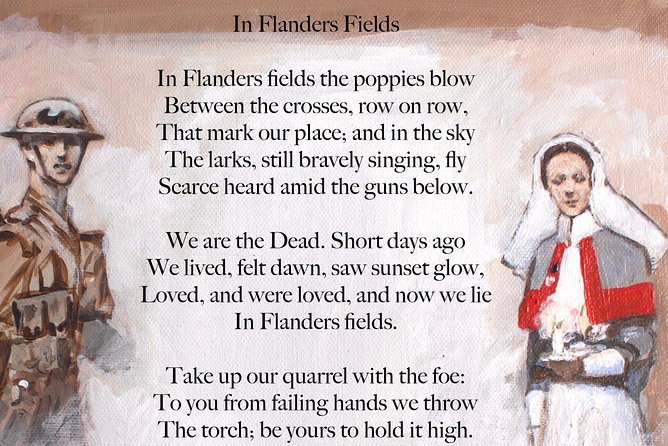
Next you visit the John McCrae site. This is the hospital site where Lt Col John McCrae composed the iconic poem In Flanders Fields. Even if you think you already know the poem, seeing the medical site context tends to change the way you read it in your mind.
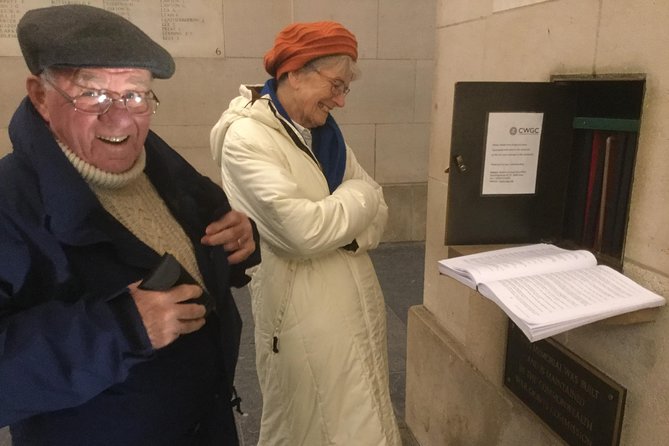
You then move to Menin Gate Memorial, where you hear the story of how it came about and the weight of the names. The tour plan notes 55,000 names listed as missing. That is not a small number, and it is the kind of scale where you understand why this memorial is so important to remembrance.
This stop is about 20 minutes, admission is free. It is brief, but Menin Gate is designed to deliver impact fast. If you want photos, do it quickly and then spend the rest of your time just looking and listening.
The itinerary also mentions driving through Zonnebeke in the line of the Australian advance. This is another small but important reinforcement, because it gives you a sense of route continuity rather than separate site visits.
Sanctuary Wood Museum: original trenches you can actually see
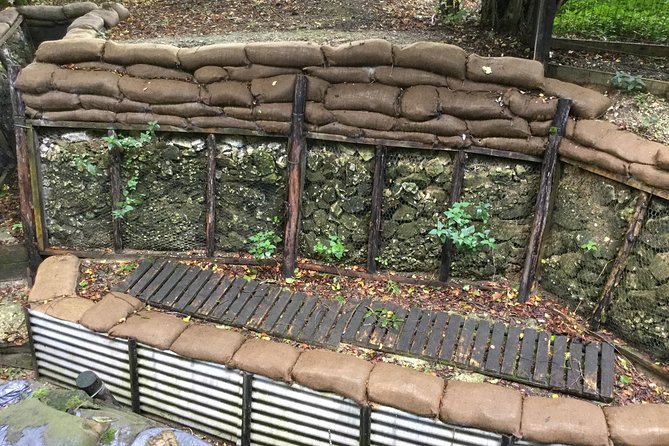
Sanctuary Wood Museum is included in the plan with admission ticket covered. The focus is on original First World War trenches, which is exactly what makes this stop valuable.
Museums can help, but trenches give you scale and angles that photos cannot. You can see how narrow and shaped the spaces were, and you can understand why movement was so difficult. Your guide’s explanations help you connect what you see with the fighting described earlier in the day.
The time here is about 40 minutes. That is enough time to walk the trench areas and still ask questions without feeling like you are being herded. If you want one stop that feels hands-on, this is the one.
Who this day trip is best for
This tour is ideal if you want a WW1 day that stays respectful but still feels clear. If you love battle history, you get the major events and the specifics of locations like mine craters and trench positions. If you prefer the human side, the cemeteries and memorials do the job, and your guide helps translate the meaning into something personal.
It is also a strong fit if you have family connections to the region. A tailored route can help you spend your time where your family story fits, instead of following a generic plan that ignores your “why.”
You might want to rethink it if you hate long drive time or you need lots of food breaks. The day runs close to 9 hours, lunch is not included, and several stops are short. Bring snacks and plan for your energy so you do not end up rushing yourself through the most meaningful parts.
Should you book this private WW1 day?
If you want a WW1 day in the Ypres area that is not just standing in front of stone and guessing the story, this is a smart choice. The blend of trenches, cemeteries, and memorials gives you both the tactical picture and the remembrance side, and the private guide format helps everything connect.
Look for value in the way the day is structured: pickup from multiple starting points, about 9 hours of guided routing, mostly free admissions, and Sanctuary Wood included. The price is high compared with group tours, but you are buying time, clarity, and context, not just transportation.
If you can handle a long day outdoors and you plan your lunch, book it. This kind of private grounding is exactly what turns Ypres from a place you visited into a day that stays with you.
FAQ
How long is the Ypres WW1 private tour?
The duration is approximately 9 hours.
What is the meeting time?
The start time is 9:00 am.
Where does hotel pickup happen?
Pickup is offered from hotels or B and Bs in a 66 km radius of Ypres, including Gent Dampoort Station for Ghent, plus pickup areas in Lille and Arras.
Is this tour private?
Yes. It is a private tour/activity, and only your group participates.
What language is the tour in?
The tour is offered in English.
What is included in the price?
The tour includes bottled water and a mobile ticket. Sanctuary Wood Museum admission is also included.
Is lunch included?
No. Lunch is not included.
Are there admission fees at the stops?
Most listed stops have admission noted as free. Sanctuary Wood Museum includes an admission ticket.
Can I bring a service animal?
Service animals are allowed.
What is the cancellation policy?
You can cancel for free up to 24 hours in advance of the experience for a full refund.
When will I get confirmation after booking?
Confirmation is received within 48 hours of booking, subject to availability.
December Evenings in Ypres
- Christmas Magic in Bruges – Private Walking Tour
★ 4.0 · 2 reviews - From Amsterdam: Private Brussels Christmas Road Trip
★ 5.0 · 1 review - Bruges Christmas Market Tour With A Professional Guide
★ 5.0 · 1 review - Brussels Christmas Market Magic Walking Tour with a Local
★ 5.0 · 1 review
Latest from Ypres


Ypres & WWI Battlefield Trips, compared.
Great War Flanders Fields Minibus Tour w/ Lunch
Read our review →
Flanders Fields Remembrance Tour from Brussels
Read our review →
From IEPER Private 4-hour Tour of the Ypres Battlefield
Read our review →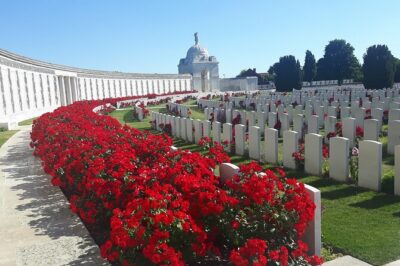
In Flanders Fields and Passchendaele Half Day Morning Tour
Read our review →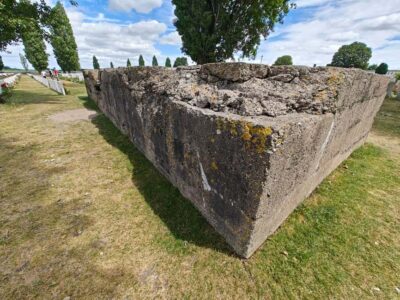
An exploration of the deadly salient battlefields
Read our review →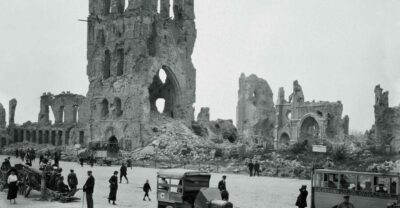
Small Group Ypres Remembrance Day Filled With War History
Read our review →Browse the lists this tour appears in