
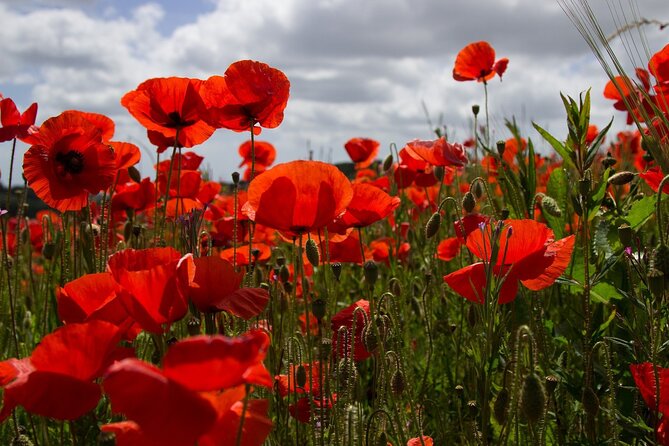
Reviewed · YPRES & WWI BATTLEFIELD TRIPS
Flanders Fields Remembrance Tour from Bruges
That WWI day trip ends at Menin Gate. What makes this one worth your time is the mix of cemeteries, trench sites, museums, and the daily ritual that’s kept going for more than a century. From Bruges, you head into the core of the Western Front, and the route connects places that most people only see in photos.
I especially like the number of memorial stops packed into a single day. You get multiple cemeteries and monuments, plus trench-related sites like the Trench of Death and Hill 60. Another high point is the way the schedule ends with the Last Post Ceremony, a daily tribute to Commonwealth soldiers missing after battle.
The main drawback to plan for is that this is a long, heavy day with a lot of stops, so you need comfortable shoes and patience for limited time at each site. Also, a couple of past participants flagged that group size and the vehicle type can feel bigger than expected, which can matter if you’re sensitive to noise or motion.
In This Review
- Key Points If You Want the Best of WWI in One Day
- A Full 10.5-Hour Western Front Day From Bruges
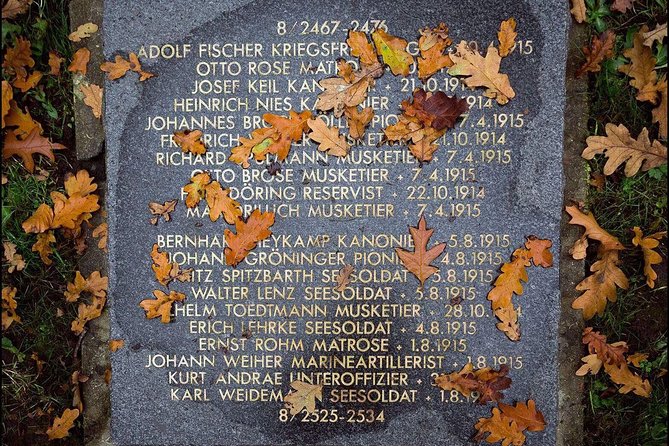
- Vladslo and the Germany Military Cemetery: Grief in Bronze and Stone
- Diksmuide’s Trench of Death: Where the War Turns Into Terrain
- Ypres Lunch Time and the Flanders Field Museum: What You Learn Before Hill 60
- Hill 60 Tunnels: Seeing War From Below Ground
- Passchendaele and Tyne Cot: The Commonwealth Scale in a Walkable Cemetery
- Essex Farm Field Hospital: Where Dr. John McCrae’s Poem Took Shape
- Menin Gate Last Post Ceremony: Daily Remembrance at the Western Front’s Heart
- Price and Logistics: Is $95.34 Worth Your Day?
- Who Should Book This Tour, and Who Might Skip It
- Final Verdict: Should You Book the Flanders Fields Remembrance Tour?
- FAQ
- What time does the tour start from Bruges?
- How long is the Flanders Fields Remembrance Tour?
- What’s included in the price?
- Is lunch included?
- Does the tour include the Last Post Ceremony?
- Are the sites admission fees covered?
- Do I need hotel pickup?
- How physically demanding is it?
- Is it offered in English?
- Where does the tour end?
Key Points If You Want the Best of WWI in One Day
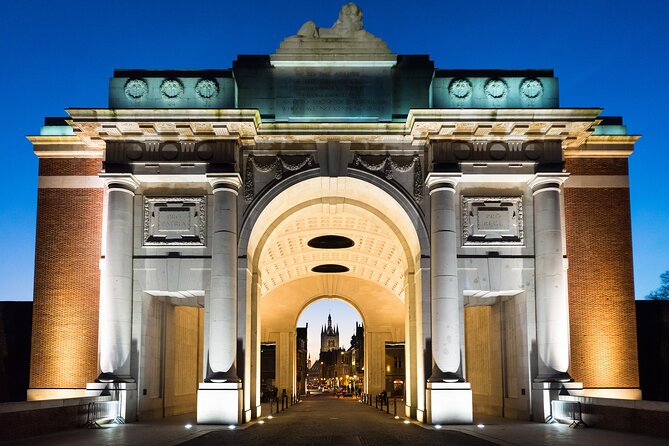
- Menin Gate Last Post gives a daily tribute that hits harder than any museum wall text
- Trench of Death and Hill 60 make the war feel physical, not abstract
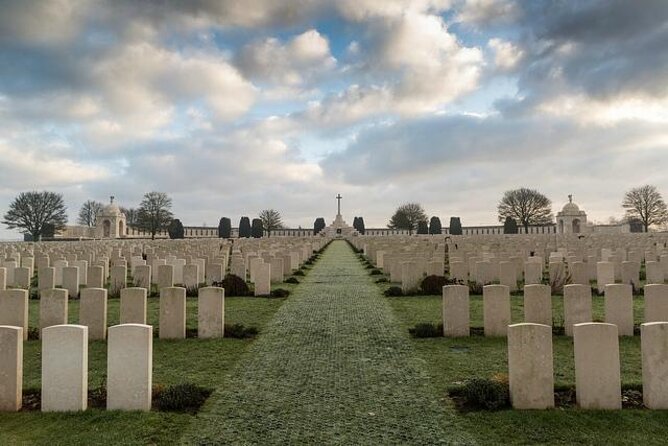
- Tyne Cot shows the Commonwealth scale, with the world’s largest Commonwealth cemetery you can actually walk through
- Essex Farm and Dr. John McCrae connect the famous poem to the hospital site where it was written
- Multiple cemeteries and memorials mean you see how remembrance works across countries and forces
- Air-conditioned coach and expert guide help you stay oriented and informed through a long day
More of the Flanders Fields battlefields:
- From Bruges: Great War Flanders Fields Minibus Tour w/ Lunch
★ 4.9 · 1,257 reviews - From Bruges: Flanders Fields Remembrance Full-Day Trip
★ 4.8 · 65 reviews - From Bruges: Private WW1 Flanders Fields Battlefield Day Trip
★ 5.0 · 10 reviews - Private tour WW1 Flanders Fields
★ 5.0 · 1 review - Flanders Fields Remembrance Tour from Brussels
★ 4.5 · 334 reviews
A Full 10.5-Hour Western Front Day From Bruges
This tour is designed for people who want a single, structured day in Flanders rather than a multi-day road trip. You start in central Bruges at 11:00 am at Bargeplein / Bargeweg, and you get back to the same meeting point at the end. The total time is listed at about 10 hours 30 minutes, so it’s a full-day commitment.
Two practical advantages matter here. First, you ride in a comfortable air-conditioned vehicle, which makes a big difference in a region where the weather can swing. Second, you travel with a professional multilingual guide who keeps you moving through the story of the war, site by site, instead of leaving you to guess what you’re looking at.
Still, this isn’t a “slow sightseeing” plan. You’re going to be on your feet at cemeteries and monument grounds, and the day is built around set ceremony timing. If you know you get motion sick, bring what you need and consider asking about vehicle size beforehand, because some past participants reported a larger coach than the minivan wording you may see.
Vladslo and the Germany Military Cemetery: Grief in Bronze and Stone
Your first meaningful stop zone is the area around Vladslo and the Germany Military Cemetery. This is the kind of cemetery that doesn’t feel like a single viewpoint. It’s a huge, solemn field where the layout and repeating headstones make the scale of loss unavoidable.
One specific detail I like about this phase is the visit to the sculpture Grieving Parents by Käthe Kollwitz. That piece does more than decorate a memorial space. It gives you a human form for what remembrance often tries to summarize with numbers. You can stand there and feel the emotional message without needing a full lecture.
In practical terms, this is also a good early stop for getting “in the right mode.” You’re still fresh from Bruges, so the morning sites help set the tone for the rest of the day. Dress for walking in cemetery grounds and keep your camera away until you’re ready, because the place deserves your focus.
Diksmuide’s Trench of Death: Where the War Turns Into Terrain
After Vladslo, the route continues toward Diksmuide, where you disembark at the Trench of Death. This stretch is part of the Western Front that saw soldiers meet their end in fierce fighting. The name alone signals what you’re going to feel: not just history, but consequences written into the land.
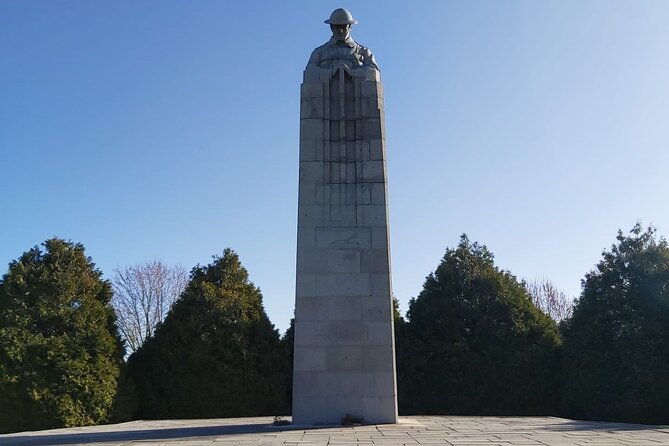
Near this stop, you also see the statue of the Brooding Soldier, commemorating the sacrifice of 2,000 Canadian soldiers during the first German gas attack. That matters because it frames the landscape with a specific episode, not only with general WWI suffering.
If you’re tempted to treat this as “just another stop,” don’t. Standing where troops died changes your sense of distance and time. You begin to understand why cemeteries are located so close to battlefields, because the war’s ending and the war’s burial grounds are tied together here.
Ypres Lunch Time and the Flanders Field Museum: What You Learn Before Hill 60
From the trench area, you’ll reach Ypres for lunch and museum time. The schedule includes time to eat, and it’s positioned as a reset before the day turns heavier again.
Next, you visit the Flanders Field Museum and take part in an audio guided tour about the war’s story. This is valuable because you’re not only seeing memorials. You’re also hearing how the war developed, how technology and tactics changed, and why these sites look the way they do today.
One heads-up that’s worth respecting: the museum experience can depend on when you go. Some past days have had closures or reduced access at certain points, so your museum time might be different from what you expect. Don’t panic if your day isn’t perfect, the route still keeps its core WWI essentials intact.
If you’re bringing a group vibe, lunch time is also where you can talk with the people around you, swap impressions, and ask your guide practical questions while you’re sitting down.
A few more Bruges afternoons to weigh up

Hill 60 Tunnels: Seeing War From Below Ground
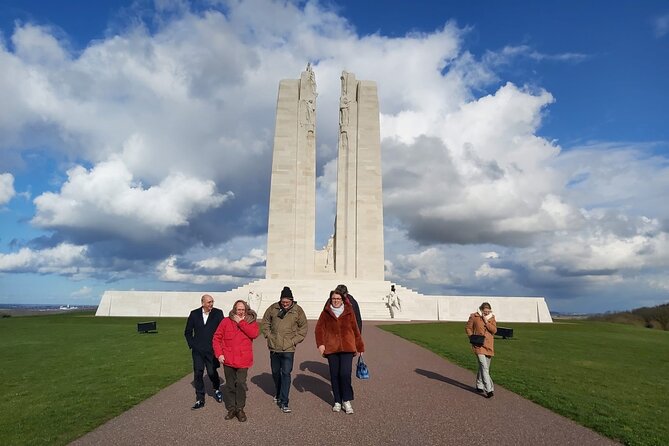
After the museum, you go to Hill 60 in the Zwarteleen area of Zillebeke. Hill 60 is known here for its tunnels and its role in the war. That’s an important shift in perspective.
So much WWI imagery is surface-level: trenches, uniforms, smoke. Hill 60 pulls you toward the other side of the story, the underworld of tunnels and cramped movement. You start to grasp why survival required not only courage, but engineering and routine.
This is also a good moment for your guide’s site-to-site storytelling to click. When you hear how tunnels fit into attacks and defense, the earlier trench stops feel less like isolated locations and more like one connected system.
Bring a layer if the weather is cool. Even in good seasons, underground or semi-exposed areas can feel colder than you expect.
Passchendaele and Tyne Cot: The Commonwealth Scale in a Walkable Cemetery
One of the strongest parts of the day is the stop near Passchendaele, including Passchendaele New British Cemetery. This is where you’re pointed toward one of the bloodiest battles connected to the region, and it’s framed with the start of major gas attacks in the broader story.
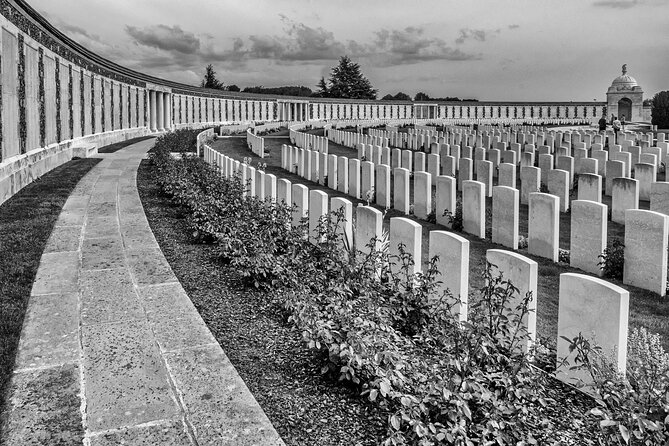
From there, the schedule brings you to Tyne Cot, which is described as the world’s largest Commonwealth cemetery. This cemetery isn’t just large, it’s organized in a way that makes you keep scanning. Row after row gives you that slow realization of numbers becoming people.
What you should watch for: Tyne Cot is the kind of place where you can spend too long staring if you’re not careful. Use the guide’s cues for what to look at first, then take a few slow minutes afterward to absorb it on your own.
If your day feels rushed at other sites, Tyne Cot is the one place where the time feels worth it. It’s where remembrance becomes visible scale.
Essex Farm Field Hospital: Where Dr. John McCrae’s Poem Took Shape
Next you go to Essex Farm Cemetery, sometimes described as Essex Farm Field Hospital, and you spend time there related to Dr. John McCrae. The schedule specifically notes it as the dressing station where he wrote In Flanders Fields.
This stop is powerful for a simple reason: it links a widely known poem to an exact place tied to the work of wartime medical care. You’re not reading lines in a textbook. You’re standing near the site connected to why those lines exist at all.
The time here is listed around 15 minutes, so it’s not an all-day museum session. But it’s long enough for your guide to provide context and for you to take in the memorial tone of the grounds.
I also like the way the day moves from huge cemetery scale (Tyne Cot) to a more focused location (Essex Farm). It’s like the tour zooms in and out, so you don’t lose your sense of what each place represents.
Menin Gate Last Post Ceremony: Daily Remembrance at the Western Front’s Heart
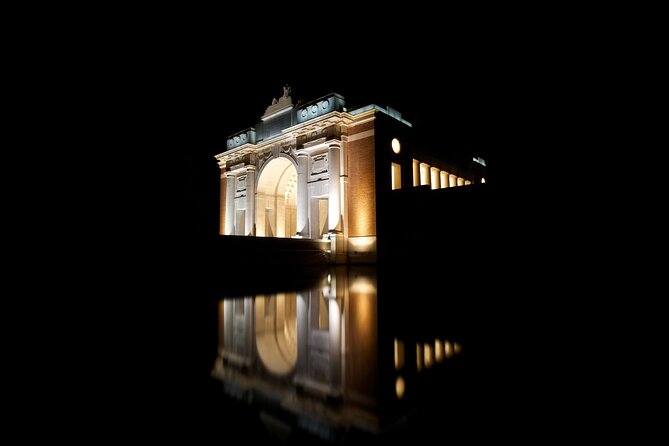
The emotional climax of the day is the Last Post Ceremony at Ypres Menin Gate. This is timed as a highlight and sits at the end of the route. The ceremony runs about 30 minutes, and it’s described as a daily tribute to Commonwealth soldiers and officers missing after battle.
If you’re wondering what makes this so different from a normal “see a monument” stop, it’s the routine. This isn’t a special event that happens once a year. It’s repeated daily, and that repetition carries weight.
A couple practical notes matter here:
- Plan on watching the crowd and the ceremony first before taking pictures.
- Scaffolding or construction can affect sightlines on some days. If you arrive and the gate area is under refurbishment, be prepared for an imperfect view while still getting the full emotional impact of the ritual.
Afterward, the tour heads back to Bruges, and that transition is actually part of the experience. Going from the ceremony back into travel mode forces a hard reset, and you’ll feel it in a good way, if you let yourself.
Price and Logistics: Is $95.34 Worth Your Day?
At $95.34 per person, the value depends on what you compare it to. You’re getting a full-day structure built around set sites and ceremony timing, plus a guided explanation that helps you make sense of what you’re seeing. You also get an air-conditioned vehicle and a mobile ticket.
Lunch is listed as not included, but the schedule includes lunch time in Ypres, and some participants reported food being part of their day. The safest way to handle this is to assume you will need to pay for your own lunch unless the confirmation details you receive say otherwise.
Where the tour’s cost really earns its keep is in the transfer time. This is a big chunk of the Western Front, and doing it on your own takes serious driving, planning, and ticket effort. Here, the route is pre-set and guided.
Two considerations from past experiences are worth factoring in:
- Group size can affect hearing and comfort. Some people noted larger-than-expected groups, making it harder to catch commentary.
- Vehicle details can vary by operation. Even though one description points to a minivan, some days have been run as a larger bus, which can matter if you’re sensitive to motion.
Who Should Book This Tour, and Who Might Skip It
This tour is best for people who want a guided, packed day without the hassle of planning routes, parking, and timing. If you like history that’s tied to places, not just dates, you’ll appreciate how the route moves from cemetery to trenches to tunnels to ceremony.
I’d also recommend it if you enjoy questions. The day is long, and with the guide you can ask what you’re seeing, why it matters, and how WWI played out in this region specifically.
On the other hand, you might want a different plan if:
- You get motion sickness easily, since vehicle size can vary and the day includes lots of ride time.
- You’re the type who needs more quiet and less movement between stops. This tour does not slow down much.
With moderate physical fitness, you should be fine for cemetery walking and short site stops, but bring supportive footwear and keep your expectations realistic.
Final Verdict: Should You Book the Flanders Fields Remembrance Tour?
If you want one memorable day that connects major WWI sites from Bruges to the Last Post at Menin Gate, this is a strong choice. The combination of trenches and tunnels, multiple cemeteries and memorials, and the end-of-day ceremony creates an emotional arc that’s hard to replicate on your own.
Book it if you like structure, guided context, and you can handle a long day. Skip it or plan differently if motion sickness is a concern or you need longer free time at fewer sites. Either way, wear comfortable shoes and be ready for a day that stays with you long after you’re back in Bruges.
FAQ
What time does the tour start from Bruges?
The tour starts at 11:00 am from Bargeplein / Bargeweg, 8000 Brugge, Belgium.
How long is the Flanders Fields Remembrance Tour?
The duration is listed as about 10 hours 30 minutes.
What’s included in the price?
The tour includes an air-conditioned vehicle and a professional multilingual guide. A mobile ticket is also provided.
Is lunch included?
Lunch is listed as not included. The schedule includes a lunch break in Ypres, so plan to cover your meal unless your confirmation states otherwise.
Does the tour include the Last Post Ceremony?
Yes. The day ends with the Last Post Ceremony at Ypres Menin Gate, listed for about 30 minutes.
Are the sites admission fees covered?
The itinerary lists free admission tickets for Passchendaele New British Cemetery, Essex Farm Cemetery, and the Last Post Ceremony.
Do I need hotel pickup?
No. Hotel pickup and drop-off are not included, and the tour starts at the meeting point in central Bruges.
How physically demanding is it?
The tour calls for a moderate physical fitness level, since you’ll spend time walking around cemeteries and memorial grounds.
Is it offered in English?
Yes, the tour is offered in English.
Where does the tour end?
It ends back at the same meeting point in Bruges.
Latest from Bruges

Ypres & WWI Battlefield Trips, compared.
Great War Flanders Fields Minibus Tour w/ Lunch
Read our review →
Flanders Fields Remembrance Tour from Brussels
Read our review →
From IEPER Private 4-hour Tour of the Ypres Battlefield
Read our review →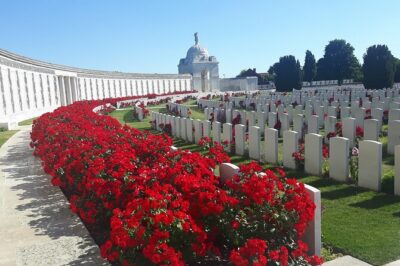
In Flanders Fields and Passchendaele Half Day Morning Tour
Read our review →
An exploration of the deadly salient battlefields
Read our review →
Small Group Ypres Remembrance Day Filled With War History
Read our review →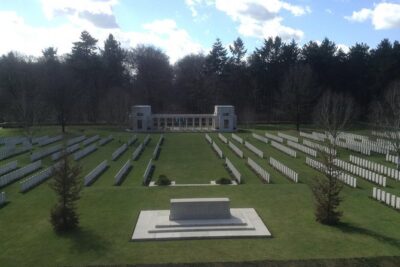
From Ypres, The Christmas Truce to Passchendaele Ypres Based WW1 private tour
Read our review →Browse the lists this tour appears in