
Reviewed · YPRES & WWI BATTLEFIELD TRIPS
From IEPER Private 4-hour Tour of the Ypres Battlefield
Four hours, and Ypres history hits hard. This private tour links the Battle of Ypres to real ground at places like Hill 60 and Tyne Cot, with a guide who uses maps and photo cues to make the timeline click. I love the calm pacing, you get time to absorb each site, and I love the way the guide can tailor focus for your family ties, even requesting service records when possible. The one drawback to consider is value: at $399.25 per group, it works best when you have a group of up to four.
Pickup is built in, so you are not trying to wrestle local transit while carrying your best intentions. I also like that you get a mobile ticket, and the tour runs either a morning or an afternoon time slot so it can fit train and dinner plans.
What stays with me most is the respectful, question-friendly way the story is told. At stops like Sanctuary Wood Museum, you are shown original trenches and you even get to experience a tunnel segment, which helps the whole battlefield feel less abstract.
In This Review
- Key things to know before you go
- Ypres Battlefield in 4 hours, and why private makes it easier
- Getting picked up in Ieper, riding in a hybrid SUV, and staying sane
- Stop 1, Hill 60: the June 7, 1917 mines and the force of escalation
- Stop 2, Sanctuary Wood Museum: trenches you can actually stand in
- Stop 3, Tyne Cot Cemetery: scale, silence, and the hard numbers
- Stop 4, Saint Julien Memorial: the chlorine gas moment and holding the line
- Stop 5, Essex Farm Cemetery: John McCrae, In Flanders Fields, and the poppy
- How guides make this tour worth the money: tailoring, pacing, and real questions
- Practical tips for your 4-hour battlefield day
- Who should book this private Ypres WWI tour
- Should you book this Ypres battlefield tour?
- FAQ
- How long is the Ieper private 4-hour tour of the Ypres Battlefield?
- What is the price, and how many people can be in the group?
- Do you get to choose a morning or afternoon tour time?
- Where does pickup happen?
- What sites are included during the 4-hour route?
- Is the tour offered in English?
- Is there admission cost at the stops?
- When will I get confirmation after booking?
- Can I cancel for a full refund?
Key things to know before you go
- Private, small-group feel: only your group participates, ideal for questions and personal priorities
- Hill 60’s June 1917 mines: a specific, dramatic moment in the Ypres fighting is put into context
- Sanctuary Wood trenches and museum: original WWI trenches plus a hands-on sense of place
- Tyne Cot scale and names: 12,000 buried, only 3,000 named, and Commonwealth VC connections
- Saint Julien gas attack focus: the chlorine gas event and how Canadians held the line
- Essex Farm and In Flanders Fields: how a poem and the poppy became lasting symbols
More of the Flanders Fields battlefields:
- In Flanders Fields and Passchendaele Half Day Morning Tour
★ 5.0 · 117 reviews - Ypres: An exploration of the deadly salient battlefields
★ 5.0 · 76 reviews - From Ypres, The Christmas Truce to Passchendaele Ypres Based WW1 private tour
★ 5.0 · 29 reviews - From Ypres: WWI Battlefields Private Tour
★ 5.0 · 25 reviews - Ypres Battlefields and Passchendaele Museum Full Day Tour
★ 5.0 · 10 reviews
Ypres Battlefield in 4 hours, and why private makes it easier

Ypres is one of those places where a regular “drive-by” route leaves you with more questions than answers. This tour is designed to fix that fast by anchoring you to key sites and telling the story in a clear sequence. In a half-day, that matters because the battlefield is huge, and the details matter.
The big win is the private setup. You can ask the annoying questions, the personal questions, and the timing questions without feeling like you are slowing a bigger group down. It also means the guide can keep adjusting to your pace, including walking limits after surgery, which came up in accounts of past tours.
The practical downside is that private tours cost more per person unless you share the group price. If you are traveling solo, it can still be worth it for someone who wants depth, but the math is kinder when you travel as a couple or a small family.
Getting picked up in Ieper, riding in a hybrid SUV, and staying sane
The tour handles one of the hardest parts of Ypres logistics: the first move. You can meet your guide at Ieper train station if you arrive by train, and you can also meet at your Ieper hotel or B and B if it is listed. If it is not, you message with your accommodation name and the guide meets you there.
From what I’ve seen described, pickup is on time and the transport is comfortable, including a hybrid SUV. That sounds like a small detail, but in this region you are doing a lot of standing, looking, and reading. Starting the day seated comfortably helps you save energy for the stops that matter.
You also get a mobile ticket, so you are not spending time hunting paperwork. And because the tour offers morning or afternoon timing, you can plan it around train departures and dinner, not just around daylight on a map.
Stop 1, Hill 60: the June 7, 1917 mines and the force of escalation
Hill 60 is short on time, but it is heavy on meaning. You spend about 40 minutes there hearing what happened when massive mines were blown on 7 June 1917. That date matters because it points to how quickly the fighting escalated and how engineering became part of the battlefield.
What you should expect is a guided explanation that turns the name into an image in your mind. The guide uses maps and photos to connect the terrain to the larger Ypres story. If you like your history with visuals, this is where you feel the advantage of having a guide instead of reading a plaque and moving on.
Hill 60 also teaches you a useful lesson about the Western Front: scale is not just about land size. It is about the way battles were planned, measured, and then unleashed, sometimes with technology that felt brand new at the time.
Admission is listed as free for this stop, which helps keep your half-day costs from creeping upward.
Stop 2, Sanctuary Wood Museum: trenches you can actually stand in
Sanctuary Wood is where Ypres stops feeling like a textbook. You get about 45 minutes at the museum and trenches, with admission included. The experience is designed around seeing poignant original WWI trenches and then learning through a small museum that gives you more context.
One practical reason to choose this kind of stop is that trench warfare is hard to picture from a distance. Even when you know the basics, it is different when you are in the space and can sense how close everything was. The tunnel segment is a big deal here. Several accounts highlight that walking through the tunnel among trenches makes the whole place feel immediate and real.
This is also where a good guide earns trust. The guides associated with this tour are described as respectful with a sombre subject, and they leave room for questions. If you have personal family ties, this is often where those questions can turn into something more personal, like a guide researching service records or helping you connect a story to a nearby line of fighting.
If you want a half-day with emotional weight but still organized and clear, Sanctuary Wood is a key reason to book.
A few more Ypres afternoons to weigh up



Stop 3, Tyne Cot Cemetery: scale, silence, and the hard numbers
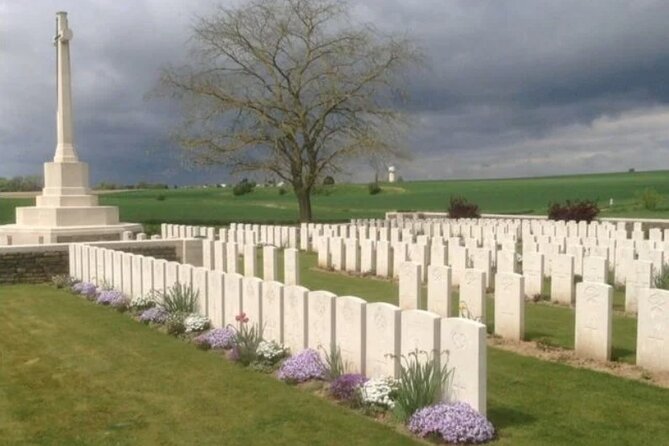
Tyne Cot is not just important. It is the main event for many people. You have about 45 minutes here, and admission is listed as free.
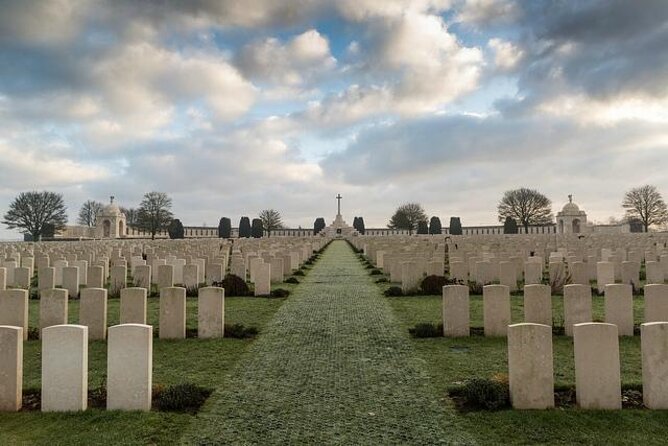
Tyne Cot is described as the world’s largest Commonwealth War Graves Commission cemetery. The numbers are staggering: 12,000 soldiers are buried there, but only about 3,000 have names. That detail changes how you see the stones. Named graves feel like biography; unnamed graves feel like absence with no labels.
It also connects Ypres to wider Commonwealth stories. You are told that two Australian and one Canadian VC recipients are buried here. Even if you do not know much WWI history going in, this is where the “why does it matter to me?” question often gets answered in a tangible way.
In practice, I’d treat this stop like a slow walk, not a sprint. Give yourself time to read what you can, look past what you cannot, and just stand for a moment. The silence is part of the education.
This is one place where your guide’s framing really helps. A private guide can emphasize the right elements for your background, including nationality focus that has shown up in past experiences, like Canadian emphasis for Canadian visitors.
Stop 4, Saint Julien Memorial: the chlorine gas moment and holding the line
Saint Julien Memorial is the shortest stop on the route, about 15 minutes, but it is a concentrated moment in the timeline. You learn about the first German gas attack in WWI on 22 April 1915 against French soldiers and how Canadians held the line in the face of chlorine gas.
This stop works when you accept that you will not get every detail in 15 minutes. Instead, it provides a landmark event so you understand why later battles in the Ypres area carried such urgency. Gas warfare was terrifying because it changed what “battle” meant. It was not just bullets and shells. It was atmosphere, fear, and endurance.
If you are the type who likes context, ask your guide how this event fits into what you saw earlier. You will usually get a clean explanation that ties gas and trenches back to the big Battle of Ypres narrative.
Admission is listed as free here too, which is helpful since this tour stacks major sites back to back.
Stop 5, Essex Farm Cemetery: John McCrae, In Flanders Fields, and the poppy
You end with about 30 minutes at Essex Farm Cemetery, and the stop is tied to one of the most famous WWI poems. You see the hospital site where Lt Col John McCrae composed In Flanders Fields, and you learn how the poppy became the iconic WWI symbol.
This stop is a strong choice for two reasons. First, it connects battlefield history to culture and memory, not just politics. Second, it gives the story a human thread through a specific person and a specific act of writing under brutal circumstances.
If you are carrying any personal questions about why the poppy symbol matters today, this is where the answer comes from. The guide’s framing helps you understand that symbolism did not appear out of nowhere. It grew from a lived reality on the ground in places like this.
As with the other free sites, admission is listed as free here, so your cost stays steady while you still get a meaningful close to the tour.
How guides make this tour worth the money: tailoring, pacing, and real questions
This is the part you cannot measure from a brochure. The value comes from how the guide handles your priorities.
In past tours tied to this experience, guides have done things like:
- requesting a relative’s service record so the route connects more directly to the places you will visit
- tailoring attention to national perspective, including Canadian focus for Canadian visitors and adjustments for visitors from places like New Zealand
- adapting pacing and routes for walking restrictions after surgery
- helping families find small but important details, like medals and document discoveries, then explaining what those details meant in the battlefield context
You also get a sense that the guides treat the topic with the right balance. Several accounts mention a blend of respect with a light touch of humour, which helps you stay human while talking about mass loss. It is not about making jokes. It is about making space to think.
The best practical advice I can give is to come with at least one anchor. That anchor can be your country connection, your family name, or even one question you want answered, like how mines and gas changed the battlefield. A private guide can work with that, and the whole day clicks faster when you are not starting from zero.
And if you are traveling onward by train, keep an eye out for suggestions your guide might have. One account even mentions a supermarket recommendation for picking up freshly made sandwiches for a train back to Paris, which is exactly the kind of real-world help that makes a tour feel complete.
Practical tips for your 4-hour battlefield day
This is a half-day tour, so small choices make it better.
Wear shoes you can stand in for long minutes on uneven ground. Even if you do not walk far, you will spend time looking down, then looking out, then listening. Ypres cemetery settings can also be windy, and you will appreciate having a layer.
Bring a notebook or phone notes. The guides often use maps and photos to connect the story, and having a place to write dates and names helps you later when you want to build your own understanding.
If you want family research, share what you have before you go. Even basic details can help a guide focus, and the tour’s structure allows time to connect your interest to the sites. Some accounts mention guides researching relatives before the day, then using that research to tailor what you see.
Finally, go easy on the expectations for 4 hours. You will cover a lot of ground, but this is still a small slice of a massive war. The goal is to get your bearings fast and leave with a clear timeline you can carry into the rest of Belgium.
Who should book this private Ypres WWI tour
This tour fits best if you want depth without hassle. If you enjoy WWI history, especially when it connects to specific places, this route gives you a structured way to understand the Battle of Ypres and the trench system.
It also suits families with mixed ages, since guides have shown patience when traveling with children. The key is that children often do best when the guide keeps things organized and answers questions, and this tour format supports that style.
If you have mobility limits, the private structure is a real advantage. Past experiences mention adjustments for walking restrictions after surgery, which is exactly the kind of flexibility group tours struggle to provide.
If you are a solo traveler on a tight budget, think carefully. The price is per group up to four. That does not mean you cannot enjoy it alone, but the value math improves when you share.
Should you book this Ypres battlefield tour?
Book it if you want a clear, respectful, guided path through five major WWI stops without dealing with transport or timing. The route balances big landmark sites like Tyne Cot Cemetery with “how did this happen” detail like Hill 60’s mines, then closes with memory and meaning at Essex Farm and the poppy.
Also consider booking early. This experience is commonly reserved about 61 days in advance, which tells you it is popular for people planning WWI-focused trips.
Skip it or consider an alternative if you only want a quick overview and you are comfortable self-guiding with a map and guidebook. With this tour, you are paying for interpretation, pacing, and the chance to ask questions, including personal ones about family connections.
If you want the battlefield to make sense, this is a solid choice.
FAQ
How long is the Ieper private 4-hour tour of the Ypres Battlefield?
It runs for about 4 hours.
What is the price, and how many people can be in the group?
The price is $399.25 per group, for up to 4 people.
Do you get to choose a morning or afternoon tour time?
Yes, morning or afternoon tour times are offered.
Where does pickup happen?
Pickup is offered at Ieper train station, or at your Ieper hotels and B and Bs (if your accommodation is not listed, you can message the name and arrangements are made).
What sites are included during the 4-hour route?
The tour includes Hill 60, Sanctuary Wood Museum, Tyne Cot Cemetery, Saint Julien Memorial, and Essex Farm Cemetery.
Is the tour offered in English?
Yes, it is offered in English.
Is there admission cost at the stops?
Sanctuary Wood Museum admission is listed as included, while the other stops are listed as free.
When will I get confirmation after booking?
Confirmation is received within 48 hours of booking, subject to availability.
Can I cancel for a full refund?
Yes. You can cancel up to 24 hours in advance for a full refund. If you cancel less than 24 hours before the start time, the amount paid will not be refunded.
Latest from Ypres
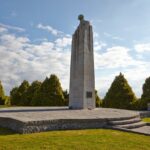



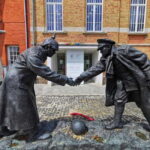
Ypres & WWI Battlefield Trips, compared.
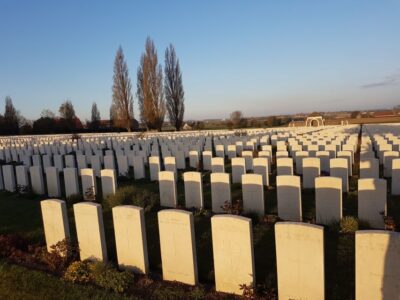
Great War Flanders Fields Minibus Tour w/ Lunch
Read our review →
Flanders Fields Remembrance Tour from Brussels
Read our review →
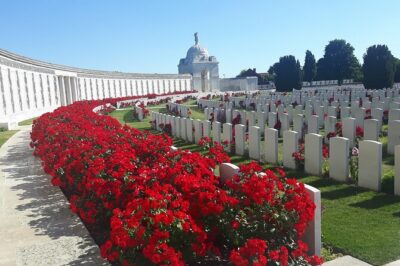
In Flanders Fields and Passchendaele Half Day Morning Tour
Read our review →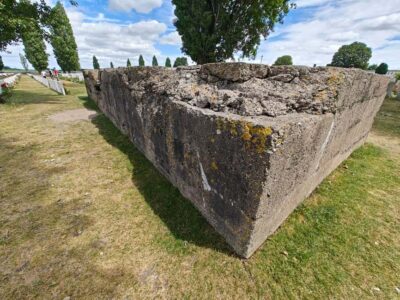
An exploration of the deadly salient battlefields
Read our review →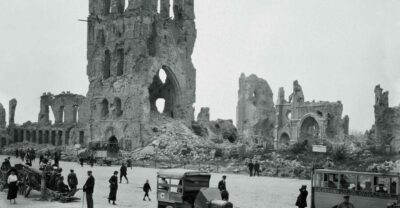
Small Group Ypres Remembrance Day Filled With War History
Read our review →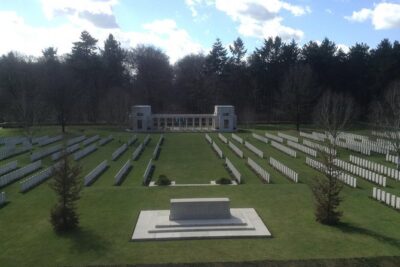
From Ypres, The Christmas Truce to Passchendaele Ypres Based WW1 private tour
Read our review →Browse the lists this tour appears in