

Reviewed · YPRES & WWI BATTLEFIELD TRIPS
Full Day Private Tour to WWI Passchendaele Base in Ypres
You come to Ypres for the quiet, then the stories get loud. This private day tour strings together the key Australian-linked sites around the Passchendaele campaign, with time on memorials, cemeteries, and the ground itself where people fought and suffered. You end the day with Menin Gate and the scale of the missing laid out in plain view.
I especially like the way the route mixes named memorials with the tactical details, from gun pits along Menin Road to the tunnelling sites tied to Hill 60. You also get a strong guide-led narrative, and in one standout review the local guide Mike was prompt, kept things on schedule, and still made room for the right locations.
The main drawback to consider is the price. At $707.76 per person for an 8-hour private tour, this is best when you truly want one-on-one pacing, not when you just need a quick overview. Also, lunch is not included, so you’ll want to plan for whatever is open.
In This Review
- Key moments that make this Passchendaele base tour click
- A private 8-hour route that actually holds the front-line thread
- Messines Ridge: mine craters, the Christmas Truce, and a chilling underground stop
- Hooge Crater Cemetery and Menin Road: the VC story beside the assault line
- The Black Watch site: Australian HQ in 1917 and earlier action in the same ground
- Polygon Wood and the Australian 5th Division monument: concrete bunkers and a walked-through woods
- Hill 60: tunnelling warfare, Captain Woodward, and a mine blast at 3.10am
- Tyne Cot Cemetery and John McCrae: when names thin out
- Menin Gate Memorial: the 55,000 missing and why it hurts
- Sanctuary Wood Museum: original trenches plus a small museum you can actually digest
- Driving through the line of the Australian advance: why the in-between moments matter
- Price and logistics: what $707.76 per person is buying you
- Who this tour fits best
- Should you book this Full Day Private Tour to the Passchendaele Base?
- FAQ
- How long is the private tour?
- Where does the tour start in Ypres?
- Is pickup included?
- What language is the tour offered in?
- Is this a private tour or a group tour?
- Does the tour include tickets or admission fees?
- Is lunch included?
- Is there a mobile ticket?
- What is the main price for the tour?
- What is the cancellation policy?
Key moments that make this Passchendaele base tour click
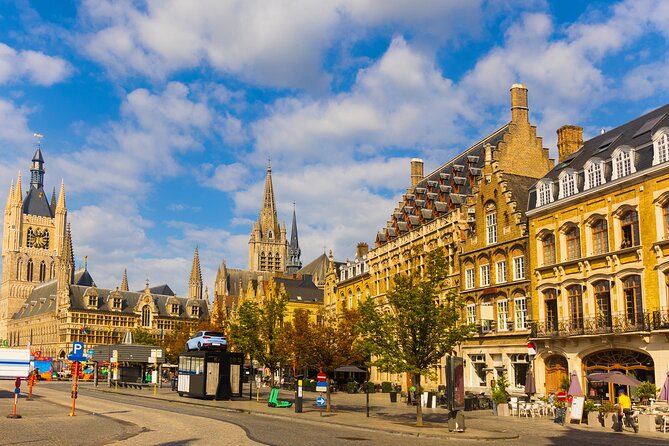
- Messines Ridge NZ Memorial plus mine craters and the scene tied to the Christmas Truce
- The Hooge Crater Cemetery stop, including Pat Bugden VC and the view along Menin Road
- Hill 60 and the tunnelling story linked to Captain Woodward and the 7 June 1917 mine blast
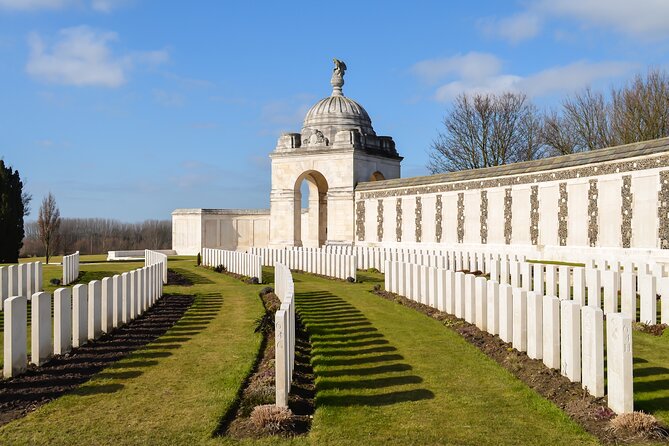
- Tyne Cot Cemetery with WWI scale and a sobering fact: only 3,000 of 12,000 buried have names
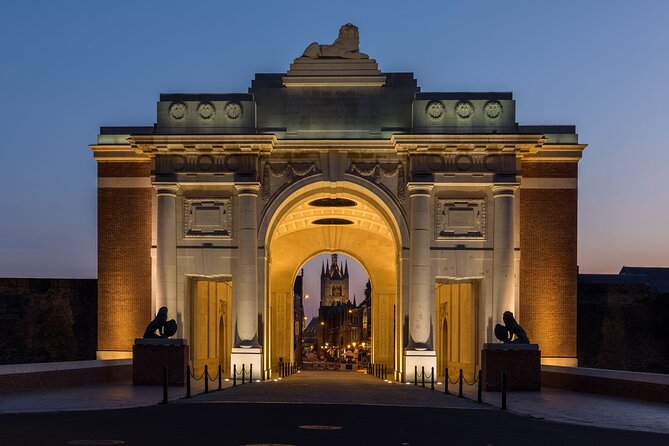
- Menin Gate Memorial and the 55,000 missing whose names fill the walls
- Sanctuary Wood Museum with original trenches you can still walk through
More of the Flanders Fields battlefields:
- From IEPER Private 4-hour Tour of the Ypres Battlefield
★ 5.0 · 154 reviews - In Flanders Fields and Passchendaele Half Day Morning Tour
★ 5.0 · 117 reviews - Ypres: An exploration of the deadly salient battlefields
★ 5.0 · 76 reviews - From Ypres, The Christmas Truce to Passchendaele Ypres Based WW1 private tour
★ 5.0 · 29 reviews - From Ypres: WWI Battlefields Private Tour
★ 5.0 · 25 reviews
A private 8-hour route that actually holds the front-line thread
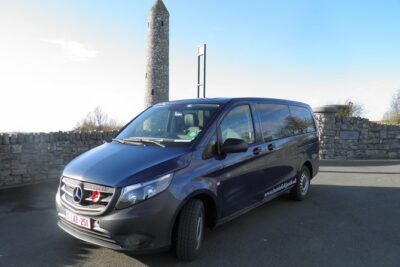
This is designed as an all-day drive with stops spread through the Ypres Salient and toward the Passchendaele area, around 8 hours total. You get pick-up and drop-off in the city center or at your hotel, in an air-conditioned vehicle with private transportation. The tour language is English, and it runs as a private group, so you are not wedged into the pace of strangers.
The big practical value here is the “front-line continuity.” Instead of jumping randomly between famous points, you move along the area of the Australian advance, with driving segments that connect the dots between the major sites. If your brain needs structure when you’re processing WWI, this kind of routing helps you remember what happened where.
Your guide’s job is to turn the stops into a sequence you can follow. In one review, Mike made sure the group stayed on time and still saw the correct locations, which matters on this type of tour where the ground is spread out and parking is limited.
Messines Ridge: mine craters, the Christmas Truce, and a chilling underground stop
Messines Ridge is the kind of stop where you feel the landscape changing under your feet. You’ll spend about 2 hours at the Messines Ridge NZ memorial area, and the admission ticket is included. Expect a guided story of the Battle of Messines, then time at the mine craters tied to that fighting.
Two details make this stop more than just a memorial plaque moment. First, you’ll hear how the Christmas Truce is linked to the scene here, and you’ll be shown the setting for that unusual wartime pause. Second, there’s a specific crypt location connected to Adolf Hitler being treated for wounds, which is historically documented and emotionally heavy.
Here’s the real payoff for you: the guide helps you understand why mines and crater fields were not abstract tactics, but something that shaped survival, movement, and terror in the days that followed. You’re not just looking at names, you’re seeing how the earth itself became part of the battlefield.
A consideration: this stop is longer than many others, so if you’re sensitive to darker stories or long memorial-walk pacing, give yourself a moment to reset before you move on.
Hooge Crater Cemetery and Menin Road: the VC story beside the assault line
Next comes Hooge Crater Cemetery, with about 30 minutes on site. Admission is free here, so you’ll focus on the people and the ground without worrying about an extra ticket. This cemetery is closely tied to the Passchendaele fighting, and it sits near the areas associated with the assaults.
You’ll hear about Pat Bugden VC, including that he was a 20-year-old recipient of the Victoria Cross. Then you’ll stand on or very near the iconic Menin Road, alongside where Australian gun pits were for the assault on Passchendaele. That pairing, VC biography plus an orientation moment along the road, is exactly what makes cemeteries feel different from museum displays.
Why I think you’ll appreciate it: the guide’s framing makes the cemetery feel like part of a battle system. In other words, you see where the attack formed, then you look at who didn’t make it back.
Timing note: 30 minutes is enough for meaning, but it’s not enough for long drifting. If you like to read every stone slowly, you’ll want to arrive with a calm pace in mind.
The Black Watch site: Australian HQ in 1917 and earlier action in the same ground
The Black Watch stop is short, about 30 minutes, and admission is free. This is where the Australian HQ was in September 1917, and it also connects to earlier actions on the same ground in November 1914.
That “same ground, different war cycle” idea matters. You’ll often read WWI as a straight timeline, but places in Flanders were reused, reoccupied, and repurposed over and over. A good guide will help you see how the war returned to the same points repeatedly, not in one clean blow, but in waves.
Because this stop is compact, you’ll get the story quickly and then move on. If you love deep architectural details, you might find it more narrative-focused than physically detailed, but the context is the point.
A few more Ypres afternoons to weigh up


Polygon Wood and the Australian 5th Division monument: concrete bunkers and a walked-through woods
Polygon Wood is next, with about 20 minutes. This stop is free and includes a walk through the woods plus visits to concrete bunkers that were there when the Australian soldiers captured during the battle. You’ll also see the cemetery and the Australian 5th Division monument.
What you’ll likely feel here is the mismatch between how calm the woods look now and how engineered the space was back then. Concrete bunkers are not just “old stuff,” they’re evidence of how soldiers tried to force safety out of a battlefield that refused to be safe.
If you like photo-worthy contrast, this is one of the stronger spots. The guide’s job is to help you map what you see to what happened, so the woods become a navigational memory rather than just trees.
The possible drawback is simple: the time is brief. You’ll get the core understanding, but you won’t have hours to wander and reframe everything like you might on your own.
Hill 60: tunnelling warfare, Captain Woodward, and a mine blast at 3.10am
Hill 60 lasts about 40 minutes, and admission is free. This is a place built on engineering and timing, tied to Captain Woodward and the 1st Australian Tunnelling Coy. The story includes a massive mine blown at 3.10am on 7 June 1917, and you’ll see the crater connected to that event.
This stop is valuable because it turns “tunnelling” from a vague term into a specific operation with a clock, a unit, and a location. When a guide gives you that level of detail, you start to understand how the war was fought below the surface as much as above it.
One practical consideration: craters and terrain can mean uneven ground. You’ll want solid shoes and a steady pace so you can take in the crater without rushing.
Tyne Cot Cemetery and John McCrae: when names thin out
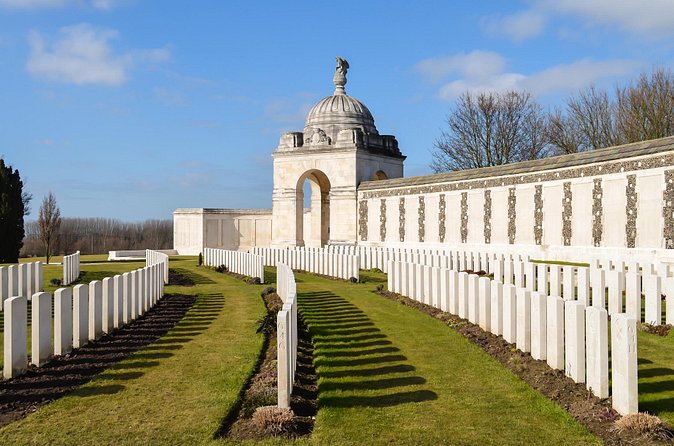
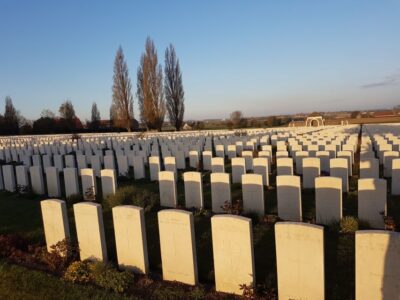
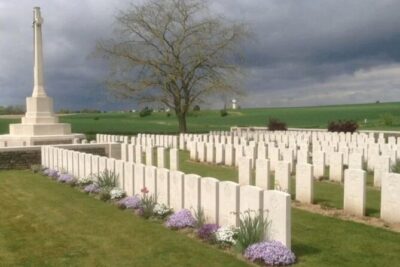
Tyne Cot is a major emotional anchor on this route. You’ll spend about 45 minutes, and it’s free to visit. This is the world’s largest Commonwealth War Graves Commission cemetery, with 12,000 soldiers buried and only 3,000 have names. You’ll also hear that two Australian VC recipients are buried here.
That “names” detail is the kind of fact that changes how you read a cemetery. Stones can feel orderly, but the record loss changes the meaning. It’s not just a place of remembrance, it’s a reminder of what war can erase.
After Tyne Cot, you head to the John McCrae site, about 30 minutes and free. Here you’ll see the hospital site where Lt Col John McCrae composed In Flanders Fields. Even if you already know the poem, this location gives it weight because you connect the words to a real place used for wounded care.
If you’re the type who values literature as a historical signal, this is one of the best pairings on the day. You’re not reading poetry from a distance, you’re placing it in a moment when people were trying to heal and record the cost at the same time.
Menin Gate Memorial: the 55,000 missing and why it hurts
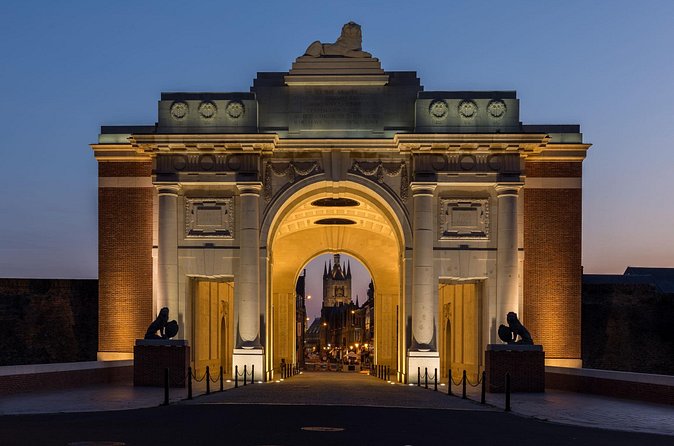
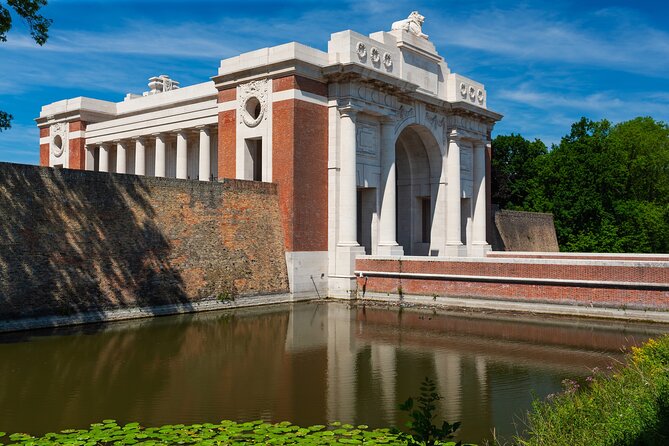
Menin Gate Memorial is next, with about 1 hour and free admission. The guide tells the story behind the Menin Gate and shares stories connected to the 55,000 names listed for the missing.
This is often the part of the day where people feel the scale most sharply. The sheer number can become a wall of text, but a good guide helps you interpret it as individual lives, not just statistics. You’ll come away with a clearer sense of what “missing” means in practice and how communities carried that uncertainty.
Practical tip for your comfort: give yourself a moment to pause and read a small section slowly. If you try to take in everything at once, your brain will blur it. A focused approach makes the names feel human.
Sanctuary Wood Museum: original trenches plus a small museum you can actually digest
Sanctuary Wood Museum rounds out the route with about 1 hour and admission included. This is one of the stops where you get to see poignant original WWI trenches, plus a quaint WWI museum.
This stop can feel like the bridge between the big memorials and the lived experience. Instead of standing at a grand wall or a cemetery headstone field, you’re closer to the idea of daily exposure, movement, shelter, and strain.
I like that you also have a museum component. After the open-air scale of cemeteries and memorial gates, a smaller museum helps your mind absorb the day. It’s the kind of stop that makes the earlier stories stick, especially if you’re the type who processes better with artifacts and guided context.
Driving through the line of the Australian advance: why the in-between moments matter
Between major stops, you’ll do short driving segments following the line of the Australian advance, including a stop through Zonnebeke. These segments might look like transit on paper, but they’re doing real work for your understanding.
Here’s the point: Passchendaele and the surrounding campaign are not a set of isolated dots. They’re a network of approaches, positions, and repeated assaults. The guide’s narration during driving moments helps you keep that mental map aligned.
If you want to take photos, this is also where you can catch broader views. Just keep it respectful. With WWI sites, the best photos usually include space for the story, not just the scenery.
Price and logistics: what $707.76 per person is buying you
Let’s talk value. At $707.76 per person for an approx 8-hour private tour, this is not budget sightseeing. You’re paying for a private vehicle, a professional local guide in Ypres, pick-up and drop-off in the city center or at hotels, plus included admission at Messines Ridge and Sanctuary Wood.
You’re also paying for time quality. Cemeteries and memorials are easier to handle with a guide because they know what you should look at, which story belongs where, and what detail helps you make sense of the rest. This matters a lot at Menin Gate and Tyne Cot, where you can otherwise feel overwhelmed by scale.
One review highlighted that Mike was hospitable, prompt, and careful with timing, and even bought lunch because many places were closed. That detail tells you something important about the day: when conditions change, the guide response can make the difference between a frustrating outing and a smooth one.
The main logistical watch-out is that lunch is not included. If you book this, plan around that reality. Bring water, set expectations for site-based breaks, and accept that your meal may not be a sit-down affair.
Also note: there’s a contradiction in the provided cancellation information, with one part mentioning a full refund if you cancel up to 72 hours before start, and another part stating the experience is non-refundable and cannot be changed. Before you book, confirm the exact cancellation rule that applies to your specific purchase.
Who this tour fits best
This is a strong match for you if you:
- Want a private, English-language guide for the Ypres and Passchendaele battlefield sites
- Like Australian WWI context, not just generic WWI landmarks
- Prefer structured pacing across multiple memorials and cemeteries in one day
- Appreciate guided stories that connect tactical ground to personal names
It might be less ideal if you:
- Are trying to stick to a tight budget
- Prefer fully self-guided wandering, with lots of extra reading time
- Need a very upbeat, light-day itinerary. This route is heavy by nature, and the stories are direct.
Should you book this Full Day Private Tour to the Passchendaele Base?
If you care about understanding the campaign as a connected front-line experience, I’d say yes. The combination of Messines Ridge, Hooge Crater, Hill 60, Tyne Cot, and Menin Gate covers the key emotional and tactical anchors of the Passchendaele base area, and the private format keeps you from feeling rushed or lost.
I’d also book it if guide quality matters to you. That review about Mike being prompt, keeping time, and handling lunch when closures hit is the kind of practical competence you want on an all-day route.
Just make the decision with eyes open. Lunch is not included, the subject matter is intense, and the price is steep. If you match those realities, this tour is one of the most sensible ways to see these sites with meaning and momentum.
FAQ
How long is the private tour?
It runs for about 8 hours.
Where does the tour start in Ypres?
The driver meets you at the Ypres center or at your hotel.
Is pickup included?
Yes, pick-up and drop-off in the city center or hotels are included.
What language is the tour offered in?
The tour is offered in English.
Is this a private tour or a group tour?
It is a private tour, and only your group participates.
Does the tour include tickets or admission fees?
Admission tickets are included for Messines Ridge NZ memorial and Sanctuary Wood Museum. Other listed stops have admission free.
Is lunch included?
No, lunch is not included.
Is there a mobile ticket?
Yes, a mobile ticket is included.
What is the main price for the tour?
The price is $707.76 per person.
What is the cancellation policy?
The information provided includes both a 72-hour cancellation window for a full refund and a note that the experience is non-refundable and cannot be changed. Confirm the exact rule that applies to your booking before you finalize payment.
Latest from Ypres

Ypres & WWI Battlefield Trips, compared.
Great War Flanders Fields Minibus Tour w/ Lunch
Read our review →
Flanders Fields Remembrance Tour from Brussels
Read our review →
From IEPER Private 4-hour Tour of the Ypres Battlefield
Read our review →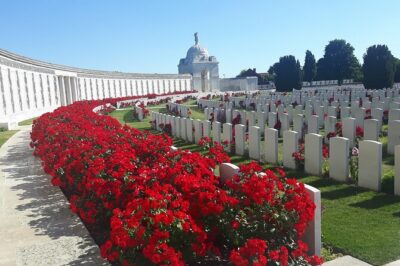
In Flanders Fields and Passchendaele Half Day Morning Tour
Read our review →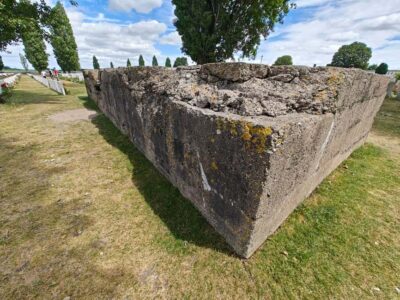
An exploration of the deadly salient battlefields
Read our review →
Small Group Ypres Remembrance Day Filled With War History
Read our review →Browse the lists this tour appears in