
Reviewed · YPRES & WWI BATTLEFIELD TRIPS
World War I Private Tour from Brussels
World War I has a way of getting personal. This private route from Brussels strings together the most important sites around Ypres and Passchendaele, so you see how the war unfolded, not just where it happened. I love the private pacing and the chance to stop at major memorials and cemeteries that are quietly overwhelming in the best way. One thing to consider: the day is long and includes lots of outdoor walking at somber sites.
What makes this tour work is the order. You start in Ypres, then move from Menin Gate to Tyne Cot and onward through the trench sector. You also get a guide who can connect the dots between museums, frontline locations, and individual stories, with Nikolai specifically praised for making the experience both moving and carefully done. If you want a very light, fun day, this is not it.
In This Review
- Key points to know before you go
- Why a private World War I route makes sense
- Starting in Ypres, where the story begins
- Menin Gate Memorial and the power of names
- Tyne Cot Cemetery, one of the largest Commonwealth rests
- Passchendaele 1917 Museum, trench reality with context
- Vladslo German War Cemetery and a sculpture that hurts
- Flanders Field American Cemetery, Belgium’s only US WWI cemetery
- Saint Julien Memorial, poison gas and the Canadian line
- Hooge Crater Museum and the underground war
- Polygon Wood Cemetery, today’s forest over yesterday’s killing
- Sanctuary Wood Museum, Hill 62 and visible trenches
- Essex Farm Cemetery and In Flanders Fields
- The guides and driver factor, and why it shows
- How to plan your day for comfort and focus
- Is it worth $962.09 per group?
- Who this tour suits best
- Should you book this Brussels WWI private tour?
- FAQ
- How long is the World War I private tour from Brussels?
- How many people are in the private group?
- Is pickup available in Brussels?
- Is the tour in English?
- What’s included for the museums and attractions?
- Are the tickets mobile?
- What amenities are included during the day?
- Is there any help with photos?
- Are service animals allowed?
- Can I cancel for a full refund?
Key points to know before you go
- Private group, up to 3 people, so you can ask questions without feeling rushed
- Pickup from airports, hotels, stations, or custom addresses, which saves you time in Brussels
- Last Post Ceremony option at Menin Gate if your timing lands in the evening
- Passchendaele 1917 Museum and Sanctuary Wood (Hill 62) tickets included, so you skip extra ticketing time
- Cemeteries across nations, including German, American, and Commonwealth sites, for a full picture of the cost
- Photo and video service, plus bottled water and onboard WiFi to keep the day comfortable
More of the Flanders Fields battlefields:
- Flanders Fields Remembrance Tour from Brussels
★ 4.5 · 334 reviews - Private World War I Battlefield Tour from Brussels to Flanders
★ 5.0 · 8 reviews - Flanders World War I Battlefields Private Tour from Brussels
★ 4.5 · 4 reviews - Brussels: Private World War I Tour: Trenches & Battlefields
★ 5.0 · 2 reviews - From Bruges: Great War Flanders Fields Minibus Tour w/ Lunch
★ 4.9 · 1,257 reviews
Why a private World War I route makes sense
This kind of history is everywhere near Ypres, but it is easy to miss the thread if you self-drive or rely on public transport. The value of a private day is that you get a plan, a driver, and a guide who can interpret what you are standing in front of.
You are also paying for time. The tour is listed at about 8 to 10 hours, which is realistic for a tight circuit of major sites plus museum time. In plain terms, you are not spending half the day figuring out transit and parking, and you are not arriving at museums rushed.
Price-wise, it is $962.09 per group for up to 3 people. That sounds steep until you think about what you get: air-conditioned vehicle, pickup, professional photo and video service, and included museum admissions for two stops. If you are traveling with a partner or small family, the cost per person drops fast compared with booking multiple separate tickets and transport.
Starting in Ypres, where the story begins
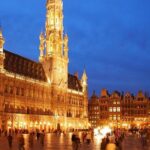
Your day kicks off in Ieper, also known as Ypres. This is the symbolic heart of the Western Front, and the tour includes time in the medieval city center plus the In Flanders Fields Museum.
What I like about this opening: it sets the tone and gives you anchors before you hit the cemeteries and trenches. The museum is described as interactive, with personal stories, which matters because World War I can feel like dates and maps until a human voice puts a face on it. You also get about 2 hours total at this stop, with the day’s rhythm built in for a short break or lunch before you head out again.
Practical consideration: Ypres is not just a museum stop, it is also a working city with streets and weather changes. If you are sensitive to cold or rain, dress for outdoor time even if you plan to spend part of the stop indoors.
Menin Gate Memorial and the power of names
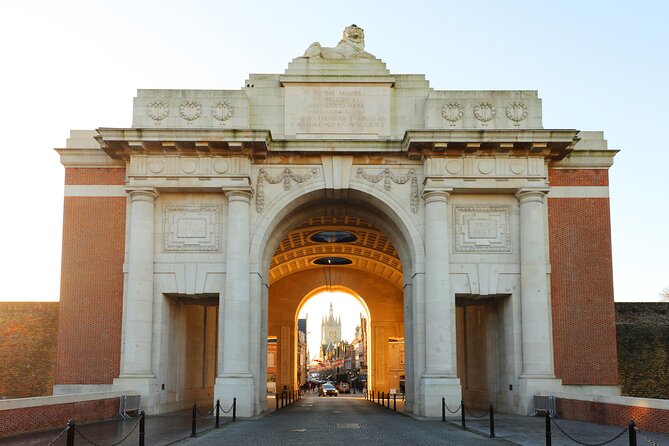
Next is Menin Gate Memorial to the Missing. This is one of Belgium’s best-known World War I monuments, and the guide explains its significance and the names engraved on its walls.
This stop is not about comfort. It is about scale and repetition, the kind that makes you realize how many people did not get a proper grave. Your time here is about 1 hour.
A special timing bonus is built into the itinerary: if your tour ends in the evening, you may witness the Last Post Ceremony at 8 PM at Menin Gate. That is a daily tribute, so if your day runs late enough, you get an added emotional moment without having to plan it yourself. The catch is simple: it depends on your schedule.
Tyne Cot Cemetery, one of the largest Commonwealth rests
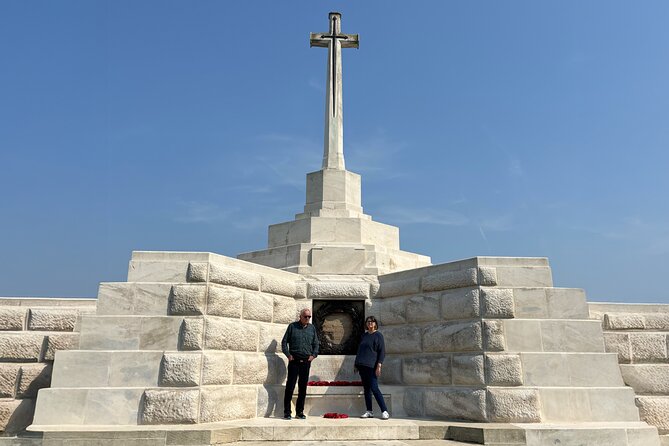
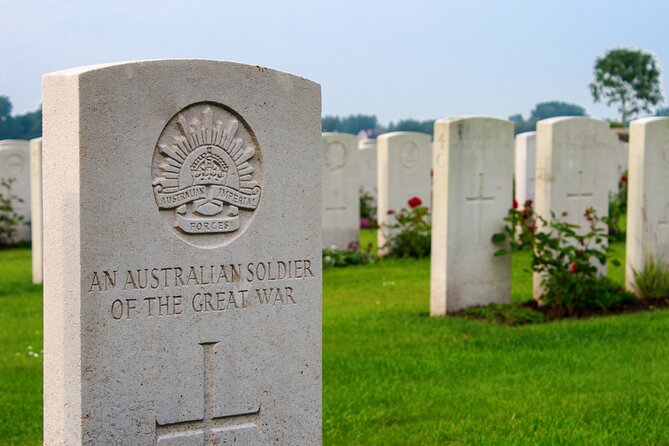
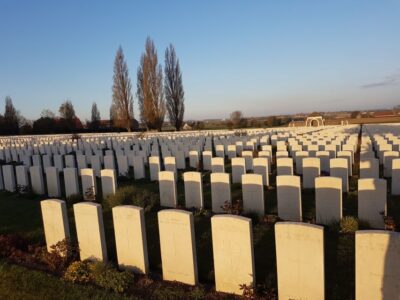
From Menin Gate you move to Tyne Cot Cemetery, near Passchendaele. This is the largest Commonwealth military cemetery in the world, and the site holds nearly 12,000 soldiers. The tour highlights the wall inscribed with the names of the missing, and your guide shares why this matters to the UK, Australia, Canada, and New Zealand.
What makes Tyne Cot a standout stop is that it is a big place with clear meaning. You can feel the immensity, but you are also given a structured way to read it: where the land connects to names and how the story stretches across countries.
Time on site is about 45 minutes. That is long enough to walk, pause, and absorb without feeling like you are sprinting through grief. Still, plan for quiet moments. If you are trying to photograph nonstop, you may miss some of the impact. Slow down and let the site land.
A few more Brussels afternoons to weigh up


Passchendaele 1917 Museum, trench reality with context
Then it is on to Memorial Museum Passchendaele 1917, where the itinerary includes admission. This stop is designed to show you what trench warfare was like, not just talk about it.
You are guided through reconstructed trenches, interactive exhibits, and authentic artifacts. The purpose here is to help you understand why the surrounding terrain mattered so much, and why this battle sector became so brutal. With world history, the “why” is what sticks, and a museum like this is made for that.
Time here is about 1 hour. Practical tip: museums have their own pace, and you may want to take short breaks inside if you start feeling overwhelmed. Sitting for a moment can help you reset.
Vladslo German War Cemetery and a sculpture that hurts
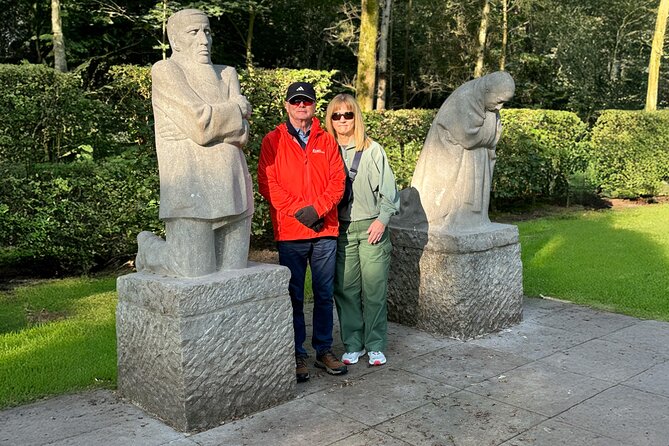
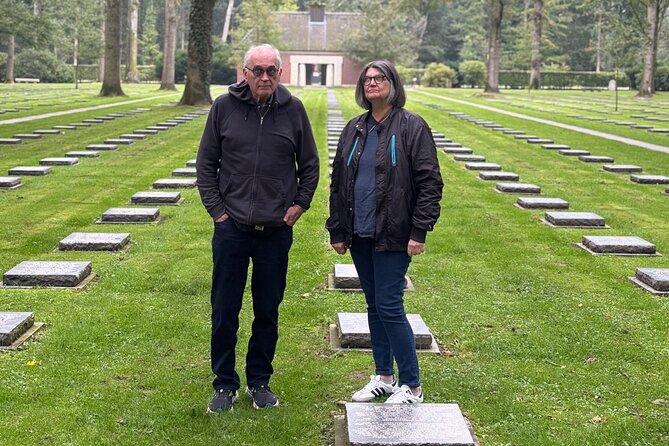
Next comes a tonal shift that is important for balance: Vladslo German War Cemetery. This is the final resting place of over 25,000 German soldiers.
Your tour also points you to the famous sculpture The Grieving Parents by Käthe Kollwitz. The work was created in memory of her son, Peter, who died in battle. That connection between art and private loss is one of the reasons this stop can hit people hard. It is not only about the war, it is about what families left behind on both sides.
This is a shorter stop, around 30 minutes. Even so, it can feel longer because you will likely pause, look closely, and remember that “enemy” was someone’s relative.
Flanders Field American Cemetery, Belgium’s only US WWI cemetery
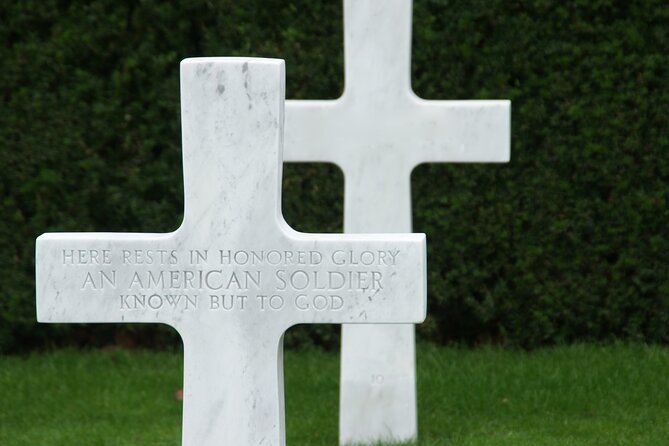
After that you visit Flanders Field American Cemetery, described as the only American World War I cemetery in Belgium. It honors 368 fallen American soldiers and includes a chapel with stained glass and engraved maps.
This stop adds a missing piece for many visitors. If you mostly know the war through European battlefields, the American presence can seem like a side note. Here, the cemetery keeps the focus where it belongs: the people who died and the effort it took to remember them properly.
You get about 45 minutes. The cemetery is maintained and the layout is tidy, which helps you slow down. If you want a quieter moment in the day, this is usually where it happens.
Saint Julien Memorial, poison gas and the Canadian line
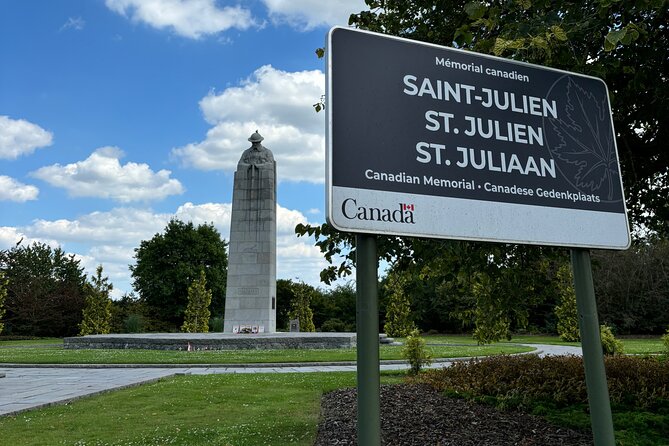
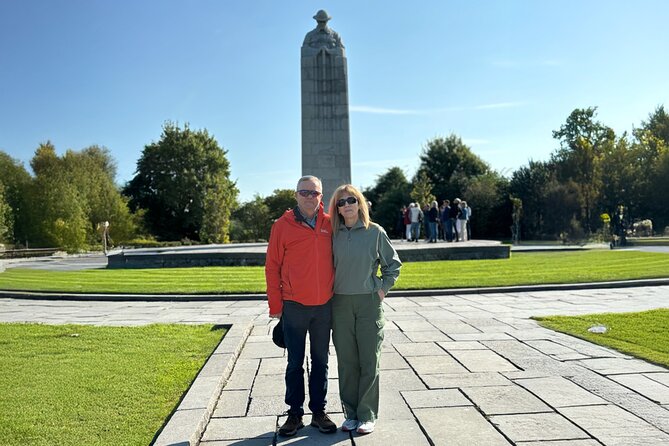
Then you head to Saint Julien Memorial, a powerful Canadian monument marking the site where poison gas was first used on the Western Front.
The itinerary notes the statue of the Brooding Soldier, which honors Canadian troops who held the line during the Second Battle of Ypres in 1915. This is another stop where the message is heavy, but the structure helps. You are not wandering with no sense of what you are looking at.
Time here is about 30 minutes. If you prefer to learn fast, you still get enough time to understand the significance and then step back.
Hooge Crater Museum and the underground war
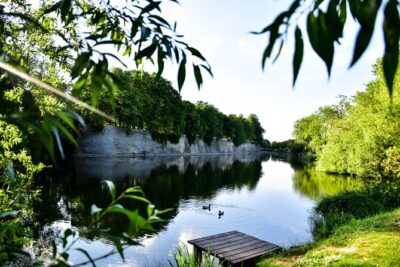
Next is Hooge Crater Museum, tied to the use of underground mine explosions during trench warfare. The area changed hands multiple times and became one of the most heavily contested and destroyed sectors near Ypres.
This stop is about 30 minutes. It can feel slightly different from the cemeteries because it is more about battlefield mechanics. The ground itself becomes a weapon, and the idea that the fighting moved below the surface helps you picture the war beyond what you see on top.
Practical consideration: because it is about a specific battlefield area, you may want to keep a mental map. Your guide can help connect Hooge Crater back to the larger Passchendaele trench system.
Polygon Wood Cemetery, today’s forest over yesterday’s killing
Then it is Polygon Wood Cemetery, linked to intense fighting during the Third Battle of Ypres in 1917. Today, the area is peaceful, with cemeteries and memorials for soldiers from several nations.
This is one of those stops where the contrast is hard to process. Forest and memorials are not supposed to go together in your mind, but here they do. That contrast is likely part of why the stop is scheduled for about 30 minutes: long enough to see the calm, but short enough that you do not lose the thread.
If you are the kind of person who likes to take photos, treat this like a moment to observe first. Let the memorials pull your attention, not your camera settings.
Sanctuary Wood Museum, Hill 62 and visible trenches
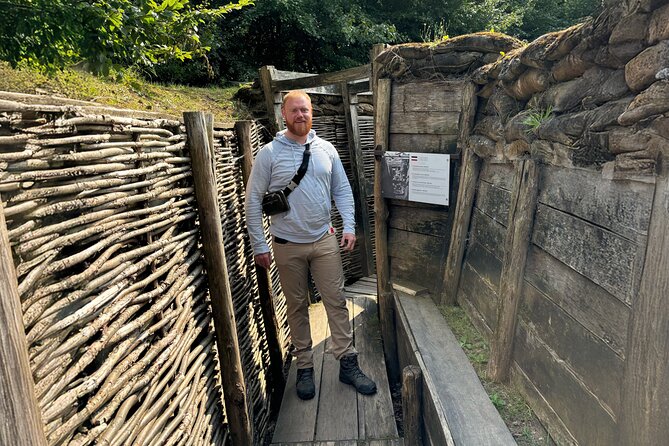
After Polygon Wood, the tour moves to Sanctuary Wood Museum, also tied to Hill 62. The itinerary calls this one of the rare places where original WWI trenches are still visible today, and notes that the ridge was fiercely fought over because it offered commanding views over Ypres and surrounding battlefields.
Admission is included for this stop. Time is around 30 minutes, which might sound short until you realize you are standing in an actual trench section and reading the battlefield with your eyes. Your guide’s job here is crucial, because visible trenches need interpretation to be meaningful.
This is also a good checkpoint in the day. By the time you reach Hill 62, you have seen monuments and cemeteries across multiple national sites, plus trench reconstruction in the museum. Now you get something closer to “you are here” reality.
Essex Farm Cemetery and In Flanders Fields
Finally, you end at Essex Farm Cemetery, where Canadian doctor John McCrae wrote the iconic poem In Flanders Fields.
The stop includes original bunkers and field dressing stations, giving you a medical side to the war that is easy to overlook when the day focuses on fighting and memorials. Time is about 30 minutes, and it works as a closing note: the war is not only the front line, it is also the aftermath and the care.
If you are interested in Canada’s role in WWI, this is a strong capstone. Poets and doctors can feel like a curveball compared with trenches, but that contrast is exactly what makes the ending memorable.
The guides and driver factor, and why it shows
The tour is built as a private experience, and that changes how the day feels. You are not stuck with one-size-fits-all commentary. In the examples I saw, Nikolai was the guide, and Theo handled the driving smoothly. That matters because on a route like this, timing and calm transit keep you from rushing through the most important moments.
The professional photo and video service is another underrated value add. On a heavy historical day, people often want to document without thinking about camera angles. Having someone handle it can let you stay present instead of constantly juggling gear.
How to plan your day for comfort and focus
Because this is 8 to 10 hours and includes multiple stops, you will want to prepare like you are going to be outside a lot, even if some parts are museums. The tour includes bottled water, and there is WiFi onboard, plus a tablet available for onboard entertainment. That helps during transit between sites.
For the stops themselves, think emotionally and practically:
- Wear layers so you are comfortable across outdoor cemeteries and indoor museum exhibits.
- Leave room in your head for silence. Cemeteries and memorials are not places you can speed-read.
- If you care about genealogy, this kind of private day can support deep questions, like where someone might have been buried or how to read memorial names.
Is it worth $962.09 per group?
Let’s do the real math behind the number. At $962.09 per group for up to 3 people, you are paying for:
- Private transportation with an air-conditioned vehicle
- Pickup from wherever you need it in Brussels area terms, including airports, hotels, and stations
- Included admissions for Passchendaele 1917 Museum and Sanctuary Wood Museum (Hill 62)
- A professional photo and video service
- A guide to connect the sites into a coherent narrative
If you compare it to hiring separate transport plus buying museum tickets plus paying for guide time, the private structure is what makes the cost feel reasonable. If you are traveling solo, it is harder to justify. If you are two or three, it becomes much more attractive.
Who this tour suits best
This tour is a strong fit if:
- You want a structured route through the Ypres and Passchendaele sector
- You care about how the war is remembered through cemeteries and memorials across countries
- You like guided context, especially for museum stops and monuments filled with names
It may be less ideal if:
- You want a fun, casual day with minimal emotional weight
- You dislike long sit-and-walk days, even if the pacing is helped by the private vehicle
Should you book this Brussels WWI private tour?
If you are the type of traveler who wants meaning, not just photos, I think this is a smart booking. The route is logical, the mix of museums and major cemeteries keeps your understanding grounded, and the included tickets remove small friction points. Most importantly, the private guide approach helps you ask questions and get answers in the moment, rather than piecing it together later.
If you are traveling with a small group, the value improves a lot. For a two- or three-person trip out of Brussels, this is one of those days you will still be thinking about on your flight home, because it does not just show World War I, it shows how people are still trying to remember it properly.
FAQ
How long is the World War I private tour from Brussels?
It runs about 8 to 10 hours.
How many people are in the private group?
The price is per group for up to 3 people.
Is pickup available in Brussels?
Yes. Pickup is offered from the airport, hotels, train stations, ports, or a custom address you provide.
Is the tour in English?
Yes, it is offered in English.
What’s included for the museums and attractions?
Admission is listed as free for several sites, and admission is included for Memorial Museum Passchendaele 1917 and Sanctuary Wood Museum.
Are the tickets mobile?
Yes, mobile tickets are offered.
What amenities are included during the day?
The tour includes an air-conditioned vehicle, private transportation, onboard WiFi, bottled water, and onboard entertainment (tablet available).
Is there any help with photos?
Yes. Professional photo and video service is included.
Are service animals allowed?
Yes, service animals are allowed.
Can I cancel for a full refund?
Yes, cancellation is free. You can cancel up to 24 hours in advance for a full refund.
Latest from Brussels




Ypres & WWI Battlefield Trips, compared.
Great War Flanders Fields Minibus Tour w/ Lunch
Read our review →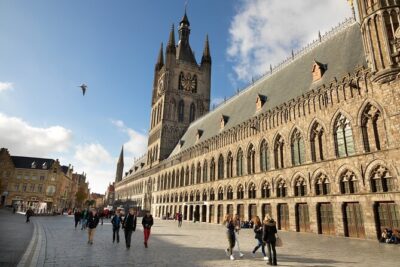
Flanders Fields Remembrance Tour from Brussels
Read our review →
From IEPER Private 4-hour Tour of the Ypres Battlefield
Read our review →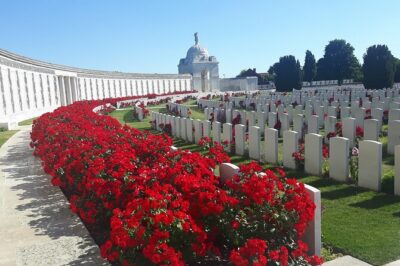
In Flanders Fields and Passchendaele Half Day Morning Tour
Read our review →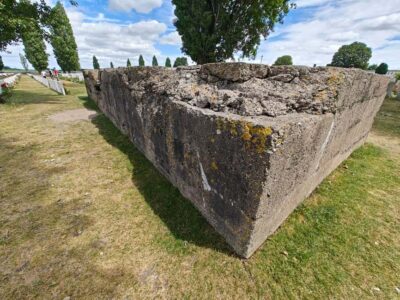
An exploration of the deadly salient battlefields
Read our review →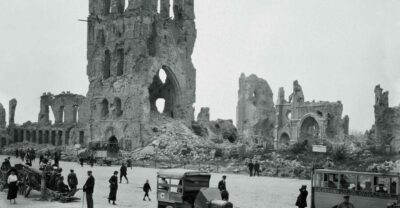
Small Group Ypres Remembrance Day Filled With War History
Read our review →Browse the lists this tour appears in