
Reviewed · GHENT & BRUGES COMBO TRIPS
From Brussels: Guided Day Trip to Bruges and Ghent
Bruges and Ghent, side by side. You get the canal-city feel of Bruges and the big-art moment at Saint Bavo Cathedral all in one long day. I like how the pacing gives you guided walking plus real breathing room to wander and eat on your own, not just march from stop to stop. One drawback to plan for: it is a full 10.5-hour day, so comfy shoes and being on time for re-grouping matter.
Guides seem to make this trip work. I’m noticing a pattern in the names people rave about, from Antonio and Peter to Oscar, Julian, and Blanca, with lots of humor and clear storytelling. You’ll also be traveling by bus between cities, so if you get car-sick or dislike long rides, pack accordingly and keep your expectations realistic about a “day trip” pace.
In This Review
- Quick hits you will care about
- Brussels to Bruges by coach, and the smart way to start
- Bruges walking tour: canals, towers, and the city’s “slow wonder”
- Bruges free time: use your 90 minutes for lunch and real wandering
- Ghent by bus: shorter ride, different mood
- Ghent guided tour: Saint Bavo Cathedral and the Van Eyck story
- Ghent free time: markets, port views, and keeping your pace
- Price and value: what $55 buys you in practice
- Logistics you should plan for before you go
- Who this tour fits best
- Should you book this Bruges and Ghent day trip?
- FAQ
- Where do I meet the tour in Brussels?
- How long is the full day trip?
- Is lunch included?
- Are entrance tickets included?
- Do I need earphones to hear the guide?
- What languages are the guides?
- Is the tour wheelchair accessible?
- Can I cancel for a full refund?
- How much does it cost?
Quick hits you will care about
- Bruges UNESCO core plus iconic photo stops like Rozenhoedkaai and the Belfry on Castle Square
- Minnewater Lake and the Begijnhof (founded 1245) for a calmer, older Bruges mood
- Saint Bavo Cathedral tied to the Van Eyck brothers’ Adoration of the Mystic Lamb story
- Ghent port life areas like Graslei, plus Market spots such as Friday Market Square
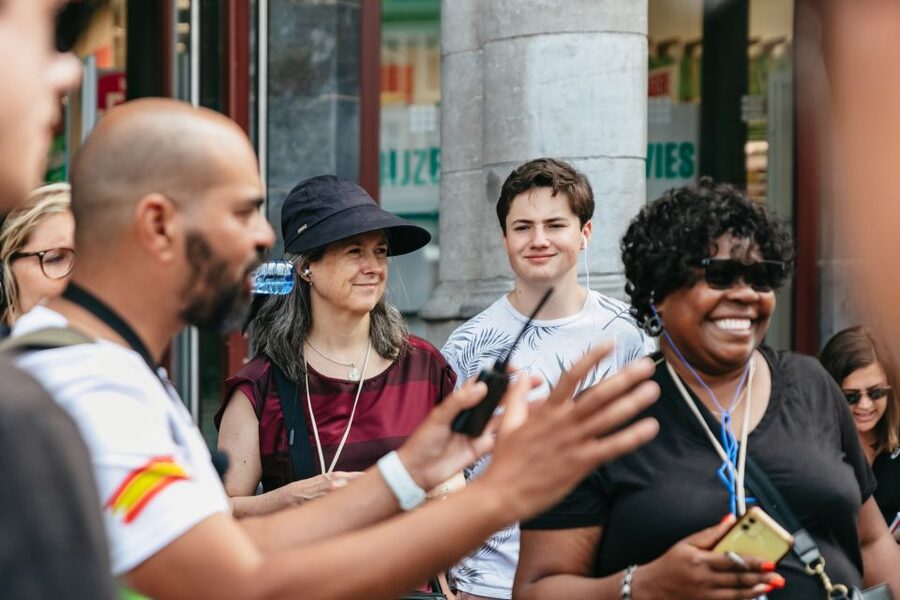
- Radio system and earphones so you can actually hear the guide while walking
More Ghent-and-Bruges doubles:
- From Brussels: Bruges & Ghent Day Tour – 2 Fairytale Cities
★ 4.7 · 8,242 reviews - Bruges and Ghent – Belgium’s Fairytale Cities – from Brussels
★ 4.0 · 4,809 reviews - Bruges and Ghent Day Trip from Brussels
★ 4.5 · 784 reviews - From Brussels: Bruges and Ghent Full-Day Trip by Train
★ 4.3 · 103 reviews - Bruges and Ghent Day Tour from Brussels
★ 4.0 · 46 reviews
Brussels to Bruges by coach, and the smart way to start
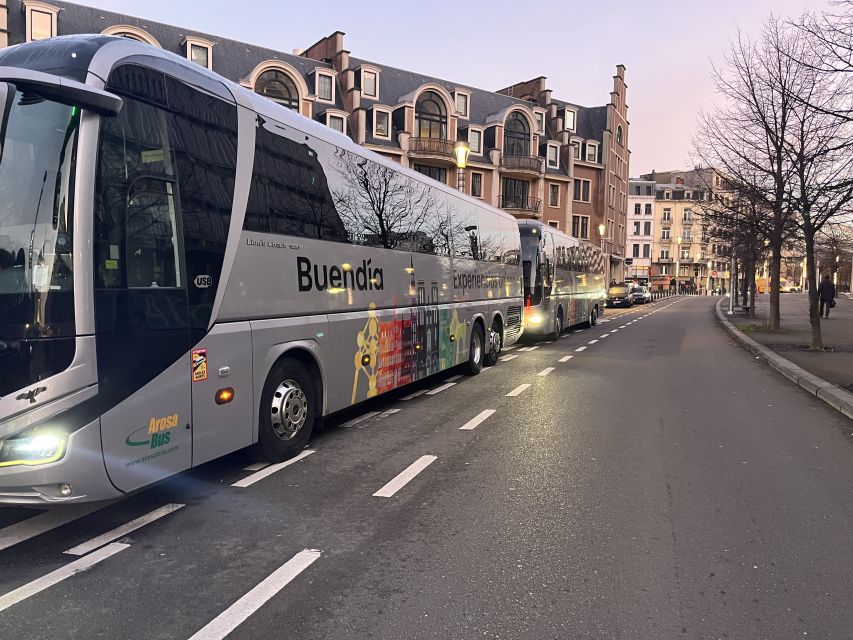
Most days start at Carrefour de l’Europe, under the columns of Brussel-Centraal, in front of the Hilton Grand Place Hotel. The guide waits there with Buendía Tours ID, so you can find the right person fast.
You then ride a bus to Bruges, about 2 hours. The upside of this setup is time saved, because public transit takes longer and is more fiddly when you are juggling a day schedule. The downside is you are committing to the day, so bring water, and try to settle in early rather than rushing at the last minute.
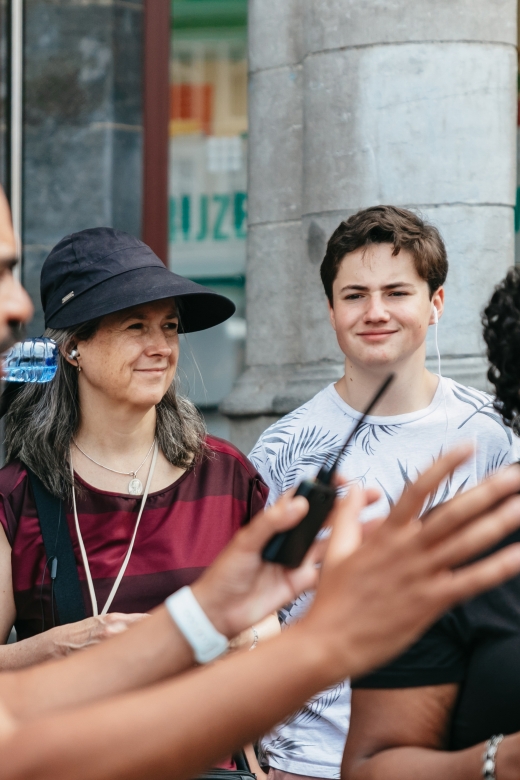
Your tour uses a radio system. That matters because the walk is guided, not a slideshow, and hearing instructions cleanly can prevent you from losing the group at each corner.
Bruges walking tour: canals, towers, and the city’s “slow wonder”
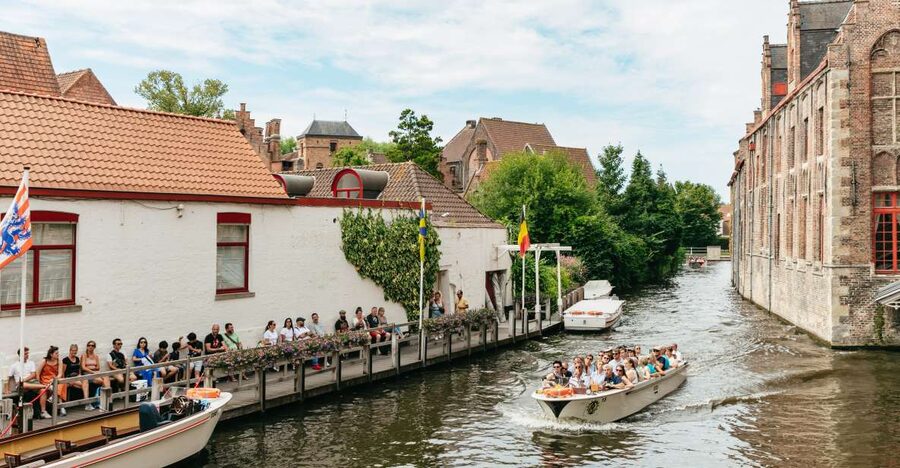
Bruges is the kind of place where you instantly understand why it earned the nickname Venice of the North. The guided portion lasts about 2 hours, which is enough time to hit the big icons and also understand what you are seeing.
You start with the softer side of Bruges, including Minnewater Lake (the Lake of Love). This stop is short, but it is one of the best chances to slow down. It also helps you reset your brain after the bus ride, because the streets around here feel quieter and more reflective.
Next comes the Begijnhof, a complex founded in 1245 to house lay religious women. Even if you do not go deep into religious details, this stop gives you a key to Bruges. It shows how the city wasn’t only about merchants and monuments, it also had structured community life that shaped everyday spaces.
Then you move into the medieval city texture. Places like Walplein Square are made for a pause, with trees and cafe seating that makes it easy to “just watch people” without feeling like you are wasting time. You also pass Stoofstraat, connected to Bruges’ former Red Light District. It sounds like a weird detour, but it is a useful reminder that historic cities have always had layers, not just postcards.
On the architectural side, the tour includes the Old St. John’s Hospital from the 11th century, plus major landmarks like the Church of Our Lady. One standout detail here is the tower, described as the world’s second tallest brickwork tower. That kind of fact makes it easier to look up while you walk, instead of getting stuck staring only at street level.
You also get the “classic Bruges photo line.” Expect to see spots around Gruuthuse Palace and the Dijver Canal, then arrive at Rozenhoedkaai, one of the city’s most photographed viewpoints. You do not need to be a photographer to appreciate it, because the angles make the whole medieval waterfront look designed.
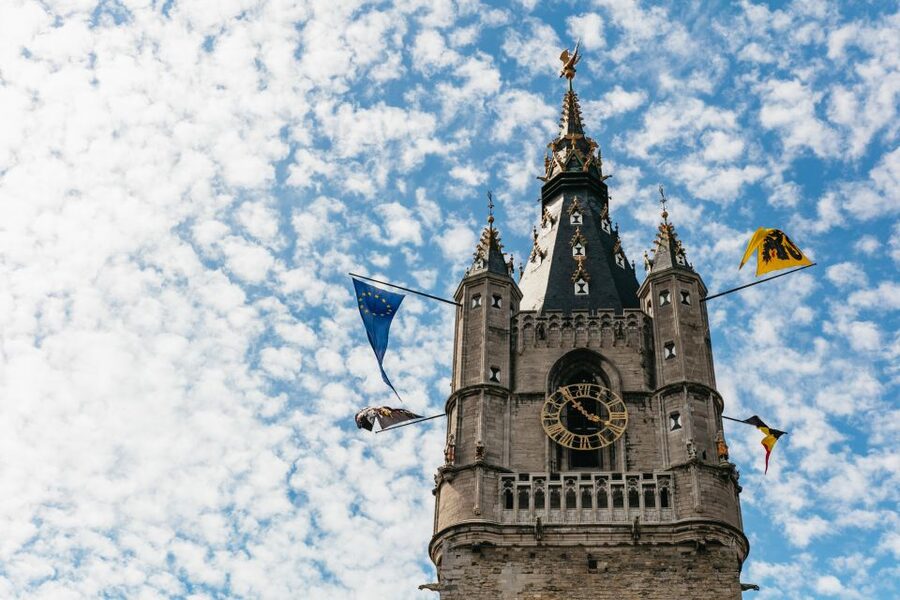
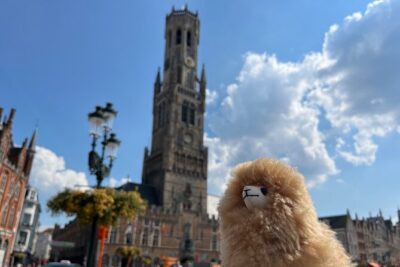
Finally, the tour lands on the civic center vibe. You visit the Belfry on Castle Square, then head to Market Square (Grote Markt) to see the Belfort bell tower. This is where you learn what Bruges was proud of, civic power and trade wealth, right in the middle of town.
Bruges free time: use your 90 minutes for lunch and real wandering
You get about 1.5 hours of free time in Bruges, and it is intentional. After a guided walk, this is when you decide how you want to experience the city.
Lunch is at your own expense, so pick something that fits your walking pace. If you want a stress-free plan, choose a place near your next planned stop so you do not lose time backtracking.
You also get the chance to shop for Belgian chocolates. This is one of those “do it now, not later” moments. If you wait, Ghent will take over your attention.
One practical tip: if you bought headphones or plan to, keep them accessible for the walk back to the coach. It sounds obvious, but it prevents a last-minute scramble when the group reconvenes.
Ghent by bus: shorter ride, different mood
After Bruges, you ride again, about 1 hour to Ghent. The switch is not just geographic, it is a tone shift. Bruges feels like a picture book you step into. Ghent feels more like a living city with serious historic weight.
The bus ride is also your window to reset. If you are the type who plans your day in your head, use this time to decide what you want from Ghent: big cathedral moments, bustling markets, or a stroll by the medieval port.
A few more Brussels afternoons to weigh up

Ghent guided tour: Saint Bavo Cathedral and the Van Eyck story
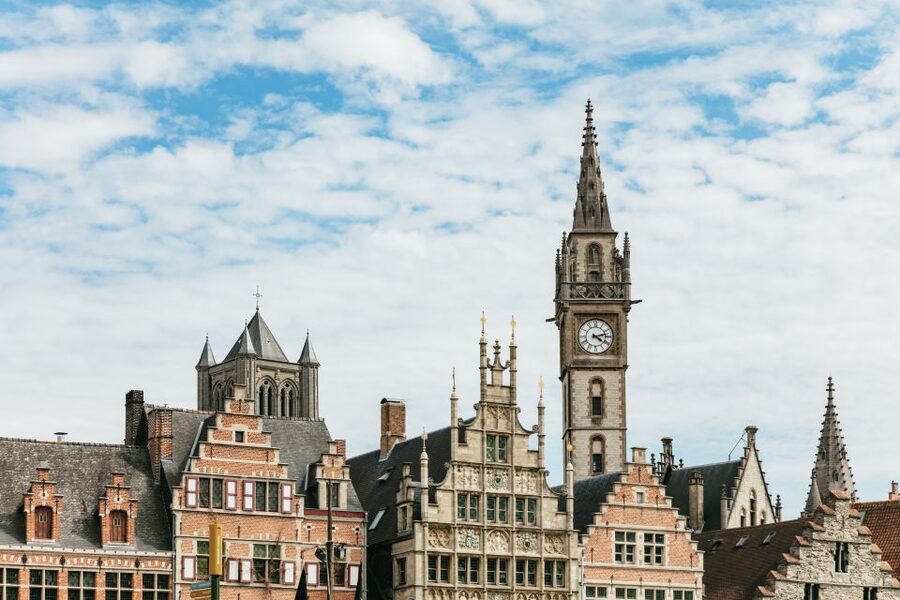
Your Ghent guided portion lasts about 1 hour. In that time you hit several high-value landmarks, but the goal is clarity, not trying to do everything in depth.
You start with the Castle of Gerald the Devil and then move to Saint Bavo Cathedral. This stop connects directly to the painting story of The Adoration of the Mystic Lamb by the Van Eyck brothers. Even if you are not a museum person, this is one of those art-history anchors that helps you interpret why Ghent is taken seriously in Europe.
From there you see more of Ghent’s “power in stone.” Expect to visit the Belfort bell tower and the Town Hall, which blends Gothic and Renaissance style. Seeing those styles together helps you understand how Ghent kept changing over centuries instead of freezing in time.
Another key stop is St. Nicholas’ Church, opposite the unusual facade of the Masons’ Guild House. That pairing matters because it shows how craft guilds and religious structures shaped the city’s identity, street by street.
You also walk along Graslei, the embankments of Ghent’s medieval port. If Bruges is all about canal romance, Ghent is about commerce with a rougher edge. The port area is a great place to look at how waterways shaped where people lived and worked.
The tour continues through landmark zones like the Castle of the Counts of Flanders, the Great Butchers’ Hall, the Old Fish Market, and Friday Market Square. You may not have time to read every plaque, but you will come away with a map in your head. That is the real value of a guided hour.
Ghent free time: markets, port views, and keeping your pace
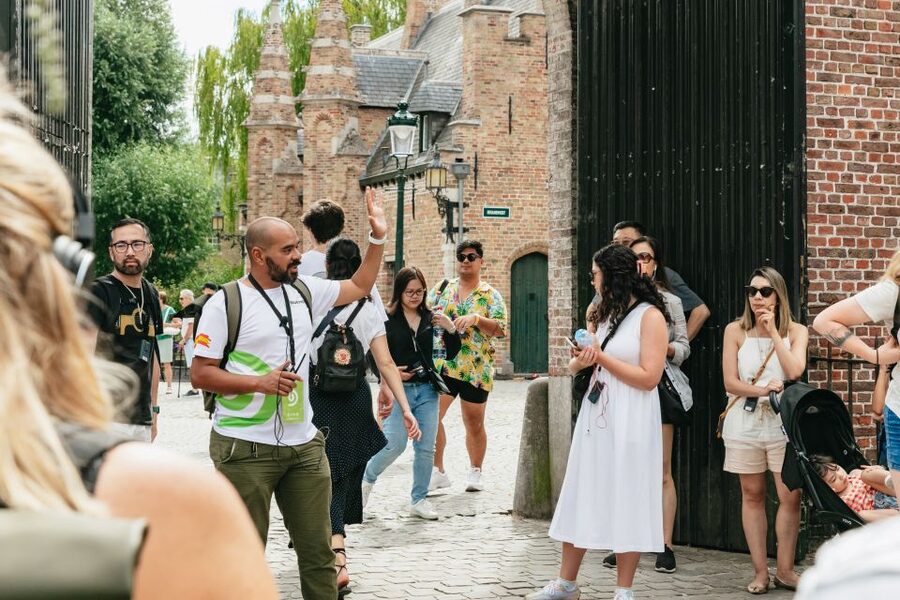
You get about 1.5 hours of free time in Ghent. This is your chance to pick your own pace after the condensed guided walk.
If you want atmosphere, loop around the market squares again, then head back toward the port area. Friday Market Square is a strong choice if you want something that feels central and social.
If you want a calmer approach, focus on the embankment views from Graslei and the surrounding streets. This is also when you can explore at your speed, take photos, and find a drink or snack without feeling rushed.
One thing to watch in any guided multi-city day: the group moves in a rhythm. Use free time to enjoy, but do not wander so far that you stress about getting back by the coach deadline.
Price and value: what $55 buys you in practice
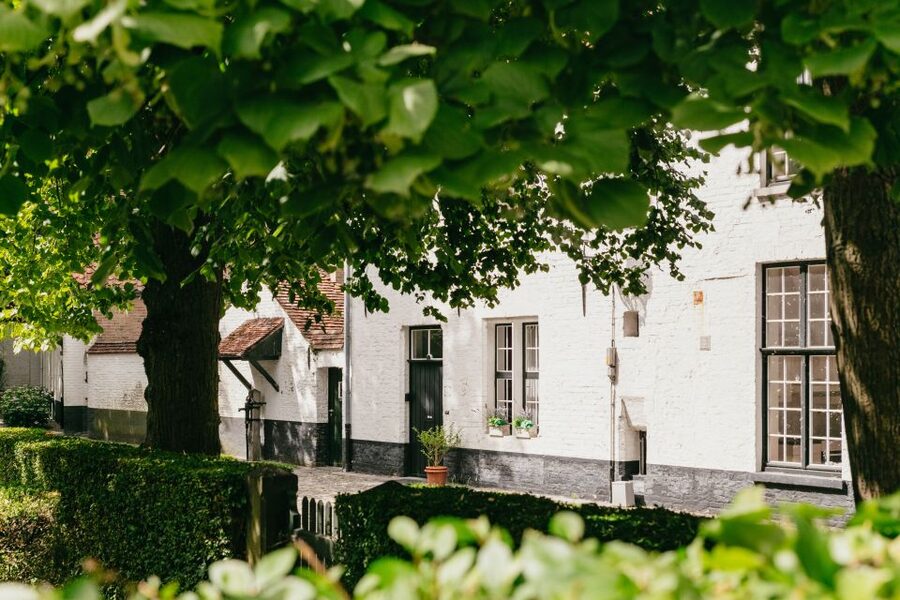
This trip costs $55 per person, and the value depends on what you want from the day.
First, you are paying for transportation between cities, a guide, and a walking format that avoids you having to plan a full day route yourself. Bruges and Ghent each take real time to explore properly. Doing both in one day is only comfortable if someone else handles the sequencing.
Second, the included guide time is meaningful. You get guided time in Bruges plus another guided hour in Ghent, not just a stop-and-hope approach. That is important because both cities have a lot of history, and the right guide helps you prioritize what to look at.
Third, you are also getting a radio system, plus eco-friendly and comfortable buses. These sound like small details, but they help the day feel less exhausting, especially for a long ride.
What is not included is also important: lunch and entrance tickets cost extra. If you plan to go inside major sites, add that budget up front, so you do not get surprised.
Logistics you should plan for before you go
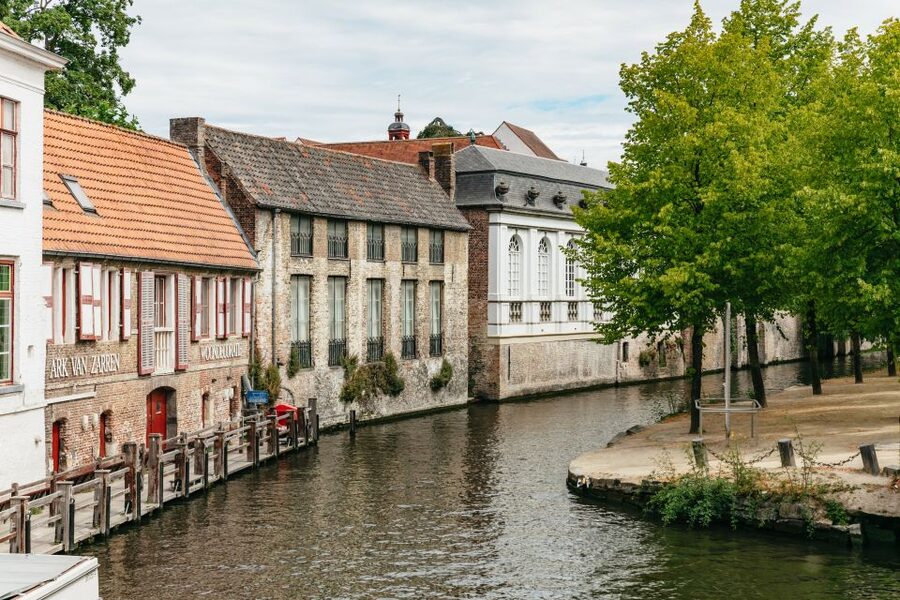
This is a walking-heavy day, and the tour is not suitable for wheelchair users or people with mobility impairments. It is built around moving through historic streets, and you should assume uneven surfaces and lots of steps.
Bring comfortable shoes. You are on foot in both cities, then still doing a fair amount of standing during photo stops and city regrouping.
Inside the coach, no smoking and no food. That is normal, but it does mean you should handle snacks and drinks before the bus, or during breaks on the ground.
Earphones matter. Because of the radio system, you may need wired earphones to hear the guide clearly, especially in larger groups. Local rules ask you to use your own, but you can buy them for €1 if you do not have them. I’d bring your own pair anyway, and if you need to buy, have coins ready.
One small caution from real-world experience: big-group tours can run a bit behind if people do not show up on time at re-group points. The guide usually handles it smoothly, but you can make the whole day easier by treating the “meet back here” times like appointments.
Who this tour fits best
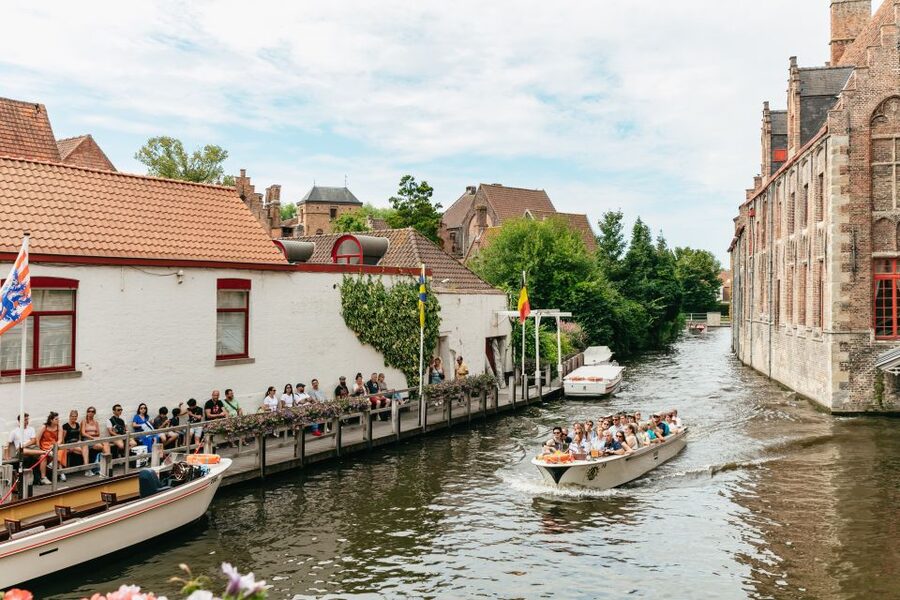
This is a strong fit if you are short on time in Belgium and want to see both “must-see” historic cities without building a complicated itinerary. It is also good if you enjoy learning while you walk, because the guide ties landmarks together with stories, from Bruges’ Begijnhof to Ghent’s Van Eyck connection.
It is less ideal if you want a slow, museum-first day. The schedule is built for outdoor sights and quick guided interpretation. If you want long interior visits, you will likely need to come back later on your own.
It is also better for travelers who do not mind a full day pace. With 2 hours driving into Bruges, 1 hour to Ghent, and 1.5 hours back to Brussels, this is not a relaxed half-day outing.
Should you book this Bruges and Ghent day trip?
I’d book it if you want high-impact sightseeing and a clear route in a limited time window. You get a well-structured split between guided highlights and free wandering, and the guide’s storytelling seems to be the main ingredient that keeps the day feeling fun instead of rushed.
I would hesitate if you hate long bus days, need wheelchair access, or plan to spend most of your time inside ticketed attractions. In that case, a slower, single-city approach could feel more satisfying.
FAQ
Where do I meet the tour in Brussels?
Meet at Carrefour de l’Europe, under the columns at the main entrance of Brussel-Centraal station, in front of the Hilton Grand Place Hotel. The guide will be there with Buendía Tours ID.
How long is the full day trip?
The total duration is listed as 630 minutes.
Is lunch included?
No. Lunch is not included, and the Bruges portion includes time for lunch at your own expense.
Are entrance tickets included?
No. Entrance tickets are not included.
Do I need earphones to hear the guide?
The tour uses a radio system. You may be required to use earphones to hear the guide clearly, and you can purchase them from the provider for €1 if you do not bring your own.
What languages are the guides?
The tour is available with live guides in Spanish and English.
Is the tour wheelchair accessible?
No. It is listed as not suitable for wheelchair users and people with mobility impairments.
Can I cancel for a full refund?
You can cancel up to 24 hours in advance for a full refund.
How much does it cost?
The price is $55 per person.
Latest from Brussels



Ghent & Bruges Combo Trips, compared.
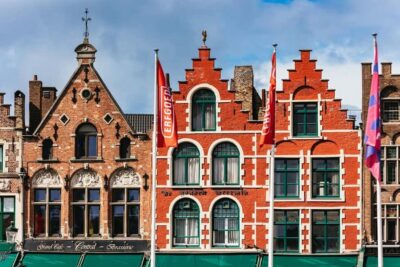
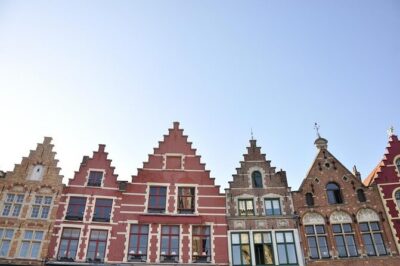
Bruges and Ghent – Belgium’s Fairytale Cities – from Brussels
Read our review →
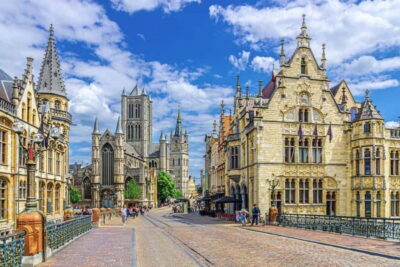
Bruges & Ghent Tour w/ Cruise & Chocolate Tasting
Read our review →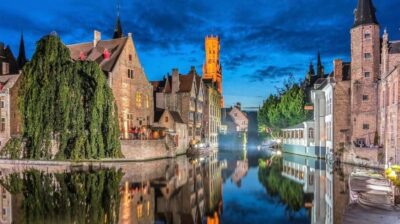
Private Full-Day Tour Bruges & Ghent from Brussels with tastings
Read our review →Browse the lists this tour appears in