
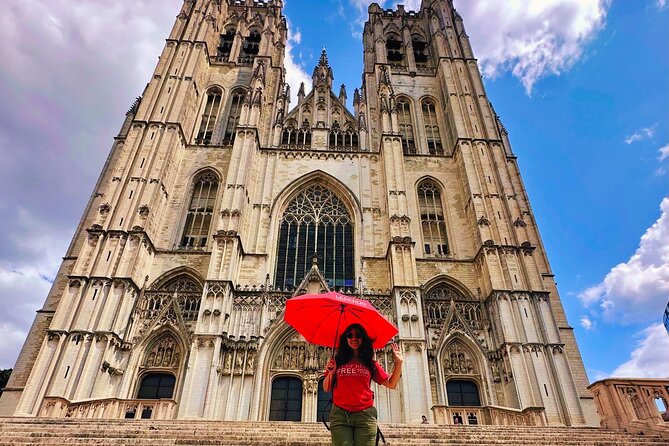
Reviewed · DARK HISTORY WALKS
Private Tour: The Dark Side of Brussels
Brussels has a darker side. This private tour threads together landmarks like Justice Palace, the Sablon churches, and the Marolles neighborhood, with an English-speaking guide for a focused, easy-to-follow walk.
I love how you get story-driven connections between major buildings and darker civic moments, including the kind of grim topics your guide may bring up, like beheadings. I also like the built-in mix of pretty places and real street life, with the Place du Jeu de Balle flea market stop giving you that everyday Brussels texture.
One possible drawback: it is a short tour. Most stops run around 10 minutes, so if you want long inside visits, you may find the pace a bit quick.
In This Review
- Key highlights at a glance
- Why this 2-hour Brussels route feels efficient (and not rushed)
- Grand Place start, then Sablon’s church-and-statue moments
- Place Saint-Jean and Tour Anneessens: old squares meet modern Brussels
- Rue de Rollebeek: the street stop that makes the walk feel real
- Notre Dame du Sablon to Justice Palace: where the tour’s tone changes
- Petit Sablon’s quiet break, then Place du Jeu de Balle
- Kapellekerk finish in the Marolles neighborhood
- Meet your guide: why Sebastian and Dan’s style matters
- Price and value: what $105.02 per person is really paying for
- Who should book this tour, and who might skip it
- Should you book The Dark Side of Brussels?
- FAQ
- How long is the Private Tour: The Dark Side of Brussels?
- What is the price per person?
- Is this tour private?
- What language is the tour offered in?
- Where does the tour start and end?
- Are tickets or admissions required for the stops?
- What are some of the main places visited on the tour?
- Can I get a full refund if I cancel?
- Are service animals allowed on the tour?
Key highlights at a glance
- A private group experience for only your party, so questions and pace stay yours
- English guide storytelling that ties religious sites to public power, including darker chapters
- Sablon highlights like Notre Dame du Sablon and Petit Sablon’s 48 guild statues
- Justice Palace viewpoints from one of Brussels’s most dramatic civic buildings
- Marolles flea market energy at Place du Jeu de Balle, with everyday second-hand finds
- Convenient start and end around central Brussels and the Kapellekerk area
More of the darker side of Brussels:
- Evening Tour: The Dark Side of Brussels
★ 4.5 · 435 reviews - Historical Walking Tour: The Story of Brussels – by Legends
★ 5.0 · 164 reviews - The Brussels Crime Tour
★ 4.4 · 18 reviews - Brussels: 2-Hour Dark Side of Brussels Private Tour
★ 4.8 · 16 reviews - Leuven Self-Guided Sherlock Holmes Murder Mystery Game
★ 3.0 · 1 review
Why this 2-hour Brussels route feels efficient (and not rushed)

A “Dark Side of Brussels” tour works best when it is tight and guided. This one is about 2 hours, and that time box is actually a benefit. Instead of trying to cram in every museum or monument, you get a curated walking path that focuses on places where stories stick.
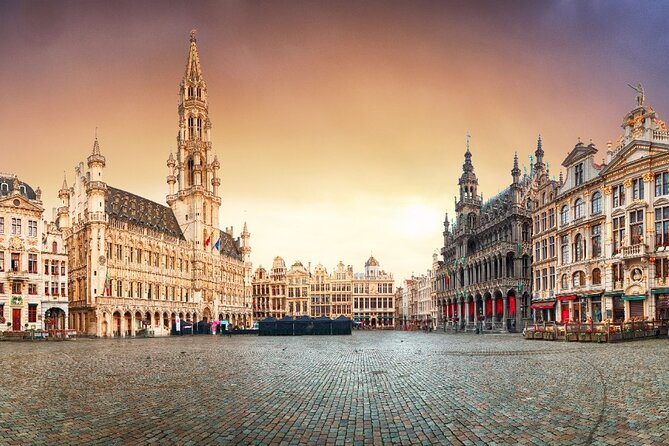
You start at Grand Place (Grote Markt), then work through the Sablon area toward the Marolles, finishing at Kapellekerk near Rue des Ursulines. That end point matters. Kapellekerk sits in the vernacular Marolles neighborhood, so you finish where the city feels lived-in, not just staged for photos.
Another value point: it is billed as a private tour. With a smaller group, your guide can slow down for what you care about, like architecture, local street culture, or the darker “why is this here” context behind major buildings.
At $105.02 per person, you are paying for the guide and the private pacing, not for a stack of museum tickets. Since admission is listed as free at every stop, your money mostly goes into interpretation, route flow, and the guide’s ability to connect dots.
Grand Place start, then Sablon’s church-and-statue moments
The tour’s first big emotional gear shift comes as you head toward Sablon. You’ll begin near Place du Grand Sablon, and the walk includes the Grand Marché area, where you can see how locals shop for food and small goods. Even with short stop time, it helps you understand Brussels as a working city, not only a postcard.
From there, the Sablon segment leans into architecture and symbolism.
At Notre Dame du Sablon (Notre Dame des Victoires au Sablon), you get a chance to really look. The church is described as gothic, with stained glass and intricate detailing, and that matters because the guide can point out what you’d otherwise miss when you are just passing by. It is the kind of stop where your eyes start asking questions, like why these windows and designs matter to the people who built and used them.
Then you reach Square du Petit Sablon, a garden square with 48 small bronze statues representing medieval guilds. That detail is a gift for a “dark” themed tour. Guilds were not only about trade. They were part of who had influence, who got protection, and who had power in the civic world.
If you enjoy reading a city through symbols, this part is where the tour starts to feel like more than a checklist.
Place Saint-Jean and Tour Anneessens: old squares meet modern Brussels
Next up is Place Saint-Jean, a historic square where the focus is atmosphere. You’ll see a composition of architecture around cafés and open space, and the St. John the Baptist Church is a centerpiece. The real value here is how the guide frames squares as “stages” for civic life. Even if you only stand for about ten minutes, you can people-watch and get a sense of how Brussels organizes public space.
Right after that, you move toward Tour Anneessens. This area is described as part of Brussels’s history and culture, with a blend of architectural styles and a lively local feel. The wording here points to something useful for your expectations: this is not only a sightseeing loop of famous buildings. It is a chance to see a district with a mix of old and newer layers.
This contrast is what helps the tour hold together. You start with a grand central landmark mood, then you keep shifting to different kinds of neighborhoods so the “dark side” theme has context. It is easier to understand why certain stories repeat when you see how people actually live near the sites.
Rue de Rollebeek: the street stop that makes the walk feel real
Not every tour gives you a moment to just walk a real street. Here you get Rue de Rollebeek, described as cobbled, lined with cafés and boutique shops. This is one of those segments where you can slow your photo-taking pace and just listen with your eyes.
In a “dark” themed tour, street texture helps you balance the heavier elements. You’re not bouncing from one grand monument to the next with no connective tissue. Rue de Rollebeek acts like the travel version of a breath between chapters.
A few more Brussels afternoons to weigh up

Notre Dame du Sablon to Justice Palace: where the tour’s tone changes
The tour’s tone shifts most at Justice Palace (Palais de Justice). This building is one of Brussels’s strongest visual anchors, described as an imposing neoclassical courthouse, and you’ll hear how it’s among the largest courthouses in the world. It sits atop a hill, so it also gives you sweeping views of Brussels.
This is where the “dark side” theme can make the most sense. Courts connect to power, punishment, and public order. Even if your guide shares only a few grim stories, the setting does part of the work for you.
What I like about this stop is that it is not only about seeing a façade. You get context for why law and authority have such strong physical presence in a city. And because the tour doesn’t linger for hours, the visit stays focused, like a strong scene in a story rather than a movie you never finish.
Petit Sablon’s quiet break, then Place du Jeu de Balle
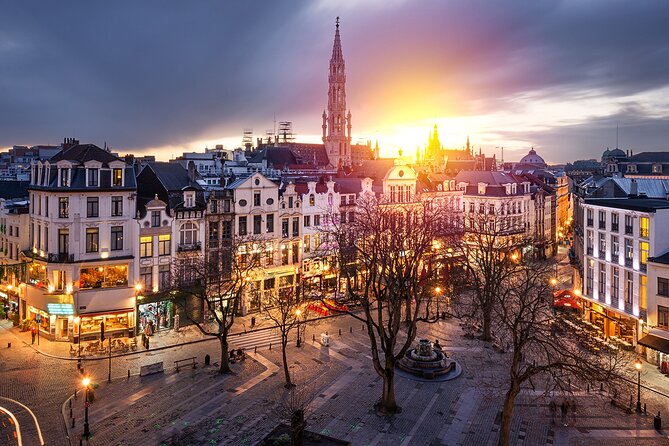
After the courthouse, you get a breather. The route includes Square du Petit Sablon, which you can revisit as a calmer moment if you were still processing the drama from the courthouse. Even in short stop time, it helps reset your senses.
Then you move to Place du Jeu de Balle. This is the stop that injects daily life into a theme that could otherwise feel overly heavy. The guide frames it through the flea market, which takes place there every day. Expect a mix of second-hand clothing, old photographs, vintage furniture, and small trinkets.
Why this matters for value: you are learning how Brussels circulates objects, memories, and style through the everyday market scene. That kind of street culture is where many city stories stop being abstract.
The atmosphere is described as welcoming, and even if you only have a few minutes here, the point is not to buy. The point is to see the neighborhood rhythm. That rhythm is what makes the “dark side” theme feel grounded, not just theatrical.
Kapellekerk finish in the Marolles neighborhood
The tour ends at Kapellekerk (Gothic Kapellekerk) in the Marolles area, a neighborhood described as vernacular. The church’s name refers to a chapel founded here in 1134.
This ending location is smart. You finish near Rue des Ursulines, after walking from major civic and religious symbols into a more local, lived-in corner of the city. It gives your brain a last frame that feels less museum-like and more neighborhood-like.
If you like ending walks on a “let’s keep exploring” note, Kapellekerk does that job. It puts you near a place where you can wander after the guide wraps up.
Meet your guide: why Sebastian and Dan’s style matters
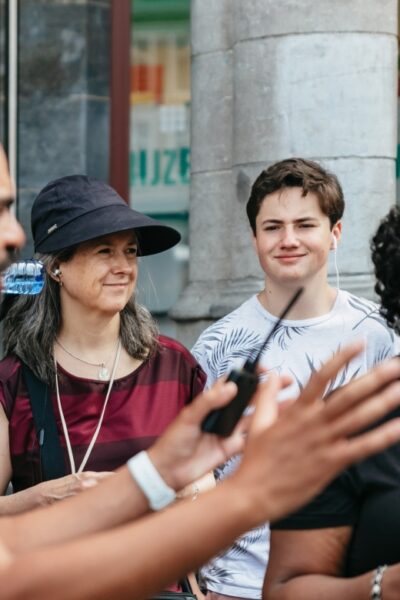
This tour runs with a professional guide, and the guide quality shows up clearly in real feedback. One review highlights Sebastian, calling him extremely knowledgeable and describing his fun personality. Another review credits a guide named Dan and notes that the visit was tailored for a group that couldn’t take a separate general city tour.
I take two lessons from that.
First, the best part of a themed tour is not the theme label. It is the guide’s ability to connect places to meaning. When the stories travel from gothic cathedrals to darker civic topics like beheadings, it means your guide is using the architecture as evidence, not just as a backdrop.
Second, private tours are not only about fewer people. They are about flexibility. If your group wants more emphasis on churches, less on courthouse details, or extra time around the market, a good guide can adapt within the tour’s short time box.
Price and value: what $105.02 per person is really paying for
Because admission at the listed stops is free, you are not paying to enter buildings. You are paying for the guide, the private route, and the interpretation that turns a normal walk into a story.
At $105.02 per person, the value improves if you like themed context. If you just want a quick highlights tour, you might spend less elsewhere. But if you want the “why” behind landmarks and you appreciate a guide who can explain how places tie together, the cost starts to feel more reasonable.
A small but practical plus: the tour includes a mobile ticket, it runs in English, and it is near public transportation. That reduces the friction of showing up and moving between stops.
Also, this is booked about 34 days in advance on average. That suggests it has steady demand, so if you’re traveling in a popular season, booking earlier is a safe move.
Who should book this tour, and who might skip it
Book this if you want a short, guided walk that mixes big civic sites with street-level Brussels. It is great for first-timers who want orientation fast, and for history-minded travelers who enjoy dark storytelling paired with architecture.
It also fits well if you like guided pacing. With around ten minutes at each main stop, you get a sample without the mental fatigue of spending half a day in one area.
Consider skipping or choosing a different style of tour if you want long museum time or extended interior access. This route is built for moving and looking, not for lingering for hours. Also, it may feel like a lot of “standing and listening” if you prefer hands-on activities.
For accessibility, the only facts provided are that most travelers can participate and that service animals are allowed. For mobility questions, it’s smart to think about cobblestones, street crossings, and time outdoors.
Should you book The Dark Side of Brussels?
Yes, if you want a compact, private walk that connects landmark architecture to heavier stories, and you still want some everyday Brussels flavor through the Marolles market scene. The mix of Sablon churches, Petit Sablon’s guild statues, Justice Palace, and Place du Jeu de Balle gives you variety in theme and mood, without turning the day into a marathon.
It is also a strong choice if you care about guide-led storytelling. The standout guide names from feedback, Sebastian and Dan, point to a tour where personality and tailoring matter.
Skip it if your priority is long indoor time or a purely cheerful sightseeing loop. This is a theme tour, and the “dark” angle shows up through the civic and historical settings.
FAQ
How long is the Private Tour: The Dark Side of Brussels?
It is approximately 2 hours.
What is the price per person?
The price is $105.02 per person.
Is this tour private?
Yes. It is a private tour, and only your group participates.
What language is the tour offered in?
The tour is offered in English.
Where does the tour start and end?
It starts at Grand Place (Grote Markt), 1000 Brussel, Belgium, and ends at Kapellekerk in the Brux.-Chap/Brus.-Kap area, Rue des Ursulines, 1000 Bruxelles, Belgium.
Are tickets or admissions required for the stops?
The itinerary lists admission ticket free for each stop.
What are some of the main places visited on the tour?
You’ll visit places including Place du Grand Sablon, Place Saint-Jean, Tour Anneessens, Rue de Rollebeek, Notre Dame du Sablon, Justice Palace (Palais de Justice), Petit Sablon, Place du Jeu de Balle, and the Kapellekerk area.
Can I get a full refund if I cancel?
Yes. You can cancel up to 24 hours in advance for a full refund.
Are service animals allowed on the tour?
Yes, service animals are allowed.
Latest from Brussels



Dark History Walks, compared.
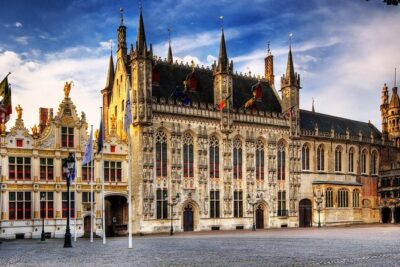
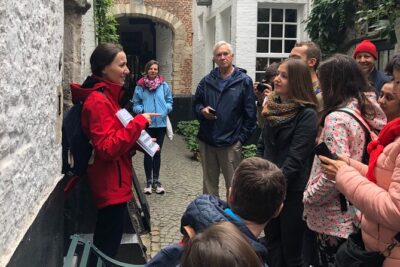

Historical Walking Tour: The Story of Brussels – by Legends
Read our review →Browse the lists this tour appears in