
Reviewed · DARK HISTORY WALKS
Evening Tour: The Dark Side of Brussels
Brussels at night tells different stories. This Legends of Bruges Free & Private Tours evening walk strings together gothic churches and courtroom architecture with the city’s less-polished past, then slows down in squares like Petit Sablon and the Marolles flea market zone. Two things I especially like are the way the route feels practical for an evening stroll and how the guide keeps the stories grounded in place, not just shock value. One thing to consider: it is more night history than full-on horror, so if you want nonstop grizzly moments, you might find it mellow.
If you like your Brussels facts with street-level color, this route delivers. You get a 2-hour sweep through landmark-and-neighborhood Brussels, with many stops around Sablon and the Marolles edge, plus a finish at Kapellekerk. The main drawback is that some parts can overlap with what you might see on daytime walks, only with different storytelling, so expect variety in perspective, not totally different sights.
In This Review
- Key Highlights You Should Know Before You Go
- How the Dark Side Tour Actually Works at Night
- Getting to Grand Place and Staying Oriented
- Stop 1, Place du Grand Sablon and The Market Quarter
- Stop 2, Place Saint-Jean and Its Church-Backed Calm
- Stop 3, Tour Anneessens and Rue de Rollebeek for Street-Level History
- Stop 5, Notre Dame du Sablon and Stop 7, Petit Sablon’s 48 Statues
- Stop 5 and Stop 6 Together, Sablon to the Palais de Justice
- Stop 3 and Stop 8, How the Tour Anneessens Area Leads Toward Marolles
- Stop 9, Kapellekerk and the Chapel Founded in 1134
- Price, Booking Fee Value, and the Real Cost of a Tip
- How to Match This Tour to Your Travel Style
- Should You Book The Dark Side of Brussels?
- FAQ
- How long is the Evening Tour: The Dark Side of Brussels?
- Where does the tour start and end?
- Is the tour offered in English?
- Do the stops require paid admission?
- Is there a group size limit?
- What is the cancellation policy?
Key Highlights You Should Know Before You Go
- Grand Place meeting point, easy evening start at Grote Markt, then you move into the older quarters on foot.
- Sablon stops that mix art and darker context, including Notre Dame du Sablon and Petit Sablon’s guild statues.
- Palais de Justice on the route, a massive courthouse that helps explain why justice and punishment show up in the stories.
- Marolles flavor at Place du Jeu de Balle, where the flea market mood sets the tone for the more unglamorous side of town.
- Strong guide storytelling track record, with names like Sebastian, Rahim, Den, Gunny, Ann Marie, and Ian showing up in people’s highlights.
- Admission to the specific stops is free, so your cost mostly goes to the guide and the walk itself.
More of the darker side of Brussels:
- Historical Walking Tour: The Story of Brussels – by Legends
★ 5.0 · 164 reviews - Private Tour: The Dark Side of Brussels
★ 5.0 · 20 reviews - The Brussels Crime Tour
★ 4.4 · 18 reviews - Brussels: 2-Hour Dark Side of Brussels Private Tour
★ 4.8 · 16 reviews - Leuven Self-Guided Sherlock Holmes Murder Mystery Game
★ 3.0 · 1 review
How the Dark Side Tour Actually Works at Night
This is the kind of tour that makes Brussels feel like two cities. Daytime Brussels can be clean, polished, and postcard-ready. At night, the same streets turn into a route for stories about power, rules, punishment, and the people who lived under them. That is the real hook here: the walk uses the city’s architecture as a map, so each stop explains why something happened there, not just what happened somewhere else.
The second reason this tour works is pacing. Around each stop, you get short, focused time windows, then you move on. That keeps your brain from melting after dark and also means you can handle the walk even if you are not trying to tour all night long. One review note that comes up is that it can feel a bit more strenuous than the soft description suggests, so comfortable shoes matter more than you might expect.
Also, this isn’t a silent museum tour. You are on the street, and the guide reads the room. That is a good thing when you want a lively explanation. It can be a frustration if you were expecting every stop to match a perfect script for every group and every time slot. If you want rigid, checklist travel, you may feel slightly underwhelmed by how human group tours are.
Getting to Grand Place and Staying Oriented
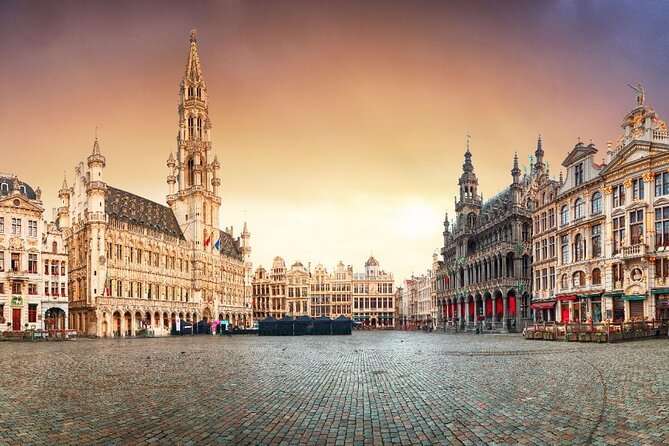
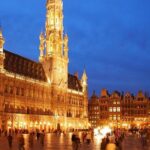
You start at Grand Place, Grote Markt, in the center of everything. That is convenient, but it is also busy, especially later in the evening. One person had trouble finding the guide in a packed square, even though they arrived early. So here is your practical move: arrive a few minutes ahead, stand in a spot that feels clearly visible, and give yourself time to get there.
From there, the tour shifts from main-square grandeur to older lanes. You will notice cobblestones and tighter streets as the evening progresses. This is part of the charm, but it also means footing matters more than on flatter walking routes.
Group size is capped at 35, and the tour is offered in English. There is a mobile ticket, and the stops are all listed as free admissions, so you are not juggling cash for entrances. Service animals are allowed, and the tour runs near public transportation, which helps if you want to hop back to your hotel between your own plans.
Stop 1, Place du Grand Sablon and The Market Quarter
The walk begins by steering you toward the Sablon area, starting with Place du Grand Sablon and the market-life around it. Even though this stop is short, it gives you a needed baseline for Brussels at ground level: food, small shops, and the daily rhythm that makes the city feel lived in. If you have only seen the city from big monuments, this is a useful reset.
What I like here is timing. In the evening, Sablon can feel calmer than it does at lunch. That gives you space to hear the guide’s setup before the darker themes start stacking up. If you are the type who needs context before you accept the scary stories, this opener helps.
Possible drawback: because it is a quick stop, you will not have time to linger like a true foodie. Plan to enjoy this as a scene-setting moment, not a shopping mission.
Stop 2, Place Saint-Jean and Its Church-Backed Calm
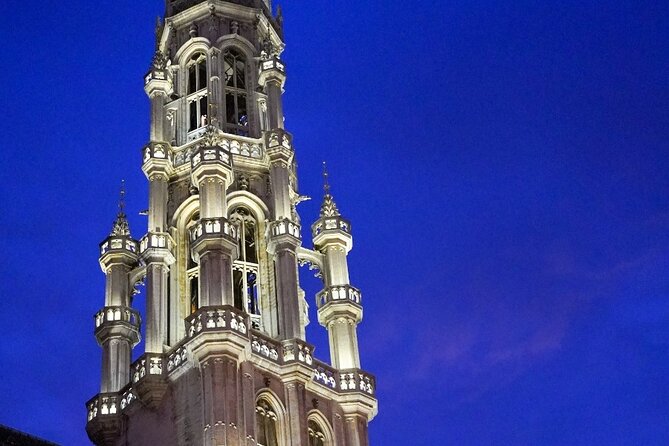
Next comes Place Saint-Jean, a historic square anchored by St. John the Baptist Church. This is your breather stop in the best sense of the word. Squares like this are where Brussels becomes easy to read. You look at the architecture, take in the cafés around you, and then the guide can connect how religious power and civic life overlapped.
I like this stop because it balances the tour’s tone. The darker side of Brussels stories can pull the mood down, but this square keeps the evening grounded. It also helps you understand why certain sites matter in the first place: people gathered here, decisions got made nearby, and records of conflict were tied to institutions.
Possible drawback: if the group is large and the evening is cool, you might want to keep your expectations flexible. You will still get the explanation, but you may not get long viewing time at every angle.
A few more Brussels afternoons to weigh up

Stop 3, Tour Anneessens and Rue de Rollebeek for Street-Level History
Then you turn into the areas tied to Tour Anneessens and Rue de Rollebeek. These are not just pretty streets for photos. This is the part of the tour that makes the city feel like it has a pulse of everyday life, and it also sets up the theme that Brussels was shaped by neighborhoods, residents, and conflict, not only kings and big buildings.
Tour Anneessens is described as a district with a diverse community and a blend of architectural styles. That matters because it signals change over time. When your guide starts talking about the city’s political and social edges, it helps to see a neighborhood where you can still feel that layering.
Rue de Rollebeek, with its cobblestones and shop-lined character, adds another useful contrast. The tour begins to feel less like a museum route and more like a walk through the city’s social corridors. You get to see how the present-day streets can carry echoes of older trouble.
Possible drawback: street-history stops can feel more about storytelling than scenery. If you want lots of dramatic visuals at every step, you might find this section lighter on the wow factor and heavier on the talk.
Stop 5, Notre Dame du Sablon and Stop 7, Petit Sablon’s 48 Statues
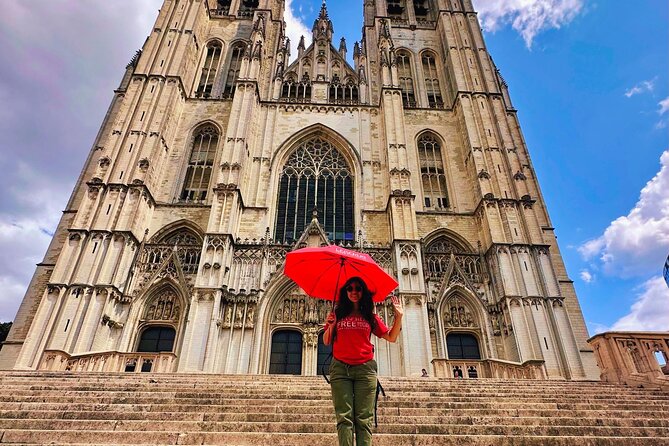
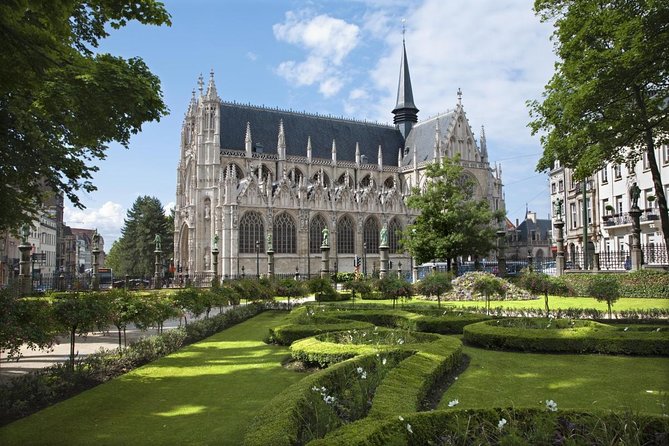
The route then brings you to Notre Dame du Sablon, a Gothic church with stained glass and intricate details. Even if you are not a church superfan, this stop helps your brain connect gothic design with power. High style was often a way of saying, we have money, we have authority, and we have reasons for the rules.
A short time later, you hit Square du Petit Sablon. This is one of the most memorable visual anchors on the itinerary. The square is surrounded by 48 small bronze statues representing medieval guilds. That is not just decorative. It gives you a concrete way to imagine how trade groups, status, and civic identity were connected. When the tour talks about crime, punishment, or social control, you can see how guild life and city governance formed a backdrop.
This combination of church and guild statues is one of the reasons the tour gets high praise. It feels like you are learning more than trivia. You start noticing why certain themes repeat in Brussels and how the built environment supports those themes.
Possible drawback: if the light is fading fast, stained glass details may be harder to appreciate. You will still get the story, but you might want to lean on the guide for what to look for.
Stop 5 and Stop 6 Together, Sablon to the Palais de Justice
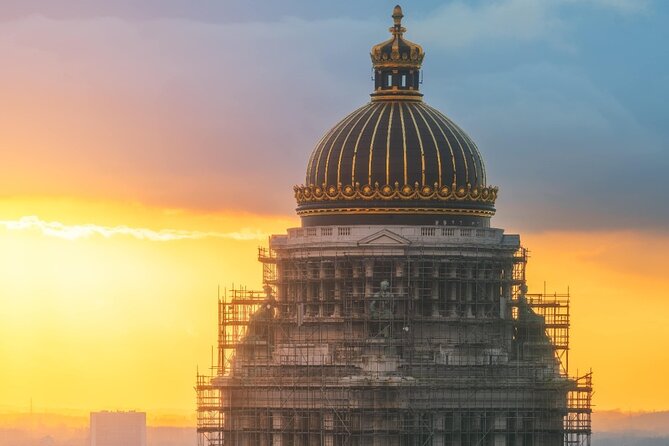
At some point in the middle, the itinerary connects Sablon back toward the monumental weight of the Palais de Justice. The courthouse is described as one of the largest in the world, with commanding neoclassical architecture, and it sits on a hill with sweeping views over Brussels.
This is the tour’s architecture-to-theme moment. A courthouse is where justice gets staged, where legal power becomes real, and where punishments were carried out under the name of order. When your guide ties the darker stories to this building, the message lands faster because you can literally see the scale.
One practical note: because it is a big structure on a hill, you may feel it as more walking and more standing time. If you are sensitive to stairs or long uphill stretches, plan your footwear and hydration accordingly.
Possible drawback: on windy or rainy evenings, you might want to keep your jacket close. The open areas around big monuments can feel chilly.
Stop 3 and Stop 8, How the Tour Anneessens Area Leads Toward Marolles
As the walk continues, you get a turn toward the Marolles neighborhood mood. The star stop here is Place du Jeu de Balle, known for the daily flea market. Think second-hand clothing, old photographs, vintage bits, and the kind of street energy that feels welcoming because people are actually doing regular life in public.
I like this stop because it gives context for why the darker side stories are not just about violence. They are also about social class, desperation, survival, and the way people built community where formal power did not always help them.
One review highlight mentions le morelle and an original fortress wall as a standout moment. Even if you do not catch every detail, the vibe is the point: the city has physical traces of past boundaries, and the Marolles area helps you feel that in your legs and eyes.
Possible drawback: flea market areas can be chaotic, even in the evening. If your tour timing overlaps with sellers or crowds, you might have less quiet time for photos.
Stop 9, Kapellekerk and the Chapel Founded in 1134
The tour ends at Kapellekerk, described as a vernacular Gothic church in the Marolles neighborhood. The church name links to a chapel founded here in 1134, so you get a direct feeling of age right at the finish.
Ending with something older than most modern politics is a clever move. It lets the darker stories fade into perspective. You are not just leaving with scary facts. You are leaving with a sense that Brussels keeps rewriting itself, but the foundations stay.
Another reason this ending works: you are not stuck far from transit. The tour finishes on Rue des Ursulines in central Brussels, so it is easy to keep your evening plans going, or just head back when you are done.
Possible drawback: because the last stop is shorter, you will want to focus on listening and less on trying to spot every architectural detail.
Price, Booking Fee Value, and the Real Cost of a Tip
The listed price is $3.62 per group, up to 6, for about 2 hours. That is not a typical museum ticket kind of fee. In practice, it is more like a small booking fee attached to a guided walk.
Here is the value logic I would use when deciding if it is worth it: you are paying for a professional guide, English speaking, with admissions listed as free across the stops. So your money is mostly going toward interpretation. If you care about stories connected to buildings and neighborhoods, that kind of guided input can feel like the main course.
But also, take the tip angle seriously. Multiple guides described in people’s experience are praised for storytelling effort, and several comments stress that guides depend on tips for income. So bring euros if you want to tip. If you do not, you might feel slightly guilty during the whole walk, which defeats the point of a fun evening.
How to Match This Tour to Your Travel Style
This tour is a good fit if you like:
- night walks with a story structure
- church and courthouse exteriors tied to social themes
- learning why certain neighborhoods feel the way they do today
It might be less satisfying if you:
- want a strictly timed script that never shifts
- expect non-stop shock and graphic detail
- dislike walking on cobblestones
- hate tours that feel like they might change slightly depending on group size and energy
One more truth worth saying: the tour title leans darker, but several experiences describe it as not overly grizzly. Think more night history and the city’s unflattering past than constant horror scenes.
Should You Book The Dark Side of Brussels?
Book it if you want to see Brussels after dark with a guide who can connect places to politics, justice, and the lived texture of older neighborhoods. You will likely enjoy the blend of Sablon beauty, Palais de Justice scale, and the Marolles flea market mood, especially if you like learning on your feet instead of sitting in a chair.
Skip it or choose a different option if you are after a pure nightlife crawl, a hard core crime tour with maximum darkness, or a route that never overlaps with daytime sightseeing. For the right traveler, this is an enjoyable way to get a second perspective on a city you might think you already know.
FAQ
How long is the Evening Tour: The Dark Side of Brussels?
It runs about 2 hours.
Where does the tour start and end?
You meet at Grand Place, Grote Markt, 1000 Brussel, Belgium, and the tour ends at Kapellekerk, Rue des Ursulines, 1000 Bruxelles, in a popular neighborhood.
Is the tour offered in English?
Yes, it is offered in English.
Do the stops require paid admission?
The listed stops show admission ticket free, so you should not need to pay entry fees for these specific sights.
Is there a group size limit?
Yes, the tour has a maximum of 35 travelers.
What is the cancellation policy?
You can cancel for a full refund if you cancel up to 24 hours in advance. The experience may also be canceled if a minimum number of travelers is not met, in which case you are offered a different date or a full refund.
More Evening Experiences in Brussels
- Brussels: Sightseeing Sunset Bus Tour
★ 3.8 · 70 reviews - Brussels Tootbus before night sightseeing tour
★ 4.0 · 14 reviews - Brussels: Private Beers, Bars, and Live Music Tour by Night
★ 5.0 · 6 reviews - Evening Tour: The Dark Side of Bruges
★ 5.0 · 956 reviews
Latest from Brussels


Dark History Walks, compared.
Historical Walking Tour: The Story of Brussels – by Legends
Read our review →
Bruges at Night: Murder, Mystery & Dark Stories Small Group Walk
Read our review →Browse the lists this tour appears in