
Reviewed · DARK HISTORY WALKS
Historical Walking Tour: Legends of Antwerp
Antwerp legends sound better on foot. This 2-hour guided walk threads together stories, art, and city history in a way that helps you understand what you are seeing and why it matters. You start at the Grote Markt, end near Handschoenmarkt, and you move through the places that shaped Antwerp, from trade power to Baroque art to street legends.
I love how the tour hits the big photo stops and still gives you real context. Grote Markt sets the tone fast, and the guide’s explanations make monuments like the City Hall and Brabo Fountain click instead of feeling like random sights. I also like the range, because you bounce from Baroque churches to printing history, then to fashion and a famous medieval alley.
One drawback to plan for: it is a lot of stopping and standing in public spaces. In a hot day or a noisy crowd, it can be harder to catch every word, so bring patience and expect some leg work over the full route.
In This Review
- Key takeaways before you go
- Why Legends of Antwerp is a smart “first grounding” walk
- The route flow: starting at Grote Markt, finishing near Handschoenmarkt
- Stop 1: Grote Markt, City Hall, and the Brabo Fountain legends
- Stop 2: Hendrik Conscience Statue and the literary-adjacent atmosphere
- Stop 3: Carolus Borromeus Church and Rubens in the Baroque spotlight
- Stop 4: Handelsbeurs Antwerpen, the Antwerp Bourse, and Golden Age trade
- Stop 5: Rubens House, where you can add on museum time
- Stop 6: MoMu Fashion Museum area and designer-quarter context
- Stop 7: Museum Plantin-Moretus and printing history that earned UNESCO status
- Stop 8: Vlaeykensgang, Antwerp’s medieval street in your line of sight
- Stop 9: Nello and Patrasche Statue, the legend behind a crowd-pleaser
- Stop 10: Cathedral of Our Lady, construction facts and where to go next
- What you pay for: included entrances vs extra museum tickets
- Guide style, group size, and how to avoid the hearing problem
- Timing, walking comfort, and weather realism
- Who should book this tour, and who might prefer something else
- Should you book Legends of Antwerp?
- FAQ
- How long is the Legends of Antwerp walking tour?
- Where does the tour start and where does it end?
- Is the tour offered in English?
- What is the price for the tour?
- Are museum or church entrances included?
- Can I cancel for free?
Key takeaways before you go
- A tight 2-hour route that gives you Antwerp context fast, even if it is your first day
- Legend-led storytelling that links statues and monuments, including the Nello and Patrasche pair
- Iconic landmarks plus “you’ll miss this” streets, like the Vlaeykensgang alley
- Art, trade, and printing in one sweep, from Rubens to the Antwerp Bourse to Plantin-Moretus
- Some entrances are included, others are not, so you can budget if you want extra museum time
- Guides end with trip ideas, which is handy when you have limited time
More Guided Walks in Antwerp
- Antwerp: City Highlights Walking Tour
★ 4.7 · 816 reviews - Antwerp: Historical Walking Tour in the Old City
★ 4.8 · 373 reviews - Historical Walking Tour in Antwerp Old City
★ 5.0 · 277 reviews - Evening Walking Tour: The Dark Side of Antwerp
★ 5.0 · 193 reviews - Antwerp: Private Walking Tour with a Local
★ 4.2 · 183 reviews
Why Legends of Antwerp is a smart “first grounding” walk
If you like walking tours but hate the ones that feel like a list of buildings, this one usually lands well. The format is built around stories and connections, so you start noticing patterns in the city. That is what makes a short tour feel useful, because you then walk the rest of Antwerp with better instincts.
You also get a mix of Antwerp’s identities in one go. You see why the city became a major trading power, why the Baroque era left such strong artistic marks, and why book and printing history matters here. Add fashion to the mix, and you get a clearer picture of how Antwerp kept reinventing itself.
Lastly, the route is designed for people who want a plan, not just wandering. Even with a bigger group, you are guided from stop to stop so you do not lose time trying to figure out where everything is.
The route flow: starting at Grote Markt, finishing near Handschoenmarkt
The tour begins at Grote Markt, which is a strong choice because it sits right in Antwerp’s historical core. You will know where you are within minutes, since the square is visually dominant and easy to orient around. You end at Handschoenmarkt, which is a practical finish point if you want to keep exploring on foot.
This start-and-finish structure matters more than it seems. If you are short on time, you can use your first walk to map the rest of your day. After the tour, you typically have enough context to decide whether you want more church time, more museums, or just a relaxed wander with sharper eyes.
Also, the tour is offered in English and uses a mobile ticket, which keeps the check-in part simple. It is near public transportation, so it is easy to pair with other plans.
Stop 1: Grote Markt, City Hall, and the Brabo Fountain legends
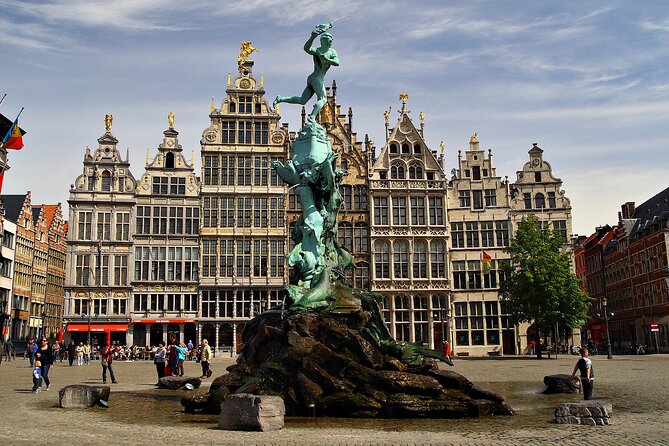
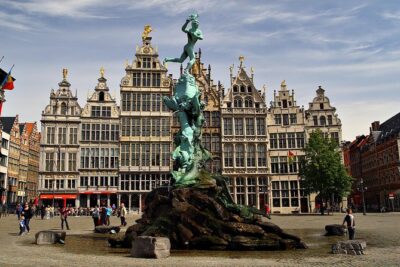
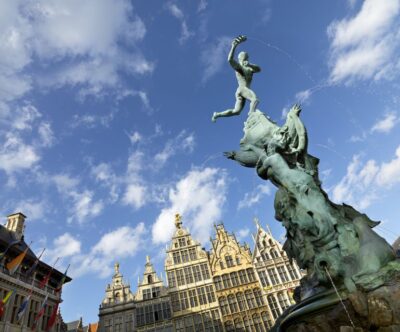
Grote Markt is Antwerp in one place. The square is ringed with medieval guild houses, and you get two big anchor points to focus on: the City Hall and the Brabo Fountain in the middle. The guide’s job here is not to overwhelm you with dates, but to explain what the symbols meant in their time.
Why this stop works: Antwerp’s later history makes more sense once you understand the city’s earlier civic power. You start to see how trade wealth and guild influence shaped the built environment you are looking at.
A practical note: Grote Markt can get busy, and it is easy for sound to get messy if the group is large. If you have trouble hearing, move closer when the guide speaks and stay aware of where other people are congregating.
Stop 2: Hendrik Conscience Statue and the literary-adjacent atmosphere
Next you head toward a square named for the Flemish writer Hendrik Conscience. This is one of those stops that feels small compared to the big square, but it gives you an “intellectual Antwerp” feeling.
The area connects the city’s architecture to its cultural life, including a Baroque church and the old city library nearby. That combination helps you understand that Antwerp was not only making money and art, it was building ideas too.
If you like tours where the guide explains what you are looking at, this is the kind of stop that builds that habit. You learn to spot the mood of a place, not just its landmark name.
More History Tours in Antwerp

Stop 3: Carolus Borromeus Church and Rubens in the Baroque spotlight
Then comes Carolus Borromeus Church, a major Baroque site famous for connections to a Rubens masterpiece. Even if you are not a specialist in art history, Baroque churches tend to read as emotional and dramatic, and that is exactly what you want for an Antwerp introduction.
The guide’s framing is the key here: you are not only seeing a church facade and interior. You are learning how Rubens helped shape the monument through paintings and decoration, so the church becomes more than a pretty building.
Possible drawback: churches can be crowded during opening hours and you may spend part of the time standing near the entrance or inside in groups. If you prefer quieter museum-style pacing, just remember this is a walking tour rhythm, not a slow gallery visit.
Stop 4: Handelsbeurs Antwerpen, the Antwerp Bourse, and Golden Age trade
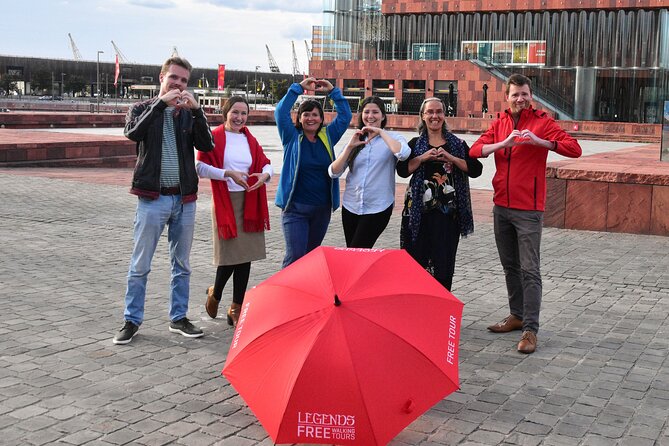
The next big jump is to Handelsbeurs Antwerpen. The tour presents it as the world’s first Wall Street, which is a fun way to get the idea across: this is a place designed for international commerce and finance.
This stop is where Antwerp’s Golden Age becomes real. You connect the city’s rise in the 16th century to the trading networks and the need for a grand, unmistakable business space.
Why it matters for you: when you later see Antwerp’s wealth in architecture, you will understand the “why” behind it. You are not just admiring old stones, you are seeing the physical result of economic power.
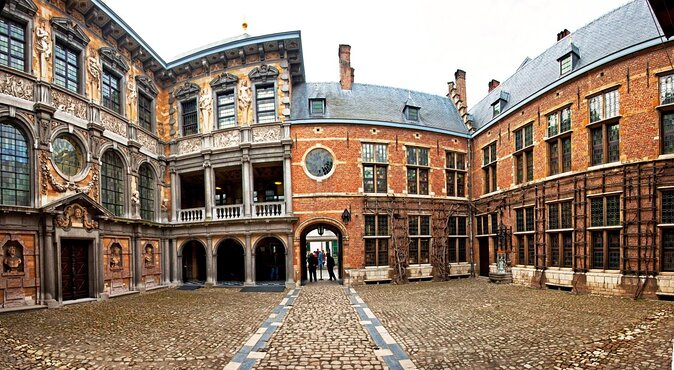
Stop 5: Rubens House, where you can add on museum time
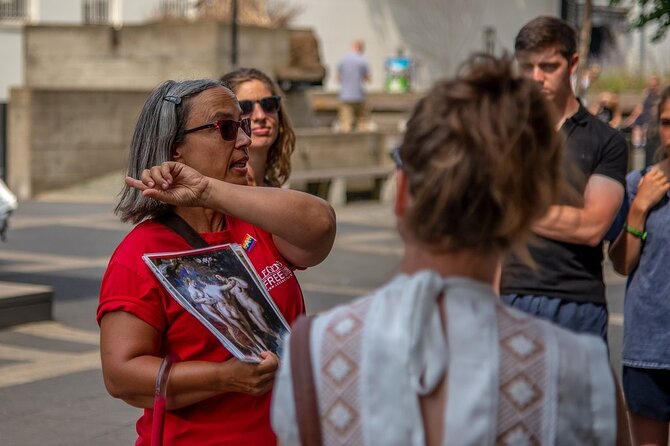
Now you reach the Rubenshuis area, the former home and workshop of Peter Paul Rubens. This stop is interesting because it changes the energy from civic and religious to personal and creative.
Important for planning: admission here is not included, so if you want the full interior experience you will need to pay separately. If you are the type who likes seeing how artists worked, this is one place where extra time can pay off.
What you should look for on this kind of visit is how “workshop logic” shows up in the space. A guide can help, but even without one, the idea of a working studio makes the art history feel more grounded.
Stop 6: MoMu Fashion Museum area and designer-quarter context
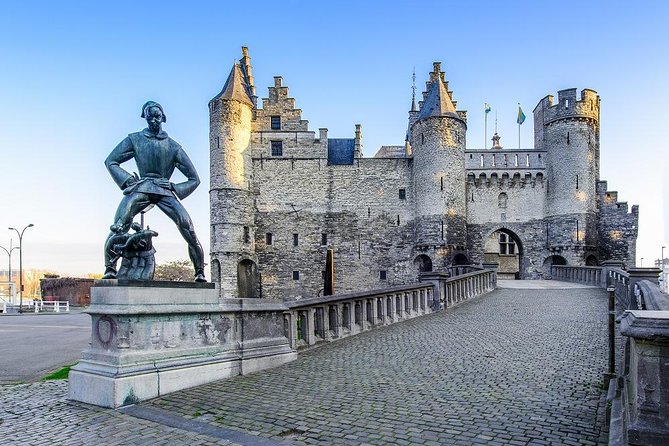
Antwerp’s fashion reputation is not just a slogan, so the tour includes time in the designer quarter and near MoMu (Fashion Museum Antwerp). Admission is not included here either, but the tour helps you understand the “why Antwerp fashion” behind the scenes.
This stop is most valuable if you like shopping and street style, because you learn where the fashion energy actually lives. It also helps you avoid a common mistake: spending hours wandering the wrong streets for the kind of finds you want.
If you are traveling with limited time, you can use this stop as a compass. After the tour, you will likely know where to go for boutiques versus where to go for classic historic areas.
Stop 7: Museum Plantin-Moretus and printing history that earned UNESCO status
Next up is Museum Plantin-Moretus, and this is one of the most meaningful stops on the whole route. It is tied to centuries of book and printing history, and it was the first museum to be listed as a UNESCO World Heritage site.
Here is the value for you: Antwerp’s story is not only painted on church walls. It is also printed, published, and distributed. That connects the city’s trade power to the spread of ideas.
This stop also tends to appeal to “I want something different” travelers. If you are museum-minded, it gives you a strong reason to set aside time beyond the walking tour. If your energy is low, you can still get a lot from the guide’s explanation of how the printing world shaped culture.
Stop 8: Vlaeykensgang, Antwerp’s medieval street in your line of sight
Then you step into Vlaeykensgang, a small alley that is hard to find on your own. It is presented as the best preserved medieval street of Antwerp and it is often described as the most photographed spot in the city.
Why this works in a guided route: the alley is narrow and easy to miss, but the guide’s timing and storytelling make it feel like a time capsule. This is one of the places where you can relax, look around, and take photos without needing to interpret every facade.
Practical tip: alley lighting can be tricky depending on the time of day. If you care about photos, try to stand where people are not blocking each other, then reposition when the crowd shifts.
Stop 9: Nello and Patrasche Statue, the legend behind a crowd-pleaser
You get another story-based stop with Nello and Patrasche. The tour explanation focuses on how this statue connects to a local tale, and how it pulls in visitors who recognize the story.
Even if you have never heard of the legend, the stop is worth it because it shows how Antwerp turns culture into symbols you can actually see. It also helps explain why a particular statue attracts so many people, which makes it more satisfying when you spot it.
This is also a good breather moment in the tour rhythm. It is short, and it shifts your focus from buildings to a specific narrative you can keep in mind as you walk.
Stop 10: Cathedral of Our Lady, construction facts and where to go next
The tour ends in front of the Cathedral of Our Lady. It is a big visual finish, and you get construction history and curious facts about how it came together.
What makes the stop useful is the handoff. The guide wraps up with recommendations for what to do next in Antwerp. Since you already learned the “why” behind several landmarks, those suggestions are easier to act on.
If you want to keep the momentum going after the walk, this is a great moment to ask practical questions. For example, you might ask what to see next based on whether you prefer museums, churches, or neighborhoods for strolling and food.
What you pay for: included entrances vs extra museum tickets
The tour includes visits during opening hours for certain stops, and the wording is clear that admission is free at multiple points. You can expect free admissions at major stops like Grote Markt, Carolus Borromeus Church, Handelsbeurs Antwerpen, and Museum Plantin-Moretus.
Two notable exceptions are where you should plan extra money: Rubenshuis and MoMu (Fashion Museum Antwerp). Admission is not included there, so you are deciding whether to pay for the interior experience.
How to think about this for value: if you only want guided context and a few photo moments, you may not need extra ticket time. If you are museum-minded and enjoy art or fashion, budgeting for one or both of those paid entrances can turn a short tour into a full, more satisfying day.
Guide style, group size, and how to avoid the hearing problem
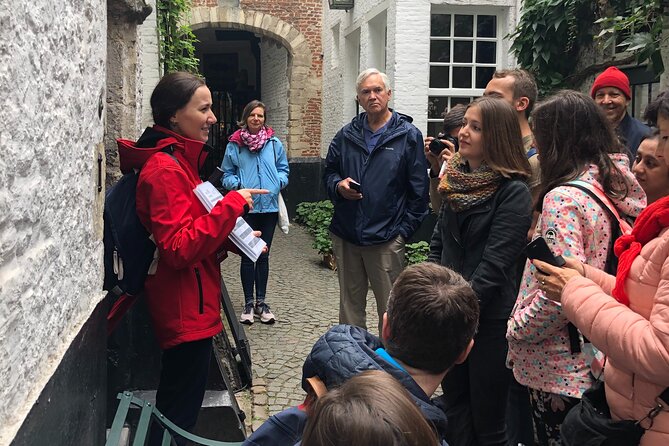
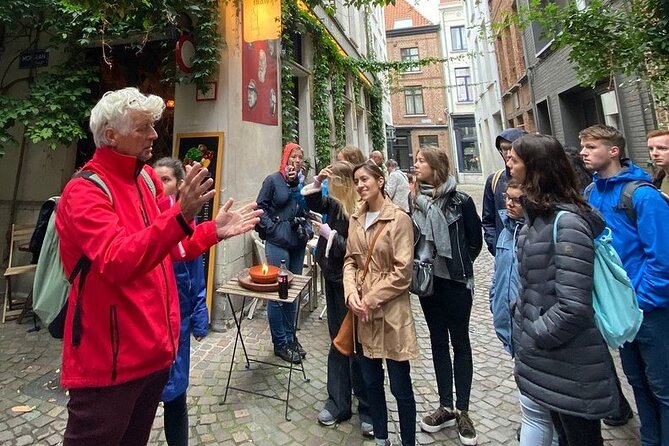
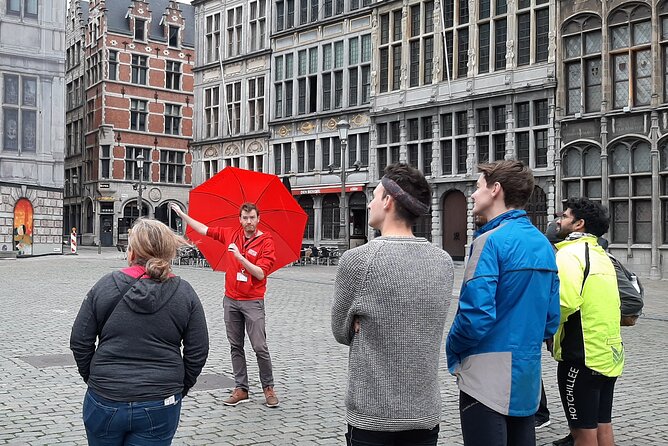
The tour can run with a maximum of 35 travelers, and it is split into a guided experience where you walk between clustered highlights. Big groups can be a blessing, because you move efficiently. The tradeoff is sound.
Some people found it harder to hear in large groups, especially in noisy outdoor spaces. My advice is simple: when the guide stops, do not stay at the back. Move forward just a bit, then fall back once the story transitions into walking.
Also, the guide quality is a major part of why this tour earns such strong ratings. Guides highlighted in feedback include people like Arie (Ari), Birke, Frans, Beren, Luc, Luc B, Marc, Marleen, Gaston, and Sergio. Across those names, a common theme is pacing that keeps the 2 hours feeling fast, plus humor and local perspective.
Timing, walking comfort, and weather realism
The tour lasts about 2 hours, so it is short enough to fit nearly any itinerary. But it is still a proper walking experience, and the stops involve a fair amount of standing while you listen.
Wear comfortable shoes. Antwerp cobblestones can punish you if you show up in the wrong footwear. If you are sensitive to heat, also plan for shade and water breaks on your own between stops, especially when the route passes through open squares.
If it is raining, you are still out in the center. Bring a small umbrella or a light rain layer so you do not spend the whole tour worrying about getting drenched.
Because the tour is near public transportation, you can also use it to reset your day. Finish nearby, then hop on a tram or bus if you want to avoid walking more than you planned.
Who should book this tour, and who might prefer something else
This is a strong fit if you want:
- A guided introduction to Antwerp’s core sights without spending all day in transit
- Story-focused context that makes statues and buildings feel connected
- A route that mixes art, trade history, and practical city orientation
It is less ideal if you:
- Struggle with listening in larger outdoor groups
- Have limited comfort for standing in sun or on busy plazas
- Want a fully indoor, slow-paced museum day
If you are traveling with kids, this kind of route can work well because the tour leans on legends and recognizable landmarks. If your group loves photos, the alley and statue stops add a lot of memorable visuals.
Should you book Legends of Antwerp?
Yes, if you want a fast, story-led way to understand Antwerp’s center. The value is strong because the group price is low, and the tour gives you a concentrated overview of major landmarks, plus a clear sense of where to go next.
Book it especially if you like walking routes that teach you how to look. By the end, Antwerp stops feeling like a set of separate highlights and starts feeling like one connected city.
Skip it only if hearing is your top priority and you dislike standing. If that is you, you might prefer a smaller-group museum-focused tour instead. Otherwise, put on comfy shoes, plan for some outdoor standing, and let the legends do their job.
FAQ
How long is the Legends of Antwerp walking tour?
It lasts about 2 hours.
Where does the tour start and where does it end?
The tour starts at Grote Markt, 2000 Antwerpen, Belgium and ends at Handschoenmarkt, 2000 Antwerpen, Belgium.
Is the tour offered in English?
Yes, it is offered in English.
What is the price for the tour?
The price is $3.62 per group, up to 6 people.
Are museum or church entrances included?
Some stops are included with free admission during opening hours, while Rubenshuis and MoMu have admission not included.
Can I cancel for free?
Yes. You can cancel up to 24 hours in advance for a full refund. Canceling less than 24 hours before start time is not refundable.
The Grim Half of Antwerp
- Private Tour: The Dark Side of Antwerp
★ 5.0 · 84 reviews - Antwerp: Dark Side of Antwerp Private Tour
★ 4.8 · 19 reviews - Exciting Murder Mystery – Interactive city walk in Antwerp
★ 3.5 · 12 reviews - Private Tour: The Dark Side of Antwerp
★ 4.5 · 7 reviews
Latest from Antwerp



Dark History Walks, compared.

Historical Walking Tour: The Story of Brussels – by Legends
Read our review →
Bruges at Night: Murder, Mystery & Dark Stories Small Group Walk
Read our review →Browse the lists this tour appears in