
Reviewed · HISTORICAL TOURS
Antwerp: walking through history
Antwerp tells its story in walking distance. This is a tight 2-hour route that strings together politics, faith, commerce, and art in a way that is easy to follow, starting on the Grote Markt and ending in the Plantin and Moretus museum gardens. I especially like the timeline-style narration and how smoothly it connects what you see on the street to what happened in the 1500s and beyond, plus the fact that the guide can work in English or Dutch.
My second favorite thing is the craft of the guide. Names like Filip de Meester and Flip come up for a reason: the storytelling is clear, sometimes funny, and paced so the group feels cared for, not rushed. One consideration, though, is weather. It is still a walk, so if it is cold or rainy (as happened on one tour), you will want proper layers and a waterproof layer for comfort.
This is also a private group with pickup in Antwerp, and it is built for real mobility needs. The route is wheelchair accessible and works for parents with prams, which matters in a city where cobblestones can get tricky fast. If you want a compact Antwerp overview without spending your whole day figuring out where to go, this format fits.
In This Review
- Key highlights worth knowing
- Starting on Grote Markt, Antwerp’s Grand Place
- Following the Scheldt and the old city walls
- The Vleeshuis and Antwerp’s guild power
- 16th-century religious strife and a city under pressure
- Carolus Borromeus Church and the shift to Baroque
- Stock Exchange area, cathedral sightlines, and the big doors you hope for
- Plantin and Moretus museum gardens, where printing changes the stakes
- Why this $106 private walk can be good value
- Who should book this Antwerp history walk, and who might not
- Should you book Antwerp: walking through history?
- FAQ
- Where does the tour start?
- How long is the walking tour?
- What languages are offered?
- Is this tour private?
- Is pickup included?
- What is included during the historical walk?
- Is it wheelchair accessible and suitable for prams?
- Can I cancel and get a full refund?
- Is there flexibility to book before you pay?
Key highlights worth knowing
- Grote Markt orientation first, so you understand where you are before you move on
- Scheldt and fortifications stops that explain how the city took shape
- Guild house focus on Antwerp’s trade world, including the butchers’ Vleeshuis
- 16th-century religious strife to Baroque art in one continuous thread
- Stock Exchange and cathedral sightlines, with a plan to try key interiors when possible
- Plantin and Moretus garden ending, tying Antwerp to printing and publishing
More Guided Walks in Antwerp
- Historical Walking Tour: Legends of Antwerp
★ 5.0 · 1,837 reviews - Antwerp: City Highlights Walking Tour
★ 4.7 · 816 reviews - Antwerp: Historical Walking Tour in the Old City
★ 4.8 · 373 reviews - Historical Walking Tour in Antwerp Old City
★ 5.0 · 277 reviews - Evening Walking Tour: The Dark Side of Antwerp
★ 5.0 · 193 reviews
Starting on Grote Markt, Antwerp’s Grand Place
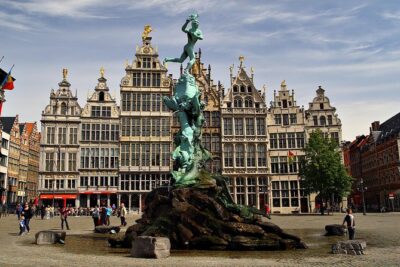
Most history tours start with a blur of facts. This one starts with your bearings. You meet at the Grote Markt, Antwerp’s big public square, then the guide gives you a quick setup so the rest of the walk makes sense. It helps a lot when you are trying to connect architecture to stories from centuries ago.
I like this opening because the square is not just scenic. It is a reminder that Antwerp’s power was public, civic, and visible. After that orientation, you stop treating the city like a museum, and start seeing it like a place that grew by decisions, money, and conflict.
If you are coming with kids in a pram or you are in a wheelchair, this is also the kind of start that feels manageable. The tour is designed for movement, not for a long scramble right away. You are also in a central spot, so you are not burning energy getting positioned.
Following the Scheldt and the old city walls
From the square, the walk shifts toward the river Scheldt, where Antwerp’s story began. This is a smart choice, because water is where trade routes meet real geography. You do not just hear that Antwerp was important, you hear why, and you watch the city’s logic unfold block by block.
You then reach the fortifications of the first town. That is the turning point where history stops being abstract. City walls tell you who was protecting what, and they hint at how fast the city had to adapt as pressure and opportunity changed.
Next comes the city’s expansion between surviving parts of the first city wall. This is where the guide’s skill really shows: they keep the timeline moving while you walk through layers of the city. If you only know Antwerp from a single neighborhood, you will start to see how the entire layout has roots in that early boundary.
In practical terms, this section sets the walking rhythm. It is long enough to feel like a journey, but structured enough that you are never wondering where you are headed next.
The Vleeshuis and Antwerp’s guild power
One of the standout moments is the stop connected to the oldest and largest guild house: the butchers’ Vleeshuis. This is not a random building stop. Guild houses were economic engines, and they also worked like social power centers. You get a sense of who had influence and how that influence was displayed.
I like the way this part of the walk reframes what you think you know about food and trade. Butchers were not just selling meat. They were part of a network that mattered to public life and city finance. When the guide ties the Vleeshuis to the guild system, it turns a name on a façade into something concrete.
Then the tour follows the timeline toward Antwerp’s first financial heart. That connection is valuable because it shows continuity. Antwerp did not become a commercial powerhouse by accident. It built it, step by step, through institutions that could handle competition and conflict.
If you want to understand the city beyond one famous church or one monument, this portion is where the walk earns its value. You leave with a clearer mental map of Antwerp’s business culture.
16th-century religious strife and a city under pressure
Next you move into the 16th century, where religious conflict shaped daily life and had big consequences for the city. The tour’s strength here is that it does not treat religion as a set of dates. It shows how strife changes real outcomes: institutions, power, and the kinds of art and architecture that appear afterward.
This part matters because Antwerp’s later style, and even its reputation, did not come out of nowhere. When the guide connects conflict to consequence, you start understanding why the city looks the way it does.
Also, this is one of the more human sections of the walk. Instead of only reading about rulers, you are hearing about tension and change. That makes the rest of the route feel less like sightseeing and more like a story you can track.
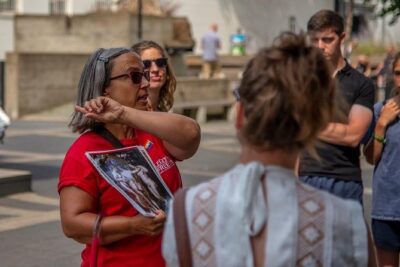
A good tour guide can overwhelm you here with big topics. The guides on this walk are consistently praised for clarity and pacing, including humor and the ability to take time. Filip de Meester and Flip are called out for being engaging and for giving explanations that are not just correct, but easy to hold in your head.
More History Tours in Antwerp
Carolus Borromeus Church and the shift to Baroque
After the conflict, the walk moves into a new era with a new style of art: the Baroque, highlighted at the Carolus Borromeus Church. This is a smart follow-up, because Baroque is not just pretty. It was a visual language that carried messages and demanded attention.
You will likely notice how the church stop changes the mood of the story. The guide helps you see the Baroque approach as a response to the needs of the time, not only as a style trend. That is the difference between seeing a landmark and learning why it was made.
If you are short on time in Antwerp, this is the kind of stop you want. A two-hour tour cannot cover everything, so choosing a single strong art and architecture thread is a good tradeoff. You leave with one clear takeaway about how the city’s identity evolved.
One practical note: some churches and museums allow free entry when there is no mass or event scheduled. The tour is set up to try for that, so the guide’s timing and local awareness matter.
Stock Exchange area, cathedral sightlines, and the big doors you hope for
The walk then aims for the mother of all stock exchanges, with a plan to see whether you can enter. That line is not just dramatic. It reflects the real-world issue that access can depend on events. So you should expect a flexible approach, with the guide trying the door when it is possible.
You also pass the biggest Gothic cathedral in the Low Countries. You might not stop inside the way you would at a museum, but you will get that key visual of Antwerp’s scale in a different architectural language. Gothic and Baroque side by side helps you see that the city did not develop one uniform identity. It absorbed and transformed influences over time.
For me, this part works because it connects commerce and faith, two themes that often get separated in guidebooks. Antwerp was not only a place to pray, it was also a place to trade. Seeing both in the same walking flow makes the city feel like one system.
If you care about architecture, keep your attention up during transitions. The guide’s route uses the city itself as the “exhibit,” and passing major landmarks is often where you pick up the strongest impressions.
Plantin and Moretus museum gardens, where printing changes the stakes
The tour ends in the garden of the Plantin and Moretus museum, a 16th-century printing and publishing house that was owned by the same family until the late 19th century. This finale is a great way to land the story, because it shifts from money and faith to knowledge and production.
Printing matters because it changes what a city can spread. Once you can mass-produce ideas, influence travels faster. By ending here, the walk gives you a rounded picture of Antwerp’s power: trade financed it, conflict shaped it, art communicated in response, and printing helped ideas move forward.
The garden setting is also a relief after a concentrated run of landmarks. You get a calmer moment to absorb what you learned. Even if you do not go into every room of a museum, the stop still gives you a strong sense of the printing world that helped shape Europe.
This final piece is a good reminder that the 1500s were not only about cathedrals and politics. They were also about how information gets made.
Why this $106 private walk can be good value
For $106 per group up to 1, you are paying for a private, guided route that compresses multiple major themes into about 2 hours. That price can feel small or big depending on your style. If you like guided structure, it is a sensible way to buy time and clarity instead of trying to piece together Antwerp yourself.
What makes it feel more worth it is the included access approach. Churches and museums, and sometimes the stock exchange area, allow free entry when there is no mass or event scheduled. That means the guide is not just pointing from outside. You get a chance at real interiors without paying extra for a formal ticket, though it will depend on what is scheduled that day.
You also get flexibility built into the tour. It works in English and Dutch, and the guides are described as passionate, well-trained, and attentive to individual needs. That matters on a private format, because the guide can slow down or adjust when you want more context, or when your group needs a different pace.
If you are traveling with limited time in Antwerp and you want the city to make sense quickly, this kind of curated, story-driven walk is often a better investment than random museum hopping.
Who should book this Antwerp history walk, and who might not
You should book if you want a focused overview that links the city’s main themes into one clear timeline. It suits first-timers who want a guided mental map fast, and it also suits return visitors who want the story behind the façade.
It is also a strong option if accessibility matters. The walk is wheelchair accessible and works with prams, which is not guaranteed in many old-city routes.
This is less ideal if you want a long, museum-heavy itinerary. Two hours means you will hit highlights and key stops, not spend deep time inside every building. If you are looking for a full day of ticketed attractions, you may want a different format.
Should you book Antwerp: walking through history?
Yes, if you want Antwerp to feel logical, not just scenic. The tour does a rare thing in a short time window: it ties together the Scheldt origins, guild power at the Vleeshuis, the pressure of 16th-century religious strife, the artistic shift to Baroque at Carolus Borromeus, the commerce angle near the stock exchange, and the knowledge thread at Plantin and Moretus.
I would book it when you want a guide who can explain with clarity and keep the energy friendly. The repeated praise for guides like Filip de Meester and Flip, including humor, patience, and time for individual wishes, is exactly what makes a walking tour work.
If weather is forecast to be unpleasant, pack for it and you will still likely enjoy it. This is a well-run route, but it is still Antwerp on foot.
FAQ
Where does the tour start?
The walk starts at Grote Markt in Antwerp.
How long is the walking tour?
The tour lasts 2 hours.
What languages are offered?
The live tour guide provides the tour in Dutch and English.
Is this tour private?
Yes, it is listed as a private group.
Is pickup included?
Yes, pickup is included in Antwerp. You contact the guide to arrange where you will be picked up.
What is included during the historical walk?
You are taken to interesting places, including churches and museums, and entry may be free when there is no mass or event scheduled.
Is it wheelchair accessible and suitable for prams?
Yes, the walk is described as accessible for people with wheelchairs and parents with prams.
Can I cancel and get a full refund?
Yes, you can cancel up to 24 hours in advance for a full refund.
Is there flexibility to book before you pay?
Yes, the offer includes reserve now and pay later.
Latest from Antwerp



Historical Tours, compared.
Historical Tour with Chocolate & Waffle Tasting
Read our review →
Historical Walking Tour with Chocolate & Waffle Tasting
Read our review →
THE Storytelling Tour of Bruges | First Day Must | History & Tips
Read our review →
Browse the lists this tour appears in