
Reviewed · HISTORICAL TOURS
Antwerp: Private 3-Hour Historical Sightseeing Walking Tour
Antwerp tells its story in stone and myth. This 3-hour private walk connects Grote Markt to Antwerp Central Station, with a guide explaining why the city’s older architecture still drives the skyline. You’ll also get a route that feels practical, not like a museum sprint.
I love two things most: the close-up architecture lessons around the guild houses, and the guided stop at Antwerp Central Station, where you see a major landmark that still functions every day. If you like cities where buildings have opinions, Antwerp will win you over fast.
One consideration: this is a walking tour through older streets, including medieval lanes, so it’s not recommended for people with limited mobility, and it’s not suitable for wheelchair users. Bring good footwear, and plan for uneven ground.
In This Review
- Key Highlights You’ll Actually Notice
- Why This 3-Hour Private Antwerp Walk Makes Sense
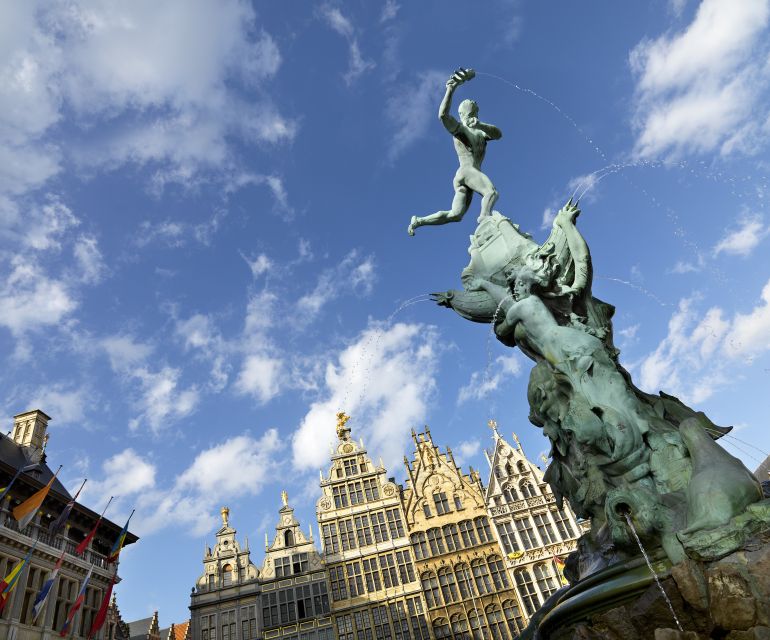
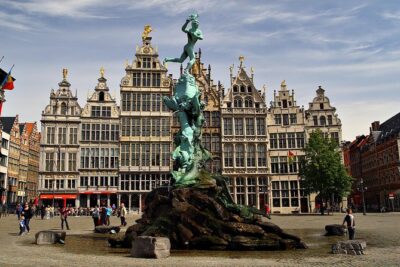
- Meeting at Brabo Fountain, Grote Markt
- City Hall and Guild Houses: Antwerp’s 16th and 17th Century Power
- Our Lady Cathedral and Art by Flemish Masters
- Vlaeykensgang and Groenplaats: From Medieval Lanes to Open Square Views
- Meir and Rubens House: Art Power Meets Everyday Antwerp
- Antwerp Central Station: Late-19th-Century Grandeur You Can Still Feel
- Private Group Value: Price, Timing, and What You’re Really Buying
- Guide Style Matters, and You Can Feel It
- Comfort, Footing, and Who Should Skip This One
- Should You Book This Antwerp Historical Walking Tour?
- FAQ
- How long is the Antwerp Private 3-Hour Historical Sightseeing Walking Tour?
- Where do we meet the guide?
- Is this tour private or shared?
- What languages are available for the live guide?
- What is included in the price?
- Are entrance fees and food included?
- What should I bring?
- Is the tour suitable for wheelchair users or limited mobility?
- Is there free cancellation, and can I reserve without paying yet?
Key Highlights You’ll Actually Notice
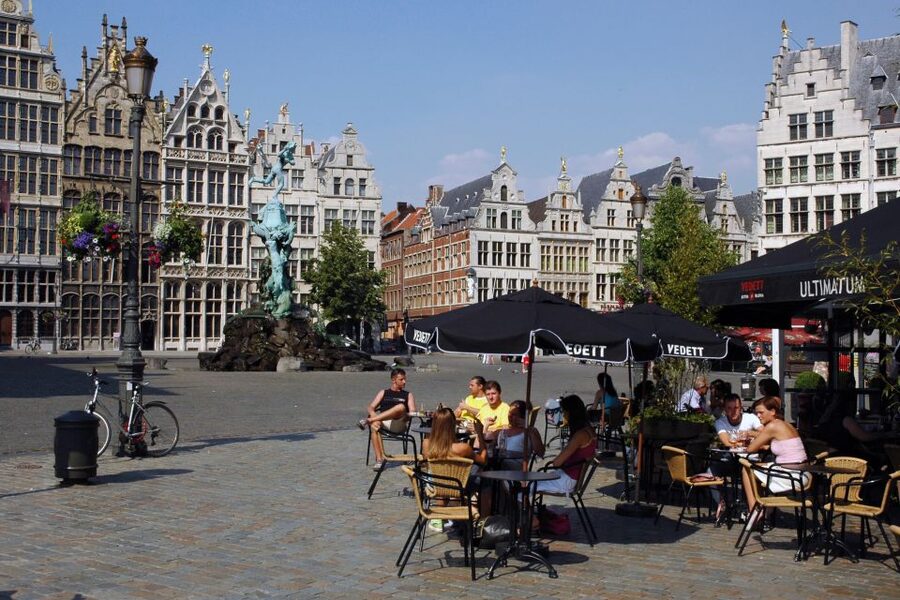
- Grote Markt and the Brabo Fountain (inaugurated 1887), a perfect start point for city orientation
- Renaissance City Hall plus 16th and 17th century guild houses, explained like you’re reading Antwerp’s business history
- Our Lady Cathedral and Flemish master art, where art and architecture meet
- Vlaeykensgang and Groenplaats, narrow medieval streets to open square views
- Rubens House exterior views linked to Pieter Paul Rubens and Antwerp’s artistic identity
- Antwerp Central Station tour, end-of-19th-century grandeur with real daily energy
More Guided Walks in Antwerp
- Historical Walking Tour: Legends of Antwerp
★ 5.0 · 1,837 reviews - Antwerp: City Highlights Walking Tour
★ 4.7 · 816 reviews - Antwerp: Historical Walking Tour in the Old City
★ 4.8 · 373 reviews - Historical Walking Tour in Antwerp Old City
★ 5.0 · 277 reviews - Evening Walking Tour: The Dark Side of Antwerp
★ 5.0 · 193 reviews
Why This 3-Hour Private Antwerp Walk Makes Sense
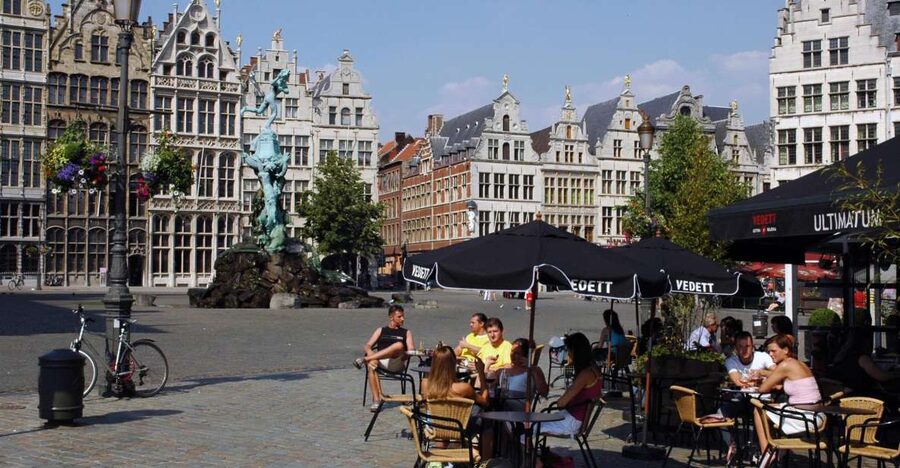
A private walking tour in Antwerp is a smart way to see a lot without getting lost in the maze of beautiful streets. In just 3 hours, you hit the city’s most recognizable anchors, then connect them with architecture and context so it all clicks together.
The big advantage is that you’re not stuck to a one-size-fits-all group rhythm. This is a private group format up to 20 people, with a live guide available in Dutch, English, French, and German. That means you can get explanations at the right level, and you can ask questions as you go.
Also, the route is built for flow. You start in the old quarter around Grote Markt, work through the center’s major monuments, and finish at Antwerp Central Station, which is a natural “wrap-up” landmark. It helps you leave with a map in your head, not just photos on your phone.
Meeting at Brabo Fountain, Grote Markt
You begin at Brabo Fountain at Grote Markt, Antwerp’s central square in the old quarter. It’s a strong meeting point because it’s visual and easy to recognize, and the fountain itself makes a nice first anchor before you start walking.
The fountain is inaugurated in 1887, and your guide uses that detail to connect the square to Antwerp’s long public-life story. Even if you’ve never studied the city, standing here gives you the layout: where the square sits, where key buildings face you, and how the streets branch off.
This start also sets the tone. Antwerp’s charm isn’t just “pretty streets.” It’s the sense that people have gathered in this exact area for centuries. A good guide will make the square feel like a living room of the city, not just a backdrop.
Practical tip: wear shoes you’re willing to stand in at the fountain. You’ll likely spend a bit of time oriented here before moving on.
City Hall and Guild Houses: Antwerp’s 16th and 17th Century Power
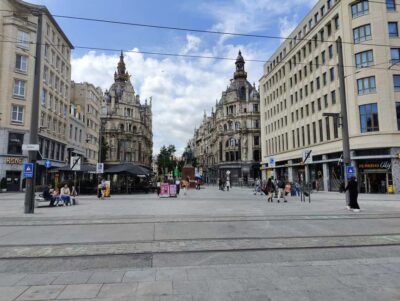
From Grote Markt, you head to the Renaissance City Hall and the surrounding 16th and 17th century guild houses. This is the heart of why Antwerp looks the way it does. The skyline is shaped by buildings that were designed to signal status, wealth, and civic pride.
What I like about this stop is the “readability” of the architecture. From the street level, you can notice how the buildings cluster, how their details catch your eye, and how the guide turns those details into actual stories about Antwerp’s past. You’re not just seeing facades. You’re learning what the facade was trying to say.
These guild houses dominate the city center, and the tour gives you just enough time to look closely without feeling stuck. The buildings are known for their striking design, and your guide helps you understand the architectural language so it feels less random and more purposeful.
Potential drawback here is simply attention span. If you rush through architecture stops on your own, you might miss the meaning. With a guide, you’ll be nudged to slow down and notice things like how the buildings relate to each other, not just how each one looks alone.
Our Lady Cathedral and Art by Flemish Masters
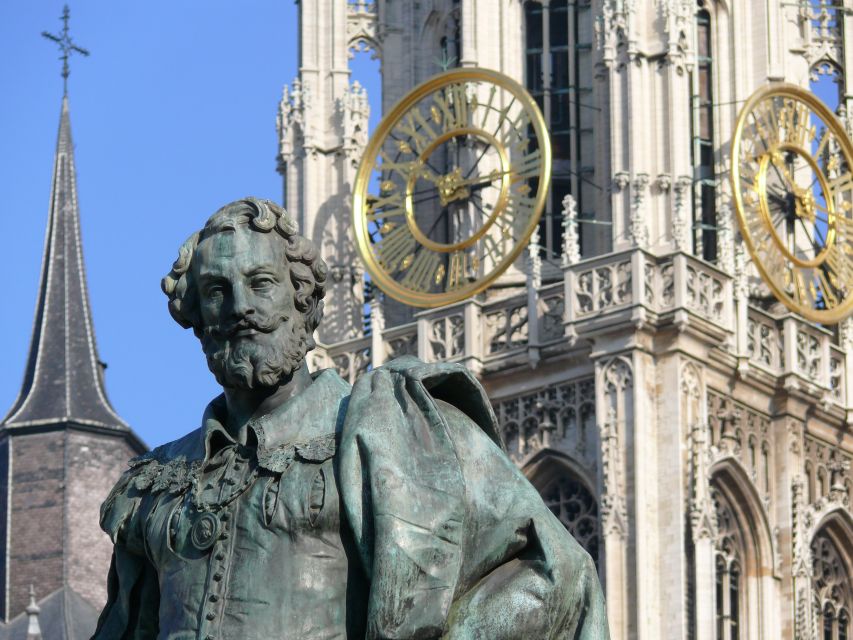
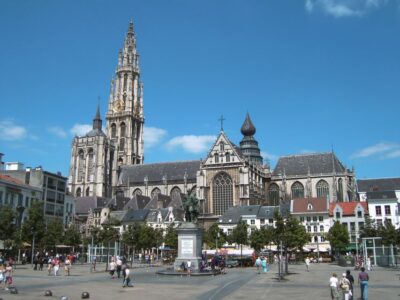
Next comes Our Lady Cathedral, where the focus shifts from architecture to art. The cathedral houses a collection of art pieces by famous Flemish masters, and the guide helps connect the artwork to Antwerp’s identity.
Even if you’re not a hard-core art person, this stop works because it gives you a reason to pay attention beyond decoration. You start to see Antwerp as a city that produced, collected, and displayed major work, not only as a place of streets and squares.
You should also plan for the reality of museum-style viewing. Entrance fees are not included, so if there’s any charge for viewing or specific areas, you’ll handle it yourself. This is one of those “budget small” details that matters, especially if you’re comparing tours.
Try to keep your eyes moving between the art and the architecture. The cathedral setting is part of the experience. You’ll likely leave with a better sense of why Antwerp’s visual culture is so closely tied to its religious and civic landmarks.
More History Tours in Antwerp
Vlaeykensgang and Groenplaats: From Medieval Lanes to Open Square Views
After the major monuments, the tour moves through the medieval part of the city: Vlaeykensgang. This area is known for narrow streets and crooked alleyways, so it feels different right away. The city changes texture here, and your guide uses the contrast to help you understand how Antwerp grew and shifted over time.
This stop is not about speed. It’s about atmosphere and orientation. When you walk these tight passages with context, you start recognizing Antwerp’s character as a sequence of old neighborhoods and older street logic.
Then you reach Groenplaats Square, an open moment in the middle of the maze. It’s a nice mental reset. The guide helps you connect what you saw in the lanes to what you’ll see next in the more public, street-facing parts of the city.
One more practical note: old streets can be uneven, so this is where good shoes matter most. If you’re sensitive to footing, take your time in the alleys and let the guide set the pace.
Meir and Rubens House: Art Power Meets Everyday Antwerp
From Groenplaats, you walk toward Meir, Antwerp’s most popular shopping street. It’s a useful transition because it shows how “important” Antwerp is not locked in the past. The city’s center is active, and the walking tour uses that energy to keep you grounded in present-day Antwerp.
Then you pass by The Rubens House, home and atelier of Pieter Paul Rubens. Even without a full inside visit (you’re described as passing by), the stop matters because it connects Antwerp’s art reputation to a real person and a real place. Rubens isn’t an abstract name here. The building ties the story to Antwerp’s daily geography.
This part also helps you build a map of interests. If you love art, you’ll see why Rubens belongs in the middle of town. If you love city life, Meir gives you the sense of where people actually spend time now.
Small expectation check: the tour’s guided, time-focused visit is called out most clearly for Antwerp Central Station, so manage your expectations for how long you’ll linger around shop streets and exterior stops.
Antwerp Central Station: Late-19th-Century Grandeur You Can Still Feel
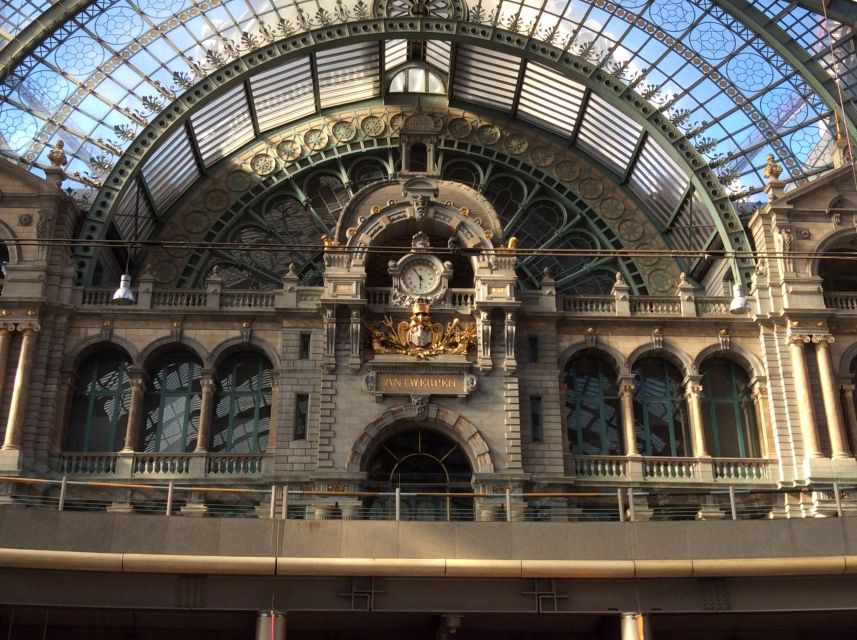
The tour ends with a guided visit to Antwerp Central Station, a beautiful building constructed at the end of the 19th century. This is the perfect finish because the station is grand in a way that grabs you instantly, but it’s also practical. People use it. Trains run. The building stays alive.
A guided visit helps because you don’t only admire the wow factor. You understand it. The guide’s job is to point out why the station became such a landmark and how it fits Antwerp’s broader story of growth and civic ambition.
Central Station also gives you a final “orientation win.” After walking through squares, lanes, and monuments, you end in a place that feels like a hub. It makes it easier to plan what you do next, whether you’re heading to another neighborhood or simply regrouping before dinner.
If you’re the type who loves stations (not just airports), you’ll probably enjoy this finish a lot. It feels like Antwerp saving its most cinematic details for last.
Private Group Value: Price, Timing, and What You’re Really Buying
The price is $341 per group for up to 20 people, and the tour lasts 3 hours. That pricing structure can be a great deal if you’re traveling with friends or family and can fill more seats. When the group is larger, the per-person cost drops fast. When it’s just two or three, it may feel like a premium.
What you’re paying for is time with a private guide and a route that hits the key landmarks in a logical order. You’re not wasting time figuring out what to see first. You’re also getting explanations in real time, in the language you need, from a human guide.
What’s not included is important for budgeting: entrance fees and food and drinks are not included. That means you should plan to cover any entry charges at sites along the way and grab water or a snack before or after. For some travelers, that’s no big deal. For others, it’s the difference between a smooth day and a slightly stressful one.
Overall, if you want an efficient, coherent Antwerp overview with context, the value is strong. It’s the kind of tour that turns “I saw a square and a cathedral” into “I understand why Antwerp grew where it did.”
Guide Style Matters, and You Can Feel It
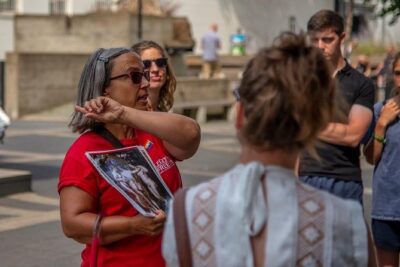
Private tours live or die by the guide. On this one, the guide experience seems to run in a friendly, relaxed direction. For example, I’ve seen guides like Rosemarie described as warm, easygoing, and funny, with solid knowledge and a comfortable pace. Another guide, Luc, is described as thorough about the plan at the start, then responsive to what people want to see.
That adaptability is real value. If you have a question about a guild house detail, or you want to spend a little more time looking at a specific building, a good guide can usually steer you. In at least one case, the tour experience was described as allowing time to view individual buildings more closely, not just pass-by sightseeing.
There is one practical sound reality to keep in mind. Some streets can be loud. If you find it hard to hear in the open square areas, stand closer to the guide and angle your body toward them. It sounds basic, but it works.
If you’re traveling with kids, grandparents, or mixed interests, this kind of flexible guidance can make the difference between “walking tour regret” and a day everyone enjoys.
Comfort, Footing, and Who Should Skip This One
This tour asks for comfortable shoes and comfortable clothes for 3 hours of walking. That’s not just a label. The route includes the older street pattern of Vlaeykensgang, with narrow lanes and crooked alleyways. Expect uneven ground and tighter turns where you need balance.
The tour is not recommended for people with limited mobility, and it’s not suitable for wheelchair users. If that applies to you or to anyone in your party, you’ll likely be happier choosing a different format that matches your pace and mobility needs.
Who tends to love this tour?
- People who want a guided city-center overview without over-planning
- Travelers who like architecture and art, and want context
- Families and friends who can benefit from a private guide
- Anyone meeting Antwerp for the first time and wanting orientation fast
If you’re comfortable walking through historic areas and you enjoy explanations, this will feel like a smart use of your time.
Should You Book This Antwerp Historical Walking Tour?
Book it if you want a clean, well-paced introduction to Antwerp’s signature sights, with a guide helping you connect the dots between Grote Markt, guild houses, cathedral art, and Antwerp Central Station. The private format up to 20 people makes it especially good for groups who want flexibility and someone to answer questions.
Skip it if mobility is an issue. Since the tour is not suitable for wheelchair users and is not recommended for limited mobility, you might struggle on the older streets.
If you’re choosing between an unstructured self-walk and a guided route, this one is the guided route. You get context, timing, and a logical finish in Central Station that helps you plan the rest of your day.
FAQ
How long is the Antwerp Private 3-Hour Historical Sightseeing Walking Tour?
The tour lasts 3 hours.
Where do we meet the guide?
The guide meets you at the Brabo Fountain at Grote Markt.
Is this tour private or shared?
This is a private group tour.
What languages are available for the live guide?
The guide is available in Dutch, English, French, and German.
What is included in the price?
A private guide is included.
Are entrance fees and food included?
Entrance fees and food and drinks are not included.
What should I bring?
Bring comfortable shoes and comfortable clothes.
Is the tour suitable for wheelchair users or limited mobility?
No. It is not recommended for people with limited mobility, and it is not suitable for wheelchair users.
Is there free cancellation, and can I reserve without paying yet?
Free cancellation is available up to 24 hours in advance for a full refund, and you can reserve now and pay later.
Latest from Antwerp



Historical Tours, compared.
Historical Tour with Chocolate & Waffle Tasting
Read our review →
Historical Walking Tour with Chocolate & Waffle Tasting
Read our review →
THE Storytelling Tour of Bruges | First Day Must | History & Tips
Read our review →
Browse the lists this tour appears in