
Reviewed · HISTORICAL TOURS
Ghent: 40-Minute Historical Boat Tour of City Center
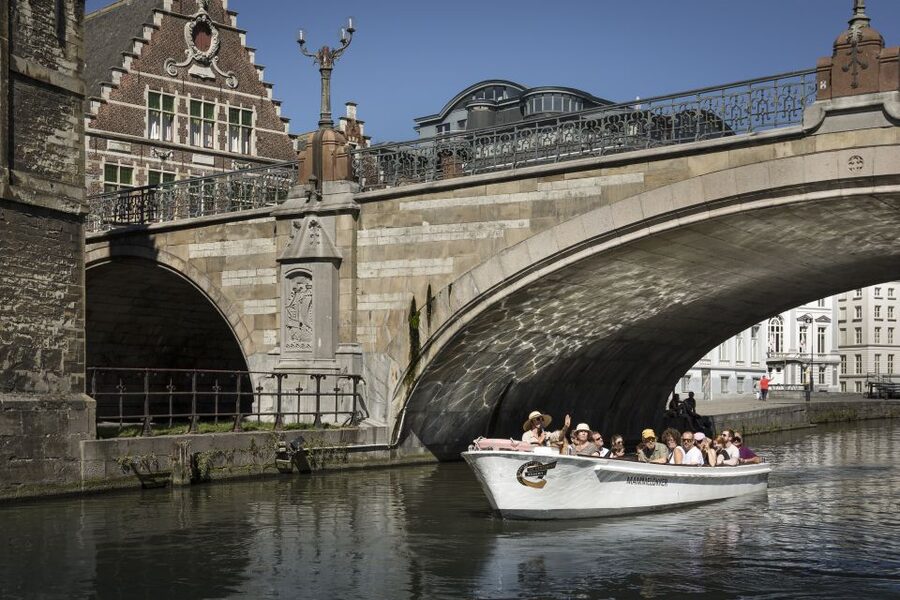
Ghent looks different when you see it from water, not sidewalks. This 40-minute city-center boat tour gives you a fast, low-effort overview of Medieval Ghent, guided with jokes and clear storytelling that brings landmarks like the Castle of Counts into focus. It also runs on multiple languages, so you can follow along without playing translation bingo.
Two things I especially like: the route is built around the most photogenic waterfront spots, and the guide usually makes the history feel personal rather than like a textbook. One thing to consider is that the boat can be open or covered depending on weather, and the covered option can take a slightly different course.
In This Review
- Key things to know before you go
- Entering Ghent From the Water: Why This 40-Minute Cruise Works
- Getting There Without Confusion: Graslei 4 and the Right Jetty
- The Route in Plain English: What You See and Why It Matters
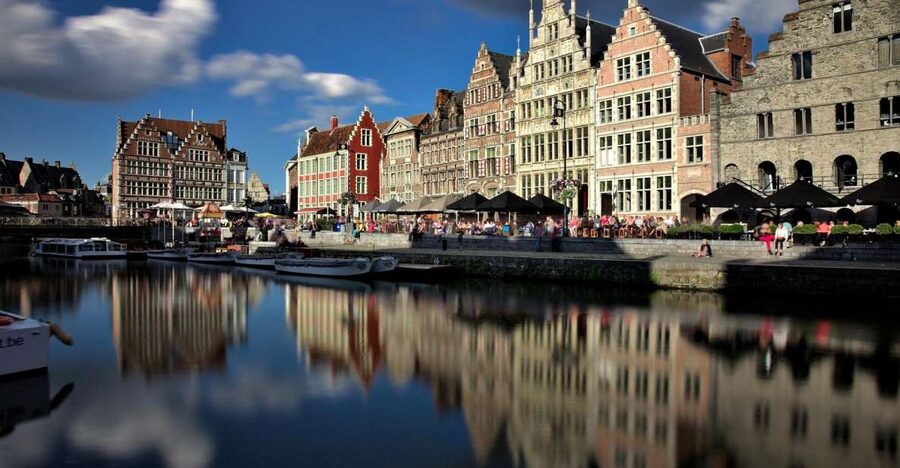
- Graslei: The waterfront postcard, up close
- Blauwe vogels and the light artwork
- Great Butcher’s Hall: where industry shaped the city
- Dulle Griet: a dramatic name and a strong silhouette
- Old Fish Market: food commerce, canal life
- Gravensteen, the Castle of Counts: steep walls from the river
- Rabot: the last stretch before returning to Graslei
- The Guide Factor: Live Storytelling That Actually Helps
- Price and Value: Why $12 for 40 Minutes Feels Reasonable
- Weather and Timing: Open Boat, Covered Boat, and Photo Light
- Language Options: What You Can Expect to Follow
- Who This Tour Suits Best (and Who Should Think Twice)
- Should You Book This Ghent Boat Tour?
- FAQ
- How long is the Ghent historical boat tour?
- Where do I meet for the boat tour?
- What languages does the live guide speak?
- Are the boats open-air or covered?
- Are departures at fixed times?
- Is the tour refundable?
- Is the tour wheelchair accessible?
- Is written tour text available in other languages?
Key things to know before you go
- Graslei 4 departure: you start at the Graslei jetty, near the white and red boat-house.
- Castle of Counts views: you pass the steep walls of Gravensteen from the river.
- Weather-aware boats: you’ll get an open or covered boat depending on conditions.
- Live guide in Dutch, English, French: plus written tour text is available in Spanish, Italian, and German.
- Timing flexibility: departures are not fixed, so check with the cashier for the next boat.
More City Sightseeing in Ghent
- Ghent: Guided City Tour with Food Tastings
★ 4.8 · 228 reviews - Ghent: City Highlights and Hidden Gems Guided Bike Tour
★ 4.7 · 196 reviews - e-Scavenger hunt Ghent: Explore the city at your own pace
★ 4.5 · 41 reviews - Ghent: Guided City Tour with Chocolate Tastings
★ 4.8 · 36 reviews - e-Scavenger hunt Kortrijk: Explore the city at your own pace
★ 4.5 · 15 reviews
Entering Ghent From the Water: Why This 40-Minute Cruise Works
If you have limited time in Ghent, a short boat ride is one of the most efficient moves you can make. You get a guided pass along the riverfront without the constant stop-and-go of walking. The time also matters: at about 40 minutes, it is long enough for real context, but short enough that you will still have energy to explore on foot afterward.
The tour is built around the city’s most recognizable waterfront scenes. You start where Ghent’s canals feel most classic, then you glide past historic buildings and river sights that are tough to fully appreciate from streets. And because the guide is live and multilingual, you do not feel stuck waiting for one person’s pace. In fact, guides often deliver the narration in multiple languages during the same outing, so different language groups stay in sync.
The other big reason to like this format is how it helps you “read” Ghent. When you see the facades and fortifications from the water, you instantly understand why the city grew where it did and how powerful families and city authorities shaped the waterfront. A good boat guide turns that into something you can remember later when you walk those same areas.
Getting There Without Confusion: Graslei 4 and the Right Jetty
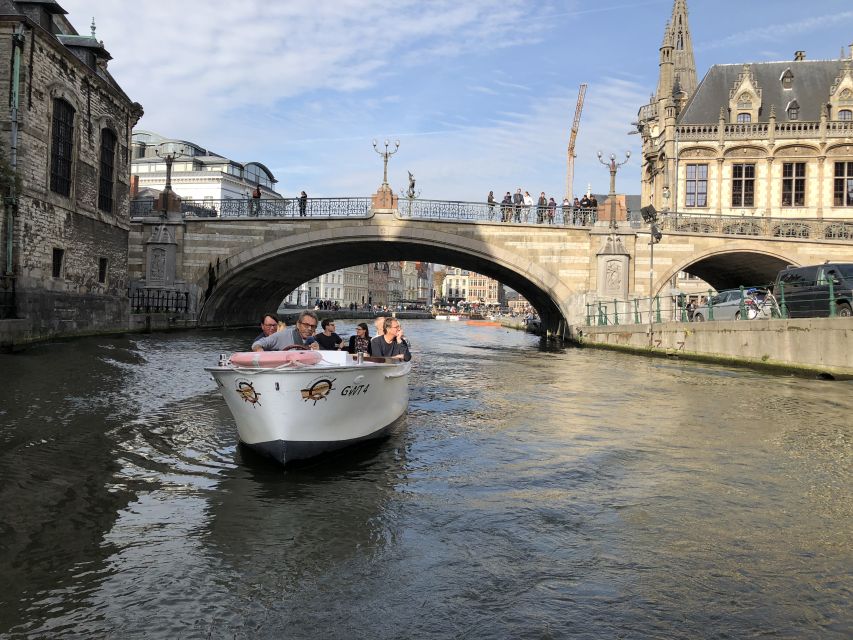
Logistics are simple, but Ghent water tourism has more than one company and more than one jetty. Your meeting point is the Graslei Jetty, at Graslei 4, near number 7 by the white and red boat-house for Ghent Watertoerist.
Do not mix it up with the other side of the water where you may see boats labeled differently, like Bootjes van gent. If you are unsure, stand where the jetty sign and the boat-house match the Ghent Watertoerist setup, then ask the staff which boat is next.
Also, departures are not fixed like a train schedule. The operator notes that you can check with the cashier to find out when the next boat leaves. In practice, that means you should arrive with a little buffer, especially if you want a specific time of day for lighting.
The Route in Plain English: What You See and Why It Matters
This is a city-center cruise, so you do not spend time “traveling between sights.” Instead, you move along a loop of major points tied to Ghent’s medieval identity. The guide narrates the story behind each stop as you approach, which helps you recognize details you might otherwise miss from a bridge.
Here is what the cruise feels like stop by stop.
Graslei: The waterfront postcard, up close
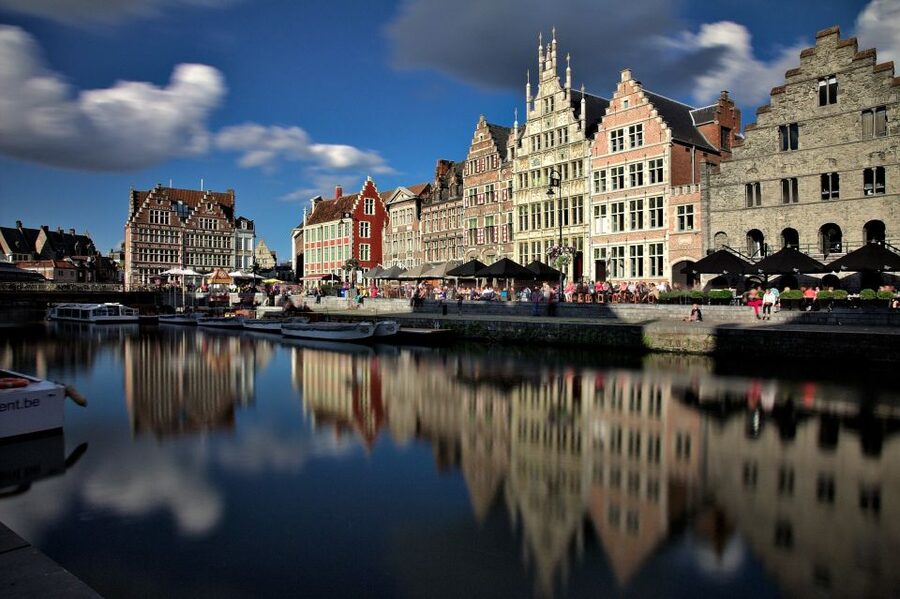
You begin at Graslei, a stretch of historic houses and riverfront architecture that instantly signals why this city became a trading and cultural center. From the water, the house fronts feel more grounded and less like a distant photo. The guide connects the look of the buildings to the city’s long arc, so you are not just admiring facades.
This is also a great moment to orient yourself. After a few minutes on the water, you can usually picture where your favorite view would be from the footpath later.
More History Tours in Ghent

Blauwe vogels and the light artwork
As you continue along, you pass the Blauwe vogels, tied to a light artwork associated with Dhr Maeterlinck. This is the kind of stop that reminds you Ghent is not only medieval stone and canals. Even with the focus on older eras, the riverfront also hosts modern additions that interact with the city in a visual way.
If you like photography, this part can be especially interesting because light and reflections often help the artwork read clearly from the water.
Great Butcher’s Hall: where industry shaped the city
Next comes the Great Butcher’s Hall. The connection to food and trade matters here, because this is one of the ways you can understand city power beyond castles and kings. From the river, the building’s presence feels more imposing than it might from a plaza.
As the boat moves, you get a sense of scale, which helps you appreciate how Ghent functioned daily, not just how it looked on special days.
Dulle Griet: a dramatic name and a strong silhouette
Then you pass Dulle Griet. The story behind the name is the sort of detail a good guide brings into focus, turning what could feel like another landmark into something memorable. From the water, you also get an angle that makes the architecture feel rugged and purposeful.
This stop is a good reminder: Ghent’s identity is partly built through character and local legend, not only official history.
Old Fish Market: food commerce, canal life
The cruise continues past the Old Fish Market. This part of the route reinforces a simple theme. Ghent’s riverfront was a working system, and marketplaces were tied to the water because waterways moved goods faster than roads.
You get more than a pretty view here. The guide’s narration helps you connect the present-day setting to the everyday commerce that once made this area come alive.
Gravensteen, the Castle of Counts: steep walls from the river
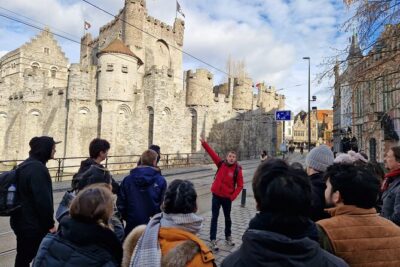
The highlight for many people is Gravensteen, often referred to as the Castle of Counts. Seeing the fortress from the water is different from seeing it across a walkway. The steep, rugged walls feel closer and more formidable because you view them at water level.
This is where the tour’s pacing clicks. By the time you reach this section, you have seen the civic and commercial side of Ghent, so the castle reads as the power center behind those daily activities. The boat angle also helps you imagine what life and authority looked like when the river was a major artery.
If you are the type who likes to stand and stare at architecture, this is your moment.
Rabot: the last stretch before returning to Graslei
Finally, you reach Rabot before returning to Graslei. This stretch ties the cruise together as a full loop through the city’s riverfront identity. Even if you do not catch every detail, you will usually leave with a clearer map in your head of how Ghent’s neighborhoods and landmarks relate along the waterline.
When you get back to the jetty, you are not closing the day. You are opening it. Use the cruise as your mental base layer, then decide what to revisit on foot.
The Guide Factor: Live Storytelling That Actually Helps
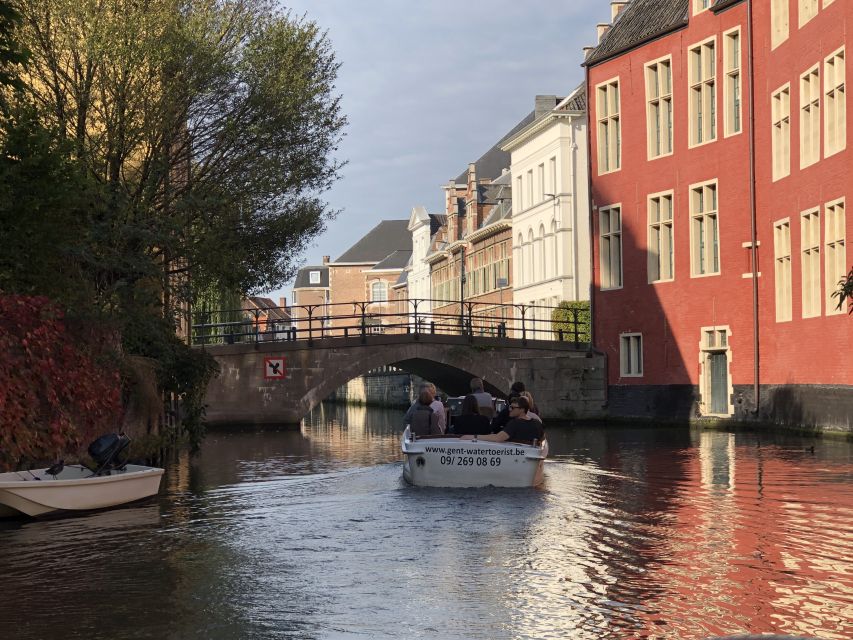
A boat tour is only as good as the person talking while you drift. This one wins because the guide has strong communication skills and tends to mix explanation with light humor. It is also common for the guide to speak across multiple languages during the same tour, including Dutch, English, and French, so you do not end up with a half-finished story.
You will likely notice three things about a well-run narration on this route.
First, the guide ties the visuals to the big picture. You see the buildings, then you hear why they mattered. That rhythm makes the city easier to remember.
Second, the guide keeps it moving. At 40 minutes, there is no time for long detours. Good guides make quick connections without rushing you past the point of interest.
Third, you get practical orientation. One of the best outcomes of a cruise like this is that you leave knowing what area you want to explore next, instead of wandering randomly and hoping you find something worthwhile.
If your group wants to take photos, the guide’s pacing can also matter. When the narration matches your position along the route, you are more likely to catch the landmark at its best angle rather than only after you have drifted past.
Price and Value: Why $12 for 40 Minutes Feels Reasonable
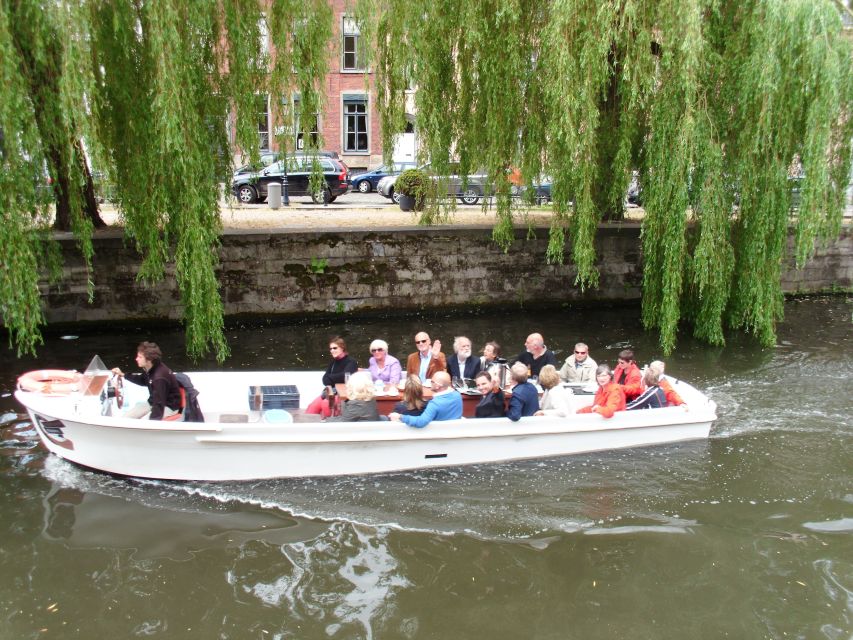
At about $12 per person for a 40-minute guided cruise, this is priced like a high-value add-on rather than a major splurge. The key is what is included: you get a live guide plus a water-level view of multiple landmark areas in one shot.
Think of it like buying a fast orientation pass. For many visitors, the cruise becomes the reason walking later feels easier. You can spot where the castle sits relative to the market zones, and you start seeing the city as a connected system, not separate photo stops.
Also, the tour has operational options for planning flexibility. You can reserve in advance without paying immediately, which helps if your day is still in flux.
The one cost consideration is weather comfort. If you choose an open boat, you may feel the cold or rain more than on a covered one. Still, the itinerary remains the same general idea, and the guide keeps the narrative going either way.
Weather and Timing: Open Boat, Covered Boat, and Photo Light
Ghent weather can change quickly, and this tour adjusts with the boat setup. Depending on conditions, you may ride in an open or covered boat. The operator also notes that the covered boat can have a slightly different course.
That means you should go in with the right expectation: your route will still center on the main riverfront story, but the exact angles and how you line up with each landmark can vary. If you are flexible and want comfort, the covered option is often the smart pick in drizzly or windy weather.
For timing, consider lighting. If you can fit the tour near the late afternoon or early evening, you may get better photo conditions than midday glare. The river reflects light in a way that can look dramatic right around sunset.
Practical advice: if you want the best photos, stand where your view is clearest once the boat slows near key sights. Then let the guide finish the story before you move on to the next landmark.
Language Options: What You Can Expect to Follow
This is a multilingual experience. The live guide runs in Dutch, English, and French. If you need additional support, there is written tour text available in Spanish, Italian, and German.
That matters for real travel comfort. You can stay engaged even if your language skills are mixed, and you do not have to rely on guesswork from visual cues alone. At the same time, do not expect every word to be translated perfectly in every moment, especially when multiple groups are involved. The overall goal is clear: you should understand the landmarks and the main historical connections as the boat passes them.
Who This Tour Suits Best (and Who Should Think Twice)
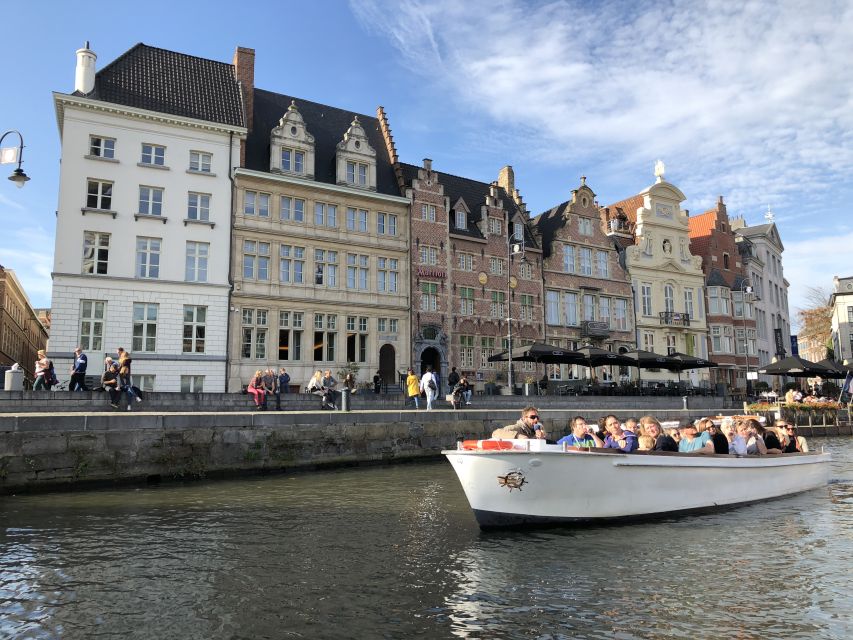
This is a strong match for first-timers in Ghent who want orientation fast. It is also ideal for anyone who prefers seeing the city from a moving viewpoint, like you would on a guided river cruise elsewhere.
It also works well at the beginning of your trip. If you do this early, you can return later to your favorite stops with a clearer sense of where you are.
On the other hand, it is not suitable for people with mobility impairments or wheelchair users. You should consider alternative options if access is a concern.
If you hate rushing, this is also a nice pace. Forty minutes is long enough to feel worthwhile, short enough that it does not dominate your schedule.
Should You Book This Ghent Boat Tour?
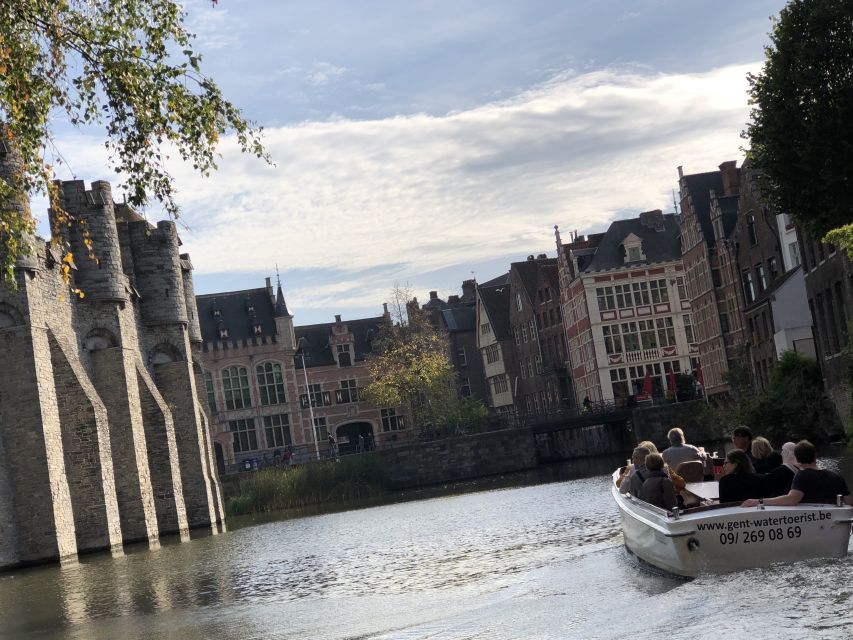
Book it if you want a practical, guided introduction to Ghent’s riverfront. The water-level views of Graslei and Gravensteen and the live storytelling in multiple languages make it a strong use of time, especially at about $12 for a 40-minute ride.
Skip it or replace it with another plan if you need wheelchair access or if you already know Ghent well and want a more specialized deep-dive tour. If you are still deciding, my rule is simple: if you want to understand the city quickly, a guided cruise like this is one of the easiest wins.
FAQ
How long is the Ghent historical boat tour?
The tour lasts 40 minutes.
Where do I meet for the boat tour?
You meet at the Graslei Jetty, near number 7, by the white and red boat-house for Ghent Watertoerist. The address given is Graslei 4.
What languages does the live guide speak?
The live tour guide is available in Dutch, English, and French.
Are the boats open-air or covered?
Boat tours run in open or covered boats depending on weather conditions.
Are departures at fixed times?
No, there are no fixed departures. You should check with the cashier when the next boat leaves.
Is the tour refundable?
Yes. There is free cancellation, with a full refund if you cancel up to 24 hours in advance.
Is the tour wheelchair accessible?
No. It is not suitable for people with mobility impairments or for wheelchair users.
Is written tour text available in other languages?
Yes. Written tour text is available in Spanish, Italian, and German.
On the Water in Ghent
- Ghent: 50-Minute Medieval Center Guided Boat Trip
★ 4.5 · 5,637 reviews - Ghent: 40 Minute Medieval Center Guided Boat Tour
★ 4.4 · 884 reviews - 40-Minute Guided boat trip in medieval Ghent
★ 4.0 · 368 reviews - Guided Boat Trip in Ghent
★ 4.0 · 181 reviews
Latest from Ghent




Historical Tours, compared.
Historical Tour with Chocolate & Waffle Tasting
Read our review →
Historical Walking Tour with Chocolate & Waffle Tasting
Read our review →
THE Storytelling Tour of Bruges | First Day Must | History & Tips
Read our review →
Private Historical Tour: The Highlights of Bruges
Read our review →Browse the lists this tour appears in