
Reviewed · HISTORICAL TOURS
Private Bruges Guided Tour: Discover City’s Rich Trade History
Bruges feels like a trading hub again. This private tour takes you through the city’s 14th-century commerce story, using real landmarks tied to cloth, money, and foreign merchant life. It’s led by an official licensed city guide, so the route comes with names, context, and the why behind what you see.
I especially like how the tour builds from the big civic stage at the Markt to the specialized neighborhoods where different guilds and nations left their mark. I also like the international angle, because Bruges trade was never only local, you see that in the Italian and Spanish quarters.
One consideration: it’s a 3 hours 30 minutes walking-focused tour with a moderate fitness level, so wear comfortable shoes and plan for cobblestones and steady movement.
In This Review
- Key things to know before you go
- Why Bruges trade history changes how you see the city
- Starting at the Markt, where business ran the city
- Steenstraat Quarter and the guild lanes that shaped daily life
- Vlamingstraat and the Italian Quarter, finance and foreign lodges
- Sint-Jakobskerk, elite church art that mirrors power
- Naaldenstraat and Hof Bladelin, the banker links between Bruges and the Medici
- Spanjaardstraat, the Spanish quarter and diplomatic docking
- Jan Van Eyckplein, art plus diplomacy under the Count of Burgundy
- Adornes Estate, a Genoese trader family’s family church
- Burg Square and the political heart of Bruges
- Huidenvettersplein and Gruuthusemuseum, leather craft and palace power
- Onze-Lieve-Vrouwekerk, the strategic church that signals pride and art
- How long the tour lasts, where it starts, and how to plan your day
- Price value, what you get for $166.42 per person
- Who this Bruges trade tour is best for
- Should you book this private Bruges guided tour?
- FAQ
- How long is the Private Bruges Guided Tour?
- What is the price per person?
- Is this a private tour?
- Who will guide me through Bruges?
- Where does the tour start?
- Where does the tour end?
- Are there admission tickets included for the stops?
- What ticket format do I use on the day?
- What happens if the weather is bad?
- Can I cancel for a full refund?
- Is it suitable if I have moderate physical fitness and can I bring a service animal?
Key things to know before you go
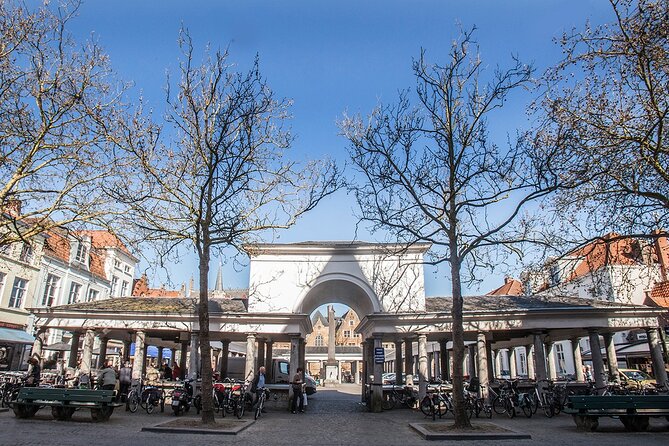
- Private group time: only your group participates, so you can go at a calmer pace.
- Official licensed city guide: expect place-specific explanations, not generic sightseeing.
- International quarters on the route: Italian lodges, the Spanish quarter, and Burgundian connections.
- Trade powered by guilds: leather makers, carpenters, bakers, and other guild signals show up again and again.
- Landmarks, not just streets: churches and key civic squares anchor the stories.
- 3.5 hours with clear pacing: stops are timed, with quick hits and short photo breaks.
More City Sightseeing in Bruges
- Bruges PRIVATE City Kickstart Tour With Locals
★ 5.0 · 174 reviews - Bruges: City Bike Tour with a Local
★ 5.0 · 116 reviews - e-Scavenger hunt Bruges: Explore the city at your own pace
★ 4.5 · 58 reviews - “Hidden Brugge” Photo Tour – 2hr open city tour & workshop
★ 5.0 · 27 reviews - Bruges: Ticket Stadhuis (City Hall)
★ 4.2 · 27 reviews
Why Bruges trade history changes how you see the city
Bruges can look like a picture-postcard city from a distance. Up close, you realize it wasn’t just pretty, it was useful. Trade brought people, paperwork, money, and influence, and that shows up in the streets, the buildings, and even the neighborhoods named for who was there.
This tour is built to help you connect the dots. Instead of treating Bruges as a museum you walk through, you treat it like a network of commercial power. You’ll move from market space to guild lanes, then into the quarters where foreign merchants set up lodging, finance hubs, and diplomatic ties.
And you get guided context the whole way. That matters here, because a lot of Bruges charm comes from details you can miss if you rush. If you enjoy history you can read into stonework and city layout, you’ll get a lot out of this format.
Starting at the Markt, where business ran the city
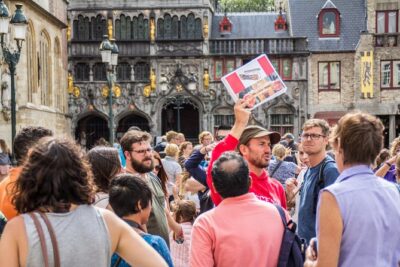
The tour kicks off at the Markt, Bruges’ market square, and you start by getting your bearings fast. This is the commercial heart of the city, and the landmarks around it tell you why Bruges mattered in Europe’s trade network.
You’ll focus on the water halls, the cloth halls, and the guild houses. Even if you don’t know the terms yet, your guide explains what these places did, how trade functioned, and why the market square acted like the center of gravity for town life. This first stop is where the tour’s theme clicks into place.
Practical tip: the Markt is a natural photo magnet. If you want clear shots of building details, take one quick wide photo, then one tighter shot for signage or facade features before you continue.
Steenstraat Quarter and the guild lanes that shaped daily life
Next comes the Steenstraat Quarter, a focused walk through guild identity. Bruges didn’t just trade goods, it traded status, and guilds were the system that organized both.
Here you’ll see guild houses connected to the leather makers, the maconneries, and the carpenters and bakers guild. That lineup alone tells you a story. Different trades formed their own communities, and they built physical presence in the city.
What I like about this stop is how it gives you a way to interpret what you’re seeing later. Once you understand that guilds had real addresses and real buildings, other details start to make sense as you pass them.
A small drawback to plan for: these stops are short, about 20 minutes. If you want to linger and sketch, bring patience or plan a longer self-guided return later.
Vlamingstraat and the Italian Quarter, finance and foreign lodges
Then the route shifts to the Vlamingstraat area and the Italian Quarter. This is where Bruges starts to feel truly international.
You’ll hear about lodges tied to Genoese, Venitians, and Florentines. You’re not just hearing “Italians were here,” you’re getting the idea that merchants lived through networks, and those networks left architecture and institutions behind.
A highlight in this section is Inn Ter Beurze, described as the heart of finance. That’s a great anchor point for understanding Bruges’ trade engine. Finance wasn’t a separate topic, it was the glue connecting goods, credit, and long-distance business.
If you like stories with names and systems, you’ll likely enjoy this portion. It sets up the later stops about banking and diplomatic ties, so the tour doesn’t just list places, it builds a chain.
More History Tours in Bruges
Sint-Jakobskerk, elite church art that mirrors power
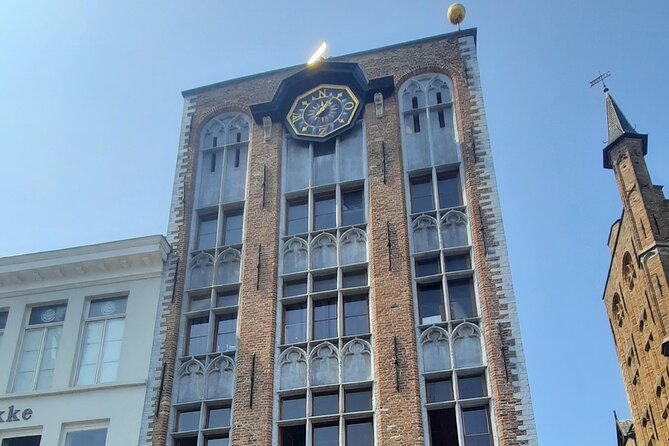
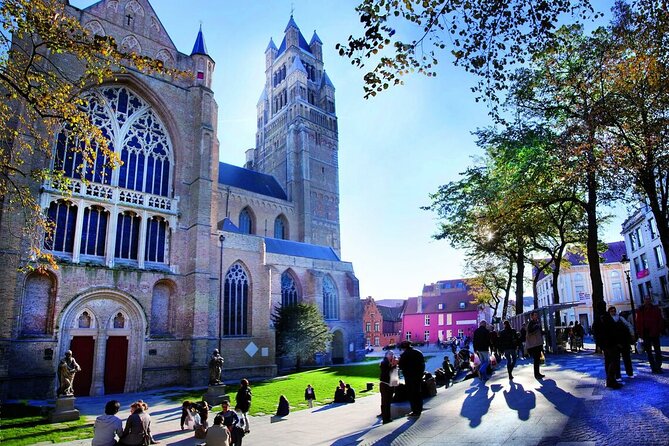
Next you’ll reach Sint-Jakobskerk, where the theme turns from commerce to status. This church is presented as a place tied to the elite, and the guide connects it to the art you can see there.
This stop works best if you pay attention to how wealth expresses itself. A trading city creates wealth, and then the wealthy invest in visible symbols. In Bruges, that often means churches that collect fine art and communicate social standing.
The stop is about 20 minutes, so you’re not getting an hour-long museum experience. Instead, it’s a guided spotlight that helps you know what to notice while you’re there.
Naaldenstraat and Hof Bladelin, the banker links between Bruges and the Medici
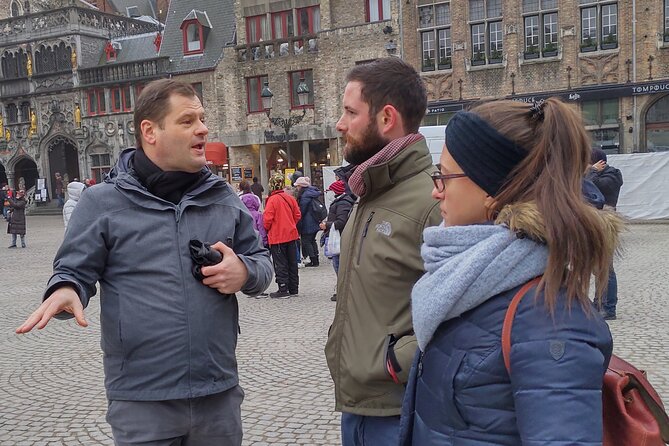
At Naaldenstraat, the tour points you toward Hof Bladelin, the residence of Thomaso Portinari and Pieter Blandelin. This is one of those stops where you get the feeling that money was international, not local.
The guide frames Portinari as a banker associated with the Medici, and Blandelin as a treasurer connected to the Counts of Burgundy. Those names give you something rare during a city walk: a direct line between Bruges buildings and major political and financial circles.
Why this stop is valuable: it shifts trade from goods to people and roles. It helps you understand that a city’s trade power depends on relationships, not only markets. When you stand in front of a residence like Hof Bladelin, you can picture the networks behind it.
Tip: if you like family and “who lived where” stories, this is a good moment to slow down and look for architectural cues that match the idea of elite residence.
Spanjaardstraat, the Spanish quarter and diplomatic docking
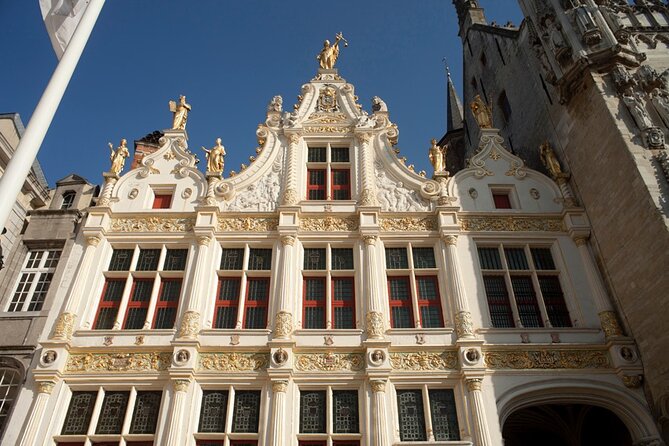
The route then moves to Spanjaardstraat, where you’ll see the Spanish quarter. The key detail here is practical and specific: it’s described as a docking place for the Spanish, along with Spanish embassies.
That combination matters. Trade cities didn’t treat diplomacy as a separate world. They handled foreign relationships where ships arrived, where messages traveled, and where merchants needed access.
This is also where you can feel the tour’s international theme deepen. Bruges becomes not just a trading city, but a meeting place for competing powers and cultures, all tied together by business.
This stop is short, about 10 minutes. That’s enough for the big idea, but if you want to linger at the street level, plan to return on your own later.
Jan Van Eyckplein, art plus diplomacy under the Count of Burgundy
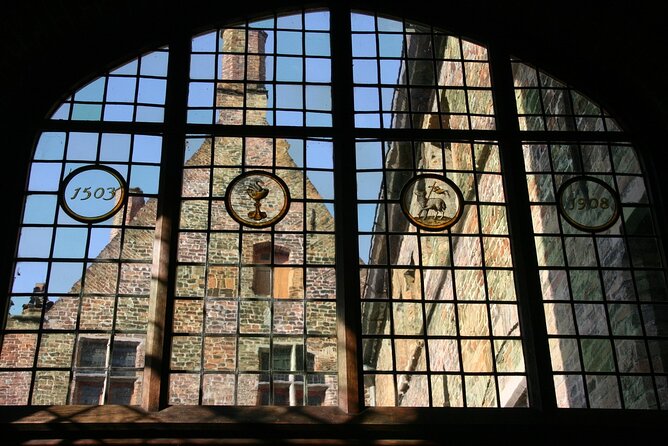
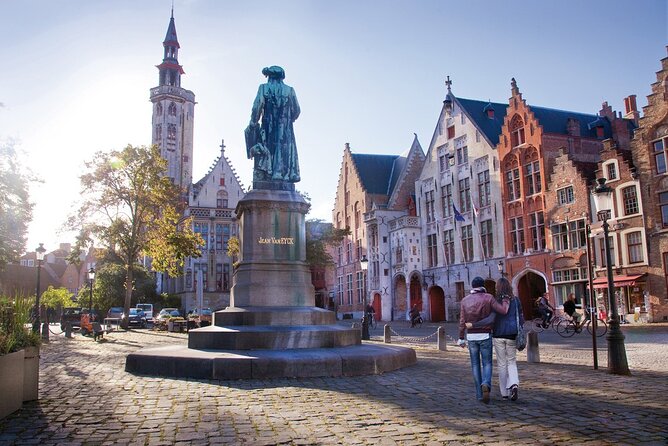
At Jan Van Eyckplein, the tour introduces Jan van Eyck in a way you might not expect if you only think of him as a painter. You’ll hear him described as a diplomat for the Count of Burgundy, so the story connects art with political function.
In the same area, you’ll see the Poorters lodge, the toll house, and the house of the pijnders. That set of details is perfect for the theme of the tour. Trade ran through rules and payments, and those physical buildings gave structure to movement and exchange.
I like this stop because it stops Bruges from feeling like a one-note history lecture. Art, governance, and commerce share space in the same city map.
If you’re an art fan, don’t just admire the name. Pay attention to how your guide links van Eyck’s role to the people who benefited from the Count’s influence. It changes how you think about artistic patronage.
Adornes Estate, a Genoese trader family’s family church
Next is The Adornes Estate, tied to the Adornes family. You’ll hear it described as the family church of a rich trader family from Genoa.
This is a great stop for travelers who like the human side of trade. Instead of only hearing about institutions, you get the sense of how wealth shaped personal life and family identity, even in religious settings.
The stop is about 15 minutes, and that pacing is smart. It gives you a focused story and enough time to notice what’s in front of you without turning the tour into a long detour.
Burg Square and the political heart of Bruges
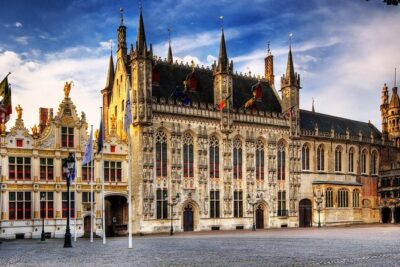
At Burg Square, the tour shifts from economic power to political power. You’ll see it described as the city’s political heart, with historic buildings connected to justice and civic life.
Key sights include the justice courts, the city hall, and the basilica of the Holy Blood. This is an important reminder that trade cities also needed legal systems and spiritual authority. If you’re trying to understand why Bruges stayed influential, this is the part of the story that explains how decisions got made.
The stop is about 25 minutes, longer than several others. That extra time works here because Burg Square is a “look and process” space. You want a moment to absorb the architecture and let the guide’s connections land.
Huidenvettersplein and Gruuthusemuseum, leather craft and palace power
The tour brings you to Huidenvettersplein, where you hear about the craft of the leather makers and their guild. This helps tie the early guild lane stop to a later, more specific craftsmanship story. It’s like the tour returns to a theme with more texture.
Then you’ll visit Gruuthusemuseum, presented as the magnificent city palace of the family of Gruuthuse, described as the most influential family of Bruges. This stop ties the tour’s whole theme together: trade created wealth, wealth created influence, and influence created buildings meant to last.
If you enjoy seeing how power changes form across a city, these two stops are worth your attention. They show the range from craft identity to elite palace residence.
Onze-Lieve-Vrouwekerk, the strategic church that signals pride and art
The final major stop is Onze-Lieve-Vrouwekerk. This is framed as a church tied to Bruges pride and its strategic city position, and it’s described as having the most important history and art in the city.
This is where you shift from civic and merchant stories into a bigger, symbolic conclusion. Even if you don’t plan to memorize every artwork detail, your guide’s framing helps you see why this church carries so much weight in Bruges.
The stop is about 20 minutes. That’s usually enough time to appreciate the setting and understand what makes the church central, without needing hours of indoor sightseeing.
How long the tour lasts, where it starts, and how to plan your day
The tour runs about 3 hours 30 minutes. You’ll start at Medi-MarketMarkt 5, 8000 Brugge, Belgium, and the end point is Church of Our Lady, Mariastraat, 8000 Brugge.
This matters for planning. You’ll be walking through the historic core with short, timed stops, so it helps to build in time for a coffee or a light lunch before or after. If you’re arriving from elsewhere in town, the route is noted as being near public transportation.
You should also know the tour requires good weather. If conditions are poor, you’ll be offered a different date or a full refund. That’s pretty important in Bruges, where the calendar can swing fast.
Price value, what you get for $166.42 per person
At $166.42 per person, you’re paying for three things that add up: a private experience, an official licensed city guide, and a route that hits major trade-linked areas plus churches and civic landmarks.
A practical plus: the tour includes stops where admission tickets are listed as free. That means you’re not stacking separate venue costs on top of the price for every stop.
Group discounts are available, which can make this a better value if you’re traveling with friends or family. Since it’s private, you also avoid the typical “walk-by-and-hope” effect of larger group tours. You get a tighter focus on the themes, trade and international influence, not just crowd management.
Who this Bruges trade tour is best for
This tour fits well if you like:
- city history that explains why buildings exist, not only what they are
- trade-linked storytelling, guilds, finance, and international quarters
- a guided walk that covers both civic life and art-focused landmarks
It’s also a smart choice for first-timers who want structure. Bruges is easy to fall in love with, but it’s also easy to wander without a mental map. This tour gives you a map made of themes, and themes are what help you remember what you saw.
Should you book this private Bruges guided tour?
Yes, if you want Bruges to feel like a living trading network, not just a postcard city. The route’s focus on guilds, the Italian Quarter, the Spanish quarter, and major civic and church landmarks gives you a strong framework for understanding how power worked.
I’d skip it or wait if you want a very slow pace, lots of interior time in museums, or long stops at each location. This is timed and efficient, built for guided context and movement.
If your idea of a great trip is learning names, roles, and relationships tied to real streets and buildings, this one is a solid bet.
FAQ
How long is the Private Bruges Guided Tour?
It lasts about 3 hours 30 minutes.
What is the price per person?
The price is listed at $166.42 per person.
Is this a private tour?
Yes. It is a private tour or activity, and only your group participates.
Who will guide me through Bruges?
The tour is led by an official licensed city guide.
Where does the tour start?
The meeting point is Medi-MarketMarkt 5, 8000 Brugge, Belgium.
Where does the tour end?
The tour ends at Church of Our Lady, Mariastraat, 8000 Brugge, Belgium.
Are there admission tickets included for the stops?
The stops listed in the route show admission ticket free.
What ticket format do I use on the day?
You receive a mobile ticket.
What happens if the weather is bad?
The experience requires good weather. If it is canceled due to poor weather, you will be offered a different date or a full refund.
Can I cancel for a full refund?
Yes. Free cancellation is available, and you can cancel up to 24 hours in advance for a full refund.
Is it suitable if I have moderate physical fitness and can I bring a service animal?
The tour notes a moderate physical fitness level and says service animals are allowed. It is also near public transportation.
Latest from Bruges
Historical Tours, compared.
Historical Tour with Chocolate & Waffle Tasting
Read our review →
Historical Walking Tour with Chocolate & Waffle Tasting
Read our review →
THE Storytelling Tour of Bruges | First Day Must | History & Tips
Read our review →
Browse the lists this tour appears in