
Reviewed · DIAMOND DISTRICT TOURS
Private Antwerp’s Diamonds and Jewellery Old City Center Historic Tour
Diamonds stop you in your tracks. Antwerp tells the story in real streets, with a private guide starting right in front of DIVA and moving through the lanes where gems, money, and craft all tangled together.
What I like most is the hands-on feel without the museum-only vibe. You’ll get designer atelier visits (including Pascale Masselis) plus street stops tied to how Antwerp built its reputation for diamonds and fine jewelry. I also love how the route mixes major anchors like Grote Markt with small workshops and goldsmith lanes, so you get the big picture fast.
One thing to consider: this is a historic old-city walk with selected studio access, not a nonstop show of diamond-cutting machinery. If your goal is to watch cutting hands at work for the whole tour, you may feel a bit stretched by the historical emphasis and the short stop times.
In This Review
- Key highlights you will actually care about
- Why this Antwerp diamond tour starts at DIVA, not a generic street corner
- Grote Markt to Wisselstraat: trade history you can see, plus a word lesson
- Saint Paul’s Church and its diamond treasury over 3,000 stones
- Zwartzustersstraat and Zirkstraat: where shop levels met workshop levels
- Pascale Masselis atelier visit: 18-carat, handcrafted, and made to order
- Lange Koepoortstraat and Wijngaardstraat: nation-house stories and modern goldsmith variety
- Rembrandt Jordan: ending at an art gallery, atelier, and jewelry shop
- Price, group value, and the 2-hour pacing reality
- Who this tour fits best (and who might want a different style)
- Quick travel tips so you get more from the walk
- Should you book this Antwerp diamond and jewellery old-city private tour?
- FAQ
- How long is the Antwerp Diamonds and Jewellery Old City Center Historic Tour?
- Where does the tour start and end?
- Is the tour private?
- What language is the tour offered in?
- What ticket information should I know for DIVA?
- Are the other stops free?
- What’s the price and group size?
- What happens if the weather is poor?
Key highlights you will actually care about
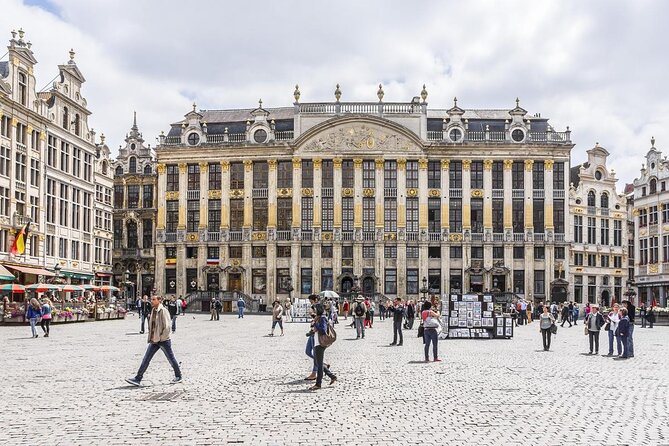
- Meet at DIVA, then connect the city’s diamond craft story to the streets you’re walking
- Designer studio access, including a visit to Pascale Masselis for unique, handcrafted 18-carat gold work
- Grote Markt and the trading fairs, where foreign merchants came to buy and sell gems
- Saint Paul’s Church and its diamond treasury of over 3,000 stones
- Goldsmith and silver lanes, including the historic nation house area tied to silversmithing
More City Sightseeing in Antwerp
- Antwerp: City Highlights Walking Tour
★ 4.7 · 816 reviews - Antwerp: City Highlights Guided Bike Tour
★ 4.7 · 529 reviews - Antwerp: Historical Walking Tour in the Old City
★ 4.8 · 373 reviews - Historical Walking Tour in Antwerp Old City
★ 5.0 · 277 reviews - Antwerp: City Brewery De Koninck Interactive Tour
★ 4.6 · 258 reviews
Why this Antwerp diamond tour starts at DIVA, not a generic street corner
I like tours that begin with the right “why.” This one does. You start in front of DIVA, museum voor diamant, juwelen en zilver, at Suikerrui 17/19. From the first minutes, your guide links Antwerp’s diamond and jewelry identity to the surrounding neighborhood, so when you step outside, everything feels connected instead of random.
The museum itself is a smart add-on after the walk. Admission to DIVA is not included, but the tour’s intro helps you know what to look for once you go inside. The practical upside: you’re not arriving at DIVA cold. You’re already fluent in the basics, like how Antwerp became a hub for diamond traders and cutters.
Also, this is a private experience. Your guide is limited to your group, so the pace is more realistic. If you want extra time at a particular atelier, you can usually ask and adjust the flow without the whole schedule collapsing.
Grote Markt to Wisselstraat: trade history you can see, plus a word lesson
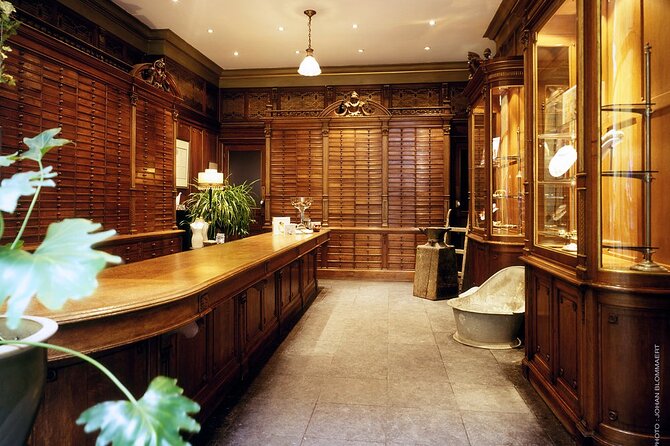
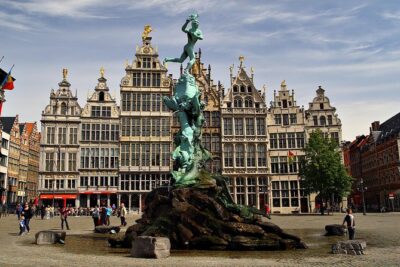
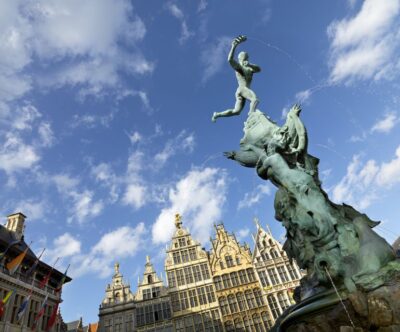
You’ll walk next to Grote Markt, where Antwerp’s diamond capital story really kicks off. The key idea here is not “Antwerp had diamonds.” It’s that merchants arrived in waves. Antwerp hosted annual fairs where foreign buyers and traders came to exchange, buy, and sell gems and jewelry. It’s a reminder that the diamond business wasn’t only artistry, it was logistics, finance, and cross-border hustle.
Then you head to Wisselstraat. Wissel means exchange, and the street name points to a practical function. Foreign buyers used the area to exchange money. Here’s the fun angle your guide shares: not all of this trade world was glitter and gold. The tour connects the darker side of finance to the word bankrupt, which is a neat way to make business history stick.
These stops are short on paper, but they matter. You’ll walk away understanding that Antwerp’s reputation came from trading systems and networks, not just workshops. That makes the rest of the craft visits feel more meaningful, because you know who the customers were and why the industry grew where it did.
Saint Paul’s Church and its diamond treasury over 3,000 stones
Saint Paul’s Church is the stop that turns the story “serious.” It still connects to silversmithing and jewelry, and the big detail is its treasury. The church is said to be well stocked, with over 3,000 diamonds.
Even if you don’t go deep into the museum-style viewing (the tour stop time is about 15 minutes), the payoff is the context. Antwerp’s diamond and jewelry reputation isn’t only about modern boutiques. It also ties into religious and civic settings where precious stones carried status and history.
This is also a good moment for photos, because the church area gives you a visual contrast to the shopfront streets. If you’re shopping later, you’ll notice how many designs still reference classic forms, not just trends.
Tip for your timing: plan your questions here. Ask things like how the diamond trade linked to local institutions, or what kinds of jewelry were favored in different periods. This stop is brief, so getting your questions answered while you’re standing in the right place is worth it.
Zwartzustersstraat and Zirkstraat: where shop levels met workshop levels
Next comes Zwartzustersstraat. The street looks like a modern shopping lane now, but your guide explains what it used to be. In past days, it was a bustling shopping street, with jewelry shops on the ground floors and diamond cutters’ ateliers up above. That layout is a big deal. It shows how vertical city life shaped production and sales in the same area.
Then you move to Zirkstraat for the story of the first diamond cutter. The tour notes that the first diamond cutter lived here in the 15th century. Even if you already know Antwerp is “diamond country,” this kind of location-specific detail helps your brain map the industry onto real geography.
One practical thing: expect these to be “look and listen” moments. The stops are about 10 minutes each, so your guide will likely focus on the key point rather than a full lecture. If you’re a detail person, bring a couple of targeted questions, like what diamond cutting required back then (tools, skills, conditions), or how neighborhood design supported work and retail.
More History Tours in Antwerp
Pascale Masselis atelier visit: 18-carat, handcrafted, and made to order
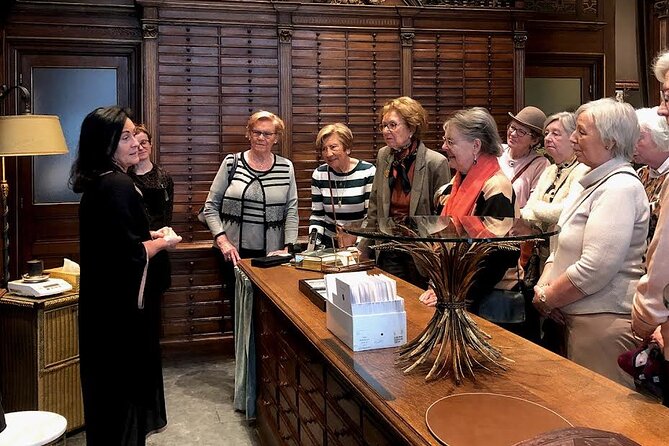
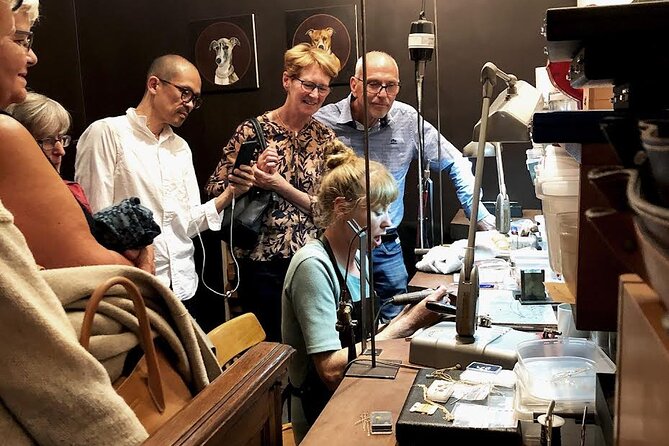
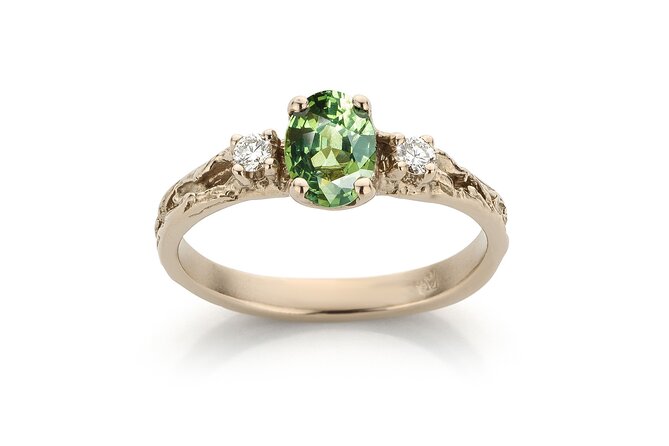
This is where the tour shifts from history into design. At Pascale Masselis, your guide brings you into the atelier and introduces the craft. Masselis graduated from the Royal Academy of Antwerp in 1983, and she works exclusively with 18 carat gold. The emphasis is on uniqueness: each piece is handcrafted in her own atelier.
The best part for buyers is the “make it yours” angle. The tour notes that pieces can be especially made to order, and there’s even the option to transform older, out-of-date jewelry into modern treasures.
This stop is valuable even if you do not plan to buy. You’ll learn how a designer thinks about materials and individuality, which changes how you look at jewelry later. On a shopping day, it helps you spot the difference between mass-produced shine and something built from deliberate choices.
If you are traveling with someone who loves design (or you just want to understand why certain pieces cost what they cost), this atelier time is one of the most satisfying parts of the walk. It also makes the earlier trade history feel less like a lecture and more like a supply chain with real people behind it.
Lange Koepoortstraat and Wijngaardstraat: nation-house stories and modern goldsmith variety
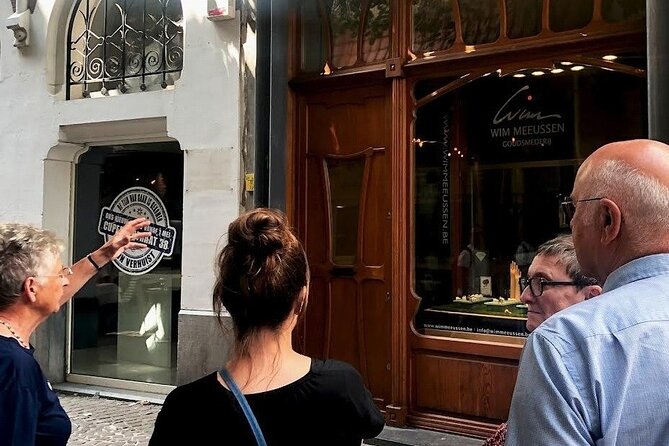
You’ll pass Lange Koepoortstraat, where the tour explains it used to be the nation house of the silver and goldsmiths. That phrase can sound abstract, but it connects to why guilds and organized craft communities mattered. If craftsmen were grouped and represented, they could manage training, standards, and trade relationships. Your guide tells you about the need for such a nation house, which helps explain why Antwerp’s jewelry identity didn’t just happen by accident.
Then you hit Wijngaardstraat, a street that the tour describes as picturesque and packed with jewellers. The stop is long enough to take in multiple creative visions and techniques, which is a welcome change from “one shop, next street” tourism.
Here, the tour points out several named ateliers and stores, each with a distinct style. You’ll hear about:
- Gerda De Vrij, trained in Pforzheim under Klaus Ullrich, linked to pioneers of modern jewellery, and now supported by her family’s next generation
- Wim Meeussen, known for his collection including wedding rings, with a second location dedicated to silver jewellery
- Hanne Schoofs, whose designs keep changing as she seeks new techniques
- Eva Crauwels, an independent goldsmith for over 15 years with a retro-romantic, feminine touch
This is a smart stop because it shows Antwerp isn’t one look. It’s many. If you like comparing styles, you’ll have fun here. If you shop, you’ll also start to understand what “style” means in practice, not just how a storefront looks.
Rembrandt Jordan: ending at an art gallery, atelier, and jewelry shop

Your walk ends at Rembrandt Jordan, Wijngaardstraat 18. This final stop is described as a multidisciplinary space, combining an art gallery, atelier, and jewelry shop.
I like end points that feel like a natural conclusion. You begin with the museum context, move through trade and craft history, and end where the craft and the art conversation live side by side. Even if you only spend the allotted time, you’ll leave with a stronger sense of Antwerp jewelry as a creative ecosystem, not a single industry.
If you want to keep the day going afterward, use this ending location as your “base.” You can extend your browsing in the same street area without needing to re-navigate the city right away.
Price, group value, and the 2-hour pacing reality
Let’s talk about money in a useful way. The tour price is $234.93 per group, up to 15 people, and it lasts about 2 hours. That pricing structure can feel high if you’re thinking per person, but it’s designed for shared value.
Here’s the quick math:
- If you book with the group near 15 people, the per-person cost is about $15 to $16
- If you book small, say 4 people, it’s more like $58 to $59 each
So you should ask yourself one question: are you traveling with enough people to spread the cost? Families, friends, and small groups often get the best value. If you’re a solo traveler, it can still be worth it, but only if you really want the private guide attention and the studio access.
On pacing: the itinerary uses short stop blocks, often 10 minutes, with a few longer ones around 15 to 20 minutes. That’s typical for a walking old-city tour. The upside is energy, you keep moving and you see variety. The downside is that you cannot “hang out” forever in one place. If you know you want deeper time somewhere, tell your guide early.
Who this tour fits best (and who might want a different style)
This works especially well if you:
- want a fast, structured introduction to Antwerp’s diamond-and-jewelry identity
- like design and craft, not just monuments
- appreciate a guided route that points out street-level history while you walk
- enjoy boutique and atelier-style stops rather than a big bus tour
It also does well with a range of ages, including older kids who can handle short segments and appreciate craft stories. The tour is private, so your guide can adapt the rhythm for your group.
If you are expecting nonstop workshop viewing of diamond cutting tools for the full duration, you may feel the focus leans more historic and craft-focused than purely “production floor” style. The tour is about understanding the industry and seeing selected atelier work, not a full manufacturing tour.
Quick travel tips so you get more from the walk
- Wear shoes you trust. You’ll be moving street to street in the old city center.
- Bring a short list of questions. The stops are timed, so smart questions get better answers.
- If you plan to visit DIVA afterward, allow extra time. The museum isn’t included, so don’t try to rush it.
- If jewelry shopping is on your mind, use the atelier visits to learn what questions to ask, like materials and custom options.
Should you book this Antwerp diamond and jewellery old-city private tour?
I’d book it if you want Antwerp to feel like a real industry, not a souvenir trail. The combination of street-history context and designer atelier access is exactly the kind of pairing that makes a short tour feel bigger.
Book it now if:
- you like the idea of seeing multiple creative approaches in a compact walk
- you want a private guide limited to your group
- you’re curious about why the trade grew where it did, from Grote Markt fairs to goldsmith lanes
Skip it or compare alternatives if:
- you want a purely visual, hands-on diamond cutting demonstration at every stop
- you only want long museum time and plan to skip the atelier element
If your travel style is curious, design-minded, and happy to connect dots while walking, this tour has a lot going for it, and it fits neatly into a day already packed with Antwerp exploring.
FAQ
How long is the Antwerp Diamonds and Jewellery Old City Center Historic Tour?
The tour lasts about 2 hours.
Where does the tour start and end?
It starts in front of DIVA at Suikerrui 17/19, Antwerp, and ends at Rembrandt Jordan, Wijngaardstraat 18, Antwerp.
Is the tour private?
Yes. It is a private tour, and only your group participates.
What language is the tour offered in?
The tour is offered in English.
What ticket information should I know for DIVA?
DIVA has an admission ticket, and it is not included in the tour. The tour includes a short stop in front of DIVA and then recommends visiting afterward.
Are the other stops free?
The tour notes that stops like Grote Markt, Wisselstraat, Saint Paul’s Church, Zwartzustersstraat, Zirkstraat, Lange Koepoortstraat, and Wijngaardstraat are free for visitors.
What’s the price and group size?
The price is $234.93 per group, with up to 15 people.
What happens if the weather is poor?
The experience requires good weather. If it’s canceled due to poor weather, you’ll be offered a different date or a full refund.
The Diamond Quarter
- Antwerp: Diamond & Jewish Quarter Walking Tour
★ 4.6 · 32 reviews - Antwerp: Diamond & Jewish Quarter Walking Tour
★ 4.5 · 5 reviews - From Brussels: Private Tour to Antwerp – Diamond & Art City
★ 4.3 · 4 reviews - Ticket to Diamond Museum in Bruges
★ 4.5 · 14 reviews
Latest from Antwerp



Diamond District Tours, compared.
Diamond Museum Ticket with Polishing Demonstration
Read our review →
Browse the lists this tour appears in