
Reviewed · HISTORICAL TOURS
Historical Bruges: Jerusalem Chapel and Univ. of Commerce
A chapel built for medieval imagination. This guided walk mixes big symbol with real street-level Bruges, starting at the old heart of trade and ending at preserved medieval mills. I especially like the Jerusalem Chapel replica experience, since it includes entry to the chapel and the tomb-like setting, then flows right into the city’s money-making story.
I also love how the route earns its nickname University of Commerce, with key stops that explain how merchants, guilds, and local orders shaped the city from the Grote Markt area onward. One thing to consider: the tour is in Spanish, so if you prefer English, you’ll want to be ready with basic comprehension or plan for slower listening time.
In This Review
- Key highlights you will actually feel on this walk
- The “University of Commerce” theme, and why it works
- From the Grote Markt to Crane Square, port life, and merchant streets
- The Brotherhood of Our Lady of the Dry Tree and local orders
- The oldest bar in Bruges (1515), plus jousting energy
- Where widowed women lived: the almshouses story
- Jerusalem Chapel: why the replica of the Holy Sepulcher is the star
- Museum of bobbin lace (Encaje de Bolillos) and the bolilleras
- Stock Exchange building: the 13th-century power center
- Guilds and royal connections: archers, San Sebastian, and England
- Medieval mills: preserved machinery, plus a view
- Price and value for a 150-minute, entrance-included walk
- Logistics that affect your experience the most
- Who this tour suits best
- Should you book this tour of Bruges commerce and the Jerusalem Chapel?
- FAQ
- How long is the tour?
- What language is the guide?
- Where do I meet for the tour?
- Is the entrance to the Jerusalem Chapel included?
- Does the price include the Adornes domain?
- Are drinks included at the Adornes estate?
- Is the tour wheelchair accessible?
- What is the maximum group size?
Key highlights you will actually feel on this walk
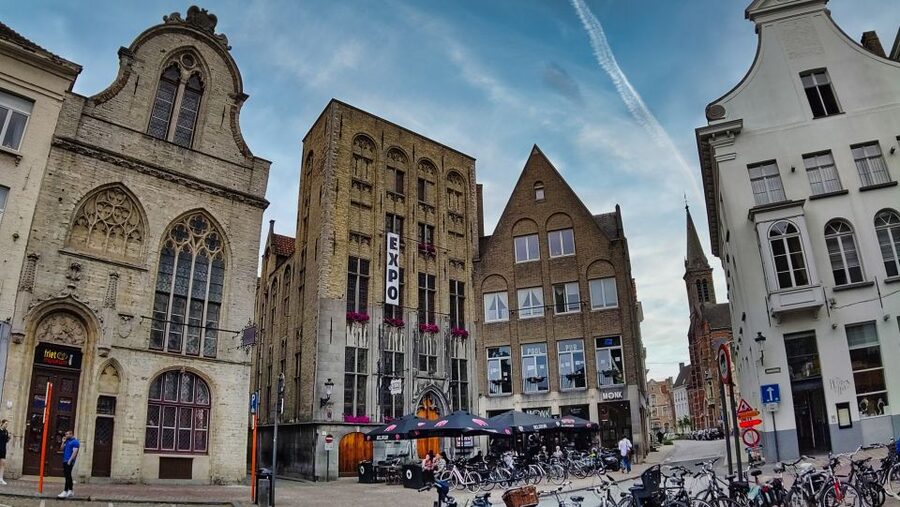
- Jerusalem Chapel with a replica of the Holy Sepulcher and tomb area included in your visit
- Museum of bobbin lace (Encaje de Bolillos), tied to the people who made Flemish cloth
- Stock Exchange origins in a 13th-century setting, connected to Anselm Adornes and the city’s merchant identity
- Old Bruges institutions in plain sight, from almshouses to guilds and medieval brotherhoods
- The oldest bar in Bruges (1515), right in the middle of the walking circuit
- Medieval mills still preserved from the 13th century, finishing the tour with scenic views
More History Tours in Bruges
- Historical Walking Tour: Legends of Bruges
★ 5.0 · 2,541 reviews - THE Storytelling Tour of Bruges | First Day Must | History & Tips
★ 5.0 · 925 reviews - Private Historical Tour: The Highlights of Bruges
★ 5.0 · 315 reviews - 2-Hour Historical Walking Tour in Bruges with Praline Included
★ 5.0 · 291 reviews - Best of Bruges: History, Chocolate & Beer Tour
★ 5.0 · 256 reviews
The “University of Commerce” theme, and why it works
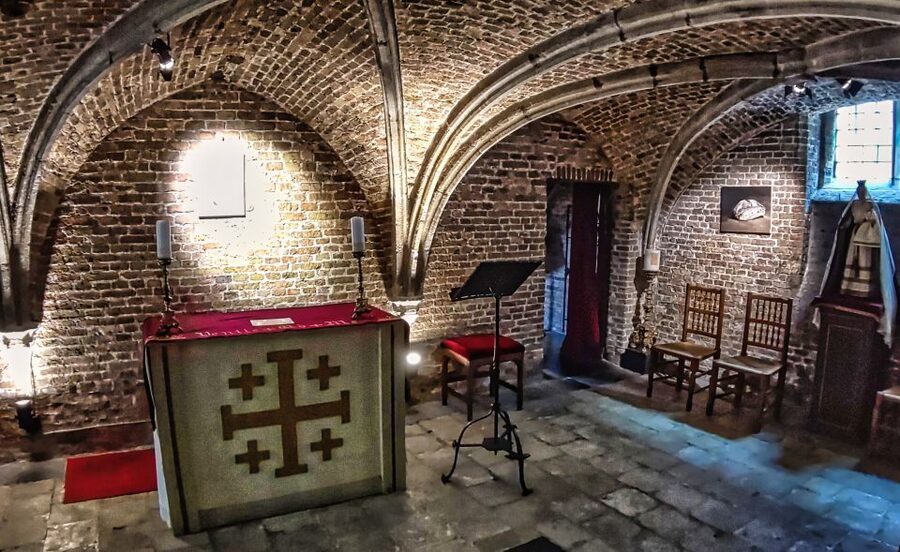
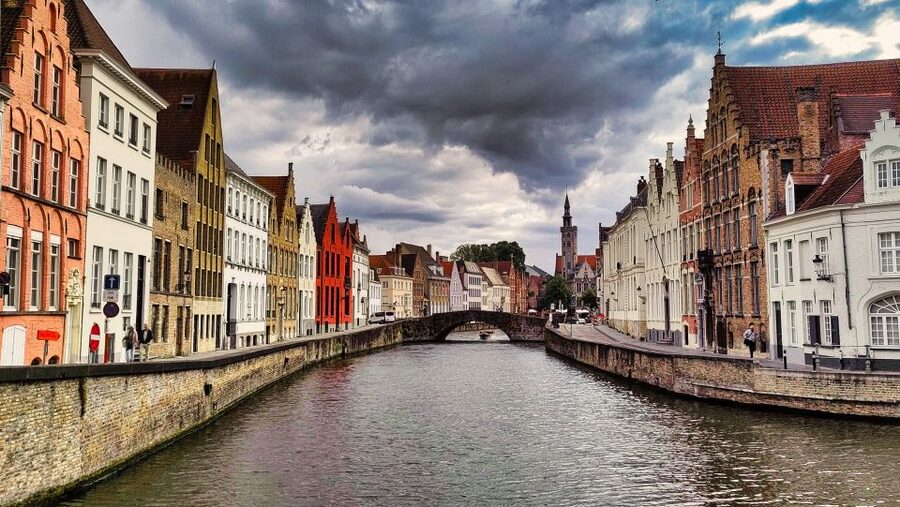
Bruges has a fairytale look, but this tour asks you to focus on the city’s engine: trade. You start near the Grote Markt, the plaza tied to the old commercial port, so the story begins where goods moved and deals got made. Instead of treating the buildings like random pretty backdrops, you get a clear thread that connects streets, guild houses, and merchant power.
The name University of Commerce is tied to Anselm Adornes, and the tour uses him as a guide for how the city functioned. You’ll see the commercial logic behind what might otherwise feel like just “another canal-side street.” The result is that Bruges clicks into place, like you can suddenly read the city rather than just admire it.
If you like history that points at real places, this theme does the heavy lifting. It turns a 150-minute walking loop into something you can remember because it has a structure.
From the Grote Markt to Crane Square, port life, and merchant streets
After meeting on Markt 1, in front of the Historium museum door, you walk through the part of Bruges where trade culture formed. The tour route builds from the old port area toward Crane Square, which is a useful mental cue: if you see the cranes and warehouse-era spaces, you stop thinking “museum town” and start thinking “working city.”
You also pass by the old customs house. That stop matters because it explains why merchants were drawn to Bruges in the first place. Customs are not glamorous, but they are where money gets measured and regulated. It’s the kind of detail that makes the past feel practical.
Then comes the guild world. You’ll walk past guild houses of Italian, Spanish, English, and other European merchants. This is one of my favorite types of tour stops because you can picture the diversity of the trading community without needing a long lecture. If you’ve ever wondered why Bruges doesn’t feel like a single-identity city, this is the answer in brick and street layout.
The Brotherhood of Our Lady of the Dry Tree and local orders
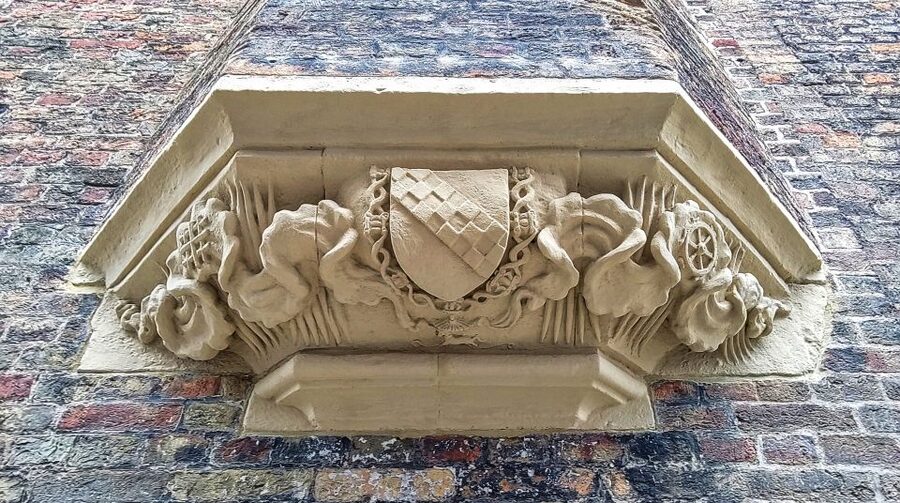
Along the same streets, the tour connects you to the headquarters of the Brotherhood of Our Lady of the Dry Tree and how it relates to the Golden Fleece. Even if you do not know those names yet, the guide’s job is to place them in the city’s ecosystem: brotherhoods, ceremonies, and affiliations that connected Bruges to broader European currents.
This is also where the tour starts to feel like it is walking alongside real social networks. Medieval commerce was not only about shipping textiles. It was about trust, sponsorship, and reputation. When you stand in the right spot and get the explanation, these institutions stop sounding abstract.
The oldest bar in Bruges (1515), plus jousting energy
At some point on the route, you reach the oldest bar in Bruges from 1515. It’s a fun break in tone, and it does more than offer a “photo moment.” The bar helps you remember that city life included the everyday rituals of meeting, drinking, negotiating, and celebrating. After all the guild talk, this stop keeps the story human.
The tour also works in the Brotherhood of the White Bear, who organized jousting knights in the city. This matters because it reminds you that merchants and local elites did not spend all their time on paperwork. They sponsored pageantry and games. It’s part of the civic personality that made Bruges a showplace, not just a warehouse.
Still got an afternoon? Try these:
Where widowed women lived: the almshouses story
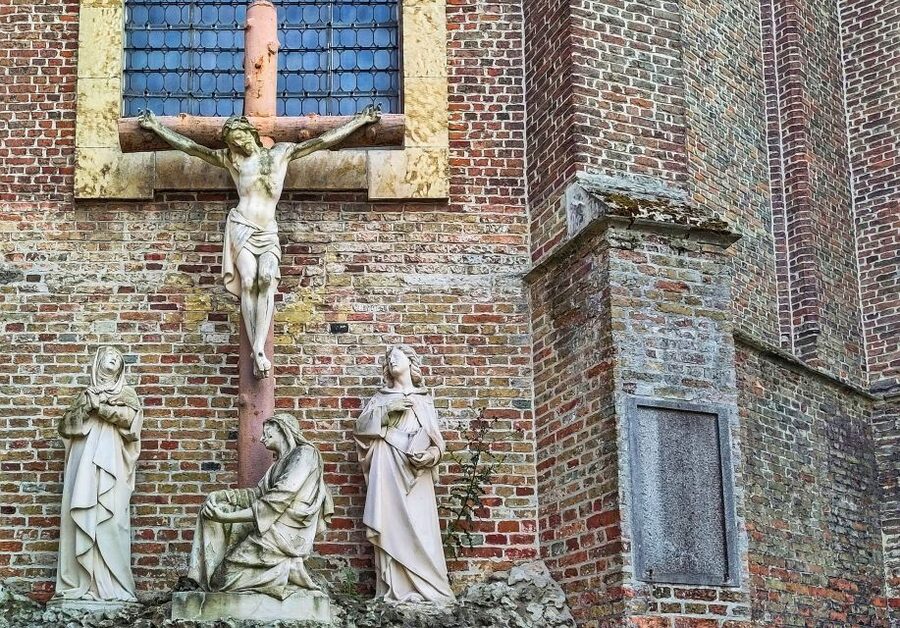
Another stop that gives the tour depth is the almshouses, described as a kind of small beguinage exclusively for widowed women. This isn’t included just to add a random “social history” detail. It shows that Bruges had systems for care and community, even in a medieval economy where stability was never guaranteed.
When a guide points out these places during a commerce-focused walk, you start to see the city as a complete machine: business for growth, institutions for support, and public identity for reputation.
Jerusalem Chapel: why the replica of the Holy Sepulcher is the star
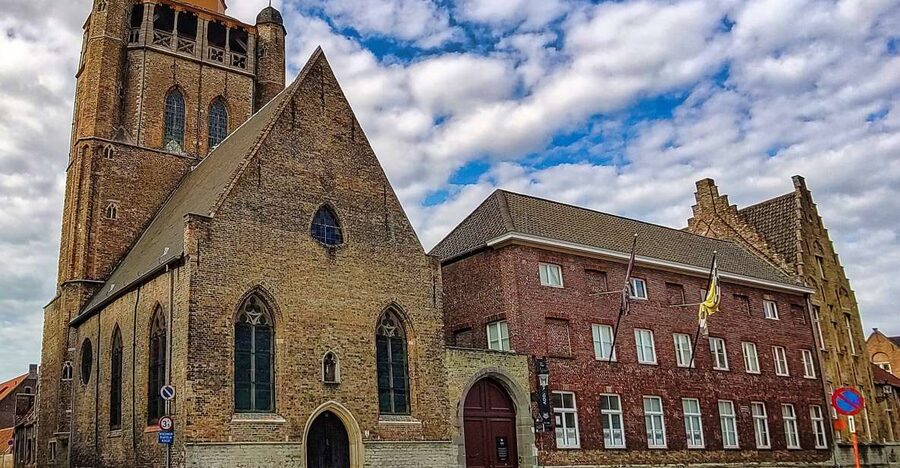
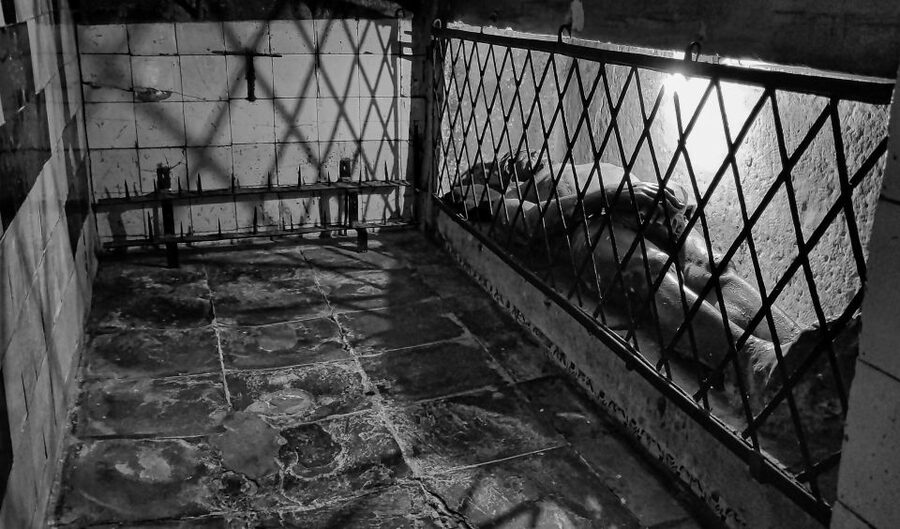
Now for the big emotional shift in the itinerary: the Jerusalem Chapel. This is inspired by the Church of the Holy Sepulcher in Jerusalem, and the visit includes a replica of the tomb setting. You get the entrance included as part of the tour, so you are not left hunting tickets and timing.
What makes this stop special is the way it reframes “medieval travel.” Pilgrimage to Jerusalem was hard, expensive, and not realistic for most people. So instead, Bruges created a local version of the sacred space. Standing inside, you can understand how a city could bring spiritual meaning into daily life, right alongside trade and textiles.
From a practical angle, the chapel is partially wheelchair accessible, but part of it has stairs. If you need step-free movement, it’s worth thinking ahead about what you can manage and asking the guide on the spot about which areas are easiest to reach.
Museum of bobbin lace (Encaje de Bolillos) and the bolilleras
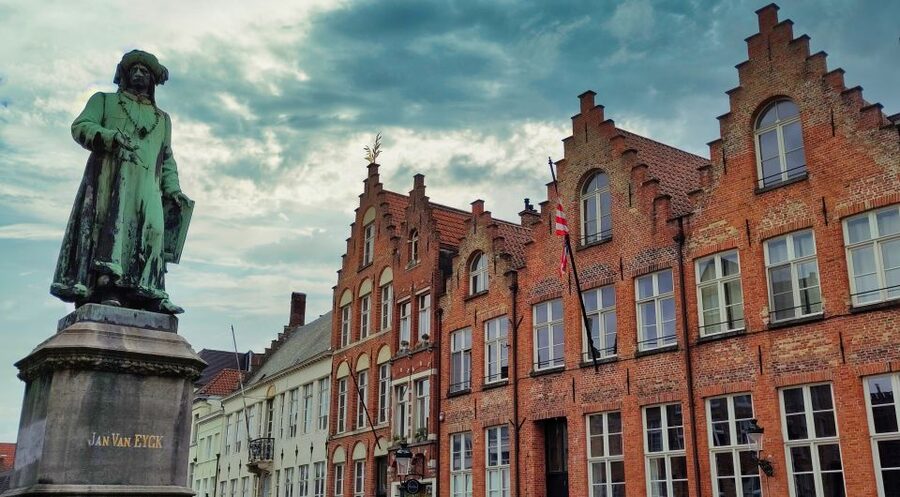
After the chapel, the tour turns to work you can almost see. You’ll visit the museum of bobbin lace, the Encaje de Bolillos. This is tied to the women called bolilleras, who sat and created Flemish cloth in the streets, with the Lace Museum nearby.
Even if you don’t know the technique, bobbin lace has a clear “why”: it is detailed, time-intensive craft that turns materials into status. Bruges became powerful through products like these because they could be traded, commissioned, and displayed.
This stop also gives you a softer side of the commerce story. Instead of only talking about ports, customs, and guilds, you meet the people behind the output. If you enjoy seeing how craftsmanship shapes an economy, you’ll like this part.
One practical note: the tour includes the Adornes domain, but drinks at the Adornes estate are not included, so if you want a warm drink during a stop there, budget extra or plan on getting it separately.
Stock Exchange building: the 13th-century power center
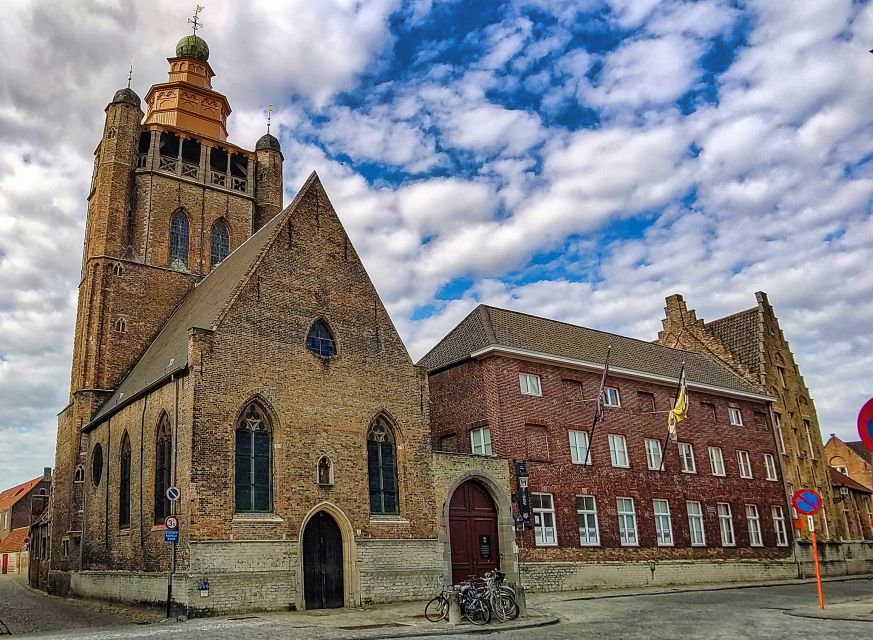
Bruges’ trading identity becomes very physical when you reach the Stock Exchange building, linked to beginnings in the 13th century. This tour frames it through the idea that Bruges was not just trading goods, it was building systems for trading outcomes.
You will also visit the house of the family that gave rise to the Stock Exchange. That kind of stop is more than a landmark. It helps you understand how wealth and influence could shape institutions, with family networks feeding into public-facing centers of business.
If you are the kind of traveler who likes a reason for why buildings were built, you’ll enjoy how this part ties back to the University of Commerce concept. It’s basically the payoff section where your earlier street walking turns into a clear “this is the hub” feeling.
Guilds and royal connections: archers, San Sebastian, and England
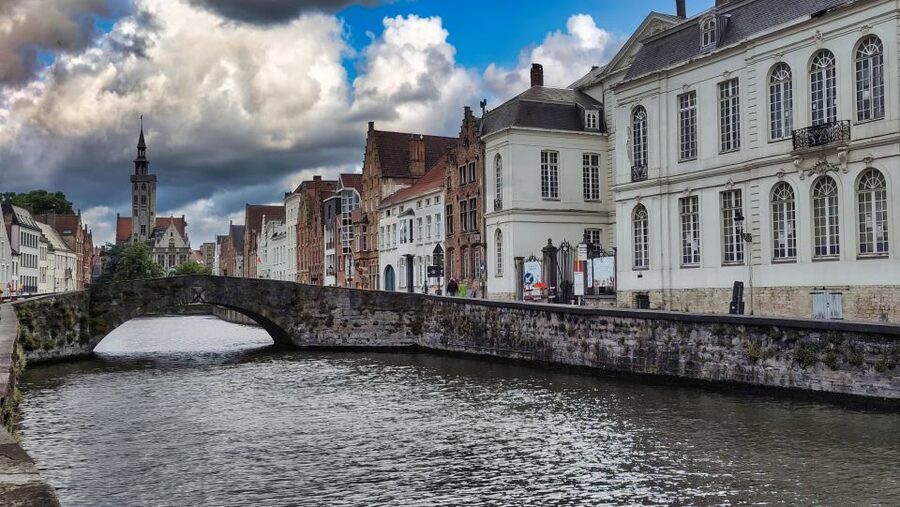
The tour includes the San Sebastian Archers Guild, and it’s linked to a big name: the Queen of England was a member. That detail is more useful than it sounds. It shows how Bruges culture connected to power beyond the city limits.
This is the kind of fact that gives your visit context later when you look at other monuments in Bruges. You begin to understand that local organizations could attract or reflect elite attention. Bruges was not isolated. It was networked.
Medieval mills: preserved machinery, plus a view
The tour finishes with medieval mills still preserved from the 13th century. The mills are described as one of the city’s major economic engines, besides having a wonderful view.
This ending is smart. You start at the trade heart near the port and customs, then move through craft and finance, and finally land at the infrastructure that processed goods. Milling is the kind of step that turns raw material into something usable. Even if you never study medieval engineering, you can still grasp the purpose: the city needed production power, not only import power.
And the views help. After walking the tighter streets, it feels like the tour gives you space to see the city’s layout. If the weather is gray or rainy, this last section can still feel rewarding because it is a natural viewpoint.
Price and value for a 150-minute, entrance-included walk
The price is listed around $29 per person for adults, and the tour is 150 minutes long. For that time span, you get more than a narration-style stroll. You actually enter two key things: the Jerusalem Chapel and the Adornes domain.
That matters because the chapel replica visit is not just “look at it from outside.” It is an included entrance. The bobbin lace museum angle is also part of the indoor value. When you compare that to tours that only pass by buildings, the entrance inclusion is what makes the cost feel reasonable.
Group size is capped at 25, which is big enough to feel lively but small enough for the guide to manage pacing and questions. Since it’s a walking tour, that group limit also helps when you need to pause at points of interest.
Logistics that affect your experience the most
This is a Spanish guided tour, and some content is shown in its original language. If you read menus in Spanish, or you can follow a slower explanation, you’ll probably be fine. If you prefer English, plan to use translation tools before you arrive.
The meeting point is Markt, 1, directly in front of the Historium museum door, and your guide wears a Curiositas Mundus badge. Show up a little early so you can locate your group without stress.
Weather can also shape how you feel about a walking tour. On cool or rainy days, I like that you can manage the pace and take small breaks without losing the entire flow. If you want time for a warm drink, it is smart to ask the guide at a natural pause point rather than waiting until you are already walking.
Who this tour suits best
This one is for you if you want Bruges to feel less like a postcard and more like a functioning medieval city. It’s especially good if:
- You enjoy commerce and guild history more than cathedral-and-castle tours
- You like crafts, especially bobbin lace, tied to real economic life
- You want a route that includes famous sites without only sticking to the most crowded lanes
- You want an included entry to an unusual attraction, the Jerusalem Chapel replica
It may be less ideal if you strongly dislike Spanish narration or you cannot handle partial steps in the chapel area. For everyone else, the variety is the point: chapel, craft, finance, and production, all connected by one story.
Should you book this tour of Bruges commerce and the Jerusalem Chapel?
Yes, if you want Bruges with a spine. The Jerusalem Chapel replica gives you a memorable centerpiece, and the rest of the walk explains why Bruges became wealthy and how people lived around that wealth. The bobbin lace museum and the Stock Exchange origins make the history feel concrete, not just decorative.
Book it when you have about 2.5 hours and your goal is understanding. If you want pure relaxation, a self-paced wander might suit you better. But if you like that moment when the city “makes sense,” this tour has a strong chance of delivering it.
If you do book, come ready for Spanish, bring good walking shoes, and give yourself a little mental flexibility. Bruges is compact, but this route is packed with meaning.
FAQ
How long is the tour?
The tour lasts 150 minutes.
What language is the guide?
The live tour guide speaks Spanish.
Where do I meet for the tour?
Meet at Markt, 1, on the square in front of the Historium museum door.
Is the entrance to the Jerusalem Chapel included?
Yes. Entrance to the Jerusalem Chapel is included.
Does the price include the Adornes domain?
Yes. Entrance to the Adornes domain is included.
Are drinks included at the Adornes estate?
No. Drinks at the Adornes estate are not included.
Is the tour wheelchair accessible?
The tour is wheelchair accessible, but the Jerusalem chapel is only partially accessible and part of it has stairs.
What is the maximum group size?
The guided visit is for a maximum of 25 people.
Latest from Bruges
Historical Tours, compared.
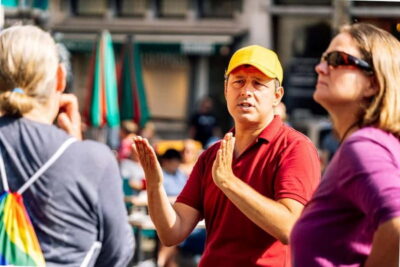
Historical Tour with Chocolate & Waffle Tasting
Read our review →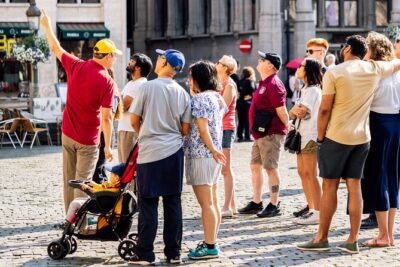
Historical Walking Tour with Chocolate & Waffle Tasting
Read our review →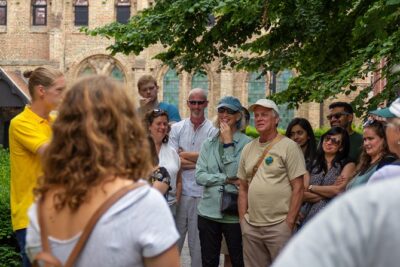
THE Storytelling Tour of Bruges | First Day Must | History & Tips
Read our review →
Browse the lists this tour appears in