
Reviewed · GHENT & BRUGES COMBO TRIPS
From Brussels: Bruges and Ghent Full-Day Trip by Train
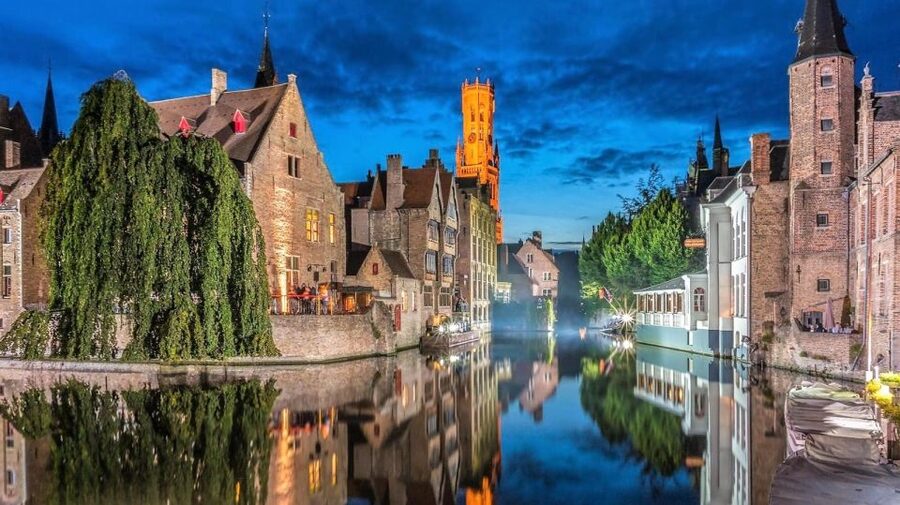
Bruges and Ghent in one day sounds risky, then it works. The magic here is the mix of guided medieval sights and real free time to eat and wander, all powered by an easy round-trip train from Brussels. You’ll walk the canal side in Bruges, then switch gears to Ghent’s cathedrals, old port, and fortress castle.
I especially like how the Bruges portion gives you the feel of the city fast. You get key stops that make Bruges make sense, from the Beguinage and canal system to the church tower of Our Lady of Bruges and the famous squares around Markt and Burg.
One caution: this is a 10-hour, a lot-of-steps kind of day. Even with breaks, expect uneven surfaces and tired legs, and you may have to choose between optional museum time and a boat ride or just sitting down for a proper Flemish meal.
In This Review
- Key points to know before you go
- A 10-hour rail day from Brussels: how the timing really feels
- Bruges walking tour: canals, Beguinage, and the quick path to the center
- Bruges church icons and museum options: what to prioritize
- Bruges squares and neighborhoods: fishmarket, guildhalls, and a smarter free-time plan
- Ghent by train from Bruges: Saint Bavo to city power in one sweep
- Ghent town hall, Belfort, and the churches that hold the medieval grid
- Graslei port views and Gravensteen: the photo stops that make the day feel complete
- Patershol and Great Butchers Hall: where the medieval past meets food
- Price and value: is $82 a good deal for Bruges and Ghent?
- Who this tour suits best (and who should skip it)
- Practical tips that make the day easier
- Should you book this Bruges and Ghent train day trip?
- FAQ
- Is this trip only available on Sundays?
- Where do we meet in Brussels?
- What time does the trip return to Brussels?
- How much guided time do you get in Bruges?
- Are the canal boat trip and the Van Eyck altarpiece included?
- What languages are the guides?
- What should I bring for the day?
Key points to know before you go
- Sunday-only departure from Brussels with a fixed meeting time at the Grand Place
- 2.5-hour Bruges walking tour plus 2 hours of free time for your own pace
- Ghent highlights focus on big anchors: Saint Bavo Cathedral, City Hall, Belfort, Graslei
- Optional add-ons cost extra like the canal boat ride (€8) and the Van Eyck Mystic Lamb (€4)
- In small groups you might return later on your own, if you want more time in either city
More Ghent-and-Bruges doubles:
- From Brussels: Guided Day Trip to Bruges and Ghent
★ 4.6 · 8,353 reviews - From Brussels: Bruges & Ghent Day Tour – 2 Fairytale Cities
★ 4.7 · 8,242 reviews - Bruges and Ghent – Belgium’s Fairytale Cities – from Brussels
★ 4.0 · 4,809 reviews - Bruges and Ghent Day Trip from Brussels
★ 4.5 · 784 reviews - Bruges and Ghent Day Tour from Brussels
★ 4.0 · 46 reviews
A 10-hour rail day from Brussels: how the timing really feels
This trip is built around one thing: getting you from Brussels into two of Flanders’ most photogenic medieval cities without you having to plan trains, timing, or meeting points.
You meet at 8:30 AM at the Grand Place in front of the Tourist Information Office, and you’ll look for your guide holding a white umbrella. The scheduled start from Brussels is 9:30 AM, and you’re back with your guide for a return train at 5:00 PM, arriving around 6:00 PM.
The best part of this format is also the hardest part. You’ll get structure and context from a live guide, but the itinerary is packed enough that comfortable shoes matter more than good intentions. A one-day plan can’t replace a slow, overnight stroll, but it can give you a strong first impression that tells you where you’d want to return.
Also note the language setup: live guiding is in Spanish, English, or French. If you’re sensitive to slower group pacing, pick the language that you can follow easily, because the day moves on a schedule.
Bruges walking tour: canals, Beguinage, and the quick path to the center
Bruges starts with canals, and you’ll get that signature scenery early. Your guided time is 2.5 hours, which is short enough to feel brisk, but long enough to build a mental map. Walking along the water in the UNESCO-listed center helps you understand why Bruges has this calm, storybook rhythm.
A highlight you’ll likely enjoy is the Lake of Love in the ancient city wall park. It’s one of the water reservoirs that nourished Bruges’ canal system, so it’s not just a pretty name. It explains how the city worked.
Then you’ll head to the Beguinage, one of the best-preserved examples of a medieval gated community where women lived. This stop is valuable because it shows a different side of medieval life than palaces and kings. You see how communities were designed, walled in, and organized.
You also stop for the kind of Bruges details that make the city feel lived-in rather than staged. After the Beguinage, there’s Brewery De Halve Maan, known for being the only brewery still operating in the city center. Even if you skip a full tasting, it helps you picture Bruges as an active place, not just a museum.
Bruges church icons and museum options: what to prioritize
Bruges’ churches can feel overwhelming, but the guide structure helps. You’ll visit Old St. John’s Hospital, which is among the oldest hospitals in Europe, with about 800 years of European architecture. There’s also an optional museum tied to Hans Memling. If you love art history, it’s a good add-on, but it is optional for a reason: time is tight.
Next comes Our Lady of Bruges. You’ll see the impressive tower, still one of the tallest brickwork towers in the world, and you’ll have a chance to view art treasures. One of the optional stops is Michelangelo’s Madonna with the Child. Like the Memling museum, this is one of those moments where you should match your energy level to your interests.
If you’re the type who likes to read every plaque, you’ll want to slow down in the church stops and maybe give up something else later. If you’re more of a walker who wants the street life, you might treat the church visits as quick but meaningful anchor points, then use your free time for food and photos.
Bruges squares and neighborhoods: fishmarket, guildhalls, and a smarter free-time plan
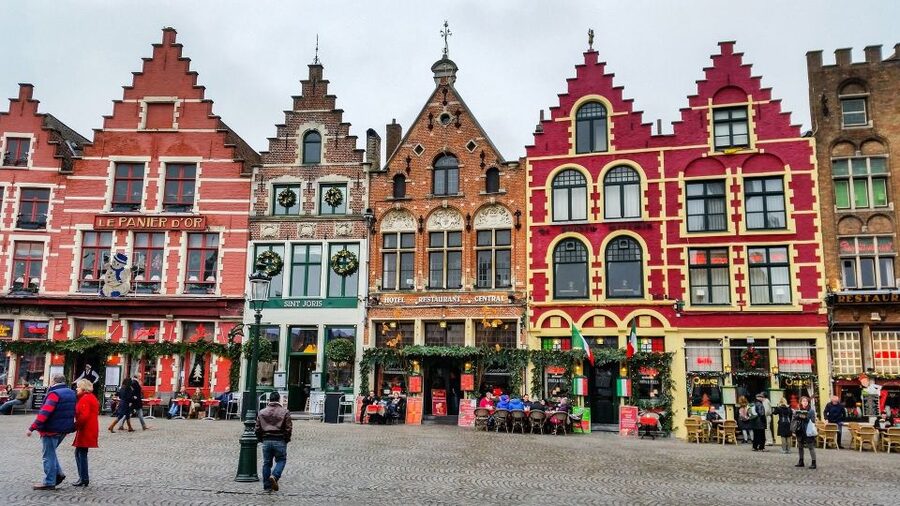
Your Bruges route also includes the VisMarkt (fishmarket) and Tanners’ Square, two of the oldest squares in town, lined with guildhalls and cafes. This is where Bruges clicks for me. The streets around these squares don’t just look old, they show how commerce shaped the city.
You’ll also pass through or visit Groeninge Museum, Burg Square, and Markt Square, which are the economic heart of Bruges. That matters because when you know where trade and civic power sat, the buildings stop being random and start telling a story.
Then you get 2 hours of free time. This is your chance to eat, shop for Belgian chocolates, and decide if you want the optional canal tour. For a smart plan, I’d pick one main meal and one snack, not five tastings. It keeps your energy up for Ghent.
There’s also an optional canal tour at €8 per person, paid while embarking. A boat ride can be one of the best uses of time in Bruges because it gives you the canal perspective without walking every stretch twice. If you’re tired already, it’s a good compromise.
A few more Brussels afternoons to weigh up

Ghent by train from Bruges: Saint Bavo to city power in one sweep
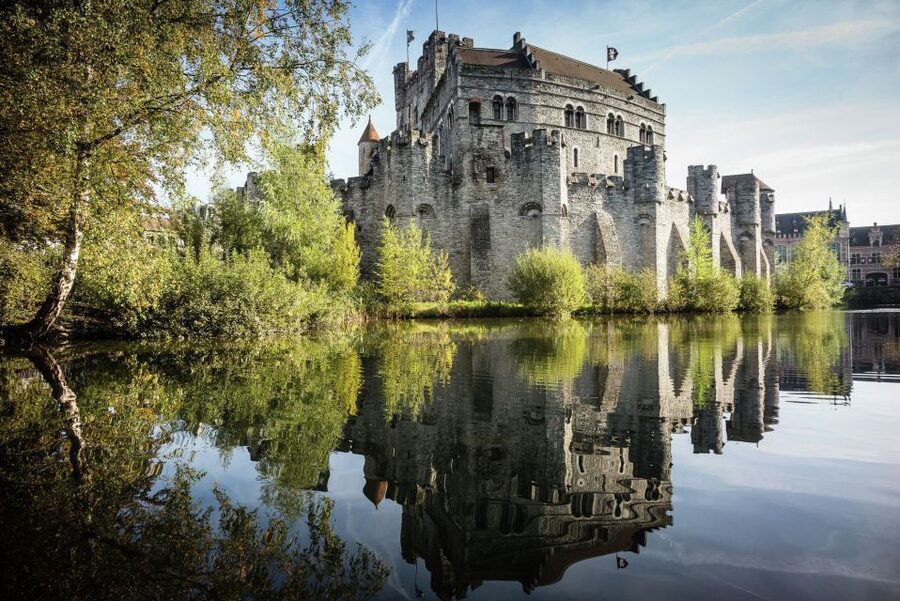
Ghent is the second act, and it’s a different vibe. The city sits at the confluence of the Leie and Scheldt Rivers, and your tour starts at Saint Bavo Cathedral. This is a strong choice because the cathedral gives you a sense of scale right away: spectacular Gothic elements, plus Baroque ornamentation.
From there you move into the marble choir and private chapels. You’ll see Rococo pulpit details and frescoes in the Romanesque crypt, including the painting Saint Bavo Enters the Convent at Ghent by Rubens. If you like medieval to early modern art transitions, this is a neat chain of styles in one building.
There’s also an optional art stop: the altarpiece The Adoration of the Mystic Lamb by the Van Eyck brothers. It costs €4 extra. I like having this as an option because not everyone wants to pay for one specific masterpiece when they’re already fitting a lot into a day. If you’re an art fan, it’s probably worth it. If you’re more into walking streets and views, you can spend that time elsewhere.
Ghent town hall, Belfort, and the churches that hold the medieval grid
After the cathedral, the tour shifts to civic architecture with City Hall, notable for its mix of Gothic, Renaissance, and Baroque design. Next up is the Market Hall area, including the Belfort Tower, a major Gothic landmark in Belgium.
This portion is valuable because it shows that Ghent’s medieval identity isn’t only religious. The city also had its own power structures, commerce spaces, and public buildings that still shape the center.
Then you’ll visit nearby churches, including Saint Nicholas, Saint James, and Saint Michael. These stops serve as reminders of how the city’s neighborhoods formed around medieval church life. You’ll start to notice patterns: streets connect plazas, plazas connect churches, and the skyline feels layered rather than flat.
Graslei port views and Gravensteen: the photo stops that make the day feel complete
One of the most satisfying parts of this tour is the walk to the old port of Graslei. It gives you views over the river Leie and the surrounding old guildhalls, which is classic Ghent. This is the spot where the day stops feeling like a checklist and starts feeling like a place you want to sit for ten minutes.
Then comes Gravensteen Castle, the medieval fortress where the counts of Flanders lived. Seeing it after the cathedral and civic buildings helps your brain sort out the roles of power in medieval life. The castle is physical control. The cathedral and town hall are cultural and civic control.
If you’re looking for one reason to do the tour even with tired legs, it’s this pairing: port charm first, then fortress energy right after.
Patershol and Great Butchers Hall: where the medieval past meets food
After the big sights, the tour heads toward Patershol, a picturesque district with charming buildings and brick facades where cafes and restaurants serve Flemish cuisine. This is a smart transition because it turns the architecture tour into a food-feeling tour.
Finally, you’ll reach the Great Butchers’ Hall, a 15th-century meat market. Even if you’re not shopping meat, the value is cultural. It reminds you that these medieval centers ran on real trades, not just tourism.
One practical note: by the time you’re here, it helps to decide what you want most, a sit-down meal or a final wandering loop. This tour’s pace is friendly, but it is still a single-day sprint.
Price and value: is $82 a good deal for Bruges and Ghent?
At about $82 per person for a 10-hour day, this trip is best viewed as a bundle: train transport from Brussels plus a guided, structured day in both cities.
Here’s what you’re paying for:
- Transportation from and back to Brussels by train
- A live local guide who helps you link sights together
- A route that covers big anchors in both cities without you making multiple decisions
What you pay extra for (if you want them):
- Canal boat tour in Bruges (€8)
- The Van Eyck Mystic Lamb altarpiece (€4)
So is it worth it? For most people who want their first visit to Bruges and Ghent to feel organized and meaningful, yes. If you’re the type who hates guided groups and wants total freedom, a self-planned day might be cheaper. But then you trade off the guided context and the stress-free logistics that this day trip handles for you.
Also check the reviews score: it’s around 4.3 from 103 reviews, which lines up with what matters most here, strong guiding and good pacing for the scope of the day.
Who this tour suits best (and who should skip it)
This day trip is a great match if you:
- Want a first look at Bruges and Ghent without renting a car or juggling trains
- Like guided context, especially for churches, civic buildings, and medieval city design
- Can handle a lot of walking on uneven surfaces
- Want built-in time to eat and shop in Bruges during the 2-hour free period
I’d think twice if you:
- Want deep museum time, because optional stops like Hans Memling and the Mystic Lamb cost extra and take time
- Prefer slow travel, since this is a full schedule from morning to late afternoon
- Travel with accessibility needs beyond what’s listed, since the day includes uneven walking surfaces even with wheelchair accessible status
Practical tips that make the day easier
- Wear comfortable shoes for uneven surfaces. Seriously. This is the #1 make-or-break detail.
- Pick your optional priorities in advance: canal boat in Bruges, or the Mystic Lamb in Ghent, or both if you’re feeling energetic.
- During Bruges free time, plan one meal and one activity, then keep moving so you don’t arrive in Ghent already drained.
- If your group is small, you may have the option to return later on your own instead of at the scheduled time. If you want extra minutes for photos or shopping, ask early so you can plan your own timing.
Should you book this Bruges and Ghent train day trip?
If you want an efficient, guided taste of two top medieval cities in Flanders, this is a solid choice. The value comes from the structure: Bruges gets its canals, Beguinage, churches, and squares, then Ghent delivers cathedral scale, civic power, port views at Graslei, and the fortress of Gravensteen.
Book it if you can handle a long day and you like walking with a guide who keeps the story moving. If you’re hoping for a laid-back day with lots of museums and zero schedule pressure, you’ll probably want separate time for each city instead.
FAQ
Is this trip only available on Sundays?
Yes. The departure from Brussels at 9:30 AM is only on Sunday.
Where do we meet in Brussels?
You meet at 8:30 AM at the Grand Place Brussels, in front of the Tourist Information Office, and look for your guide holding a white umbrella.
What time does the trip return to Brussels?
The scheduled return is 17:00, with arrival around 18:00.
How much guided time do you get in Bruges?
You get a 2.5-hour walking tour in Bruges, plus 2 hours of free time.
Are the canal boat trip and the Van Eyck altarpiece included?
No. The canal boat trip in Bruges costs €8, and admission to The Adoration of the Mystic Lamb by the Van Eyck brothers costs €4 extra.
What languages are the guides?
The live guide is available in Spanish, English, and French.
What should I bring for the day?
Bring comfortable shoes, since there is a lot of walking on uneven surfaces.
More Train Experiences in Brussels
- Brussels: Train World Museum Entrance Ticket
★ 4.7 · 524 reviews - From Brussels: Bruges Full-Day Trip by Train
★ 4.5 · 232 reviews - Brussels Train World Museum Entrance Ticket
★ 4.5 · 220 reviews - Arrival Private Transfer Brussels Train Station to Brussels by Luxury Car or Van
★ 3.0 · 2 reviews
Latest from Brussels




Ghent & Bruges Combo Trips, compared.
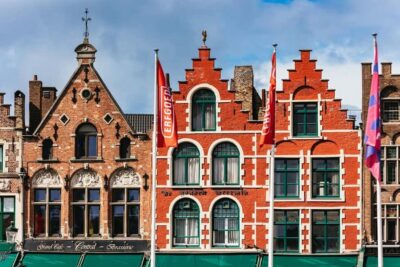
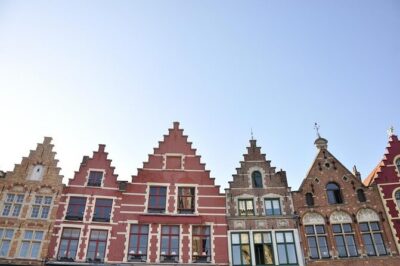
Bruges and Ghent – Belgium’s Fairytale Cities – from Brussels
Read our review →
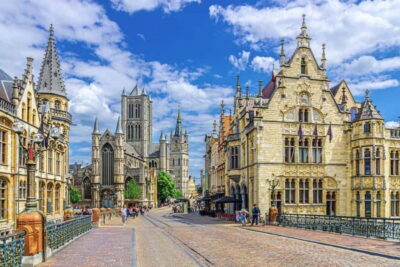
Bruges & Ghent Tour w/ Cruise & Chocolate Tasting
Read our review →
Private Full-Day Tour Bruges & Ghent from Brussels with tastings
Read our review →Browse the lists this tour appears in