
Reviewed · GHENT & BRUGES COMBO TRIPS
Bruges and Ghent Day Trip from Brussels
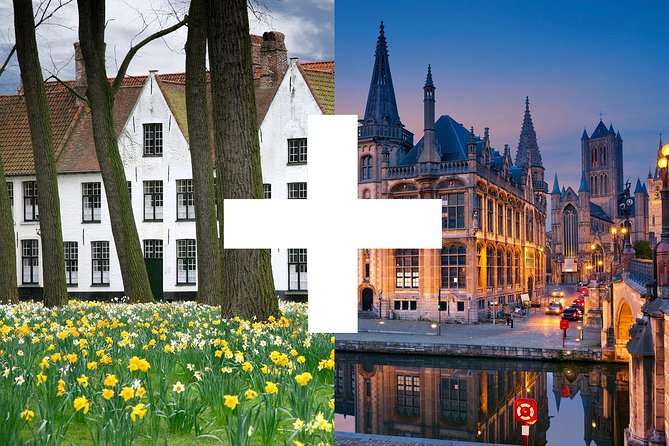
Bruges and Ghent in one long day works. This tour strings together two UNESCO cities with A/C round-trip bus transport and guided walks that keep you moving in the right order. You get Bruges highlights like Minnewater, Rozenhoedkaai, and Grote Markt, then you switch gears to Ghent’s medieval core and St. Bavo’s Cathedral.
What I like most is the mix of guided stops plus free time in both cities, so you can actually eat, shop, and wander. I also like the tight, story-driven route: the guide points out details like the Madonna and Child sculpture by Michelangelo (from the Church of Our Lady) and the Van Eyck brothers artwork at St. Bavo’s.
One thing to consider is the walking load and timing. You are on cobblestones, there are many short stops, and the bus sometimes has to park a bit away, which can cut into your free time if you are not fast with meeting points.
In This Review
- Key things to know before you go
- Price and Logistics: what $56.72 really buys
- Morning in Brussels: the 8:30 am start and bus reality
- Bruges on foot: Minnewater, Begijnhof, and the Chocolate Pause
- Medieval details you can actually see: hospitals, churches, and guilds
- The big Bruges photo stops: Boniface Bridge and Rozenhoedkaai
- Bruges free time: use it for food, chocolate, and one extra wander
- Ghent arrival and the guided core: Town Hall, Belfry, St. Bavo
- Ghent churches, guild buildings, and bridge photos
- Graslei and Korenlei: the Lys riverfront moment
- Markets and legends: Great Butchers and cuberdon
- Final Ghent stop: Sint-Veerleplein and where to meet the bus
- Guides, audio, and group size: why your experience can vary
- What to pack and how to make the day feel easier
- Should you book Bruges and Ghent from Brussels?
Key things to know before you go
- A coordinated Bruges-to-Ghent day with A/C round-trip transport from central Brussels (Carrefour de l’Europe)
- Guided walking tours in both cities, plus scheduled free time (about 1.5 hours in Bruges, about 1 hour in Ghent)
- Radio-guide rules can apply: Belgium sometimes requires radios, and you can use a 3.5 mm jack or buy one for €1
- Chocolate and beer culture stops in Bruges, including an artisan chocolate shop and a square tied to Bruges beer history
- Photo targets are built in, like Boniface Bridge and Rozenhoedkaai in Bruges, plus the St. Michael’s Bridge and riverfront in Ghent
- Group size is capped at 45, but it can still feel big in crowded old towns
More Ghent-and-Bruges doubles:
- From Brussels: Guided Day Trip to Bruges and Ghent
★ 4.6 · 8,353 reviews - From Brussels: Bruges & Ghent Day Tour – 2 Fairytale Cities
★ 4.7 · 8,242 reviews - Bruges and Ghent – Belgium’s Fairytale Cities – from Brussels
★ 4.0 · 4,809 reviews - From Brussels: Bruges and Ghent Full-Day Trip by Train
★ 4.3 · 103 reviews - Bruges and Ghent Day Tour from Brussels
★ 4.0 · 46 reviews
Price and Logistics: what $56.72 really buys
At about $56.72 per person, this is a value play. You are paying for something many people would struggle to organize alone: a coordinated day that combines round-trip bus transport from Brussels, two guided city walks, and enough unstructured time to enjoy both places.
That said, it is not a slow, one-neighborhood kind of day. The tour is built on short guided segments, then free time. Plan your expectations around that rhythm: if you want long museum visits and deep, quiet exploring, this format may feel rushed.
Morning in Brussels: the 8:30 am start and bus reality
The tour begins at 8:30 am at Carrefour de l’Europe, 1000 Bruxelles. The bus ride is part of the day’s value, especially if you do not want to juggle trains, transfers, or schedules.
The best practical advice: arrive a little early and make sure you board the correct bus. Multiple departures can happen from the same pickup area. Also, the tour includes a quick bathroom break soon after arrival in Bruges, so it helps to be ready for that moment.
One common snag to plan for is that the bus does not always pull up right beside the walking route. Some days, you may walk a bit from where the bus parks. That is normal in old city areas with traffic rules, but it matters on a full-day schedule.
Bruges on foot: Minnewater, Begijnhof, and the Chocolate Pause
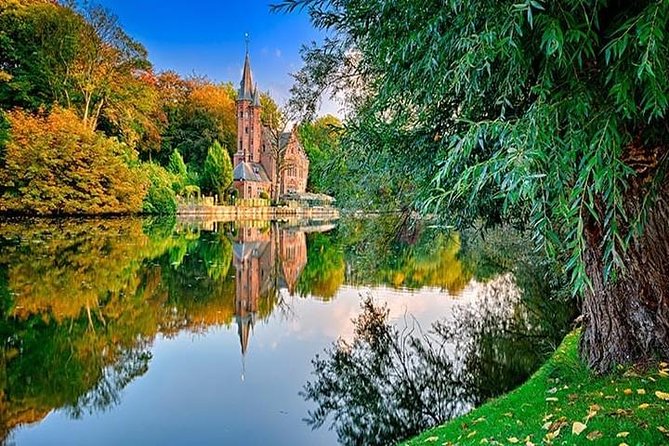
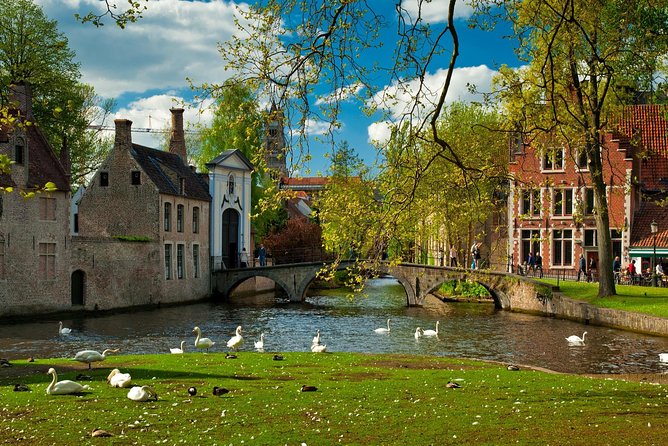
Bruges starts with a classic postcard stop: Minnewater, often called the Lake of Love. This is more than a photo break. The guide typically uses the setting to explain how Bruges’ story connects to water, trade, and local legends.
Next comes the Begijnhof, founded in 1245. It is one of those places that makes medieval life feel real, especially when a guide explains the role of the Beguines as a distinctive community of women.
Then comes a short but memorable stop at Chocolalino, an artisan chocolate shop. Here, the guide gives tips to help you spot handmade chocolate versus more industrial styles. If chocolate tasting and shopping are part of your Bruges plan, this is a smart time to do it, because your guided route keeps you from losing the day to decision fatigue.
Other quick-hit highlights along the route include:
- Walplein, where the guide ties the area to the history of Bruges beer
- Stoofstraat, where you learn what to look for in medieval house details
- A photo moment on the little bridge (built into the walking route)
Medieval details you can actually see: hospitals, churches, and guilds
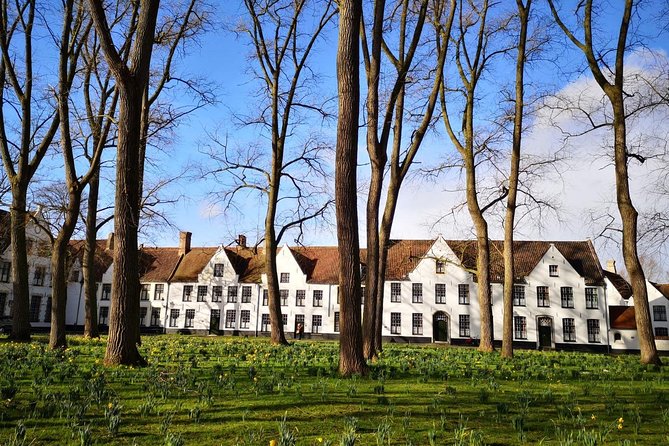
Bruges is full of buildings, but the tour does not just point at facades. It tries to teach you how to notice them.
You get a stop in front of Saint John’s Hospital (Old St. John’s Hospital). The guide explains how care and the health system worked in medieval Bruges. It is a nice change from the usual “look at the church, take the photo” cadence.
After that, you see Onze-Lieve-Vrouwekerk (Church of Our Lady) from outside, with the guide calling out curiosities about the white marble Madonna and Child attributed to Michelangelo inside the church. Even without a full interior detour, that kind of detail helps you understand why the church matters and what to look for if you ever return.
The walk also includes Gruuthusemuseum from the exterior, and the guide connects it to the powerful Bruges family active between the 1600s and 1700s.
A few more Brussels afternoons to weigh up

The big Bruges photo stops: Boniface Bridge and Rozenhoedkaai
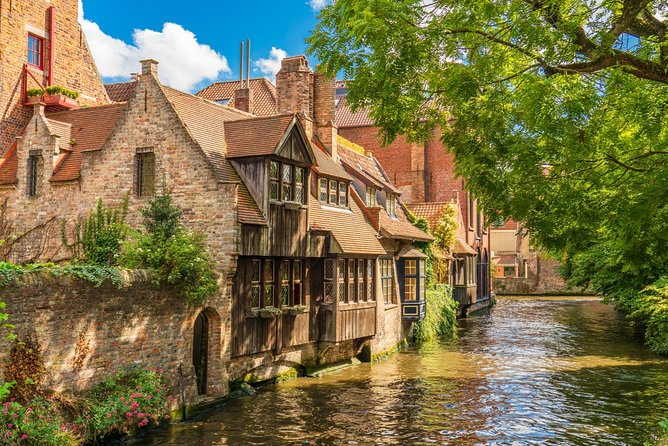
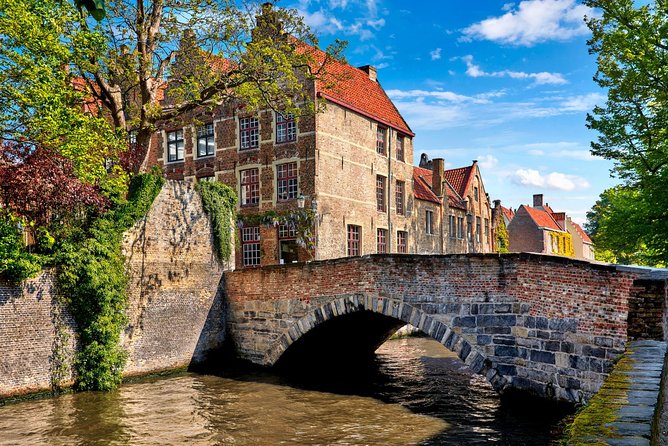
If your goal is classic Bruges images, the route pays attention to that. You pass Boniface Bridge, where the guide shares the bridge legend and gives you time to shoot photos.
Then you reach Quai du Rosaire / Rozenhoedkaai, one of Bruges’ most photographed spots. This stop is ideal if you want that riverfront look without trying to figure out where to stand on your own. The guide also gives context for the “Pier of the roses” area, which makes the view feel less like a random backdrop.
Bruges free time: use it for food, chocolate, and one extra wander
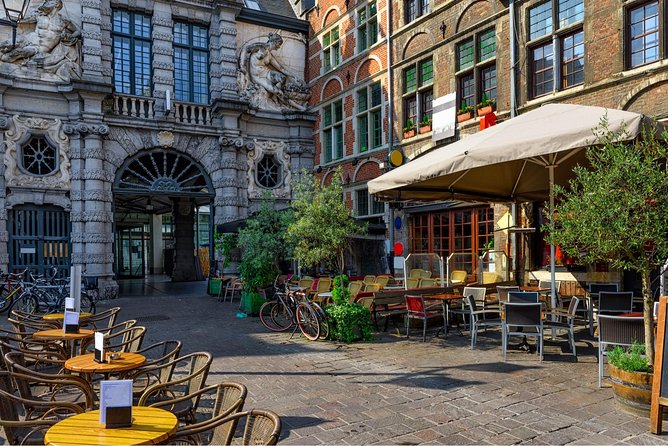
After the guided portion, you get about 1.5 hours of free time in Bruges. It can vary slightly based on traffic and group pace, but the idea is simple: go eat, buy chocolate, and explore beyond the guided checklist.
My practical suggestion: pick one target before you separate from the group. Either commit to a sit-down lunch, or commit to a shop-and-stroll loop near Grote Markt. If you do not choose, time disappears fast in crowded old streets.
There is a built-in risk to know about: getting back to the bus. Some days, the bus may be parked a bit farther than you expect, and you can end up walking back a longer distance than you’d like. If you want buffer, stay closer to the meeting area and avoid getting pulled into one more alley.
Ghent arrival and the guided core: Town Hall, Belfry, St. Bavo
You head to Ghent after Bruges, with the bus returning to Bargeplein (Katelijnparking) for the continuation.
In Ghent, the walking tour begins near the center. The first stops focus on Ghent’s identity as a well-preserved medieval city. You begin at the Ghent Town Hall (Stadhuis), where the guide explains the building’s architectural styles.
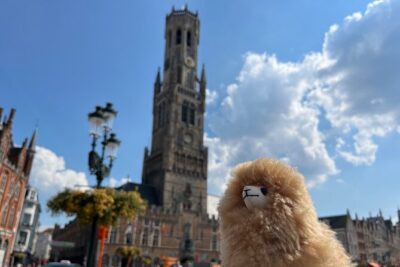
Then you see Het Belfort van Gent (the Belfry), including the tower’s history and the well-known dragon story.
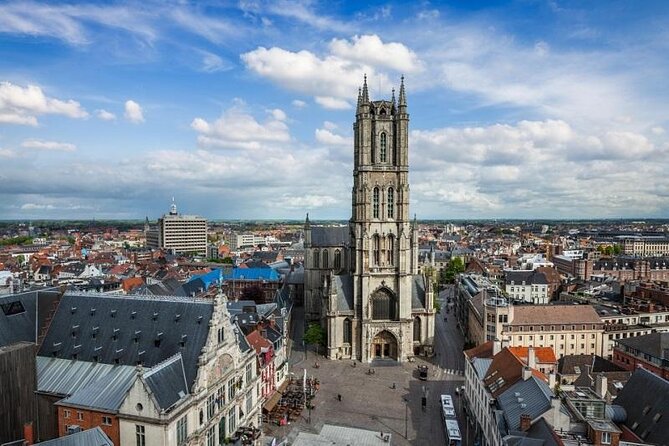
The highlight stop is St. Bavo’s Cathedral. The tour covers both the outside and inside, and the guide points you to the cathedral’s famous artwork: the Van Eyck brothers’ The Adoration of the Mystic Lamb. The tour also frames it as one of the most stolen paintings in history. Even if you are not a museum super-fan, having a guide connect the artwork to the building and its past gives you something to remember.
Ghent churches, guild buildings, and bridge photos
The Ghent walk keeps moving. You stop near St. Nicholas Church, and you learn that Belgian churches often host concerts and events, which helps you understand why these spaces are not frozen in time.
There is also a quick look at the Masons’ Guild Hall, with the guide pointing out what guild houses are and why this one is special.
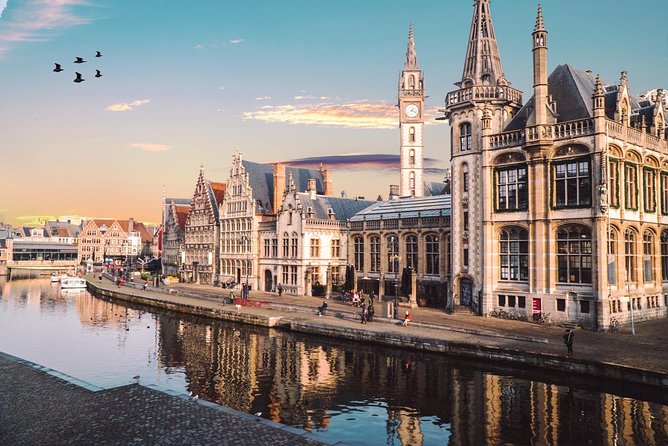
You then reach Korenmarkt, where you hear the history of the building that once served as a post office, and you cross or pause for Saint Michael’s Bridge for photos. The guide also connects it to the story of the tower of Saint Michael’s Church.
Graslei and Korenlei: the Lys riverfront moment
Next you follow the Lys riverbank through Graslei and Korenlei. This is one of those “everyone has seen a photo, but it looks better in person” areas. You get time for photos, plus the guide explains what you are seeing along the water, including ties to guild life and the buildings lined up along the river.
Markets and legends: Great Butchers and cuberdon
You also visit OOOST, the Great Butchers, which dates to the 15th century and originally functioned as a covered market. This stop works well if you enjoy the idea of medieval commerce, not just monuments.
Then there is a tiny market-stall moment at Kleine Vismarkt. You meet the seller and learn about Ghent’s famous candy, cuberdon. Even if you just watch, it adds a local-food element without turning the day into a food tour.
Final Ghent stop: Sint-Veerleplein and where to meet the bus
The guided walk ends at Sint-Veerleplein Square. The guide shares stories about the square and gives tips for where to drink traditional beer and where to shop for souvenirs.
Then comes the crucial part: the guide reminds everyone exactly when and where to board the bus back to Brussels. After that, you get about 1 hour of free time in Ghent.
If you want one practical win, plan your last purchases near your final guided stop area. Ghent can be crowded, and it is easy to wander a little too far when the city is beautiful.
Guides, audio, and group size: why your experience can vary
The tour caps at 45 travelers, and some days are smaller than that. A smaller group makes it easier to stay together in crowded areas. You might find it simpler to hear directions and get back to the bus on time.
You will also notice guide quality plays a big role. Guides such as Angie, Antonio, Blanca, JC (Harris), Julian, Jorge, and Oscar are highlighted for being organized, funny, and good at mixing facts with practical recommendations. The tour style depends on the guide’s pacing, and the best guides help you feel like you are sightseeing, not just moving.
On audio: Belgium sometimes requires radio-guides. The rules are practical. You can use your own 3.5 mm jack headphones (wired, not wireless), or buy a disposable headset for €1. If you forget headphones, you are not stuck, but the purchase can add time and annoyance. Also, sound quality can vary, so if you are picky, test your headphones before you start walking.
What to pack and how to make the day feel easier
This is a walking day with lots of stops. Bring:
- Comfortable shoes for cobblestones
- A small snack or water plan even though food is not included
- Your wired headphones (3.5 mm) if you have them, to avoid last-minute headset issues
Also, set a mental strategy: treat each stop as a quick chapter. The tour often follows a pattern of walking, then short narration, then photos, then moving on. If you fight the rhythm, you will feel impatient. If you ride it, you will pick up more than you expected.
Should you book Bruges and Ghent from Brussels?
I think you should book it if you want an efficient, well-structured way to see two UNESCO cities without doing logistics. It is especially good for first-time visitors who like stories, photo highlights, and a mix of guided time plus breathing room.
I would skip or choose a different format if you hate long walking days, if you need lots of time for sit-down meals, or if you want museum-quality time inside major sites without leaving room for shopping and river views.
For many people, the deciding factor is simple: can you handle a fast but thoughtful day? If yes, this tour is an easy way to make Bruges and Ghent feel like a coherent experience instead of two separate, stressful day plans.
Latest from Brussels

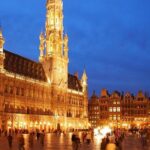


Ghent & Bruges Combo Trips, compared.
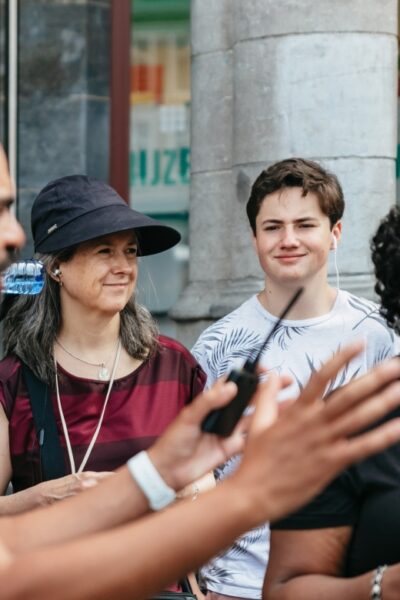
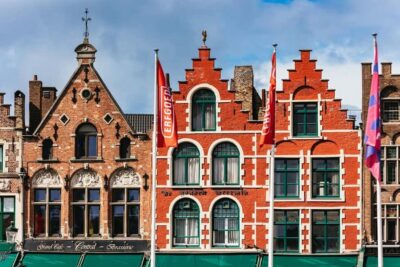
Bruges and Ghent – Belgium’s Fairytale Cities – from Brussels
Read our review →
Bruges & Ghent Tour w/ Cruise & Chocolate Tasting
Read our review →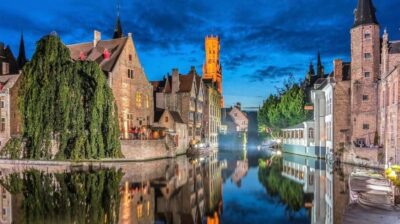
Private Full-Day Tour Bruges & Ghent from Brussels with tastings
Read our review →Browse the lists this tour appears in