
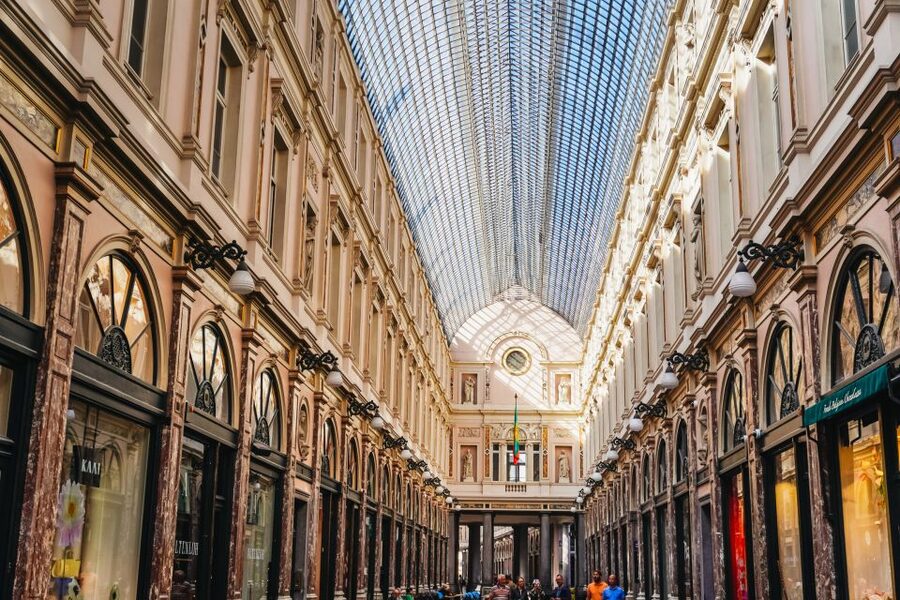
Reviewed · COMIC WALL & ART NOUVEAU WALKS
Brussels 3-Hour Guided Art Nouveau Tour
Art Nouveau in Brussels has real bite. I love the focused route from the Grand-Place to the Bailli district by tram, then finishing in front of the Victor Horta Museum. It’s a tight 3-hour format that helps you recognize why this style uses iron, glass, wood, and stone in such expressive ways, not just as decoration.
The one drawback to plan around is that you mostly view buildings from the street, not inside. Even with a guide who shares interior context through images and explanation, you should expect exteriors only during the walk, and you’ll need to handle museum entry separately.
In This Review
- Key highlights to look for
- Brussels Art Nouveau: why this 3-hour route makes sense
- Price and value: what $35 gets you (and what it does not)
- Starting at Grand-Place, finding the guide, and riding the tram
- How you’ll learn to spot Art Nouveau details quickly
- The main stops: from Old England to the Victor Horta Museum
- Interiors: what you see, what you don’t, and how to plan anyway
- Guide quality, language options, and pacing you can expect
- Who should book this 3-hour Art Nouveau architecture tour
- Should you book the Brussels Art Nouveau guided tour?
- FAQ
- What is the duration of the Brussels 3-hour guided Art Nouveau tour?
- Where is the meeting point for the tour?
- What time does the tour start?
- How much does the tour cost?
- What is included in the price?
- Is museum admission included?
- Is transportation included?
- What languages is the live guide available in?
- Is the tour wheelchair accessible?
- Do I need to bring anything?
- Is free cancellation available?
Key highlights to look for
- Bailli district tram transfer that sets you up in the densest Art Nouveau pocket
- Victor Horta Museum finish point, so your last stop feels purposeful
- Stop-by-stop focus on major names like Victor Horta and Paul Hankar
- Material-based explanations covering iron, glass, wood, and stone
- Guide-led interior “virtual context” using photos when doors are closed
- Multiple languages (Spanish, English, French) for a smoother experience
More comic walls and Art Nouveau facades:
- Brussels: Art Nouveau Pass – Entry to Three Locations
★ 4.0 · 108 reviews - Brussels: Comic Art Museum Entrance Ticket
★ 4.0 · 56 reviews - Brussels: The comic book walls walking tour
★ 4.7 · 38 reviews - Brussels: 3h Art Nouveau Private Tour with a Local Guide
★ 4.9 · 20 reviews - Brussels “Land of Comics”: Street Art & Walking Tour
★ 4.5 · 13 reviews
Brussels Art Nouveau: why this 3-hour route makes sense
Art Nouveau in Brussels can feel like a scavenger hunt if you go alone. You see pretty facades, then you miss what makes the style tick. This tour works because it narrows your attention to a real design system: how architects combined iron, glass, wood, and stone to create curves, asymmetry, and architectural “motion.”
I also like that the walk is built around places tied to specific creators, not vague “pretty street” sightseeing. You move from the Grand-Place area toward Bailli, which is famous for carrying a lot of Art Nouveau buildings in a relatively compact stretch. That means your eyes get trained faster, and the details you learn start showing up repeatedly as you walk.
Price and value: what $35 gets you (and what it does not)
At about $35 per person for a 3-hour guided tour, you’re paying for interpretation and route design. You are not buying museum tickets, and you are not paying for train travel. What you are getting is a local guide who can point out what matters, connect buildings to their architects, and help you “read” Art Nouveau without needing a textbook.
In practical terms, this is good value if you want quick competency. If you’re the type who wants to look at facades and understand why they were designed that way, the guide saves you time and guesswork. If your main goal is to step inside multiple houses, you’ll feel limited, because the tour format stays mostly outside.
Starting at Grand-Place, finding the guide, and riding the tram
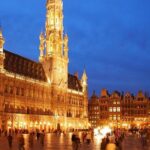
You meet at Brussels’ Grand-Place at 10:00. Look for the guide holding a white umbrella. From there, the plan includes a tram ride to the Bailli district, so you’re not just walking in a straight line for three hours.
That tram segment matters more than it sounds. It gets you out of the tourist core and into a neighborhood where the architecture becomes the point, not just a side attraction. It also breaks up the energy level so the later stops feel less rushed.
Comfort matters too. Bring comfortable shoes, because you’ll be moving between multiple buildings. One review theme was that this is not a sit-and-listen tour, it’s an active street tour.
How you’ll learn to spot Art Nouveau details quickly
The guide’s job here is to help you stop seeing “ornament” and start seeing structure. Art Nouveau is often identified by what’s on the surface, but the real clue is how materials behave as part of a whole composition. Expect explanations about how iron, glass, wood, and stone work together, plus guidance on which details to notice on each building.
Another smart touch: the guide provides interior context even when you can’t enter. Multiple reviews noted that photos or printed visuals helped explain interior design, since you mainly observe the buildings from outside. If you’ve ever felt frustrated watching a guide mention rooms you can’t see, this format helps you follow the story.
A few more Brussels afternoons to weigh up

The main stops: from Old England to the Victor Horta Museum
This tour threads through a sequence of notable addresses. Some are linked directly to Victor Horta, others to leading Art Nouveau architects and designers who shaped the style across Brussels.
Here’s what to expect at the key stops, and why each one helps you understand the bigger picture.
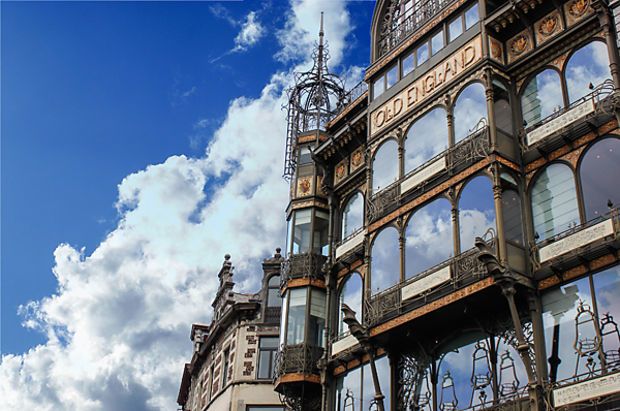
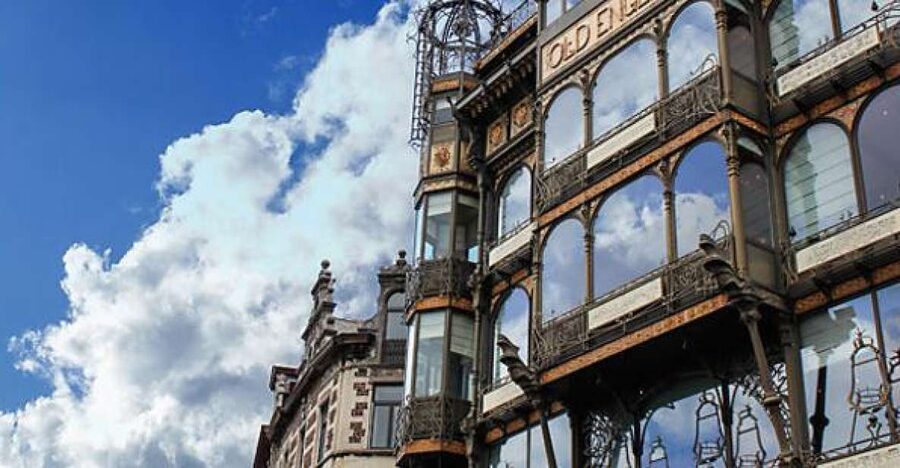
Old England House (Music Instrument Museum area)
You begin with the Old England House, associated with the Music Instrument Museum. It’s a useful starting point because it places you in the middle of Brussels’ architectural conversation before you start zoning in on the Art Nouveau houses.
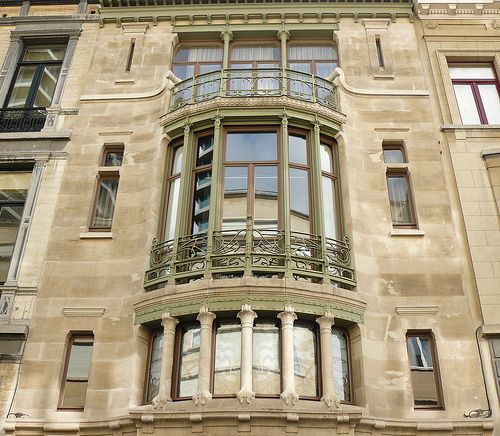
Hotel Tassel (Victor Horta), 1893 to 1894
Hotel Tassel is a must-see name in this story. Victor Horta’s work is central to how visitors learn the style, and this stop gives you a baseline for what Art Nouveau looks like when it’s treated as a design philosophy rather than a costume.
Van Rysselberghe House (Octave Van Rysselberghe), 1912
Then you shift to Octave Van Rysselberghe. This matters because it shows how Art Nouveau spread beyond a single “hero architect.” Seeing a different creator in the same neighborhood helps you notice patterns while also spotting differences in approach.
Hotel Otlet (Octave Van Rysselberghe and Henry van de Velde), 1894 to 1898
Hotel Otlet brings in Henry van de Velde alongside Van Rysselberghe. It’s a good checkpoint stop, because multi-creator projects often help you see how design ideas translate across collaborators, instead of staying locked inside one person’s signature.
Hotel Goblet d’Alviella (Octave Van Rysselberghe), 1882
Hotel Goblet d’Alviella is earlier than the other names on the route. That timeline cue can help you understand how the style’s ideas were already taking shape before the more famous late-1890s and 1900s work you’ll see next.
Hotel Ciamberlani (Paul Hankar), 1897
Now you get Paul Hankar. This stop is valuable because it turns the spotlight away from Horta for a bit, giving you a chance to compare how different architects treated the same broad Art Nouveau goals.
House of painter René Janssens (Paul Hankar), 1898
This address is tied to painter René Janssens. A home linked to an artist is the kind of detail that helps you imagine the cultural context around the architecture, not just the technical features. Even if you do not go inside, the purpose of the place adds meaning to the look of the facade.
Architect Armand Van Waesberghe
You also stop for the work connected to architect Armand Van Waesberghe. It’s another reminder that Art Nouveau in Brussels is not a single style applied once, it’s a network of architects shaping the city block by block.
Beukman House (Albert Roosenboom), 1900
Albert Roosenboom’s Beukman House lands around 1900, which is useful as a timing marker as you watch the style evolve. The guide’s material-focused explanations help you compare what changes look like when you revisit similar motifs on different addresses.
Private home of Paul Hankar
You end the neighborhood stretch at the private home associated with Paul Hankar. Since it’s a private residence type of stop, it reinforces the idea that you’re viewing the architecture primarily from the street, with interior understanding coming from explanation and visuals, not access.
Victor Horta Museum (finish point, museum admission not included)
The tour ends in front of the Victor Horta Museum. That finish matters because it gives you an immediate next step if you want to go deeper. Several people recommend lining up museum entry so your momentum doesn’t drop after the guide walks you away.
Interiors: what you see, what you don’t, and how to plan anyway
This tour is best described as an exterior architecture walk with interior context. Reviews repeatedly mention a frustration theme: you generally don’t enter the buildings. Instead, the guide supports the storytelling with photos or prints showing interior spaces.
So, if your dream day is to tour lots of houses inside and out, you might feel underfed. But if you want to become good at spotting Art Nouveau characteristics in real time, the photos and guided explanations still do a lot of heavy lifting.
Also note the museum piece: museum admission is not included. If you want to actually visit inside the Victor Horta Museum right after the tour, plan your timing and tickets in advance so the end point is more than just a photo stop.
Guide quality, language options, and pacing you can expect
The tour uses a live guide in Spanish, English, or French. Reviews mention guides like Maria and Danielle, and the consistent praise is preparation plus enthusiasm. People also liked how guides shared personal research angles and connected Art Nouveau to the social and political texture of the time.
There can be language echo effects if the group includes multiple languages and the guide repeats dialogue. One review noted that bilingual translation can stretch the experience beyond what you might expect, even if the guide remains tireless.
My practical take: bring patience, and ask questions early if you have specific curiosities. Also expect the tour to keep moving, since it has many stops and a fixed finish at the Victor Horta Museum.
Who should book this 3-hour Art Nouveau architecture tour
Book it if you are:
- A first-time Brussels visitor who wants to understand what you’re seeing
- Interested in Victor Horta and the broader Art Nouveau network around him
- Happy with street-level viewing, plus interior explanation through images
- Someone who likes structure, names, and dates as anchors during walking tours
Consider a different plan if you:
- Want to go inside multiple private homes during the tour
- Prefer purely self-guided browsing where you can linger for as long as you want on one facade
Should you book the Brussels Art Nouveau guided tour?
Yes, if your goal is to learn how to recognize Art Nouveau fast, and to see a concentrated stretch of major addresses guided by someone who clearly cares. The $35 price makes sense when you factor in interpretation, route timing, and the fact that you finish at the Victor Horta Museum, which can turn your last hour into an optional deep dive.
Book it with your eyes open: you will likely see architecture from outside, not lots of interiors. If you want museum time, line it up right after the tour so the ending feels like a real continuation, not just a stopping point.
FAQ
What is the duration of the Brussels 3-hour guided Art Nouveau tour?
The tour lasts 3 hours.
Where is the meeting point for the tour?
The meeting point is the Grand-Place in Brussels. You will find the guide holding a white umbrella.
What time does the tour start?
The tour starts at 10:00.
How much does the tour cost?
The price is $35 per person.
What is included in the price?
The guided tour is included.
Is museum admission included?
No. Museum admission is not included.
Is transportation included?
Train transportation is not included. The tour includes a tram ride from the Grand-Place area to the Bailli district.
What languages is the live guide available in?
The guide is available in Spanish, English, and French.
Is the tour wheelchair accessible?
Yes, the tour is wheelchair accessible.
Do I need to bring anything?
Wear comfortable shoes. You will be walking.
Is free cancellation available?
Yes, you can cancel up to 24 hours in advance for a full refund.
Latest from Brussels



Comic Wall & Art Nouveau Walks, compared.

2 hours Private Walking Tour of the Comics Walls
Read our review →
Brussels “Land of Comics”: Street Art & Walking Tour
Read our review →
Browse the lists this tour appears in