
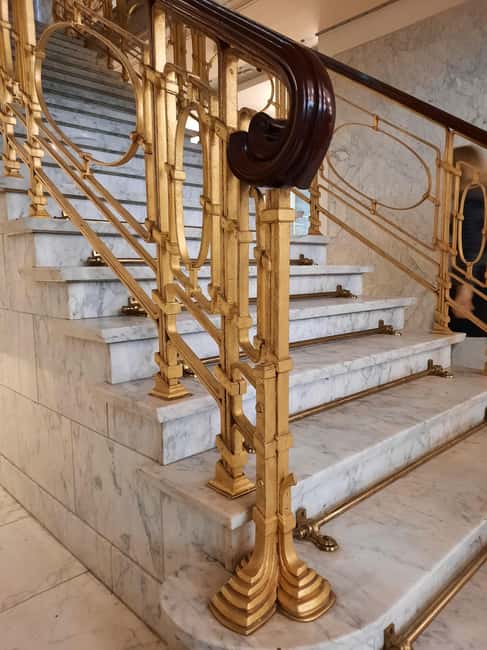
Reviewed · COMIC WALL & ART NOUVEAU WALKS
Brussels: 3h Art Nouveau Private Tour with a Local Guide
If your eye loves curling ironwork and swooping lines, you will get it here. This 3-hour private Art Nouveau walk in Brussels uses local guide Eric to turn famous facades into a story you can actually remember. You will also get a real sense of how the Belle Époque thought about design and daily life.
Two things I like a lot: you get a private guide for your group only, and you see Victor Horta creations alongside other standout houses by less famous architects. One thing to consider, the tour is still a walking route with public transport hops, so comfortable shoes matter, and wheelchair access is limited.
In This Review
- Key points to know before you go
- Brussels Art Nouveau on foot: where the style lives
- Meet Eric: the local guide angle that makes it worth paying for
- The route from Hilton Grand Place to Rue Defacqz 48
- Stop-by-stop: what to look for at each highlight
- Comics Art Museum, 20 minutes: a quick warm-up before the style
- Square Ambiorix, 40 minutes: your Art Nouveau spotting skills
- Public transport hop: quick repositioning, less walking fatigue
- Hôtel Solvay, 20 minutes: a big name with real presence
- Ixelles, 40 minutes: where Art Nouveau becomes a neighborhood habit
- Saint-Gilles streets and the final stretch: patina and contrast
- Victor Horta and the UNESCO-linked houses you should recognize
- Art Nouveau vs Art Deco: what Eric helps you spot
- Public transport and timing: how to make the 3 hours feel easy
- Optional meal at an Art Nouveau restaurant, if you want to linger
- Who this private Art Nouveau walk fits best
- Price and value: what $129 buys you in Brussels
- Should you book this Brussels Art Nouveau private tour?
- FAQ
- How long is the Brussels Art Nouveau private tour?
- What is included in the tour price?
- Are entrance fees or museum tickets included?
- Do I need to buy public transport tickets?
- Where does the tour start and end?
- What languages are available for the live guide?
Key points to know before you go
- Private guide only for your group, so you can ask questions and Eric can adjust as you go
- 10 to 12 Art Nouveau buildings, not just a highlight list from the guidebook world
- Horta + UNESCO-linked houses, including well-known stops such as Hôtel Solvay
- Ixelles and Saint-Gilles streets, where you can spot the style in everyday city blocks
- Eric’s focus on how Art Nouveau works, plus help distinguishing it from Art Deco
- End point in a quiet residential street, Rue Defacqz 48, handy for continuing on your own
More Local Favourites in Brussels
- Brussels: City Highlights and Hidden Gems Bike Tour
★ 4.8 · 443 reviews - Brussels Highlights & Hidden Gems Private Tour with a Local Guide
★ 5.0 · 251 reviews - Brussels Highlights & Hidden Gems Bike Tour
★ 5.0 · 195 reviews - Brussels PRIVATE TOUR With Locals: Highlights & Hidden Gems
★ 5.0 · 177 reviews - Brussels Like a Local: Private & Personalized Experience 2-4 hrs
★ 5.0 · 111 reviews
Brussels Art Nouveau on foot: where the style lives
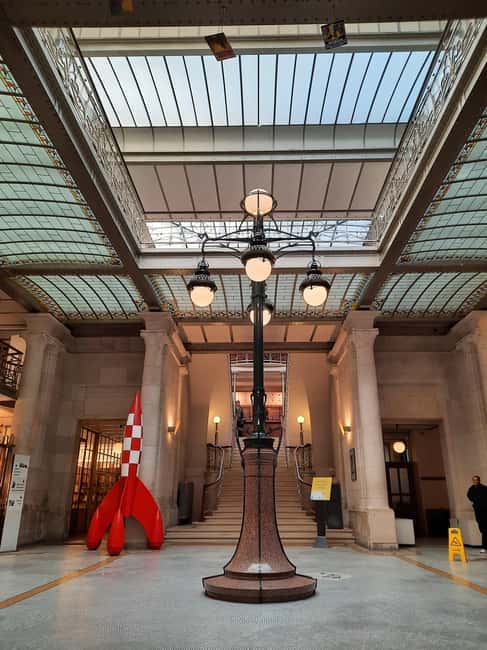
Brussels is one of those cities where architecture feels like it’s still having a conversation with you. Art Nouveau here is not just on postcards. It is on corners, across courtyards, and in stair-stepped facades that look different depending on the angle and the light.
That is why a walking format works so well. You are not just looking at one building behind a fence. You are moving through the neighborhoods where this style took root. And because the tour is private, Eric can slow down when you catch a detail, like the way lines curve or how ornament sits next to more practical design choices. In short: you will see the trees, not only the forest.
Meet Eric: the local guide angle that makes it worth paying for
The biggest difference between a script and a real guide comes down to energy and explanations. Eric is an Art Nouveau enthusiast, and you can feel the difference in how he frames the movement. He covers where the style came from and how it spread across Europe and beyond, so the buildings do not feel random. They feel connected.
I also like that Eric does not just say what something is. He helps you understand why it mattered. The tour is built around context, so you learn how Art Nouveau changed architecture, not just how it looks.
Language options help too. You can choose Dutch, English, French, or Spanish, which matters when you want architecture terms explained clearly and quickly.
And from what I see in the tour experience, this guide approach often leads to practical payoffs: you end up noticing patterns, and you get better at spotting style cues on your own later.
The route from Hilton Grand Place to Rue Defacqz 48
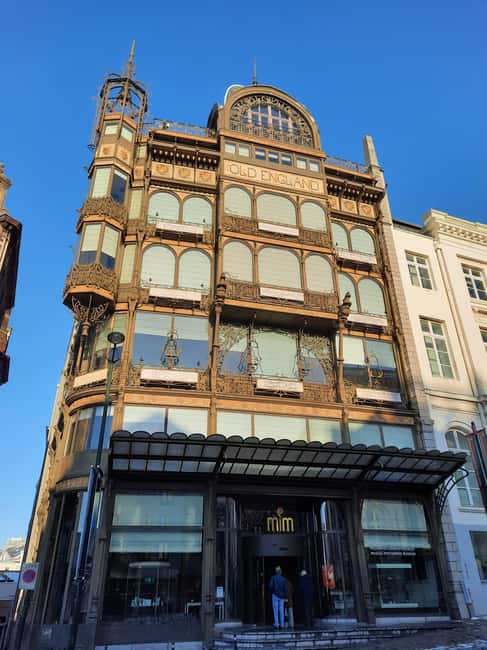
This is a 3-hour loop that mixes major center stops with quieter districts. You start at Hilton Bruxelles Grand Place, right in front of the revolving door, across from Gare centrale. That is a smart meeting point because it is easy to find, especially if you are arriving by train.
The walk then steps through a mix of time periods and city textures, so Art Nouveau does not feel like it appears out of nowhere. It also keeps things efficient, with short public transport transfers between longer stretches. You should plan to use local transit during the tour, but tickets are not included.
You finish at Rue Defacqz 48. That ending location is useful if you want to grab a drink or a simple meal afterward, and it avoids the awkward, everyone clumped in front of the same landmark moment.
Stop-by-stop: what to look for at each highlight
Below is the backbone of what you will experience. The exact order and timing can shift slightly depending on your pace and questions, but this is the core structure.
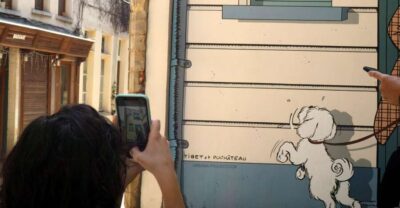
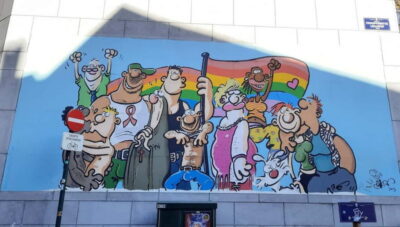
More comic walls and Art Nouveau facades:
Comics Art Museum, 20 minutes: a quick warm-up before the style
You begin with a guided orientation stop at the Comics Art Museum. Even if you are not planning to enter the museum itself, this first section helps you switch your brain into a mode where you read details like a designer.
The time here is short, about 20 minutes. Think of it as a warm-up: you get ready for the ornament and structure patterns you will spot later on the walk.
Square Ambiorix, 40 minutes: your Art Nouveau spotting skills
Square Ambiorix is where the tour starts to feel like you are in the middle of the movement, not just talking about it. You get a longer guided stop here, around 40 minutes.
This is a great place to practice what Eric teaches. Look for the way decorative elements connect to the building’s lines. Art Nouveau tends to feel organic, but it is not random. The ornament usually has a job, and once you learn the visual cues, the buildings start to “click.”
Also, do not rush photos. Standing still is the secret. Some details only show once you find the right angle.
Public transport hop: quick repositioning, less walking fatigue
Between major stops, you will take public transport. The tour includes around 15 minutes and then later another transfer segment of about 25 minutes.
Two important points for your comfort:
- Plan your pacing. If you hate transit transitions, know this tour has them built in.
- Bring the right transit option. You need to handle tickets yourself since they are not included.
Hôtel Solvay, 20 minutes: a big name with real presence
Hôtel Solvay is one of those stops that instantly signals, this is serious architecture. You get about 20 minutes guided time here.
It also ties directly into the Victor Horta focus. The tour highlights several Horta houses that are linked to UNESCO World Heritage status, and Hôtel Solvay is one of the named anchor points in the route. That matters because UNESCO-linked sites often draw big crowds on their own tours, but here you are seeing them with a guide who explains what you are actually looking at.
If you want value, this is a key moment. You pay the guide fee for interpretation, not just for being present in front of a famous facade.
Ixelles, 40 minutes: where Art Nouveau becomes a neighborhood habit
Next comes Ixelles for about 40 minutes. This is the part of the tour that feels most “Brussels,” meaning the architecture is not only a destination. It is part of the street life.
Eric points out both grand and smaller Art Nouveau elements, the kind that you can easily miss if you are walking too fast. This is where you start noticing how the style shows up across different scales, from dramatic houses to calmer streetfronts.
If you are trying to learn, Ixelles is a friendly classroom: the guide can point out the patterns, and you can then apply them to the buildings around you.
Saint-Gilles streets and the final stretch: patina and contrast
The tour also moves through Saint-Gilles. This is where you may see different states of preservation, including buildings that look close to how they did when constructed, as well as places that have been restored, plus facades showing gentle patina from more than a century of wear.
That matters because Art Nouveau was a short-lived fairytale compared to styles that kept dominating for decades. Watching it survive in different conditions helps you understand its real-world fate, not just the ideal version you might find in a museum brochure.
The tour ends at Rue Defacqz 48. You finish with your eye trained, so the walk does not end when you stop hearing the guide. It ends when you start seeing the next building yourself.
Victor Horta and the UNESCO-linked houses you should recognize
Horta is the star here, and this tour makes sure you see why. You spend time on Horta work and also pair it with houses by other architects who did not become global household names, but who clearly had serious talent.
That balance is part of the value. If you only see one architect, you get a narrow story. If you mix masters with other contributors, you start learning how Art Nouveau carried different interpretations while still sharing common visual language.
You also get a practical education on style labels. By the end, you should be able to distinguish Art Nouveau from Art Deco, and you even get examples of both. That is useful because Brussels can confuse you fast if you are bouncing between styles without a guide.
Art Nouveau vs Art Deco: what Eric helps you spot
Style names can feel like trivia until someone shows you the real differences. Eric helps you learn the trends in Art Nouveau and how to tell them from Art Deco.
Based on how the tour is structured, the learning is tied to what you see on the street:
- Art Nouveau typically emphasizes flowing, organic lines and ornamental forms that feel connected to the structure
- Art Deco tends to read more geometric and more streamlined in its decorative logic
When your guide points out what to look for, you stop relying on intuition alone. After a few stops, you start making quick judgments before you even lift your camera.
That skill is one of the best souvenirs you can take home.
Public transport and timing: how to make the 3 hours feel easy
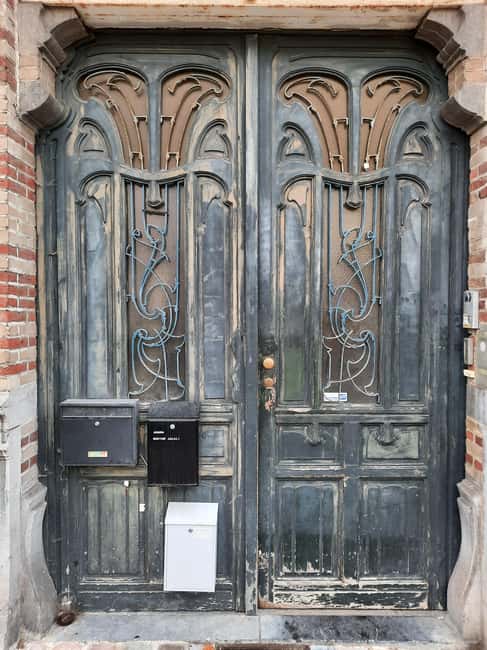
This tour is 3 hours, but it is not only 3 hours of walking. There are guided stops and transit breaks.
A few practical notes:
- Public transport tickets are not included, so plan for two tickets or a STIB/MIVB Brupass 1 day
- Wear comfortable shoes. This is a walking tour, and Brussels sidewalks can be uneven in some areas
- Belgian weather can flip quickly. Bring weather-appropriate clothing, and expect some waiting between street blocks
Because it is private, you also get a better pacing experience than with a larger group. Still, you should expect an active route. If you want architecture without walking, this may not be the right format.
Optional meal at an Art Nouveau restaurant, if you want to linger
The tour can end with a meal at an authentic Art Nouveau restaurant, with décor that has stayed close to what it looked like more than a century ago. Meals and drinks are not included, but if you want to extend the experience, this is a nice way to keep the design theme going.
It is also a good option if your stomach is calling for a pause while your eyes are still hungry.
If you choose this add-on, build in time so you are not rushing. Architecture does not like being rushed.
Who this private Art Nouveau walk fits best
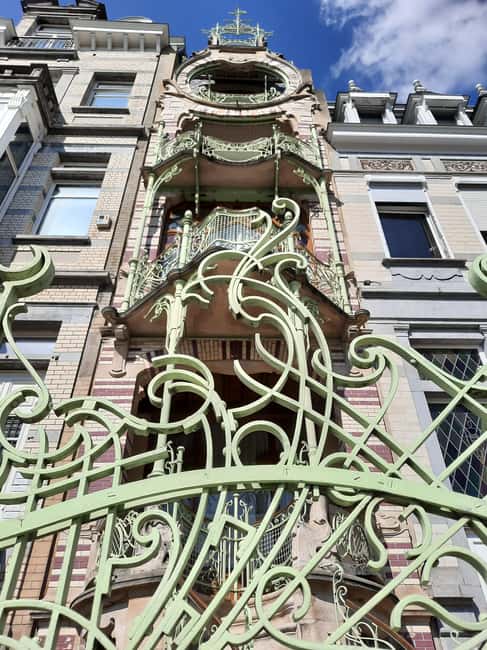
This tour fits best if you like architecture and want more than a photo stop. You will probably enjoy it most if:
- You want a structured overview of Art Nouveau across multiple neighborhoods
- You care about Victor Horta, but you also want variety beyond the biggest names
- You enjoy learning how to recognize styles in real time
- You prefer a private group pace over a crowded walking tour
If you are traveling with kids, you might find the subject matter engaging, but the walking and architecture talk may be a better match for older kids or teens who enjoy design.
If you use a wheelchair, the information you have indicates streets are not quite adapted. I would treat this as a hard limitation unless you confirm details directly with the operator.
Price and value: what $129 buys you in Brussels
At $129 per person for 3 hours, you are paying for a private, interpretation-heavy experience, not a bus tour.
The value comes from four things:
- You get an expert guide for your group only
- You cover 10 to 12 buildings, including well-known Horta stops
- You spend time in neighborhoods like Ixelles and Saint-Gilles where you can spot the style in context
- You learn the difference between Art Nouveau and Art Deco, so the tour improves your future sightseeing
Entrance fees are not included, and you handle public transport tickets. So the true cost can rise slightly depending on what you choose to enter or eat afterward. Still, for most people, the guide time plus the architectural focus makes this a strong deal.
Also, free cancellation up to 24 hours in advance is helpful when Brussels weather is doing its own thing.
Should you book this Brussels Art Nouveau private tour?
I’d book it if you want a short, high-impact architecture education with a real local guide, and you care about seeing the story behind the facades. The private format is the key. You are not stuck waiting for a group, and Eric’s Art Nouveau enthusiasm is the engine of the whole tour.
I would skip or think twice if you hate walking, if you want fully accessible routes, or if you prefer self-guided sightseeing with no transit hops.
If your ideal Brussels day looks like guided, detail-focused wandering through Belle Époque streets, this is a smart use of time.
FAQ
How long is the Brussels Art Nouveau private tour?
The tour lasts 3 hours.
What is included in the tour price?
It includes a guided tour outside of Art Nouveau buildings, visits in the historic center and lesser-known districts, and an expert guide with in-depth knowledge of Art Nouveau.
Are entrance fees or museum tickets included?
No. Entrance fees to museums or attractions are not included.
Do I need to buy public transport tickets?
Yes. Public transport tickets are not included. You may need two tickets, or you can use a STIB/MIVB Brupass 1 day.
Where does the tour start and end?
You meet in front of the revolving door of the Hilton Grand Place, opposite Gare centrale. The tour finishes at Rue Defacqz 48, 1000 Bruxelles.
What languages are available for the live guide?
The live guide is available in Dutch, English, French, and Spanish.
Latest from Brussels


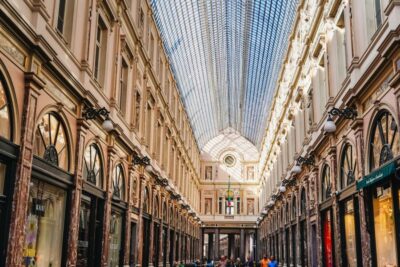
Comic Wall & Art Nouveau Walks, compared.
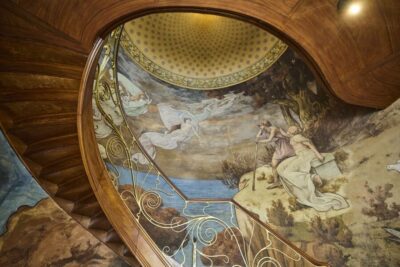
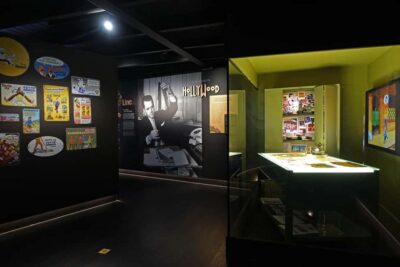

2 hours Private Walking Tour of the Comics Walls
Read our review →
Brussels “Land of Comics”: Street Art & Walking Tour
Read our review →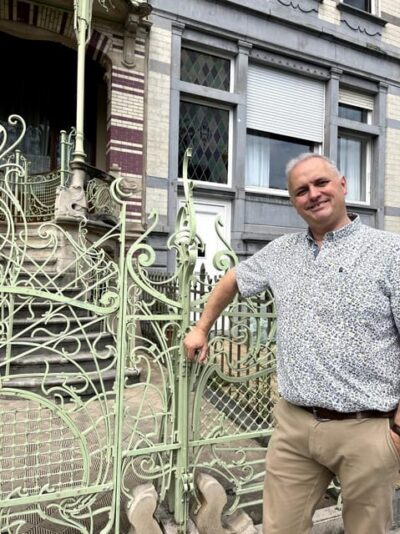
Browse the lists this tour appears in