
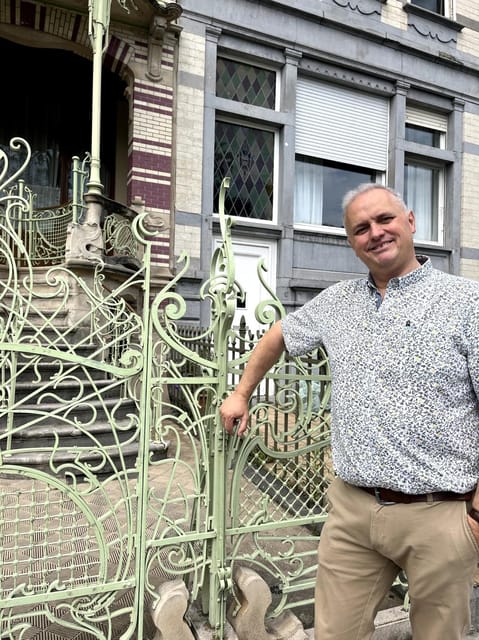
Reviewed · COMIC WALL & ART NOUVEAU WALKS
Brussels: 2-hours “Art Nouveau” Walking Tour
Art Nouveau in Brussels looks one way, then makes sense on the sidewalk. This 2-hour tour connects the movement’s birth to real buildings, and I especially love how it highlights Horta’s legacy while also teaching you how to spot different Art Nouveau trends.
I also like the pace, you get real time at major facades instead of a rushed slideshow, and the guide language stays practical and clear in English. The main drawback to consider is simple: you must show up at the right Merode meeting spot or you could lose time before the walk even starts.
In This Review
- Key points to know before you go
- Why Brussels became the birthplace of Art Nouveau
- Meeting at Merode and the first 15 minutes near Cinquantenaire
- Maison Cauchie, Palais Stoclet, Maison Saint Cyr, Maison Van Dyck
- Horta’s big role: Hôtel van Eetvelde, Hôtel Tassel, and related houses
- The rest of the Art Nouveau picture: Roosenboom, Hankar, Hannon, and more
- A quieter stretch: the longer mid-tour stop and the Hôtel Ciamberlani segment
- Finishing in Saint-Gilles and what you do after
- Is $136 per person worth it for a 2-hour Art Nouveau walk?
- Making the walk easier: what to focus on and how to prepare
- Guide quality, meeting precision, and why small details change the day
- Should you book this Art Nouveau walking tour in Brussels?
- FAQ
- Where does the tour meet?
- What time does the tour start?
- How long is the tour?
- Is it a walking tour?
- What language is the guide?
- Is the group private?
- What is included in the price?
- Do I need a transport ticket?
- Can I cancel for a full refund?
- Is smoking allowed?
Key points to know before you go
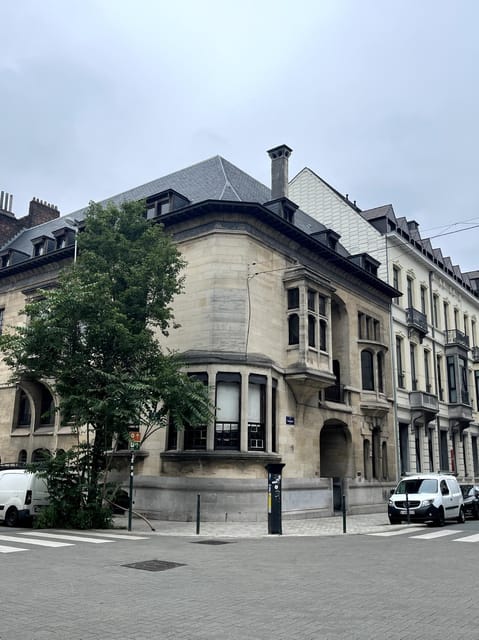
- You start at Merode, right by Cinquantenaire, so the tour begins with context, not confusion.
- Horta is the anchor, with key stops tied to his buildings and the ideas behind them.
- You’ll compare multiple Art Nouveau styles, not just one look.
- The route includes big names and side stops, helping you see why the movement mattered citywide.
- The tour can adjust based on availability, so don’t assume every listed facade will be identical day to day.
More Guided Walks in Brussels
- Brussels: Guided Walking Tour
★ 4.6 · 3,560 reviews - Brussels: Historical Walking Tour with Chocolate & Waffle Tasting
★ 5.0 · 1,165 reviews - Brussels Walking and Tasting Tour (Beers,Chocolates&Fries/Waffle)
★ 5.0 · 929 reviews - Brussels Chocolate Walking Tour and Workshop
★ 4.5 · 885 reviews - Brussels: City Highlights Walking and Tasting Tour
★ 4.9 · 505 reviews
Why Brussels became the birthplace of Art Nouveau
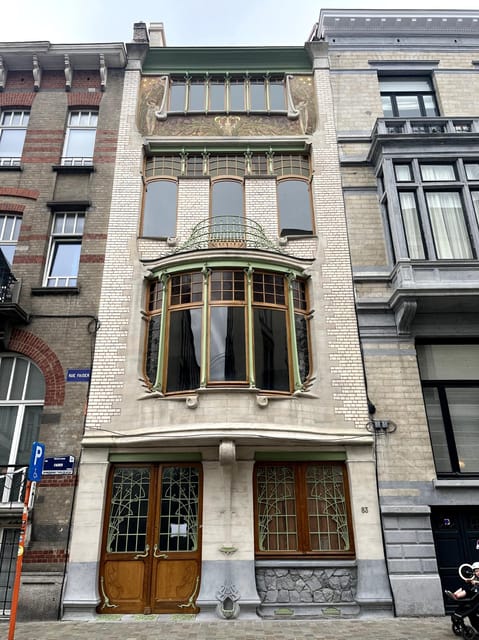
Art Nouveau didn’t arrive as a vague trend. It arrived as a full attitude, the kind that wanted art to live inside everyday life, from street-level façades to interiors. On this tour, you start with the emergence of the movement and why Brussels became such fertile ground for it, especially at the moment when designers were trying to shock the “normal” look of buildings into something newer.
What I like about this setup is that you don’t just hear about style. You learn how to read it. The guide walks you through the characteristics that felt so modern at the time, then quickly organizes the conversation by different Art Nouveau trends, so what you see later stops being random ornament.
If you’re the type who usually takes photos and then moves on, this part is the correction. You’ll start noticing the small choices, like how curves shape the structure visually, how decoration relates to function, and how the overall design tries to feel unified instead of pasted on.
Meeting at Merode and the first 15 minutes near Cinquantenaire
The tour meets in front of Brasserie Carpe Diem, at Metro Station Merode, and the key detail is the metro exit. Use Exit 3, and plan to be there a few minutes early so you can get oriented before the group forms.
From there, you begin at the Parc du Cinquantenaire entrance. The early stop is about 15 minutes of guided context, which is perfect timing because it gives you a mental filter before you start walking between buildings. You’ll also get a quick portrait of what the guide plans to cover, including the major names that define Art Nouveau in Brussels.
Practical tip: if you’re arriving by metro, give yourself a little extra time to confirm you’re at the correct exit. One small detour at Merode can snowball into a late start.
Maison Cauchie, Palais Stoclet, Maison Saint Cyr, Maison Van Dyck
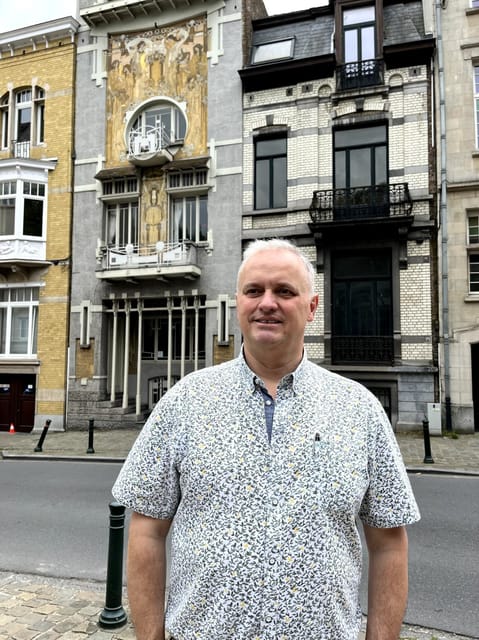
Once you’re rolling, the tour shifts into its main job: helping you connect style labels to actual streets. You’ll see a run of celebrated Art Nouveau addresses, including Maison Cauchie, Palais Stoclet, Maison Saint Cyr, and Maison Van Dyck.
Even without stepping inside, these façades do something important. They show you how Art Nouveau tried to make a building feel like a single artwork. Look for how the decoration is integrated rather than stuck on, and watch how the design uses line, texture, and contrast to direct your eye. The guide’s explanations are meant to sharpen that visual reading so you can tell the difference between trends instead of just thinking, “pretty and curvy.”
This is also where the tour becomes more than a highlight reel. You’ll learn what separates one Art Nouveau direction from another, so when you see similar floral energy or flowing forms later, you’ll understand what the style is doing and why.
Horta’s big role: Hôtel van Eetvelde, Hôtel Tassel, and related houses
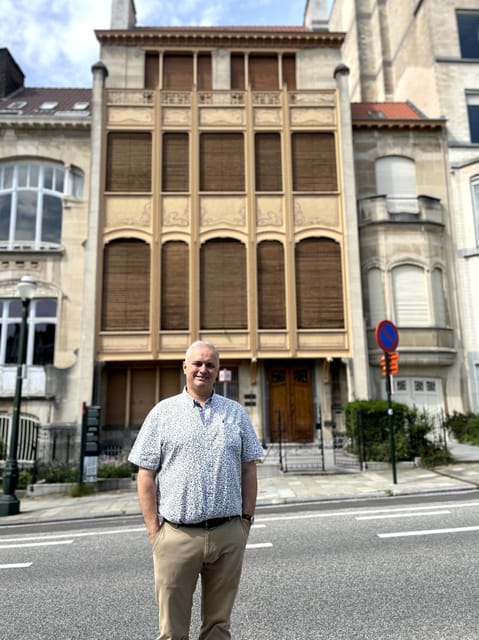
Brussels Art Nouveau is inseparable from Victor Horta, and this tour makes sure you feel that influence rather than just hear the name. You’ll specifically include Horta linked stops like Hôtel van Eetvelde and Hôtel Tassel, and you also see additional Horta addresses such as Maison et Atelier Horta, plus Hôtel van Eetvelde-area context that helps you place the architecture in a bigger story.
Why this matters for you: Horta is often where people want to start, but many self-guided visits turn into an Instagram crawl. A guide changes the experience. You’ll connect features you might otherwise ignore to the design thinking of the period, and you’ll understand why these buildings were considered modern instead of merely decorative.
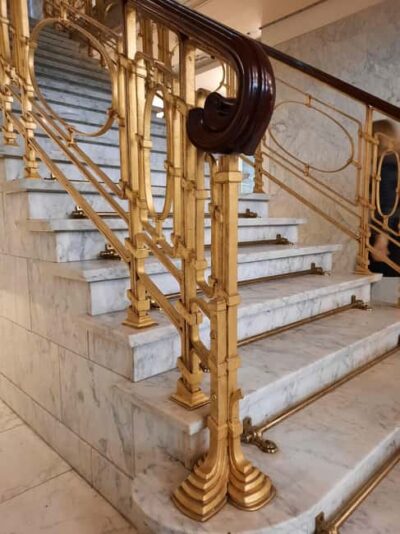
In this Horta-focused portion, I’d focus your attention on how the building communicates movement. Art Nouveau frequently uses sweeping lines and dynamic composition to make the façade feel alive. With the guide’s framework, you’ll start spotting those cues quickly, and you’ll be able to compare the rhythm of one façade to the next.
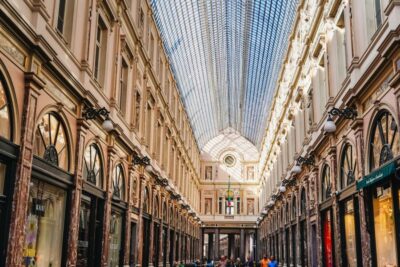
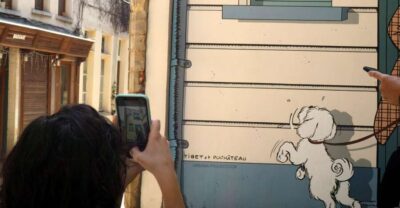
More comic walls and Art Nouveau facades:
The rest of the Art Nouveau picture: Roosenboom, Hankar, Hannon, and more
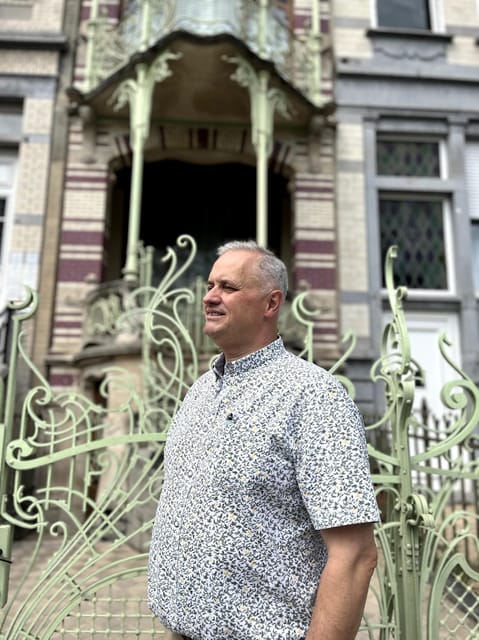
After Horta’s signature influence, the tour keeps moving through other important Art Nouveau stops, including Maison Roosenboom, Maison Hankar, and Maison Hannon, plus additional addresses like Hôtel Ciamberlani and others in the program. The point is not to treat every building the same way. The point is to show how Art Nouveau evolved, and how different designers pushed the style in slightly different directions.
This section is especially useful if you’re a style-spotter. The guide explains the characteristics of Art Nouveau trends, so when you see another façade that feels similar at first glance, you’ll learn what’s actually different. You’ll also start noticing how designers varied the balance between nature-like curves and more structured, graphic elements, even while keeping the Art Nouveau identity.
One more reason I like this approach: it prevents the classic beginner trap of thinking Art Nouveau equals one look. Brussels shows the style as a spectrum, and this tour gives you enough stops in two hours to understand that spectrum without getting lost.
A quieter stretch: the longer mid-tour stop and the Hôtel Ciamberlani segment
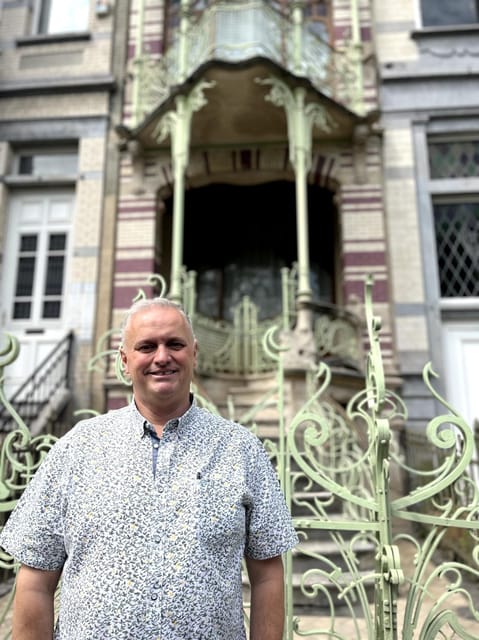
The schedule includes a 1.5-hour guided segment at a “hidden gem” style stop in the flow of the day, followed by 15 minutes at Hôtel Ciamberlani asbl. You don’t spend equal time everywhere, and that’s a good sign. The longer stop usually means more explanation of what you’re seeing, and more time to look closely rather than rushing past a façade.
For you, this is where the tour can feel most educational. A well-timed pause helps you compare what you learned at the beginning with what’s in front of you now. The mid-tour stretch also lets the guide connect design details back to the broader Art Nouveau trends you heard about earlier.
Then you wrap this portion with Hôtel Ciamberlani asbl for about 15 minutes. It’s a shorter segment, but the value is that you’ve already built your visual vocabulary. So even brief stops start landing. You’re not just collecting buildings. You’re collecting differences.
Finishing in Saint-Gilles and what you do after
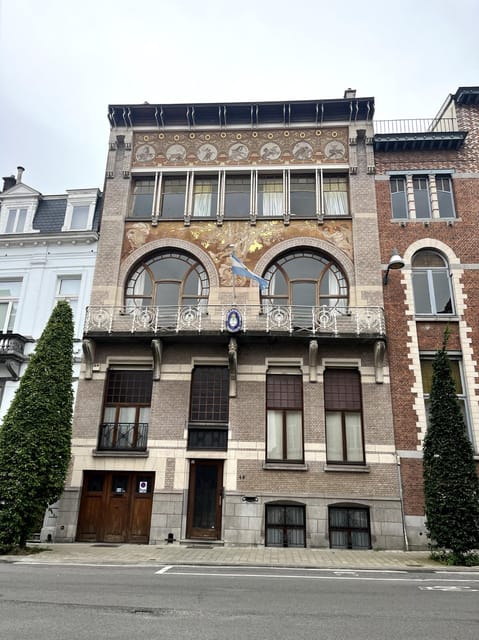
The tour ends at Av. de la Jonction, Saint-Gilles, Belgique. That matters because it can change how you continue your day. If you like to tack on another museum or a neighborhood walk afterward, you’ll want to plan your next step around where the guide finishes, not where you wish the route ended.
If your goal is to see more Art Nouveau after the tour, this is a strong strategy. You’ve already learned how to read the style, so the city becomes easier. One of the best ways to make that next step work is to keep your eyes on façades. Even when you’re not sure of the building name, you can recognize the design cues the guide has trained you to look for.
Is $136 per person worth it for a 2-hour Art Nouveau walk?
At $136 per person for about 2 hours, this is not a bargain-basement walking tour. But it is priced like an expert-led architectural experience, and you do get concentrated value.
Here’s what you’re paying for:
- A professional guide who explains Art Nouveau trends and characteristics, so you’re not guessing what you’re looking at.
- A multi-building route featuring major Brussels Art Nouveau addresses, including Horta linked work.
- A short format that still includes multiple stops, so you see more than one neighborhood.
It also helps that it’s listed as a private group. That usually means you’re less likely to get lost in the crowd and more likely to get answers to the questions you actually care about.
Not included is transport ticket coverage if you need it, so factor that into your math. If you can walk comfortably between stops and you know where you’re going, your costs stay simple. If you need metro help, budget a bit for transit.
My bottom line: it’s worth it if you care about architecture enough to want explanations, and you want the route and the style logic handled for you. If your goal is purely casual sightseeing with no focus on design, you might feel the price harder to justify.
Making the walk easier: what to focus on and how to prepare
This is a walking tour, so comfort matters. Wear shoes you’re happy in for about two hours, and plan for standing time while you look at façades up close.
I’d also do one small prep before you go. Pick two or three buildings from the route list that you most want to see, such as Hôtel van Eetvelde or Palais Stoclet. When the guide brings those up, you’ll remember them faster and notice the details with more interest.
During the stops, don’t just stare at the most obvious decoration. The guide’s whole point is to help you understand characteristics and trends, so look for how the design elements connect across the façade: lines, materials, and how ornament relates to the building’s shape.
If you’re taking photos, give yourself permission to slow down for 20 to 30 seconds at each main façade. It’s usually enough time to spot the design cues the guide is emphasizing, and you’ll leave with both images and understanding.
Guide quality, meeting precision, and why small details change the day
The tour quality is closely tied to the guide. The most praised experiences in the data point to guides who are passionate and articulate, like Yves and Davit, and others named David and Eric. That matters because Art Nouveau details are easy to miss if nobody explains what to look for.
There’s also one practical lesson from the less smooth experience: meeting point accuracy is everything. With Merode and multiple exits, getting to the correct spot can make the difference between a calm start and a frustrating hunt.
Also remember the program is subject to availability and can be changed at any moment. That can mean a different exact pairing of buildings on your day, so don’t cling too tightly to a single photo you want. Keep an open mind. If the guide shifts the route, your goal should still be the same, understanding Art Nouveau trends through the buildings you do see.
Should you book this Art Nouveau walking tour in Brussels?
I’d book it if you want an organized, expert-led way to understand Brussels Art Nouveau in a short time. You’ll get a structured introduction, a route that focuses on major façades including Horta linked work, and enough explanation to help you spot differences between trends instead of treating every building as the same style.
Skip it or think twice if:
- You need wheelchair accessibility, since it is not suitable for wheelchair users.
- You prefer fully self-guided sightseeing without expert interpretation.
- You’re likely to arrive late or unsure about Merode Exit 3, because the tour starts at a specific street-level meeting spot.
If you’re the kind of traveler who loves architecture, likes clear storytelling, and wants to feel like Brussels makes more sense by the end of your walk, this is a solid choice.
FAQ
Where does the tour meet?
The tour meets in front of Brasserie Carpe Diem, in front of the Metro Station Merode, and you should use the metro exit shown as Exit 3 on the product page photo.
What time does the tour start?
It lists starting times by checking availability, since the exact start depends on the schedule.
How long is the tour?
The duration is 2 hours.
Is it a walking tour?
Yes, it is described as an Art Nouveau walking tour. Transport is not included, so you may still need metro or other transit if your route requires it.
What language is the guide?
The live tour guide speaks English.
Is the group private?
Yes, it is a private group.
What is included in the price?
The price includes a professional guide and the walking tour of Art Nouveau buildings.
Do I need a transport ticket?
Transport ticket coverage is not included, so bring your own metro or local transit plan if needed.
Can I cancel for a full refund?
Free cancellation is available if you cancel up to 24 hours in advance for a full refund.
Is smoking allowed?
No, smoking is not allowed.
Latest from Brussels



Comic Wall & Art Nouveau Walks, compared.
2 hours Private Walking Tour of the Comics Walls
Read our review →
Brussels “Land of Comics”: Street Art & Walking Tour
Read our review →
Browse the lists this tour appears in