
Reviewed · DARK HISTORY WALKS
Private Tour: The Dark Side of Gent
Ghent has a darker side, and this tour leans into it. I love the evening pacing, when the streets feel calmer and the stories land better, plus the private format means you can keep your own tempo instead of getting swept along. I also like how the walk mixes big landmarks with vivid legends, from Devil’s Tower lore to the industrial-era twist that helps explain why Ghent feels so lively today.
The one possible drawback to plan for: it’s mainly a walking and storytelling experience, so a few stops are look-and-learn only, with some cathedral or building entries not included.
In This Review
- Key takeaways before you go
- Why an evening private tour fits Ghent so well
- Price and what you really get for $105.59 per person
- Where the tour starts and how to make your timing easy
- The 10 stops on The Dark Side of Gent (what you’ll see and why it matters)
- Stop 1: St Michael’s Bridge, skyline and medieval trading power
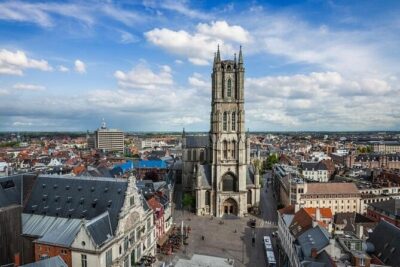
- Stop 2: St Bavo’s Cathedral, why the nickname is Devil’s Tower
- Stop 3: Graslei and Korenlei, the medieval harbour economy
- Stop 4: Appelbrugparkje, Butchers Hall and the father-and-son legend
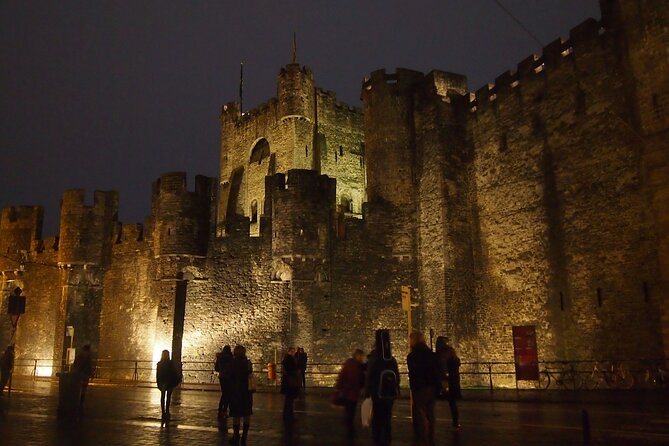
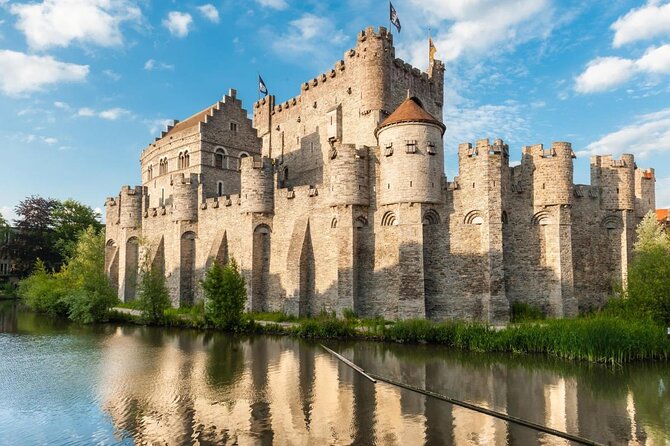
- Stop 5: Gravensteen, the fortress that shaped the city
- Stop 6: Prinsenhof, the Prince’s Court and a bit of imagination
- Stop 7: Rabot Sluice, defense wall remnants and a 14 km history
- Stop 8: Keizer Karel V, Charles V sculptures and imperial scenes
- Stop 9: Augustijnenklooster, religious wars and Calvinist rule
- Stop 10: Patershol, Monk’s hole and the Industrial Revolution rebound
- The best part: guides who can tell stories without rushing you
- What to watch out for, so you don’t feel disappointed
- Who this tour is perfect for
- A smart way to extend the experience after the tour
- Should you book The Dark Side of Gent?
- FAQ
- How long is The Dark Side of Gent private tour?
- How much does it cost?
- Is this a private tour?
- Is the tour offered in English?
- Are there any entries included at the stops?
- Where does the tour meet and where does it end?
Key takeaways before you go
- Evening route through Ghent means fewer crowds and more atmosphere on cobblestones and bridges
- Private guide, private group so you can ask questions and pause whenever you want
- Legend plus landmark balance gives you the why behind the medieval sites, not just dates
- St Bavo’s Cathedral and other interior access are limited, so bring your questions for what you can see outside
- Finish in Patershol for an easy next step, bars and restaurants right there in the medieval quarter
More of the darker side of Ghent:
- Historical Walking Tour: Legends of Gent
★ 5.0 · 1,761 reviews - Evening Tour of the Dark Side of Gent
★ 5.0 · 646 reviews - Ghent: The Dark Side of Ghent Private Walking Tour
★ 4.9 · 19 reviews - Kortrijk Self-Guided Sherlock Holmes Murder Mystery Game
★ 5.0 · 2 reviews - Historical Walking Tour: Legends of Bruges
★ 5.0 · 2,541 reviews
Why an evening private tour fits Ghent so well
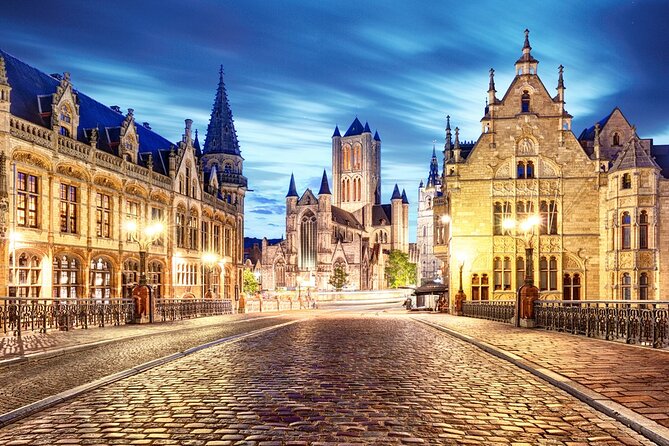
Ghent is gorgeous in daylight. But at night, it feels like the city turns down the volume and speaks in quieter details. That’s why this tour works: you see key medieval and fortress points while the streets are less busy, so you can actually notice the architecture and the small scene changes that make the stories believable.
The private part matters too. In a group tour, you often spend half your time trying to keep up or angle for a photo at the exact same moment. Here, you can slow down for a viewpoint, speed up if you’re photo-happy, and ask your guide to explain something again without the schedule police showing up.
The name is a hint, but it’s not a horror show. You’ll hear gruesome legends and religious conflict themes, yes. Still, the goal is to help you understand Ghent’s identity, how power worked here, and why certain places earned scary nicknames.
Price and what you really get for $105.59 per person
At $105.59 per person for about 1 hour 45 minutes, this isn’t a bargain city stroll. It’s a paid tour, so you’re paying for three things: a guide who can connect sites into a story, the convenience of a tight route, and the value of doing it privately.
What makes the price feel more reasonable is the stop density. You cover a lot of Ghent’s “this is why the city mattered” locations in one evening, without you needing to plan transport or map out a self-guided route. And because it ends in Patershol, you’re not left stranded at some random edge of town. You walk out into a walkable dining zone.
That said, set your expectations honestly. If you want a tour with lots of interior museum time, you might feel a bit shortchanged. Several stops are outside viewpoints or exterior-focused history, and some sites explicitly do not include entry.
Where the tour starts and how to make your timing easy
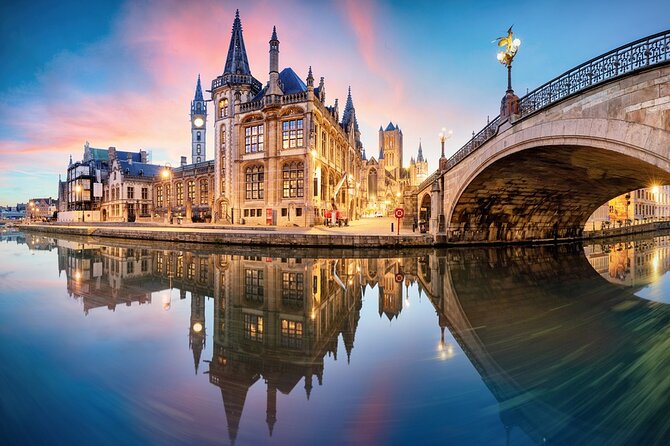
You’ll meet at Hostel Uppelink, Sint-Michielsplein 21, 9000 Gent. It’s a straightforward city-center start, and it’s near public transportation, which is helpful if you’re coming in from Brussels or another Belgian stop.
The tour ends in Patershol, a medieval quarter known as Monk’s hole, where you can continue with food and a drink. That matters on an evening tour. Instead of spending your last energy figuring out where to go, you get dropped right into an area designed for wandering and lingering.
The 10 stops on The Dark Side of Gent (what you’ll see and why it matters)
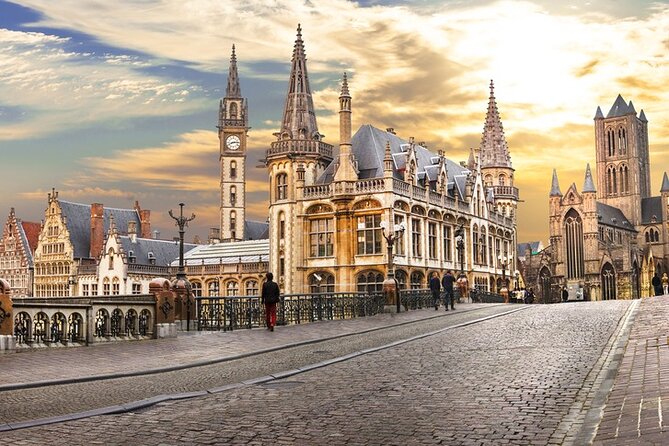
This is a story route that moves through Ghent’s trading power, religious conflict, defenses, and the later economic rebound. Most stops are about 10 minutes, with a slightly longer opening overview.
A few more Ghent afternoons to weigh up
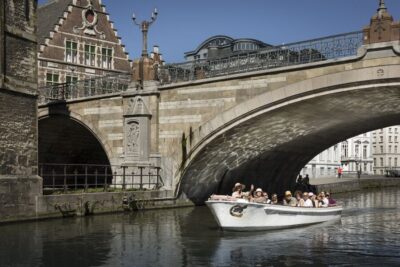
Stop 1: St Michael’s Bridge, skyline and medieval trading power
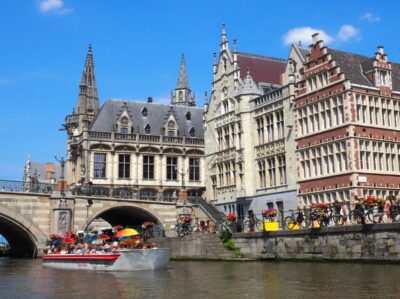
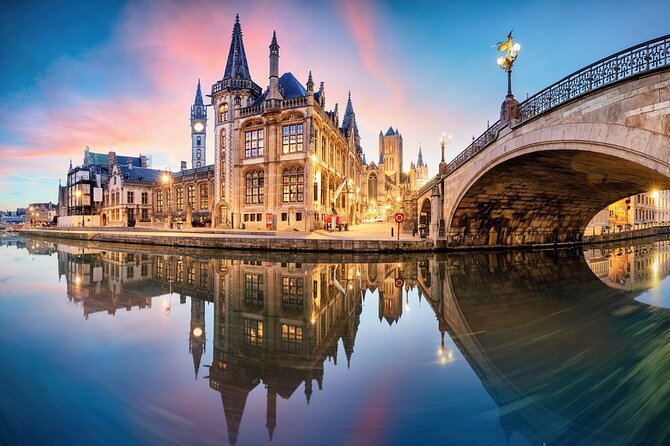
You start here to get your bearings. Your guide explains Ghent’s role as a trading hub in medieval times, and you also get a quick introduction to the three towers of the Ghent skyline, which are best visible from this spot.
This is a smart opener. When you later see other areas, you’ll understand why certain buildings matter and how the city’s geography shaped its power.
Practical note: bridges can get windy at night. Wear something you don’t mind holding onto your scarf for.
Stop 2: St Bavo’s Cathedral, why the nickname is Devil’s Tower
Next is St Bavo’s Cathedral, where the focus is the gruesome story behind why it’s known as Devil’s Tower. The key detail: entering isn’t part of the tour, and admission is not included.
That means you should treat this stop as a storytelling moment connected to a real landmark. If you’re the type who loves reading museum labels for 30 minutes, you’ll need to plan extra time on a different day if you want interior access.
Stop 3: Graslei and Korenlei, the medieval harbour economy
Now you move into the heart of Ghent’s medieval harbour area, Graslei and Korenlei. This is where your guide talks about the lucrative trading activities that once made Ghent an economic powerhouse in Europe.
This stop is valuable because it reframes what you’re looking at. You’re not just admiring old buildings. You’re seeing the physical layout of a trading world: where commerce happened, what it protected, and why the city’s wealth could turn into conflict.
Stop 4: Appelbrugparkje, Butchers Hall and the father-and-son legend
On Appelbrugparkje, you look out over the giant Butchers’ Hall from the bridge. Your guide shares a legend involving the execution of a father and son, plus a miraculous event said to have saved them.
This is where the “Dark Side” branding makes sense. The scenery stays real, but the story adds emotional stakes. It’s also a good example of how a guide can turn architecture into a narrative, not a postcard.
Tip: if you want photos, ask your guide when the best angle is, then lock it in quickly. Bridges and hallways get crowded fast in summer, and the tour schedule is tight by design.
Stop 5: Gravensteen, the fortress that shaped the city
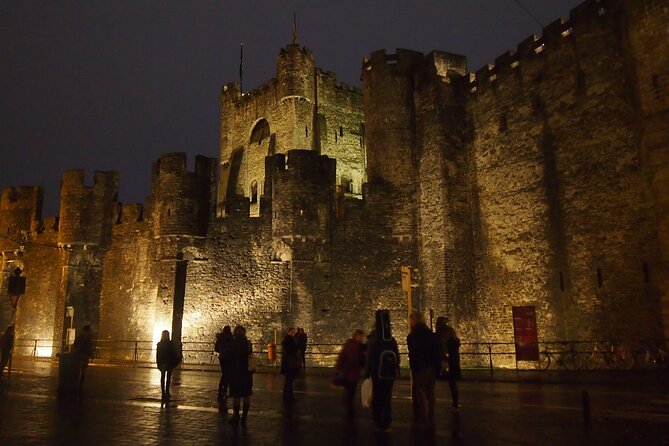
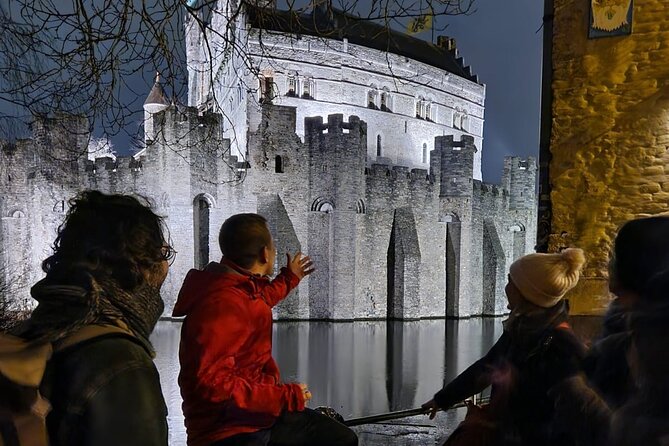
Gravensteen is next. It was built by Count Baldwin in the 9th century, originally to help protect the inhabitants from Viking raids. Your guide explains how the city began developing around this fortification.
This stop is a big “click” moment for many first-time visitors. You see that Ghent wasn’t just medieval art and canals. It was also defense and control.
One consideration: fortresses can feel like photo marathons. If you’re tired, give yourself permission to take fewer pictures and listen more. The payoff is in understanding why this place existed.
Stop 6: Prinsenhof, the Prince’s Court and a bit of imagination
Then you head to Prinsenhof, once a gigantic palace called the Prince’s Court. Today you need imagination to picture the scale, but your guide brings its history to life. Entering isn’t part of the tour, and admission is not included.
This stop benefits you most if you like guided visualization. If you’re the type who needs walls and rooms to fully understand a place, you might find this one less satisfying. Still, it’s great for learning how elite power lived and how it connected to the rest of the city.
Stop 7: Rabot Sluice, defense wall remnants and a 14 km history
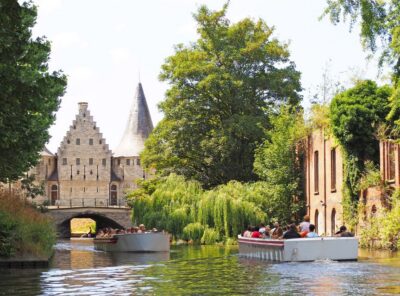
At Rabot Sluice, you see the only remaining tower of a defense wall that stretched 14 km around Ghent during the Middle Ages. Your guide connects the site to why Ghent needed that kind of protection.
This is one of the stops where the numbers make it feel real. A full perimeter defense wall is hard to grasp until you’re standing near what remains. It also makes later stories about conflict feel less random.
Stop 8: Keizer Karel V, Charles V sculptures and imperial scenes
At Keizer Karel V, you cross the Bridge of Imperial Delights, flanked by four sculptures depicting legendary scenes from the life of Charles V. Your guide explains what these scenes mean.
Even if Charles V isn’t your personal obsession, the value here is how art shows political messaging. Those sculptures are not decoration only. They’re instruction, identity, and propaganda all in one package.
Stop 9: Augustijnenklooster, religious wars and Calvinist rule
The tour then covers Augustijnenklooster, focusing on the troublesome history of the Religious Wars and the effect Calvinist rule had on Ghent’s history. Entering isn’t part of the tour, and admission is not included.
This stop can be emotionally heavier than the others, but it gives context for why Ghent’s past feels dramatic on purpose. When you connect it to earlier defense and power stories, it stops feeling like random “dark facts” and starts feeling like a coherent timeline.
If you prefer lighter evening topics, you can still enjoy it, just treat it like history with teeth, not sensational horror.
Stop 10: Patershol, Monk’s hole and the Industrial Revolution rebound
Finally, you finish in Patershol, the medieval quarter called Monk’s hole. Your guide explains the social impact of the Industrial Revolution and how it played a role in reviving the city’s economy.
This ending is smart. It doesn’t end on grim conflict. It shows what changed after the worst chapters and why Ghent kept evolving instead of becoming a museum only.
The best part: guides who can tell stories without rushing you
The biggest praise behind this experience is the quality of the guiding. Names that come up often include Jerke, Kenny, Hamraz, Isabelle, Sébastien, Deborah, and Debra. Across those examples, the common theme is that guides are patient, kind, and genuinely able to explain history with personality.
You’ll likely feel the difference in how questions are handled. This is the kind of tour where it’s normal to ask small clarifying questions, including the ones that start with, Wait, why did they do that? A guide who can keep the tone light while still taking the subject seriously can turn a 1 hour 45 minute walk into a real memory.
If you’re traveling with kids, one reason families seem to like it is that the storytelling is engaging and paced. It can work even if everyone has different attention spans, because the route keeps giving new visuals and new story hooks.
What to watch out for, so you don’t feel disappointed
Here’s what could trip you up, and how to handle it:
- Not everything is an entry site. St Bavo’s Cathedral, Prinsenhof, and Augustijnenklooster are part of the story but not entered, and admission isn’t included for those stops.
- It’s a walking route. You’re moving through the center and spending time at outdoor viewpoints. Wear shoes you trust.
- Dark themes are history-based. You’ll hear legends and conflict themes, but it’s not a supernatural tour or staged performance.
- If you only want “scary,” you might want more. This tour is more about context and meaning than maximum shock value.
If you go in for the historical legends plus Ghent’s medieval-to-modern connections, you’ll probably feel it was worth the time.
Who this tour is perfect for
This is a strong pick if you:
- want a first meaningful Ghent experience that doesn’t require planning a route
- like history stories with a spooky edge, but still grounded in real places
- enjoy evening walking when the city feels less crowded
- want a private setup so you can ask questions without feeling rushed
- are food oriented too, because ending in Patershol gives you an immediate place to go next
It might be less ideal if you:
- want mostly indoor attractions and long museum time
- dislike walking and prefer slow, sit-down sightseeing
- expect a full-on horror show rather than historical legends
A smart way to extend the experience after the tour
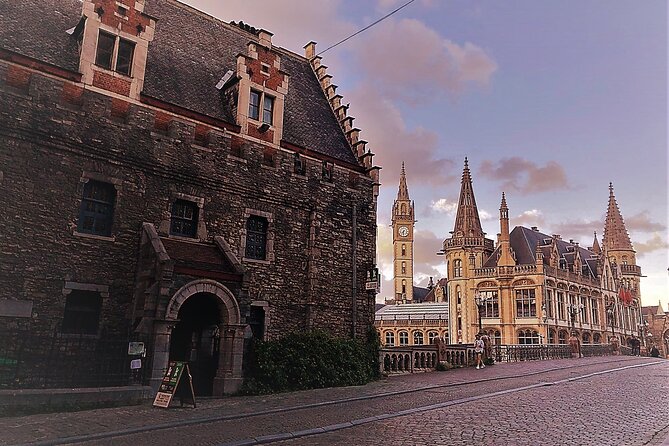
Because you end in Patershol, use that time intentionally. Pick one place for dinner that’s close to where you finish, then take a short wander after. If you feel like you still want a viewpoint, ask your guide for one extra local walk you can do on your own in that area, using what you learned during the stops.
Also, if any of the places outside intrigued you, plan a return visit the next day when interiors are more appealing. The tour will have already given you the “why” behind what you’ll see.
Should you book The Dark Side of Gent?
I’d book it if you want an evening route that turns Ghent into a connected story, not a list of sites. The private pacing, the focus on medieval power, defenses, and religious conflict, and the ending in Patershol make it practical and satisfying.
I’d think twice if you’re mainly chasing interior visits, because several stops are look-and-learn only. Also, if you want shock-heavy entertainment, remember this is history with legends attached, not a scripted scare-festival.
If you’re flexible, comfortable walking, and curious about how a beautiful city got its darker nicknames, this tour is a very solid use of an evening in Ghent.
FAQ
How long is The Dark Side of Gent private tour?
It takes about 1 hour 45 minutes.
How much does it cost?
The price is $105.59 per person.
Is this a private tour?
Yes. It is a private tour, and only your group participates.
Is the tour offered in English?
Yes, the tour is offered in English.
Are there any entries included at the stops?
St Bavo’s Cathedral is not entered as part of the tour, and admission is not included. The same is true for Prinsenhof and Augustijnenklooster, since entering is not part of the tour. Some other stops are listed as having free admission.
Where does the tour meet and where does it end?
It starts at Hostel Uppelink on Sint-Michielsplein 21 in Ghent and ends in the Patershol area, close to bars and restaurants.
Latest from Ghent





Dark History Walks, compared.


Historical Walking Tour: The Story of Brussels – by Legends
Read our review →Browse the lists this tour appears in