
Reviewed · WALKING TOURS
Brussels Off the Beaten Path: Private Local Walking Tour
Side streets make Brussels feel human. This is a private local walking tour that trades big sights for street-level stories, and I loved how Chris kept the facts coming without turning it into a lecture. You’ll get a clear sense of how ordinary Brussels works, block by block, from old courtyards to canal life.
Two highlights for me: the way the tour uses small landmarks like Zinneke Pis and Rue du Marché aux Porcs as doorways into real local history, and the comfortable pace that lets you actually look, not just move. One thing to think about is food timing, since lunch isn’t included and the included break is a beer or soft drink, so you’ll want to plan your meal after.
In This Review
- Key things I think you’ll love
- How This 3-Hour Brussels Walk Stays Local
- Starting at Place Saint-Géry: Old Brussels with a Modern Mood
- Zinneke Pis and Place Sainte-Catherine: Quick Stops with Meaning
- Vismet and Market Streets: The Food History Still in the Pavement
- Rue de la Cigogne and Walvis Cafe: Slow Down on Purpose
- Brussels Canal and Comte de Flandre: Where Industrial Past Turns Creative
- Minoterie Farcy and Place Communale: Working-Class Brussels in Plain Sight
- Brunfautplein and Boulevard Barthélémy: Finishing with Neighborhood Energy
- Price and Value: What 118 Per Person Really Buys
- When This Tour Fits You Best
- Should You Book Off the Beaten Path With a Private Guide?
- FAQ
- How long is the Brussels Off the Beaten Path private walking tour?
- Is this a private tour or a group tour?
- What language is the tour offered in?
- Where do I meet the guide and where does the tour end?
- What’s included in the price?
- Are there admission fees at the stops?
- Is lunch included?
- How far in advance should I book?
- Can I cancel for a full refund?
Key things I think you’ll love
- Private guide time, with only your group, so you can ask questions and set a comfortable rhythm
- Offbeat stops with context, like Senne Courtyard at Place Saint-Géry and the industrial leftovers tied to flour production
- No paid admissions at the stops listed, most places are ticket-free for this walk
- A real bar stop at Walvis Cafe, with a beer or soft drink and canal-adjacent atmosphere
- A route that makes sense on foot, ending on Boulevard Barthélémy where you can keep going easily
More Guided Walks in Brussels
- Brussels: Guided Walking Tour
★ 4.6 · 3,560 reviews - Brussels: Historical Walking Tour with Chocolate & Waffle Tasting
★ 5.0 · 1,165 reviews - Brussels Walking and Tasting Tour (Beers,Chocolates&Fries/Waffle)
★ 5.0 · 929 reviews - Brussels Chocolate Walking Tour and Workshop
★ 4.5 · 885 reviews - Brussels: City Highlights Walking and Tasting Tour
★ 4.9 · 505 reviews
How This 3-Hour Brussels Walk Stays Local
This tour is built for the moment you start to wonder what Brussels feels like when you stop chasing postcards. Instead of lining up at the usual icons, you follow a route through working streets, market history, and neighborhood corners that you would likely miss on your own.
I also like that it stays practical. The format is time-friendly, about 3 hours, and the stops are short enough to keep the energy up. You’re not stuck in one spot for long periods. You get to see more of the city’s “everyday” face, then regroup at the next point with a story that helps it click.
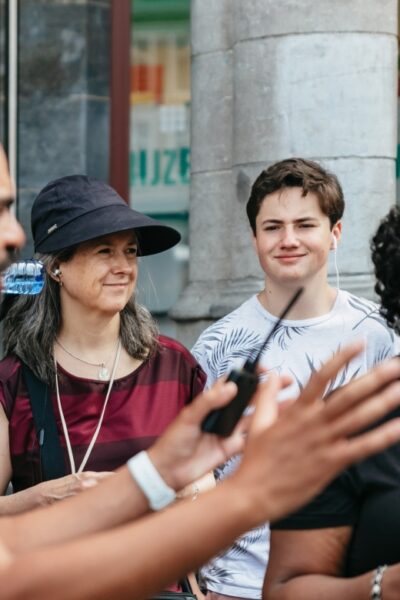
And yes, the guide matters. In my case, Chris made the tour feel easy to follow and comfortable to be around, with a steady flow of interesting facts. If you’re the kind of traveler who likes to understand what you’re looking at, this kind of guide-led walking tour is a great match.
Starting at Place Saint-Géry: Old Brussels with a Modern Mood
You begin at Pl. Saint-Géry 2, right where Brussels layers itself. Place Saint-Géry is one of those squares where you can sense older foundations while the area still feels current. I liked the contrast right away, old architecture meeting the modern bustle of people out doing normal things.
From there, the tour moves you into the Senne Courtyard, a quieter pocket that gives you a glimpse of Brussels’ medieval past without the need for a museum ticket. This is the kind of stop that works because you can slow down for a few minutes and actually notice your surroundings. The square gives you the frame, and the courtyard gives you the atmosphere.
Practical note: this is a good place to orient your eyes before you head into narrower streets later. If you’re worried about “where am I?” this start helps a lot.
Zinneke Pis and Place Sainte-Catherine: Quick Stops with Meaning
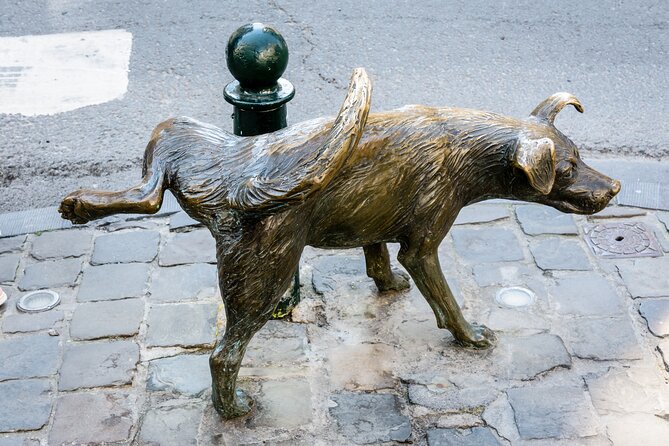
Next up is Zinneke Pis, the quirky sculpture of a peeing dog. It’s short, but it’s memorable, because it feels playful and local. The tour uses it as a jumping-off point, showing how Brussels puts humor into public art and how the city’s funny statues have their own variations.
Right after, you walk toward Place Sainte-Catherine, a square where old and new architecture sit close together. This part felt like a breather in the best way. You get time to look around, take in the church area, and wander into nearby shops at a relaxed pace. Even if you’re not going in anywhere, the atmosphere does the job.
If you want to photograph bridges of eras, this is one of your easier wins. The buildings around the square give you plenty of angles without requiring a long detour.
Vismet and Market Streets: The Food History Still in the Pavement
Then the walk gets smarter, because the route uses street names as clues. You head to Vismet, tied to Marché aux Poissons, which was once the city’s fish market. Today, you’ll see seafood focused restaurants lining the square, and it becomes obvious that the market role didn’t vanish. It shifted.
I like these moments because they help you read the city like a timeline. When you hear fish-market history and then see it paired with seafood spots, it stops being trivia and starts becoming a pattern you can recognize.
You continue along Rue du Marché aux Porcs, a historic street linked to the pork market. Now it’s shops and cafés, which tells you something important about Brussels: the city has often kept its uses, even when the exact trade changes. The street itself is part of the story, so you’re not just hearing about it, you’re walking it.
Short stop, but effective. If you enjoy food culture or you like understanding how cities evolve by function, you’ll get a lot from these market segments.
Still got an afternoon? Try these:

Rue de la Cigogne and Walvis Cafe: Slow Down on Purpose
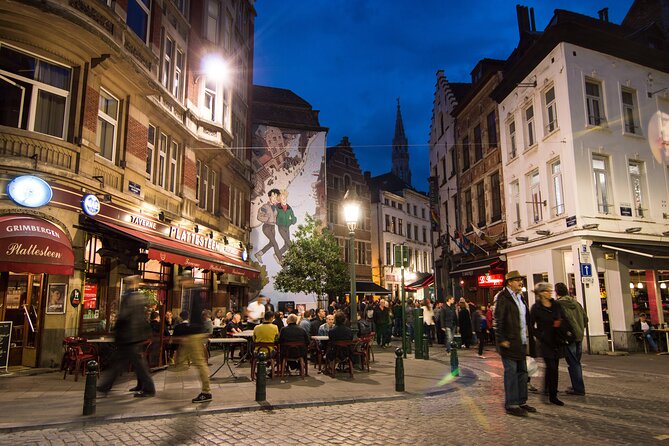
At Rue de la Cigogne, you’re aiming for a more intimate street feel. This is described as an authentic alley hidden in the heart of Brussels, and that matches what I look for on these walks. Narrower streets like this tend to feel calmer. You can hear less traffic. You’re more aware of the buildings close to you.
It’s also a good mental transition. Up to this point, you’ve been moving through squares and market-adjacent areas. This alley stop resets your attention. You’ll probably notice more textures, doorways, and street geometry when you’re not trying to cross a wide square.
Then comes the best timing break: Walvis Cafe. This is a traditional local bar, and the tour includes a beer or soft drink, so you don’t have to decide on the spot. I appreciated that the pause is built in, about 20 minutes, and you can stay relaxed while still feeling like you’re part of the neighborhood scene.
One extra detail worth noting: the bar has views of the nearby canal area. Even if you’re not the type to sit and people-watch for an hour, a short drink with a view makes the walking day feel less like chores and more like a proper outing.
Brussels Canal and Comte de Flandre: Where Industrial Past Turns Creative
After the bar, you head to the Brussels Canal area, often associated with the Kanaal neighborhood. This portion is about transformation. The canal zone was once industrial, and now it’s turned into a cultural hotspot with art, cafés, and waterfront paths.
You don’t need to do anything fancy here. What matters is the walk itself. Waterfront paths give you that open-air reset, and the canal line helps you connect neighborhoods in your head. It’s one of the easiest ways to understand why this part of Brussels feels different from the older market streets you just walked.
Then you reach Comte de Flandre metro stop. The tour uses that arrival point to place you in one of Brussels’ most energetic districts. Even without a long stop for a big attraction, it works as a marker. You get a sense of scale and direction. And because it’s a transit stop, you can quickly understand where you are if you want to continue on your own later.
Minoterie Farcy and Place Communale: Working-Class Brussels in Plain Sight
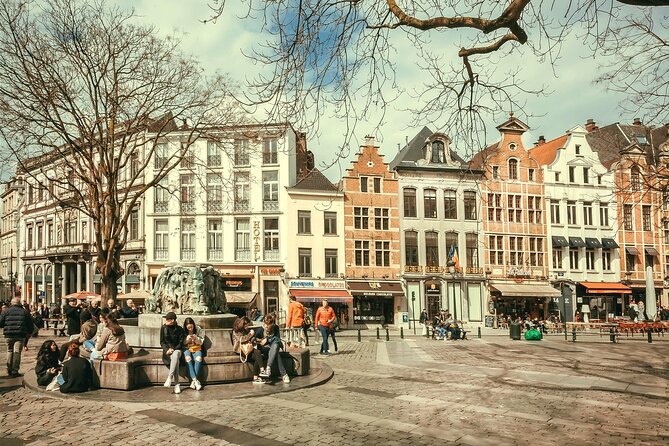
The route continues toward Place de la Minoterie, tied to Minoterie Farcy, an old flour mill. This is where the tour turns from “pretty places” into “how the city earned its living.” You’ll get a window into Brussels’ working-class roots through an industrial site that still stands for what it used to be.
If you like Brussels for its grounded side, this stop is a keeper. Industrial history is often treated like background in guidebooks, but here it becomes a visible anchor. You can stand where milling once mattered, then picture the flow of everyday life tied to production.
From there, you reach Place Communale, where the tour leans into everyday observation. This is one of those stops that feels simple until you realize that it’s part of the point. You watch daily life unfold, and you get a break from concentrated looking. It’s a good moment to check your photos, refill your energy, and ask your guide a question if anything has sparked curiosity.
I found this kind of stop useful because it doesn’t demand a “must see” ticket. It asks you to pay attention to normal Brussels, which is often where the best understanding comes from.
Brunfautplein and Boulevard Barthélémy: Finishing with Neighborhood Energy
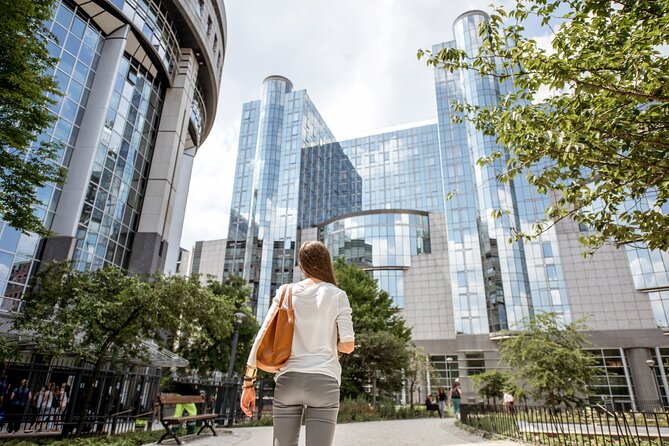
Next you go to Brunfautplein, a local square that blends modern daily life with neighborhood charm. The tour highlights nearby green spaces and local shops, and this is a nice shift from industrial memory into something more human-scale.
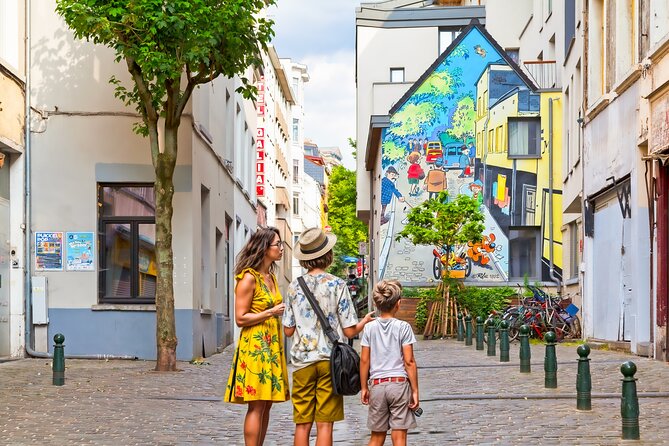
Finally, you finish on Boulevard Barthélémy, walking along a corridor where history and modern Brussels meet. This ending stretch includes shops and restaurants, plus street art. I like finishing in an active area because it makes your next step easy. You can grab a meal nearby or hop on transit without feeling stranded after the guide’s final minutes.
Also, street art near a busy boulevard is a good last impression. It ties back to the earlier theme of Brussels being layered and self-aware. You end the tour with a sense of forward motion, not just old stone and old stories.
Price and Value: What 118 Per Person Really Buys
At $118 per person for an approximately 3-hour private walking tour, the price can look steep at first glance. But the value changes when you consider what’s included and what you avoid.
First, you get a local guide for the full route. You’re not sharing a mega-group and losing attention. Private tours also tend to feel more efficient because you can keep the pace comfortable without sacrificing time.
Second, most of the stop points are listed with free admission tickets. That matters because you avoid stacking small entry costs onto a day already filled with walking and transit decisions.
Third, you get a built-in drink stop at Walvis Cafe, with a beer or a soft drink included. It’s not a huge expense for the operator, but it changes your experience. You get a real pause inside local life, not a random coffee shop stop you picked yourself while scanning menus.
One more value angle: this tour is offered in English, uses a mobile ticket, and is easy to locate near public transportation. That combination reduces the “logistics tax” that can eat the day.
If you’re traveling in a group and can use a group discount, it gets even easier to justify. And since the tour is commonly booked about 60 days in advance, booking early can help you lock in a time that works with your schedule.
When This Tour Fits You Best
This is a great choice if you want Brussels without feeling like you’re cramming your day with museum tickets and monument selfies. You’ll likely enjoy it if you like:
- learning how street names connect to former markets and trades
- seeing public art like Zinneke Pis as part of local humor
- understanding neighborhoods by their function, not only their landmarks
- a guide who keeps the pace comfortable and the stories easy to follow
It’s also a solid option for couples and small groups who want private time but still want a ready-made route. And because it’s described as most travelers can participate, it’s a reasonable pick for many people planning a walking day.
If you hate walking and want mostly indoor stops, this probably won’t feel right. The tour is designed to be outside, moving between points.
Should You Book Off the Beaten Path With a Private Guide?
I think you should book this tour if you want Brussels to feel lived-in. The route makes sense, the stops are short enough to stay fun, and the payoff comes from understanding the city through everyday spaces.
If your trip includes only one Brussels guided experience, this is one I’d pick for getting your bearings beyond the headline sights. You’ll walk away with a clearer mental map of where the city’s past shows up, where it shifted, and where you can go next on your own.
One last decision helper: if you’re the kind of traveler who values stories, context, and a comfortable pace more than long museum time, you’ll be in the right place. Plan to eat after the tour, then use the boulevard ending to continue at your own rhythm.
FAQ
How long is the Brussels Off the Beaten Path private walking tour?
It is approximately 3 hours.
Is this a private tour or a group tour?
It is a private tour, meaning only your group participates.
What language is the tour offered in?
The tour is offered in English.
Where do I meet the guide and where does the tour end?
You start at Pl. Saint-Géry 2, 1000 Bruxelles, Belgium, and the tour ends at Boulevard Barthélémy, Bruxelles.
What’s included in the price?
The tour includes a 3-hour private tour with a local guide and a beer or a soft drink in a local bar.
Are there admission fees at the stops?
The stops listed are shown with admission ticket free.
Is lunch included?
No, lunch is not included.
How far in advance should I book?
On average, this tour is booked about 60 days in advance, so booking early is a good idea.
Can I cancel for a full refund?
Yes, you can cancel up to 24 hours in advance for a full refund.
Latest from Brussels



Walking Tours, compared.
Small Group Boat Cruise and Guided Walking Tour
Read our review →
Historical Walking Tour with Chocolate & Waffle Tasting
Read our review →
Brussels Walking and Tasting Tour (Beers,Chocolates&Fries/Waffle)
Read our review →
Browse the lists this tour appears in