Reviewed · BRUSSELS EXPERIENCES
Visite guidée : Bruxelles, 1000 Ans de Luttes
This tour turns Brussels into a human story, not a postcard. I really like the local, story-led approach and the way you get unexpected history in places most people skip. One possible drawback: it is not a classic monuments parade, so if you only want big photo stops, you may feel like you are walking for ideas more than for sights.
You will move through five stops with short time at each one, but the pacing still leaves room for questions and context. The vibe is small, focused, and designed for people who like learning what life felt like in Marolles over many centuries.
I also appreciate that the route is built around real neighborhood texture, from a working church scene to the daily rhythm of the flea market square.
In This Review
- Key highlights to look for on the walk
- A 2-hour theme that makes Brussels feel lived-in
- Price and value: $3.62 plus a suggested gratuity
- Meeting at Rue de la Chapelle, ending at Jeu de Balle
- Stop 1: Église Notre-Dame de la Chapelle and its Polish Sunday life
- Practical tip
- Stop 2: Palais de Justice, the scandal of unfinished renovation
- A balanced consideration
- Stop 3: Ascenseur des Marolles for the best view of Brussels
- Quick expectation check
- Stop 4: Quartier des Marolles, tight streets and unexpected history
- Consider it if you like people-focused history
- Stop 5: Place du Jeu de Balle and the daily flea market grind
- Good to know
- What the guides do well, and how to get the most out of it
- How you can help the experience
- Who should book this tour, and who might skip it
- Should you book Brussels By Foot: 1,000 Years of Struggles
- FAQ
- How long is the Brussels, 1,000 Years of Struggles tour?
- What language is the tour offered in?
- Where do we start and where does the tour end?
- Is there an entrance fee for the sites?
- What does the tour cost, and are tips included?
- How large is the group?
- Can I cancel for a full refund?
Key highlights to look for on the walk
- Notre-Dame de la Chapelle: a 12th-century church with Polish Mass on Sundays
- Palais de Justice controversy: a long renovation saga and the public-money angle
- Ascenseur des Marolles: go up for the best Brussels view
- Marolles neighborhood walk: tight streets, blind alleys, and the idea of invisible borders
- Place du Jeu de Balle: the daily flea market and the effort to keep it going
A few more Brussels afternoons to weigh up
- Brussels: Atomium Entry Ticket with Design Museum Ticket
★ 4.4 · 9,254 reviews - From Brussels: Guided Day Trip to Bruges and Ghent
★ 4.6 · 8,353 reviews - From Brussels: Bruges & Ghent Day Tour – 2 Fairytale Cities
★ 4.7 · 8,242 reviews - Choco-Story Brussels: Chocolate Museum Entrance with Tasting
★ 4.3 · 4,883 reviews - Bruges and Ghent – Belgium’s Fairytale Cities – from Brussels
★ 4.0 · 4,809 reviews
A 2-hour theme that makes Brussels feel lived-in
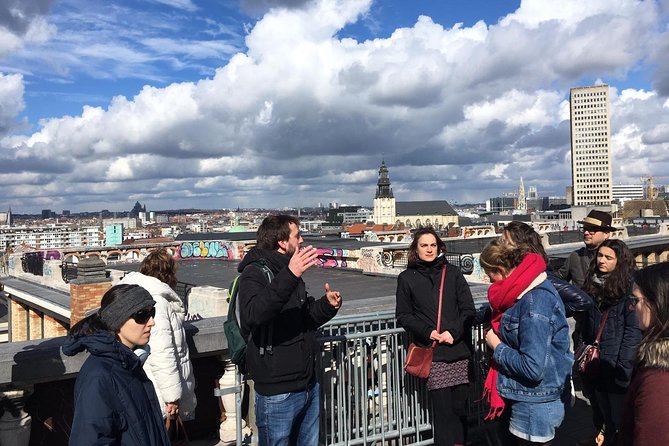
The whole point of Brussels, 1000 Ans de Luttes is simple. You do not just see Brussels, you learn how people fought for space, dignity, and a steady life. The emphasis stays on everyday constraints, social change, and the forces that shaped this part of the city.
This is the kind of tour where the facts matter, but the meaning matters more. You start connecting buildings to real choices people had to make, and you notice how Brussels can split into different realities just by walking a few blocks.
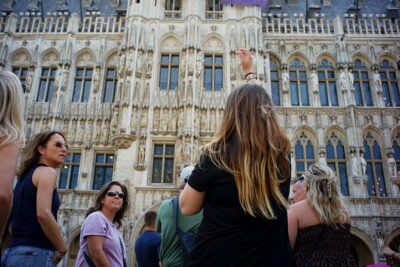
The group stays small, up to 25 people, which helps the guide keep the tone conversational. It is also offered in English, and the tour uses a mobile ticket, so you spend less time fussing and more time listening.
Price and value: $3.62 plus a suggested gratuity
The listed price is $3.62 per person, and the tour includes the entrance fee and registration. The sites on the route show as free to enter, so you are mostly paying for guided storytelling rather than paying for admissions.
The only extra you should plan for is gratuities of €10.00 per person. Whether you follow it closely or not, I treat this kind of tip as part of the real cost of a guide-led walking experience.
Given the length, the five guided stops, and the fact that the content is designed to be nuanced rather than quick-and-generic, I see this as strong value. Just keep in mind you are paying for interpretation, not for a bus ride full of photo ops.
Meeting at Rue de la Chapelle, ending at Jeu de Balle
The walk starts at Rue de la Chapelle 21, 1000 Bruxelles. It finishes at Pl. du Jeu de Balle 64, 1000 Bruxelles, in the middle of the square.
This matters because the ending location is prime for what you want next. You can naturally drift into the bars and restaurants around the square after you wrap up the tour.
Also, because the tour is near public transportation, you can fit it into a day of sightseeing without wrestling with long transfers. If you want a smooth morning or afternoon plan, this is an easy anchor.
Stop 1: Église Notre-Dame de la Chapelle and its Polish Sunday life
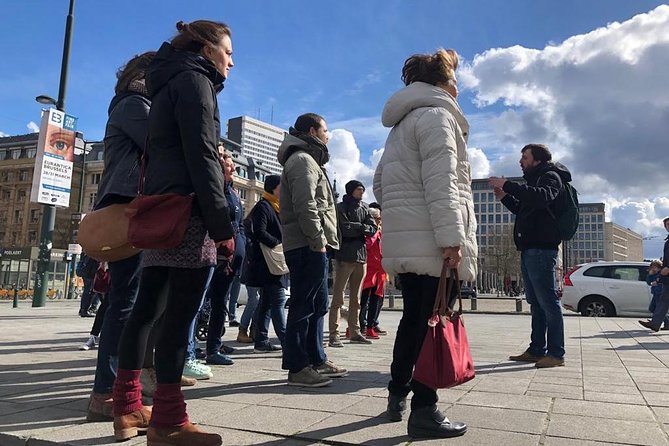
Your first stop is Église Notre-Dame de la Chapelle, a church built in the 12th century. Even before you get to the big stories, the setting tells you something: this is not just architecture on display, it is a living place.
The standout detail here is the Polish Mass every Sunday, which gives the church a particular kind of continuity. You learn how communities carry culture across generations, and how a neighborhood becomes a meeting point for language, ritual, and belonging.
What I like about starting here is that it frames everything else. If you understand how faith and community operated in older Brussels, the later stories about social pressure and public projects hit harder.
Still got an afternoon? Try these:
Practical tip
Dress respectfully, especially since this is an active church. Even if you only have a short visit time, a calm, low-volume attitude is the right move.
Stop 2: Palais de Justice, the scandal of unfinished renovation
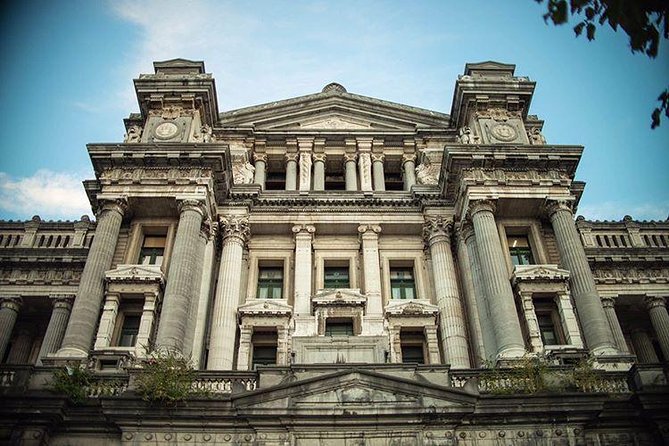
Next you stand at Palais de Justice, the monumental courthouse that comes with a very human lesson. The guide talks about renovation works that began decades ago, then never seem to fully finish, and how the story became a kind of Belgian scandal.
This stop can be surprisingly political without turning into a lecture. You get the idea that public money is not just an abstract budget line. It becomes visible in cranes, delays, and the gap between promises and results.
I also appreciate the framing. Instead of treating the building like a statue, you treat it like a system. That makes the later neighborhood stories feel connected, not random.
A balanced consideration
This is not a details-heavy photo stop. If you want lots of time staring up at the facade, the time here is structured for explanation and context first.
Stop 3: Ascenseur des Marolles for the best view of Brussels
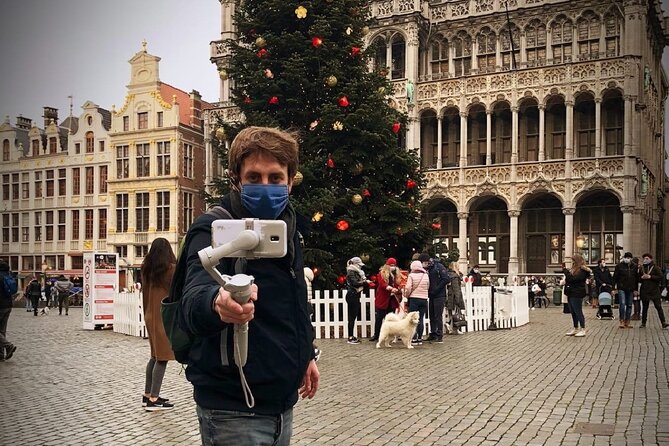
Then you hit Ascenseur des Marolles, the elevator that offers one of the best views in the area. It is only a short stop, but it is a clever one because it resets your perspective.
From up top, you can connect what you heard about Marolles to what you see. The city looks different when you gain height, and the guide uses that moment to help you understand boundaries, movement, and where people ended up in the urban map.
I like this stop because it gives your brain a break. After the heavier topics, you get something more sensory and immediate.
Quick expectation check
Plan for a brief window up there, not a long observation session. The value comes from how the view supports the story you just heard.
Stop 4: Quartier des Marolles, tight streets and unexpected history
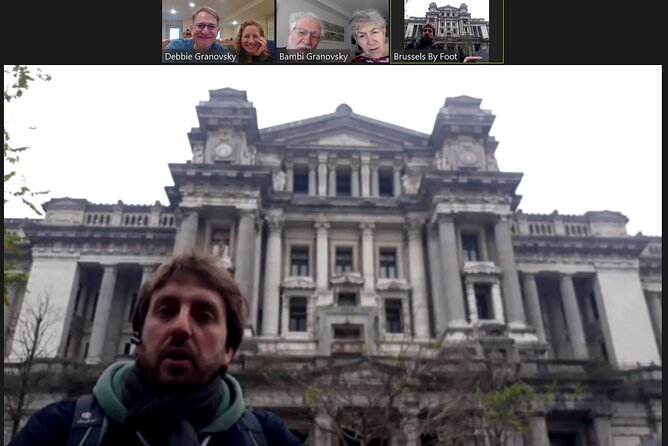
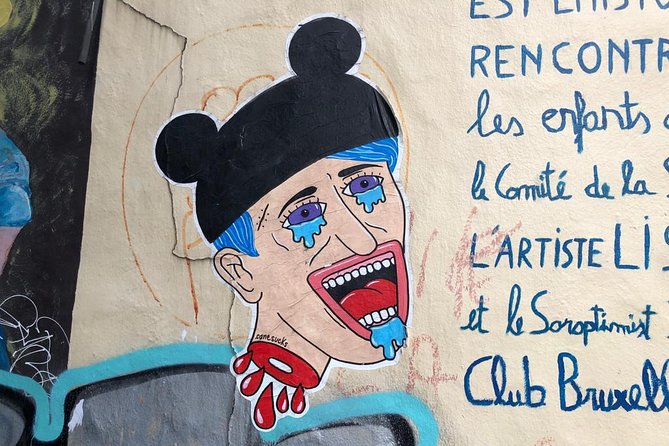
Now the walk turns into neighborhood immersion, in the best sense of the word. Quartier Marolles is described as a poor neighborhood in the center of Brussels, with tiny streets and blind alleys. The guide leans into the idea that this place has an unruly side, but also a deep internal logic.
This is where the tour’s theme becomes real. You hear how communities managed daily life under pressure, and how independence and struggle can live side by side. You also get a sense of boundaries that are not only physical.
One of the most praised angles is how the guide explains visible and invisible borders within the district and across Brussels. That is the kind of idea that stays with you long after the tour ends, because it matches what you start noticing on your own.
Consider it if you like people-focused history
If your favorite kind of history is social history, street-level life, and how neighborhoods evolve, you will love this segment. If you prefer only royal timelines and wars, you might find the tour more grounded and less grand.
Stop 5: Place du Jeu de Balle and the daily flea market grind
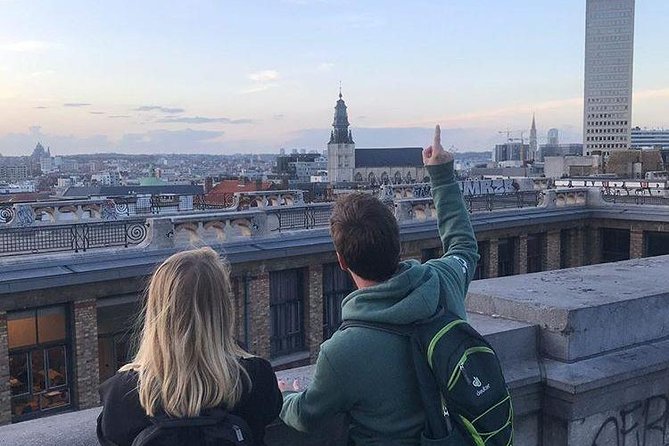
The final stop is Place du Jeu de Balle, home to the daily flea market of Marolles. This is not just a shopping backdrop. The guide frames it as something people rely on, and something they work to keep conserved.
You hear about the challenges of maintaining a market that is always moving. That theme fits perfectly with the overall title: struggle is not always dramatic. Sometimes it is keeping a livelihood alive day after day.
Finishing at the square also sets you up for an easy after-tour plan. You can wander, grab a bite, or go for a drink with the story still fresh in your head.
Good to know
This stop is short, so if you want to browse stalls, treat it as a bonus moment, not your full shopping time.
What the guides do well, and how to get the most out of it
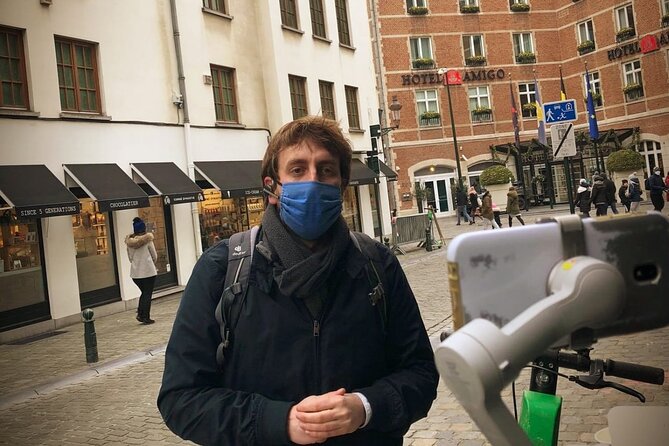
The biggest praise across the experience centers on storytelling style and engagement. Guides like Francois, Simon, and Thomas are noted for being passionate and for answering questions during the walk.
That is not a small detail. In a tour like this, good questions lead to better answers, and better answers help you connect the dots. A guide who can explain a social idea without making it feel academic is exactly what you want.
I also like that the tour aims for nuance. You get a sense of progress and change over centuries, but you also see how people dealt with disadvantage with stubborn independence. The result is a tour that feels human, not dramatic for drama’s sake.
How you can help the experience
Bring a curious mindset, not a checklist. If you ask about daily life, migration, neighborhood identity, or why certain institutions slow down or fail, the guide’s stories will land even better.
Who should book this tour, and who might skip it
This tour is a great match if you want:
- Social history that explains how ordinary people lived
- A walk that connects architecture to lived reality
- A guide-led route in Marolles that helps you notice what you would miss alone
It may not be the best match if you only want:
- Long time at major monuments
- A high-volume photo itinerary with minimal context
- A tour focused on famous landmarks above all else
Because it runs about 2 hours and keeps stops relatively tight, it works well as a half-day anchor. You can pair it with other central sightseeing without losing your day to logistics.
Should you book Brussels By Foot: 1,000 Years of Struggles
I would book it if you like Brussels as a city of people, not just buildings. The combination of a church with Polish Sunday life, a justice palace with a renovation controversy, a view from the elevator, and the Marolles market square makes the route feel complete.
It is also an unusually strong value format for the money, especially with free entry to the major stops and a guide focus that people consistently praise as engaging and not boring.
If your travel style leans toward thoughtful, street-level history and neighborhood understanding, this one is a clear yes. If you want only headline sights and zero context, you may find it too story-forward.
FAQ
How long is the Brussels, 1,000 Years of Struggles tour?
It runs for approximately 2 hours.
What language is the tour offered in?
The tour is offered in English.
Where do we start and where does the tour end?
You start at Rue de la Chapelle 21, 1000 Bruxelles. You end at Pl. du Jeu de Balle 64, 1000 Bruxelles, in the middle of the square.
Is there an entrance fee for the sites?
Entrance fees are included, and the sites on the route are listed as free to enter.
What does the tour cost, and are tips included?
The price is $3.62 per person. Gratuities of €10.00 per person are not included.
How large is the group?
The tour has a maximum of 25 people.
Can I cancel for a full refund?
Yes. You can cancel up to 24 hours in advance for a full refund.
Latest from Brussels


Brussels Experiences, compared.
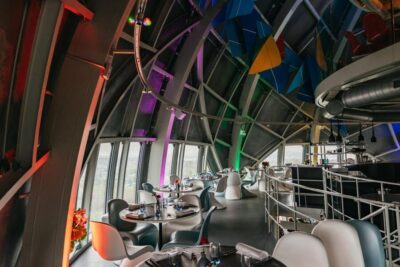
Atomium Entry Ticket with Design Museum Ticket
Read our review →

Choco-Story Brussels: Chocolate Museum Entrance with Tasting
Read our review →
Bruges and Ghent – Belgium’s Fairytale Cities – from Brussels
Read our review →