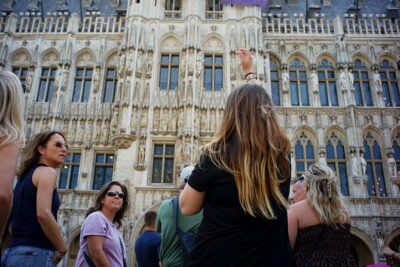
Reviewed · BRUSSELS EXPERIENCES
MUSIC TOUR OF BRUSSELS (SPANISH)
Music and streets belong together here. This 2-hour Spanish tour turns Brussels landmarks into a listening experience, with headphones doing the heavy lifting as you move from place to place. I especially like the way the route uses specific sounds to explain why Brussels became who it is, and I also like the strong sense of local culture, from the saxophone story to the city’s chanson icons. One thing to consider: the format depends on clear audio, so if you are sensitive to sound interference in busy squares, plan for that.
I also think the price is fair for what you get. For $14, you’re paying for a guided walk plus a stop-by-stop music track chosen to match each location, not just a slideshow tour. The tour is built for people who enjoy walking and listening, so if you prefer quiet, slower museum time, you might find parts of the route a bit too “on the move.”
You start at a dramatic spot with big views, then work your way through Brussels musical education, independence-era anthems, African influences, and Belgian opera. It is a practical way to see the city’s cultural layers without needing to research on your own first.
In This Review
- Key highlights to know before you go
- A 2-hour music walk that links famous Brussels to actual sound
- Starting at the Palace of Justice, where Brussels looks like a stage
- Petit Sablon and the Royal Conservatory zone
- The Museum of Musical Instruments and the Adolphe Sax story
- Mont des Arts: independence-era songs and African influences
- Jacques Brel: chanson as Belgian identity
- Manneken Pis: the irreverent statue with a soundtrack
- Grand Place and Ommegang: where festivals become music
- Bourse area and the social side of Brussels music
- Finishing at La Monnaie: Belgian opera as a freedom story
- The Spanish guide and headphones: what works, and what to watch for
- Price and value: is $14 worth 2 hours of sound and stories?
- Timing, meeting point, and how to not miss your group
- Should you book this music tour?
- FAQ
- How long is the Music Tour of Brussels (Spanish)?
- How much does the tour cost?
- What language is the tour guide?
- Where does the tour start and where does it end?
- Is it allowed to record audio during the tour?
- Is the tour suitable for wheelchair users or hearing-impaired people?
Key highlights to know before you go
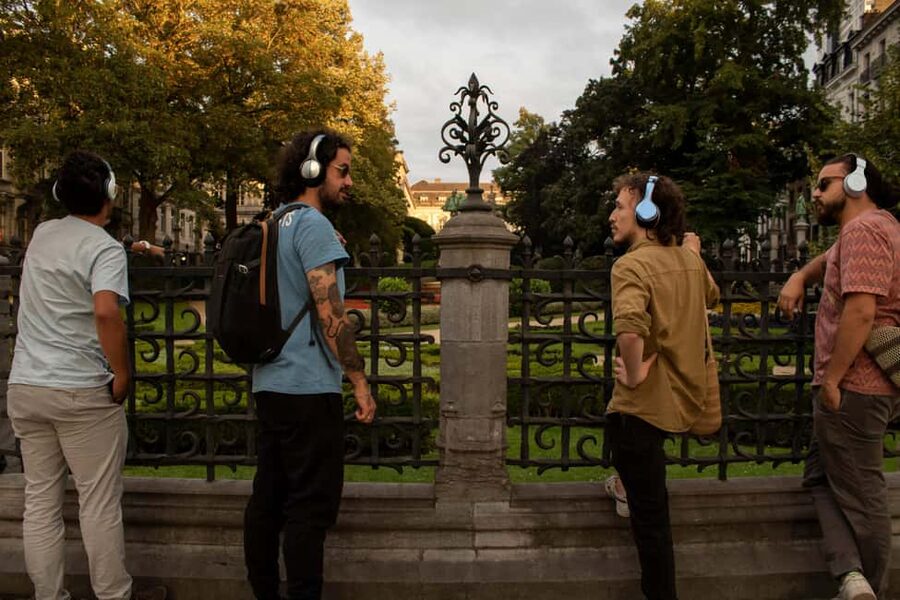
- Headphones included, so you get clear narration and music even in noisy outdoor areas
- Music chosen for each stop, so the stories stay tied to what you are seeing
- Landmarks with real musical meaning, from Royal Conservatory-adjacent streets to La Monnaie
- A Spanish-only experience, which keeps the pacing tight and easy to follow
- A finish at the Royal Opera House, with opera fragments that put the whole route into context
A few more Brussels afternoons to weigh up
- Brussels: Atomium Entry Ticket with Design Museum Ticket
★ 4.4 · 9,254 reviews - From Brussels: Guided Day Trip to Bruges and Ghent
★ 4.6 · 8,353 reviews - From Brussels: Bruges & Ghent Day Tour – 2 Fairytale Cities
★ 4.7 · 8,242 reviews - Choco-Story Brussels: Chocolate Museum Entrance with Tasting
★ 4.3 · 4,883 reviews - Bruges and Ghent – Belgium’s Fairytale Cities – from Brussels
★ 4.0 · 4,809 reviews
A 2-hour music walk that links famous Brussels to actual sound
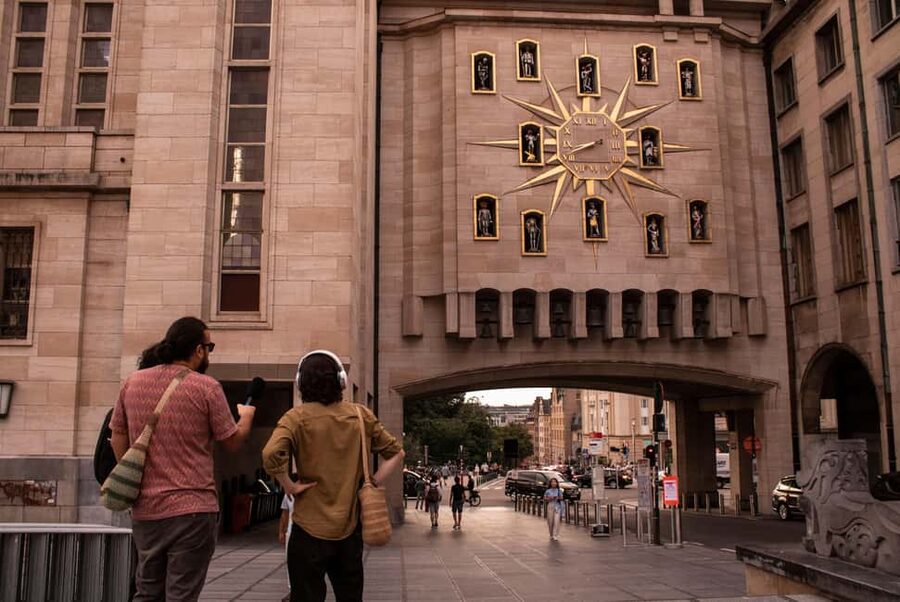
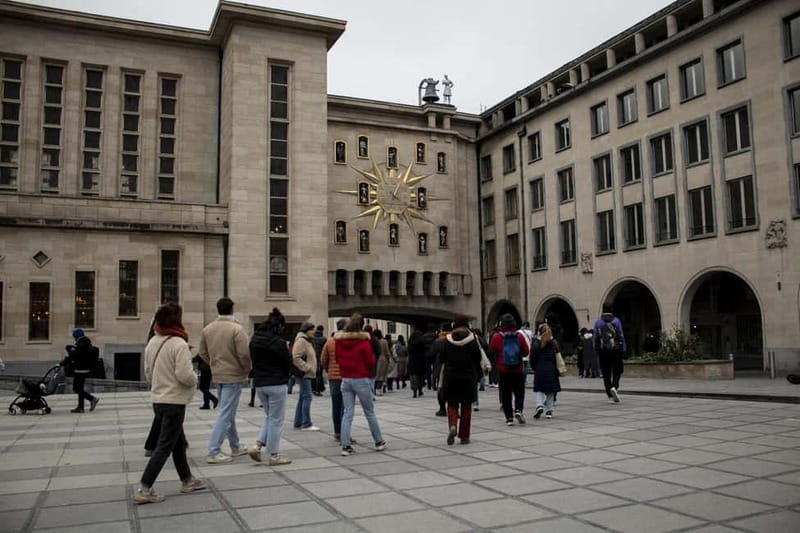
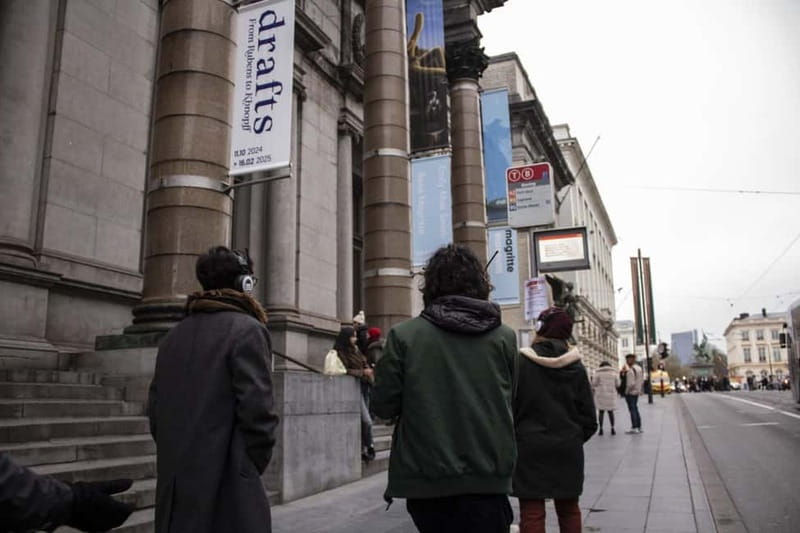
This is not a generic “Brussels highlights” loop. The point is the match between place and sound, so you hear the city’s cultural history as you walk through it. At each stop, the guide connects the music to the landmark in a way that feels like you’re learning patterns, not dates.
The timing also helps. With only 2 hours, you stay focused and you do not end up tired from a long day of wandering. You get a compact route that touches major sites and still leaves you free afterward to explore at your own pace.
And yes, it is guided. The guide’s narration is part of the experience, so you are not just relying on your own smartphone. The headphones matter because they keep the music and explanations in your head, even when the street around you is doing its own thing.
Starting at the Palace of Justice, where Brussels looks like a stage
The tour kicks off at the Palace of Justice of Brussels, where you get a panoramic view as the experience begins. It sets a useful tone fast: you start with a sense of scale and power, then the music threads in to show how Brussels evolved over time.
From this kind of overlook, you understand something important. Brussels is not just pretty buildings and squares, it is also an administrative and cultural engine. The opening music helps connect that idea to later stops, so when you move into smaller, more “human” places, you feel the contrast.
If the weather is cool, dress for outdoor wind. The first minutes matter, because once the route starts moving downhill and into squares, you will want to stay comfortable enough to focus on the sound.
Petit Sablon and the Royal Conservatory zone
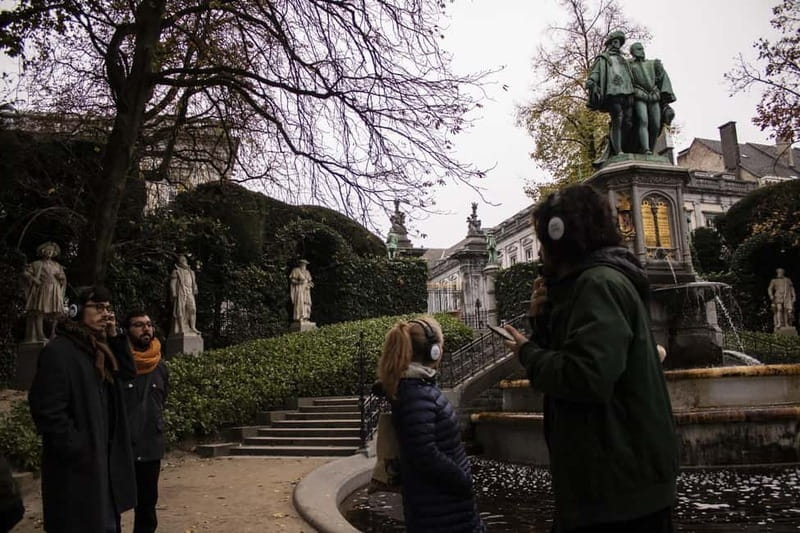
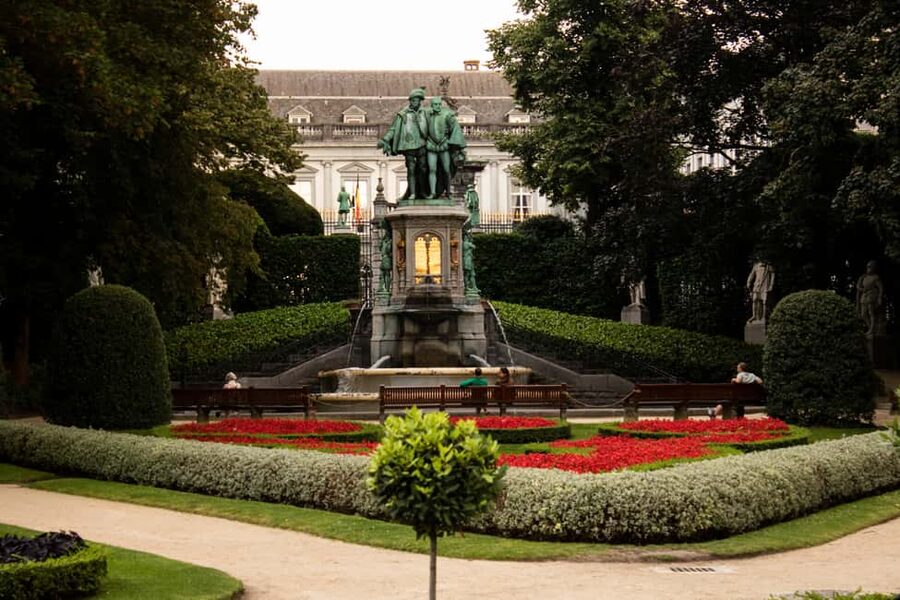
Next you head toward the Place du Petit Sablon area, near the Royal Conservatory of Brussels. This stop sits near the former palace of Count Egmont, so you get a sense of where Brussels gathered its influence long before today’s cultural institutions.
It is also an art-and-training zone. The Royal Conservatory matters here because musical education is not an abstract idea. It is tied to the city’s identity, and the tour uses that connection to frame Brussels as a place where music gets taught, performed, and passed on.
The way the tour moves here works well because it is a “transition” moment. You are leaving a large visual viewpoint behind and stepping into a cultural corridor where music feels like it belongs.
The Museum of Musical Instruments and the Adolphe Sax story
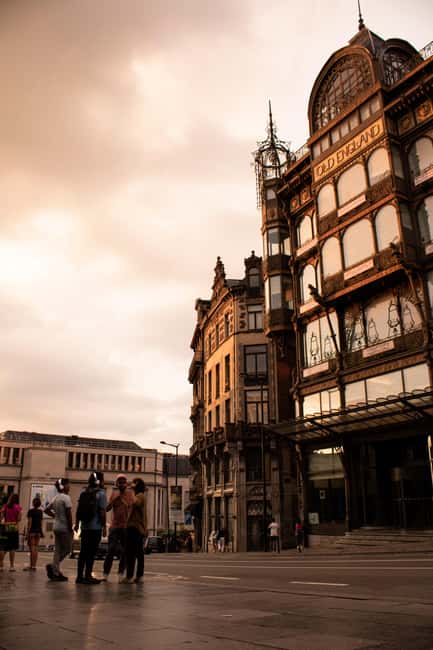
Then comes the Museum of Musical Instruments, one of the most logical places to pause during this kind of tour. Here, the focus shifts outward, toward sounds from around the world, before it sharpens into a very Brussels-specific innovation story.
You learn about the history of the saxophone, linked to Belgian inventor Adolphe Sax. Even if you only know the sax as a soundtrack instrument from movies or jazz records, this gives you a concrete “it started here” angle, which makes the sound feel less generic.
This is also where the tour’s format becomes especially satisfying. Music is not treated like a background decoration. It becomes evidence, a way to understand how Brussels connected local creativity with global musical trends.
If you are a music fan, do not rush your attention here. This is the stop where the stories are most likely to stick, because the instrument history gives you something specific to remember.
Still got an afternoon? Try these:
Mont des Arts: independence-era songs and African influences
From the Museum area, you move toward the Mount of Arts, a viewpoint that the tour uses to highlight Brussels’ musical reach. You hear about the influence of African music in Brussels, and the tour connects that influence to the city’s broader cultural evolution.
This stop also brings in independence movements. The idea is that music often becomes anthems of change and resistance, not just entertainment. When the guide plays pieces tied to those themes, it reframes what “music in a city” can mean. It becomes social history you can listen to.
The viewpoint element matters too. Standing higher changes how you perceive the city, and the music helps you read Brussels as a place shaped by more than one group or one era. If you like cultural context, this is one of the strongest segments of the route.
Jacques Brel: chanson as Belgian identity
Then you move to a tribute at the foundation connected to Jacques Brel, one of Brussels’ best-known figures in chanson. The tour uses Brel’s legacy to talk about emotional expression, and how that style became a symbol of Belgian identity.
This matters because Brel is not just a famous name. He represents a particular kind of storytelling through song, and the tour uses him as a bridge between history, art, and everyday feeling.
If you know Brel’s songs, you will likely enjoy hearing them placed into a wider context. If you do not, you still get the point: Brussels takes songwriting seriously, and the city’s creative identity is not limited to classical music or opera.
Manneken Pis: the irreverent statue with a soundtrack
After Brel, you reach the Manneken Pis statue, described by the tour as the most irreverent statue that has inspired songs and festivals across centuries. This is a great contrast stop. You go from intimate chanson feeling to playful public symbolism.
Manneken Pis is one of those places that can feel obvious on a first visit. The tour makes it more interesting by connecting it to how the city celebrates itself. You are not just looking at a tiny landmark, you are seeing why it became a recurring cultural reference point.
This is also where the walk stays fun. The music choices here help you shift gears, so you do not feel like every minute is heavy history.
Grand Place and Ommegang: where festivals become music
Next is the Grand Place, the vibrant heart of the city and a recognized World Heritage Site. The tour connects the square to major festivals and concerts, and it also points to Ommegang, a cultural heritage festival associated with UNESCO.
This is a practical stop. Grand Place is one of the easiest places in Brussels to just stand and stare at buildings. The tour helps you do that with a purpose, because you connect what you see to what used to happen there, including musical events that brought the square to life across centuries.
If you like planning your time, this stop gives you a useful mental map. After the tour, you can look at the square and think about it as a stage, not just a backdrop for photos.
Bourse area and the social side of Brussels music
The itinerary continues toward the Bourse area, near Brussels’ historic financial and civic energy. Even if you are not a business history person, the tour’s angle helps.
It treats the space as a symbol of Brussels’ social and cultural evolution. In earlier times, it was a meeting point for musical events, reflecting the close relationship between music and city transformation over centuries.
This is a smart way to keep the story from becoming only about famous artists. You learn that music also lives in everyday gathering spaces, where different kinds of people cross paths.
Finishing at La Monnaie: Belgian opera as a freedom story
The tour ends at the Royal Opera House, known in the local context as Teatro Real de la Moneda. This is a strong finale, because it reframes everything you heard earlier through the lens of opera.
The tour describes the building’s imposing architecture and has you relive fragments of famous operas. Even though opera can feel distant for some people, hearing it as part of a guided sound journey makes it more accessible. You also get the tour’s main message in a literal setting, that music is freedom, not just performance.
This finish works well for planning your evening too. After the tour, you’ll likely feel ready to go back out into the city and keep listening, whether that means a concert, a casual café soundtrack, or just noticing how music slips into daily life.
The Spanish guide and headphones: what works, and what to watch for
The tour is led in Spanish, and the headphones help keep the guide and music clear. This matters because a lot of Brussels landmarks are outdoors, and open squares can swallow sound.
I also like how the experience is interactive and sensory in structure. You are meant to listen while moving, and the guide’s storytelling gives you something to look for instead of wandering with your own playlist.
One practical caution: some visitors have noted sound interference at times. That likely comes down to normal outdoor conditions, crowd levels, and street noise. If you are especially picky about audio quality, I would treat this as an outdoor listening experience first, not a studio-grade headset session.
If you get a great guide, the whole tour clicks. One Spanish-language guide named Julián has been praised for connecting the walking route to music and history, and for sharing extra local bar and food recommendations. If that kind of personal touch is your thing, you will feel it here.
Price and value: is $14 worth 2 hours of sound and stories?
At $14 per person for a 2-hour guided walk, you are paying for more than a docent. You’re paying for a guided route tied to music, with headphones included and a special music selection at each stop.
So the real question is what you get for that money: do you get context you can’t easily create on your own. Here, the value comes from the way music choices are matched to specific landmarks, and from the guide’s narration that stitches it together as you walk.
If you love music, or you want a different angle on Brussels besides the usual art-buff checklist, this is a good deal. If you only want to see buildings and you do not care about soundtracks, you might feel like you are paying for an audio-led concept.
Timing, meeting point, and how to not miss your group
You meet at the Palace of Justice area. The guide carries an open umbrella with the MUSA logo, which is a helpful visual cue.
Because the route is only 2 hours, you should build in a little buffer time before the start. Brussels can be easy to navigate, but the Palace of Justice area is also big, and you do not want to waste your first few minutes hunting for the correct group.
Once you see the umbrella, you are set. Follow the group, keep your headphones on, and let the guide do the pacing. This is one tour where paying attention early gives you a better experience for the whole walk.
Should you book this music tour?
I think you should book this tour if you want Brussels to feel alive through sound. It is a smart choice for people who enjoy music history, Belgian culture, and the idea of learning as you walk. It is also a nice option for visitors who have limited time and want a concentrated route that still feels thoughtful.
Skip it if you struggle with outdoor audio, if you need wheelchair access, or if you rely on accessibility support not supported by this format. Also, if you want a silent, slow museum day, this is not built for that mood.
If you fall somewhere in the middle, you will probably enjoy it. You’ll get a guided route with headphones, a story that moves from saxophone invention to Jacques Brel to opera, and a fresh way to look at Brussels’ landmarks after the last note fades.
FAQ
How long is the Music Tour of Brussels (Spanish)?
The tour lasts 2 hours.
How much does the tour cost?
The price is $14 per person.
What language is the tour guide?
The live tour guide and audio guide are in Spanish.
Where does the tour start and where does it end?
It starts at the Brussels Palace of Justice and finishes at the Teatro Real de la Moneda.
Is it allowed to record audio during the tour?
No. Audio recording is not allowed.
Is the tour suitable for wheelchair users or hearing-impaired people?
No. The tour is not suitable for wheelchair users, and it is also listed as not suitable for hearing-impaired people.
Latest from Brussels


Brussels Experiences, compared.

Atomium Entry Ticket with Design Museum Ticket
Read our review →

Choco-Story Brussels: Chocolate Museum Entrance with Tasting
Read our review →
Bruges and Ghent – Belgium’s Fairytale Cities – from Brussels
Read our review →