

Reviewed · CITY ESCAPE GAME TRAILS
e-Scavenger hunt Ostend: Explore the city at your own pace
A phone-based city walk turns Ostend into a game you control. This e-scavenger hunt is made for exploring on foot without a fixed schedule, so you can start when your plans say start. I like that it mixes classic sights with just enough puzzle pressure to keep you moving.
Two things I genuinely like: you set your own pace, and you can pause for a snack without feeling like you’re falling behind. Second, the route is built around big-name landmarks and smaller details that are easy to miss when you’re just wandering, including the Mercator ship and the Kursaal Oostende area.
One drawback to plan for is that the experience runs on your smartphone, so a dead battery can end the fun fast. I’d also keep in mind that question order can be a little flexible, and if you do not know the streets well, you might backtrack now and then.
In This Review
- Key highlights at a glance
- Why This E-Scavenger Hunt Feels Like a Day Off
- Price and Value: The Real Benefit of Paying Per Group
- How the Mobile Ticket Works, and What to Do When Tech Gets in the Way
- Mercator Ship, Right Off the Bat: Starting With Ostend’s Harbor Icon
- Saint Peter and Saint Paul, Neo-Gothic and Built on Ashes
- James Ensor House: When the Art of Ostend Leads the Walk
- Zeeheldenplein and Arne Quinze: Spot the Reds, Follow the Clues
- Fishermen’s Church and Capuchin Roots, in a Small Baroque Setting
- Kursaal Oostende and Leopold I: Architecture and a Promenade View
- The Long Pier Walk: 300 M to Sea Views You Can Actually Earn
- Heilig Hartkerk, Patrick Steen, and Time for Beach Mode
- Small Stops for Real Life: Snack Breaks and Easy Plans
- Who This Is Best For (and Who Might Find It Frustrating)
- Should You Book This e-Scavenger Hunt in Ostend?
- FAQ
- How long does the e-scavenger hunt in Ostend take?
- What is the price for this activity?
- Where do we meet, and how does it end?
- What language is the experience in?
- Do I need a smartphone and data?
- Is it available at any time?
- Can I cancel for free?
Key highlights at a glance

- Start anytime, no group clock so your timing can match trains, meals, or weather
- Phone-guided puzzles at real stops, built for casual discovery instead of checklist rushing
- Harbor icon at the start with the protected sailing ship Mercator near Station Oostende
- Art stops you can spot quickly including Arne Quinze’s red sculptures on Zeeheldenplein
- Short walking effort with sea payoff thanks to the 300 m pier walk for skyline views
- Good group value because the price is per group up to 6, not per person
More City Sightseeing in Ghent
- Ghent: 40-Minute Historical Boat Tour of City Center
★ 4.3 · 430 reviews - Ghent: Guided City Tour with Food Tastings
★ 4.8 · 228 reviews - Ghent: City Highlights and Hidden Gems Guided Bike Tour
★ 4.7 · 196 reviews - e-Scavenger hunt Ghent: Explore the city at your own pace
★ 4.5 · 41 reviews - Ghent: Guided City Tour with Chocolate Tastings
★ 4.8 · 36 reviews
Why This E-Scavenger Hunt Feels Like a Day Off
Ostend is a city where a self-guided plan makes sense. You get the freedom to roam at walking speed, stop for coffee, then keep going when you feel ready. This format also helps if you do not want the usual, tightly timed sightseeing routine.
What makes this hunt work is the way it structures your wandering. Each stop connects to a place you can actually reach on foot, then turns it into a quick puzzle moment rather than a long history lecture. That keeps the day active without feeling like a test.
If you are traveling with mixed interests, the setup is friendly. You can spend extra time at the Church of Saint Peter and Saint Paul or skim ahead if you just want to keep the game rolling. And because it is private for your group, you are not sharing the pace with strangers.
Price and Value: The Real Benefit of Paying Per Group
The cost is $37.33 per group up to 6, and that matters more than it sounds. A lot of “guided walking” experiences price per person, which turns a small group into an expensive day. Here, splitting the cost makes the hunt feel like a practical add-on to an Ostend day already filled with walking.
The other side of the value equation is what you bring. You need a smartphone and you need data to run the game, and those are not included. If you already travel with a data plan, it is smooth. If not, factor in the cost of internet access or plan offline navigation tools just in case.
Duration is about 2 to 4 hours, which is a sweet spot for this kind of activity. It is long enough to feel like you “saw” the city, but short enough to still have time for the beach, dinner, or a second stroll.
How the Mobile Ticket Works, and What to Do When Tech Gets in the Way
You’ll use a mobile ticket, and the experience is in English. That’s helpful if your group is not fluent in Dutch or French, and it keeps the puzzles from getting slowed down by language hurdles.
You also need to be realistic about phone power. One review called out that the fun ended when the smartphone battery died, which is exactly the kind of problem you can prevent. I strongly suggest bringing a power bank, especially if you will be using GPS at the same time.
Navigation is mostly straightforward, but a couple of small issues came up in real-world use. If the map does not show up how you expect inside the app, you may need to rely on Google Maps or GPS to find the next stop. Also, the experience does not require strict pacing between answers, so you can pause and return to it without chaos.
Mercator Ship, Right Off the Bat: Starting With Ostend’s Harbor Icon
Your hunt begins at Station Oostende, Natiënkaai 1, 8400 Oostende, and it ends back at the same meeting point. That makes planning easy, because you are not stuck with an awkward return to your hotel.
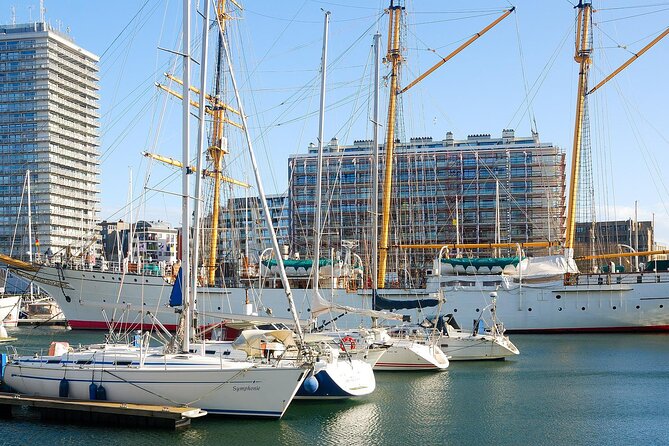
The first major stop is the protected sailing ship Mercator, moored in Ostend’s harbor for decades. It sits between the station and the town hall, so you are basically stepping from transportation mode into “vacation mode” within minutes. Even if you are not a boat person, it’s a strong visual anchor for the start of the game.
What I like about starting here is that it sets the theme of Ostend: sea, movement, and maritime identity. Then the hunt keeps pulling you through the city so you feel like you are traveling, even when you are staying on foot.
More Escape Game Trails in Ghent



Saint Peter and Saint Paul, Neo-Gothic and Built on Ashes

Next up is the Church of Saint Peter and Saint Paul, the main church of Ostend. It is Roman Catholic and Neo-Gothic, and it sits on the site of an earlier church that once stood there before being replaced. That detail is a good reminder that religious buildings often carry layers, not just one era.
In practical terms, it’s also a useful stop for your pacing. Churches give you a place to slow down, check your next question, and reset your legs. If you want to read the surrounding details before moving on, this is a stop that rewards a slightly unhurried approach.
Because the hunt is puzzle-based, you do not need to know church architecture in advance. You just need to show up, look around, and follow the next step the game asks of you.
James Ensor House: When the Art of Ostend Leads the Walk

Ostend has a strong artistic identity, and this hunt taps into it with a stop connected to James Ensor and the renovated James Ensor House. If you like art that feels a little strange, a little playful, and very tied to place, this part of the route fits well.
This is also a smart break in the day’s rhythm. After maritime sights and churches, switching to an artist-focused stop keeps the experience from feeling one-note. Even if you do not plan to spend a long time inside, the game angle nudges you to take notice of the cultural story you might otherwise skip.
You’ll get a sense of why Ostend matters to Ensor, without turning your afternoon into a museum checklist.
Zeeheldenplein and Arne Quinze: Spot the Reds, Follow the Clues

Then comes one of the more modern, visual pop moments: the red sculptures by Arne Quinze on Zeeheldenplein. Their monumental size and red color make them easy to locate, even for people who are not great at reading maps.
This is the kind of stop that works well with an e-scavenger hunt. You can spot the landmark quickly, then focus on the question rather than spending minutes figuring out where you are. It keeps the walking day feeling efficient.
Also, public art gives you a different kind of atmosphere than churches and historic buildings. Here, you feel like you are moving through a living coastal city, not just passing through sightseeing zones.
Fishermen’s Church and Capuchin Roots, in a Small Baroque Setting
The hunt includes a smaller, two-aisle baroque church in the town centre. It connects to the Capuchin monks who worked among fishermen, and later it became associated with fishermen and seamen in Ostend.
Because it is smaller than some of the bigger landmarks, you might be tempted to speed through it. I’d resist that urge. Smaller churches are often where the game’s details feel most rewarding, because you get a clear, compact space to study for your clue.
This stop also adds texture to your Ostend understanding. You see the city not only as a seaside resort, but as a community shaped by work, trade, and the sea.
Kursaal Oostende and Leopold I: Architecture and a Promenade View
Later, you reach the Casino-Kursaal (Kursaal Oostende), a kursaal built in 1950 with white Portland stone. If you like architecture, this stop gives you something concrete to look at without needing a long explanation. The contrast between the building’s formal look and the relaxed seaside surroundings creates a nice pause in the day.
The hunt also features a bronze equestrian statue of King Leopold I on the dike of Ostend, along the Albert 1 promenade. Statues like this do more than decorate. They help you understand where the city places importance, especially along a walkway that’s meant for movement and views.
Together, these stops turn the promenade into more than a path to get somewhere. It becomes part of the story you’re solving.
The Long Pier Walk: 300 M to Sea Views You Can Actually Earn
One of the best “practical payoff” moments is the pier. This is described as the longest pier of the coast from 2019, and it’s about 300 m long to the end. That length is short enough to do even with an already full itinerary, but long enough to feel like you left the land behind.
The payoff is simple: skyline views from the sea side. In a city like Ostend, that change in perspective is the difference between looking at the ocean and experiencing it.
I also like that it’s a clear walking segment during a phone-driven hunt. When you reach the pier area, you can let the game run in the background while you walk, then check back in when it tells you what to do next.
Heilig Hartkerk, Patrick Steen, and Time for Beach Mode
Near the finish, you’ll encounter the Heilig Hartkerk, a parish church located on Heilig Hartplein in the district of Westerkwartier. Churches here help you keep building the city picture, even as the day shifts toward leisure.
The hunt also includes a sculpture by Patrick Steen on the boulevard. It’s life-size and shows a fusion of two dancing people with the waves of the sea. This works as a fun visual capstone because it mixes motion, sea imagery, and public space.
And then you get the most important final ingredient for Ostend: time to slow down by the water. The experience wraps up with the idea of a sunbath or beach walk, plus room to play or practice water sports. Even if you only have 45 minutes left, that’s enough time to finish the day in a way a puzzle alone cannot deliver.
Small Stops for Real Life: Snack Breaks and Easy Plans
One reason this hunt feels relaxed is that you can take a break for something to eat and drink without losing your place in the story. I like activities that let you keep your rhythm instead of forcing you back onto a strict timeline.
If you want meal ideas along the way, you might like the cafés named in local use: Café Crayon, Café Manuscript, and a recommendation for Den Artiest for a delicious meal. I’m not claiming every stop lines up perfectly with these places, but they are useful leads if you want somewhere nearby when you pause.
Because the route is designed for on-foot exploration, you can build your day around it. For example, you can start the game earlier, then shift toward the pier and promenade later when you want more open space and sea air.
Who This Is Best For (and Who Might Find It Frustrating)
This hunt fits best if you like walking, solving light puzzles, and learning without a formal lecture. It’s also a good option for groups because it’s private and priced per group up to 6.
Families can do well with it too, especially because the clues are designed to guide you rather than trap you. One theme in the feedback was that the questions were not overly hard to find, which keeps the day from turning into stress.
The main reason to hesitate is tech dependence. If your phone battery is unreliable, or you hate navigating by screen, you may find the experience less enjoyable. Translation quirks can also happen, like repeated sentences or minor issues, so if you are very sensitive to language imperfections, plan to treat the puzzles as the main focus.
Should You Book This e-Scavenger Hunt in Ostend?
I’d book it if you want a fun, self-paced way to see Ostend’s key waterfront and architecture highlights without spending hours planning routes. It is especially good for first-time visitors who want structure but still want freedom, and for return visitors who want a different way to notice the city.
Skip it if you need a live guide, or if you know your phone battery and data situation will be a constant worry. In that case, you might prefer a traditional walking tour where someone else handles the pace and route.
If you do book, do two simple things: bring a power bank, and check that the map and next clues display correctly in your app before you walk far from the meeting point. Then you’ll get what this format is built for, an Ostend walk where the city feels like a game you can finish at your own speed.
FAQ
How long does the e-scavenger hunt in Ostend take?
It takes about 2 to 4 hours.
What is the price for this activity?
The price is $37.33 per group, up to 6 people.
Where do we meet, and how does it end?
You start at Station Oostende, Natiënkaai 1, 8400 Oostende, Belgium, and the activity ends back at the same meeting point.
What language is the experience in?
The e-scavenger hunt is offered in English.
Do I need a smartphone and data?
Yes. A mobile ticket is used on your phone, and the use of a smartphone and data is not included.
Is it available at any time?
Yes. The opening hours are listed as Monday to Sunday, 12:00 AM to 11:59 PM, so you can begin within those hours.
Can I cancel for free?
Free cancellation is available. You can cancel up to 24 hours in advance for a full refund.
Latest from Ghent





City Escape Game Trails, compared.

e-Scavenger hunt Antwerp: Explore the city at your own pace
Read our review →
e-Scavenger hunt Bruges: Explore the city at your own pace
Read our review →
Bruges Scavenger Hunt and Highlights Self Guided Audio Tour
Read our review →
e-Scavenger hunt Ghent: Explore the city at your own pace
Read our review →
Beer Tasting and Scavenger Hunt in Brussels – About 3 Hours
Read our review →
e-Scavenger hunt Mechelen: Explore the city at your own pace
Read our review →
Romantic Bruges: Love Between the Canals Exploration Game
Read our review →
e-Scavenger hunt Hasselt: Explore the city at your own pace
Read our review →Browse the lists this tour appears in