
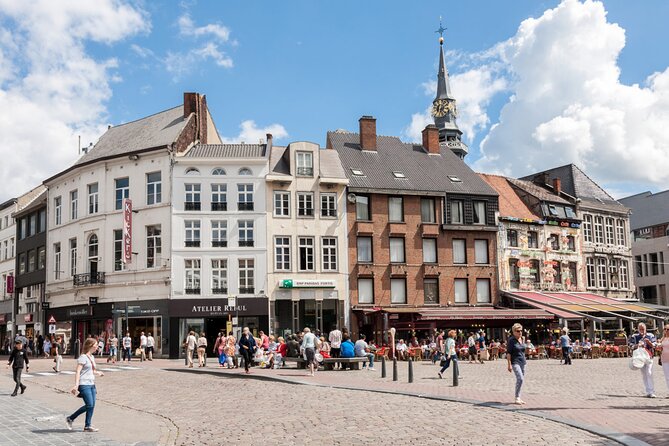
Reviewed · CITY ESCAPE GAME TRAILS
e-Scavenger hunt Hasselt: Explore the city at your own pace
A city game beats a boring walking tour. What makes the Hasselt e-Scavenger hunt fun is that you follow a digital trail at your own pace, with games and short stories as you move around town.
I like that it feels like a guided tour, minus the fixed timing. You and your team of up to six can start when you wish and solve tasks between major landmarks and memorable details.
I love the stop mix, because it includes big names and surprise angles. For example, the trail points you toward the statue of Mary of Jesse (Virga Jesse) and then keeps going into Hasselt’s cathedral and museum layers. I also like the practical navigation, with options that let you follow the route by map or GPS on your phone.
One thing to consider: this is built as a game, not a full-on guided lecture. If you want deeper storytelling and lots of talking, you might feel the content at each stop is more “snack size” than “sit down for an hour.” And if your phone auto-translates, you could end up with confusing or poor wording.
In This Review
- Key things to know before you go
- Hasselt is the right size for a phone trail
- How the e-Scavenger hunt works on your phone
- The trail from Gin Museum to Virga Jesse basilica
- St Quintinus Cathedral and Modemuseum Hasselt: culture in two steps
- Plopsa Indoor and Stadskantoor: Hasselt’s playful and official sides
- A beguinage memory, the Japanese Garden, and Herkenrode’s women’s history
- Streets with power stories: Dusart and Congo, Grote Markt, and Minderbroederskerk
- Stadsmus and its mysterious citizen clue
- Price and the group math that actually matters
- Timing, duration, and how to pace the hunt
- Tips that make the difference: navigation, text length, and translation
- So, should you book this Hasselt e-Scavenger hunt?
- FAQ
- How long does the e-Scavenger hunt in Hasselt take?
- Where does the tour start and end?
- What do I need to play the game?
- What languages is the experience offered in?
- Is it a group tour or private?
- Can I cancel for a refund?
Key things to know before you go

- Self-guided start time: you control your pacing, and the trail runs for about 2 to 4 hours
- Team up to 6: the group price becomes much better when you travel with friends or family
- Phone app does the heavy lifting: you get a mobile ticket plus game prompts on your device
- Lots of recognizable Hasselt stops: from St Quintinus and Stadskantoor to the Japanese Garden
- It’s game-first: think tasks and fun facts more than a traditional guided city tour
- Watch your translation settings: auto-translation can mess up the experience if you switch languages
More Escape Game Trails in Belgium:
- Escape Hunt Brussels, Escape Game
★ 5.0 · 103 reviews - e-Scavenger hunt Antwerp: Explore the city at your own pace
★ 4.5 · 67 reviews - e-Scavenger hunt Bruges: Explore the city at your own pace
★ 4.5 · 58 reviews - Bruges Scavenger Hunt and Highlights Self Guided Audio Tour
★ 4.0 · 54 reviews - e-Scavenger hunt Ghent: Explore the city at your own pace
★ 4.5 · 41 reviews
Hasselt is the right size for a phone trail
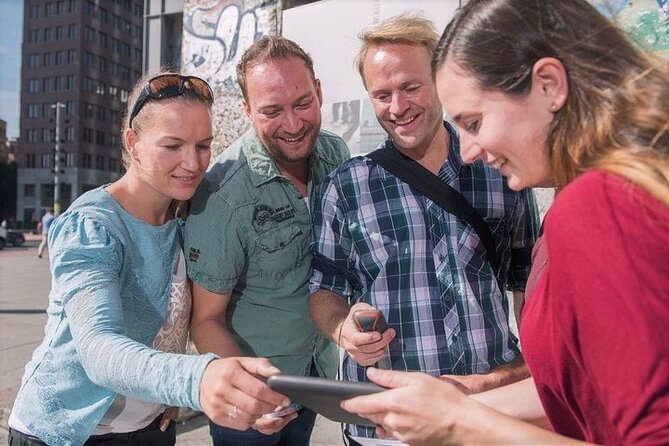
Hasselt’s city center is compact, so this kind of self-guided experience works well here. You are not stuck crossing town for every clue. You can hop from one key spot to the next without turning it into a long slog.
That matters because the hunt is meant to feel like play, not like a chore. When the distance between stops is reasonable, you are more likely to actually enjoy the tasks instead of just trying to finish. Even the Grote Markt is easy to read, with restaurants, hotels, and shops around it, so it plays nicely with a scavenger hunt format.
Also, the format is built for flexibility. The tour is offered in English, but you are not locked into a group schedule the way you would be with a traditional guided walk. You can plan Hasselt around your day, instead of squeezing it into someone else’s timetable.
How the e-Scavenger hunt works on your phone
You use an online app on your phone, and you get a mobile ticket to play the game. The tour is private, meaning only your group participates. That’s great if you want to keep things low-stress and avoid big-tour crowd energy.
You will need your own smartphone and data, since they are not included. Bring a charged battery and consider a power bank if you tend to use GPS a lot. You are also walking outside, so if you rely on mobile data, keep an eye on signal in quieter corners.
The trail is set up like a series of stops, with questions, tasks, and fun facts. In practice, that means you will pause, read what the app gives you, and answer or complete something before moving on. If you are the kind of traveler who likes “learning by doing,” this style clicks fast.
One more practical note from experience with this kind of app: translation can make or break it. This hunt is offered in English, so if you start turning on automatic translation, you may see odd wording or doubled translations. If you are using a phone language that is not English, I strongly suggest you check translation settings before you start.
The trail from Gin Museum to Virga Jesse basilica
The hunt starts at Diesterstraat 1 in Hasselt and loops back to the same meeting point when you finish. From the first stop, it leans into Hasselt’s identity, starting with the Gin Museum. You get a mind-and-body framing for the visit, and the idea is that you do not just pass through you engage with what the museum represents.
Next comes a church built in the 18th century, which is now a basilica. The star here is the statue of Mary of Jesse (Virga Jesse) from the 14th century. This stop works well in a game format because it gives you a reason to look closely. Instead of just glancing at religious art and moving on, you are mentally “on assignment,” which makes details stick.
If you like religious sites for their art and symbols, this section is a good match. If you are not into churches, you can still enjoy it because the trail turns them into clue locations, not lecture halls.
St Quintinus Cathedral and Modemuseum Hasselt: culture in two steps

After Virga Jesse, the trail brings you to St. Quintinus Cathedral in the center of Hasselt. It is dedicated to Quintinus, and it became a cathedral when the Diocese of Hasselt was founded in 1967. The game format helps here too, because the “why it matters” is attached to the clue system, not buried in a long read.
Then you shift to Modemuseum Hasselt, housed in a seventeenth-century building known as the Oud Gasthuis. This is one of those locations where the setting adds meaning. The fact that the museum lives in an old building gives you a double story at once, the architecture and whatever exhibitions you might catch (at least in context).
If you are short on time, you do not need to force a full museum visit to get value. Even if you only use the outdoor portions and the stop content from your phone, the trail still encourages you to notice what makes that building-era angle special.
More City Sightseeing in Belgium:


Plopsa Indoor and Stadskantoor: Hasselt’s playful and official sides
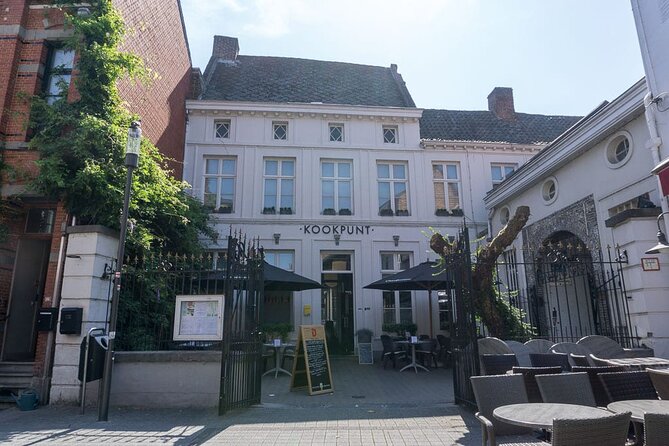
Hasselt is not only churches and museums. The hunt includes Plopsa Indoor Hasselt, described as Belgium’s first partially covered theme park. It sits next to Ethias Arena and Grenslandhallen. Including it in a city trail is a smart move. It tells you Hasselt is also a place for families and entertainment, not only heritage tourism.
Then you head to the town hall of Hasselt, also called Stadskantoor, which opened in 2018 as a replacement for the Old Town Hall. The hunt’s job here is to pull you from “I saw a building” into “I know what changed and why.” City hall is often overlooked when you travel fast, but turning it into a clue stop helps you process it.
Also, since the route is compact, you are not spending your whole hunt staring at your screen. You glance at the phone, do the task, and you are back on the street.
A beguinage memory, the Japanese Garden, and Herkenrode’s women’s history
One of the more thought-provoking sections is the clue about the oldest beguinage, mentioned as early as 1245. It was located outside the ramparts, around the Virga Jessecollege area (Guffenslaan), and it was destroyed during the Iconoclasm. Even with short stop content, this kind of historical marker gives you a deeper sense of how Hasselt changed over centuries.
Next you will hit the Japanese Garden in Hasselt, described as the largest of its kind in Europe. This is the stop where you slow down a bit. A garden is perfect for a self-guided game, because you can pause and take it in between tasks without feeling rushed.
After that comes a longer, more story-driven segment: the trail through the history of Herkenrode, set up as a chronological story of 600 years of women. The hunt approach works well here because chronology can be tough to hold in your head during a walk. Turning it into steps lets you process the timeline in chunks.
If you like historical context, this is where the hunt feels most meaningful. If you prefer lighter content, you can still enjoy it by treating each piece as a mini discovery rather than trying to memorize everything.
Streets with power stories: Dusart and Congo, Grote Markt, and Minderbroederskerk
The trail includes a story about Dusart, noting he went to the Royal Military School in Brussels, became a lieutenant at 19, and then left for Congo in 1890, when Congo was private property of King Leopold II. This is one of the heavier historical notes in the hunt. The game format can make difficult history easier to approach, because you encounter it as a specific fact tied to a stop rather than a huge wall of text.
Then you get a classic Hasselt breather at the Grote Markt. The hunt points out that the city center is not very large, and the square reflects that, with restaurants, hotels, and shops around it. This section is useful if you want a reset moment. It also gives you a place to check your route and regroup as a team.
Later you visit the Minderbroederskerk, where you can find the burial chapel and museum of Father Valentinus Paquay, a site that attracts thousands of visitors every year. The value here is in the “why now” connection. A game clue encourages you to look for what makes the person and place significant, not just to pass by.
Stadsmus and its mysterious citizen clue
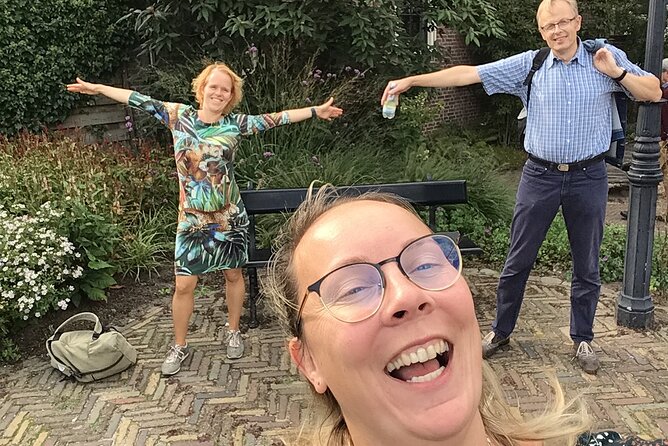
The trail ends with something very Hasselt-feeling: Stadsmus and its story approach to the city’s streets and famous inhabitants. It also includes a mysterious detail about a citizen who sees the light of day once every seven years.
I love stops like this in a scavenger hunt because they add personality. You are not just collecting facts. You are learning the way locals play with storytelling. Even if you do not fully chase the legend in your own head, the fun is in noticing how the city myth gets built into the walk.
Price and the group math that actually matters
The price is $37.21 per group, up to 6 people. So the best value depends heavily on how many you bring. If you go as:
- 6 people: about $6.20 per person
- 3 people: about $12.40 per person
- 2 people: about $18.60 per person
That makes it clear why this can feel like a steal for families and friend groups, but can feel pricey if it is just you and one other person. It is not that the hunt is short, it is that the group format spreads the cost.
Also, remember what you are paying for. You are not buying a live guide for conversation. You are buying a well-structured activity that covers multiple sights in one go, with a phone-based game layer. If you want chat and long explanations, you might prefer a guided walk. If you want a fun way to see Hasselt while learning in small steps, the pricing makes more sense.
Timing, duration, and how to pace the hunt
The hunt takes about 2 to 4 hours. That range is your real guide. If you move fast, you can treat it as an efficient afternoon activity. If you slow down for photos, garden time, or a museum pause, expect it to stretch.
The opening hours list is essentially all day (12:00 AM to 11:59 PM), which gives you flexibility. Since Hasselt is compact, I recommend you pick a time when the light looks good for the garden and the historic buildings. It also reduces stress because you are not forced into a narrow meeting window.
Start at Diesterstraat 1, then trust the app for the route flow. Because it is self-guided and private, you do not have to coordinate with strangers. You can also decide how long to linger at the stops that matter most to you.
Tips that make the difference: navigation, text length, and translation
You will likely choose between short and longer stop text in the app, which helps you tailor the reading level to your group. If you are traveling with mixed interests, try the short option first. Then, if someone is curious, switch to longer text at the stops that they care about.
Navigation-wise, the hunt supports both map and GPS approaches. In practice, I suggest you use map mode when you are orienting, then use GPS mode when you are doing the final approach to a stop. That keeps you from constantly “micro-correcting” on the street.
Most important for a smooth experience: translation control. If the hunt feels oddly worded, do not assume the clue is just wrong. Check your phone’s automatic translation settings. If auto-translation is on, you can end up with messy double translation. To avoid that, keep the app in English and let your phone stay stable on the same language, or fully disable automatic translation for the duration of the hunt.
So, should you book this Hasselt e-Scavenger hunt?
I’d book it if you want an easy way to see Hasselt’s highlights without wrestling with meeting times. It is especially good for groups up to six, because the per-person value drops quickly. It also works well when you want to mix serious history (like Herkenrode and the beguinage story) with lighter stops (like Plopsa Indoor and the Stadsmus legend).
I would pass or swap your plan if you are the type who wants a traditional guide and lots of conversation. This hunt gives you structure and facts, but it is still a game. If you are traveling as just two people, the price may feel high for the depth of each stop.
If you go in with the right mindset, this is a smart, flexible way to tour Hasselt. You get a walk with built-in reasons to look closer, and by the end, you will notice the city differently.
FAQ
How long does the e-Scavenger hunt in Hasselt take?
It usually takes about 2 to 4 hours, depending on how you pace the game and how much you stop to read or look around.
Where does the tour start and end?
It starts at Diesterstraat 1, 3500 Hasselt, Belgium, and it ends back at the same meeting point.
What do I need to play the game?
You get access to an online app and a mobile ticket, but you need to bring your own smartphone and data.
What languages is the experience offered in?
The experience is offered in English.
Is it a group tour or private?
It is a private tour or activity, so only your group participates. The team size is up to 6 people.
Can I cancel for a refund?
Yes, you can cancel up to 24 hours in advance for a full refund. If you cancel less than 24 hours before the start time, the amount is not refunded.
Latest from Belgium





City Escape Game Trails, compared.

e-Scavenger hunt Antwerp: Explore the city at your own pace
Read our review →
e-Scavenger hunt Bruges: Explore the city at your own pace
Read our review →
Bruges Scavenger Hunt and Highlights Self Guided Audio Tour
Read our review →
e-Scavenger hunt Ghent: Explore the city at your own pace
Read our review →
Beer Tasting and Scavenger Hunt in Brussels – About 3 Hours
Read our review →
e-Scavenger hunt Mechelen: Explore the city at your own pace
Read our review →
Romantic Bruges: Love Between the Canals Exploration Game
Read our review →
e-Scavenger hunt Brussels: Explore the city at your own pace
Read our review →Browse the lists this tour appears in