Reviewed · BRUSSELS EXPERIENCES
Brussels: Fall and Rise of Art-Nouveau Guided Tour
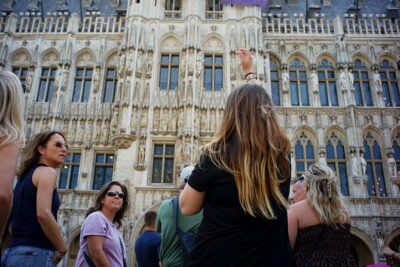
Art Nouveau in Brussels is never just pretty, it has craft. This guided walk helps you read the city through the techniques that shaped it, from sgraffito to Victor Horta. I especially like how the guide turns facades into clear explanations and how you get to see the style across multiple streets instead of only one landmark. One thing to plan for: it is a rain friendly experience in theory, but you will want real rain gear in wet weather since it is an outdoor walk.
You will also like the pace and focus. It is only about three kilometers on an easy loop around the outskirts, so the ideas stick without feeling like a long slog. The tour is led in Spanish, and from the feedback I saw, the guide answers questions with confidence and keeps the tour friendly. The possible drawback is language: if Spanish is not your strong suit, you might miss some of the nuance, since the tour is not listed in other languages.
4-6 key things that make this tour worth your time
- Sgraffito explained clearly so you can spot what makes it different from fresco work.
- Victor Horta’s Maison du Peuple remains, tying the walk to one of Brussels’ central Art Nouveau names.
- Street level Art Nouveau viewing in Saint-Gilles and Ixelles, not just distant theory.
- A short, focused route of about three kilometers that fits into a single outing.
- A guide who responds to questions and keeps the tone personable, including mention of Samuel as the lead guide.
In This Review
- Why this Brussels Art Nouveau tour works better than a random self-walk
- Sgraffito vs fresco: the technique lesson you can use on every Brussels facade
- Victor Horta and the Maison du Peuple remains: why the name matters
- Saint-Gilles and Ixelles facades: reading Art Nouveau at street level
- The 3-kilometer outskirts walk: timing, pacing, and what to bring
- Meeting point near Horta Metro: how to find your guide fast
- Guide style and what the top ratings tell you to expect
- Price and value: is $17 for 150 minutes a good deal?
- Who should book, and who might skip this one
- Should you book the Brussels Fall and Rise of Art-Nouveau Guided Tour?
- FAQ
- Where is the meeting point for the tour?
- How long is the Brussels Art Nouveau guided tour?
- How far do you walk during the tour?
- What language is the live guide?
- Is the tour wheelchair accessible?
- What is included in the price?
- How much does the tour cost?
- What should I bring for weather?
- What is the cancellation policy?
- Who provides the tour?
Why this Brussels Art Nouveau tour works better than a random self-walk
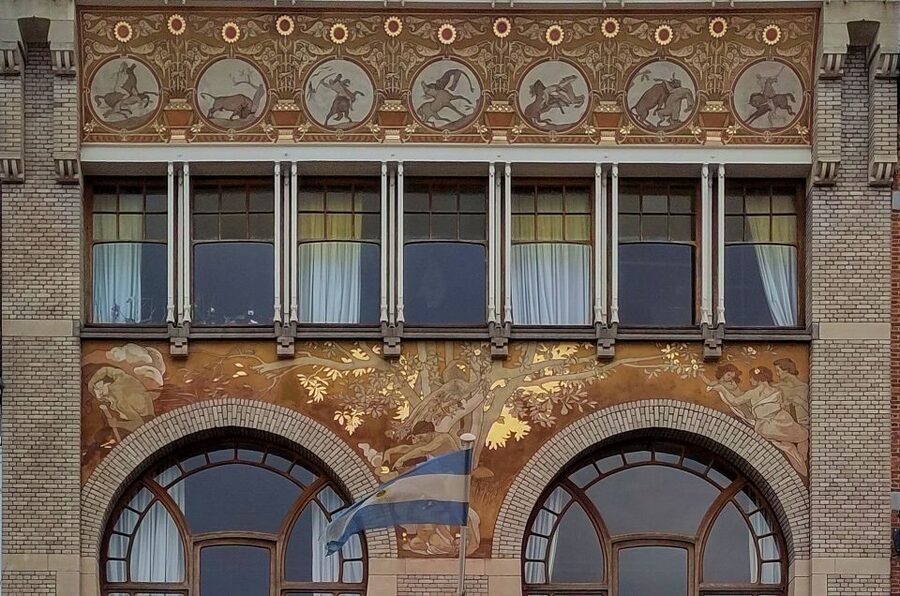
Brussels is full of architectural styles, but this tour gives you a lens. Instead of wandering and hoping you recognize motifs, you follow a route built around how Art Nouveau was made and used across buildings.
I like that the emphasis is on technique and explanation. Art Nouveau can look like decoration from far away, yet up close it is about methods, materials, and decisions made for specific facades. Here, you learn the most used techniques in Art Nouveau and you get language for what you are seeing, so your brain stops treating details like background noise.
You’ll also get a sense of neighborhood rhythm. The route runs through parts of the Brussels Capital Region, with focus on Saint-Gilles and Ixelles, two areas where Art Nouveau houses are known for being among the more stable examples. That matters because when a building has lasted, you can study it without the constant worry that half the story is gone.
One more practical win: the tour is about 150 minutes. That is long enough to connect ideas, but short enough that you can still plan a second activity after. It also means you can do this even if you are not staying in central Brussels only. You will be walking an outing length, not a half-day mission.
A few more Brussels afternoons to weigh up
- Brussels: Atomium Entry Ticket with Design Museum Ticket
★ 4.4 · 9,254 reviews - From Brussels: Guided Day Trip to Bruges and Ghent
★ 4.6 · 8,353 reviews - From Brussels: Bruges & Ghent Day Tour – 2 Fairytale Cities
★ 4.7 · 8,242 reviews - Choco-Story Brussels: Chocolate Museum Entrance with Tasting
★ 4.3 · 4,883 reviews - Bruges and Ghent – Belgium’s Fairytale Cities – from Brussels
★ 4.0 · 4,809 reviews
Sgraffito vs fresco: the technique lesson you can use on every Brussels facade
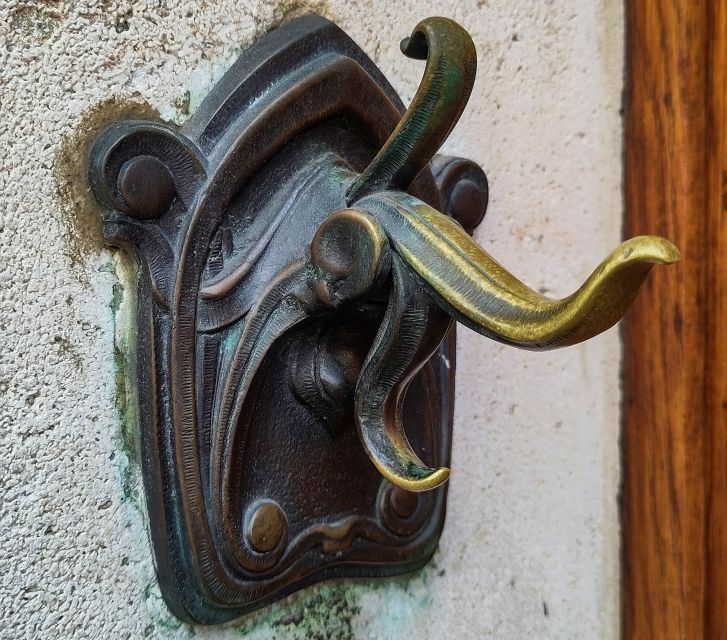
A big reason to take a guided Art Nouveau tour is learning what to look for. This one centers on craft, especially the sgraffito technique and how it differs from frescoes.
Here is the practical take you should carry with you. Sgraffito is typically created by working into a surface layer so the pattern or design shows through by removing parts of what is on top. Fresco work is different because it relates to paint applied to plaster, creating the image as part of a plaster surface system. During the tour, the guide explains what sgraffito is and then helps you compare it to frescoes, so you can train your eyes to tell the difference without needing an art degree.
The tour also promises coverage of the most used techniques in the Art Nouveau world. Even when you are not sure of a name, you can still listen for what the guide points out: how the surface is made, how the pattern is produced, and how the building’s exterior reads as one integrated piece. That approach turns random street sighting into a skill. Afterward, you will likely spot other facades and instantly think, Ah, I know what kind of surface work that is.
And because you are walking, the technique lesson stays connected to real examples. You do not just hear definitions in the abstract. You get to see the buildings and compare what the guide describes, which is exactly how these details become memorable.
Victor Horta and the Maison du Peuple remains: why the name matters
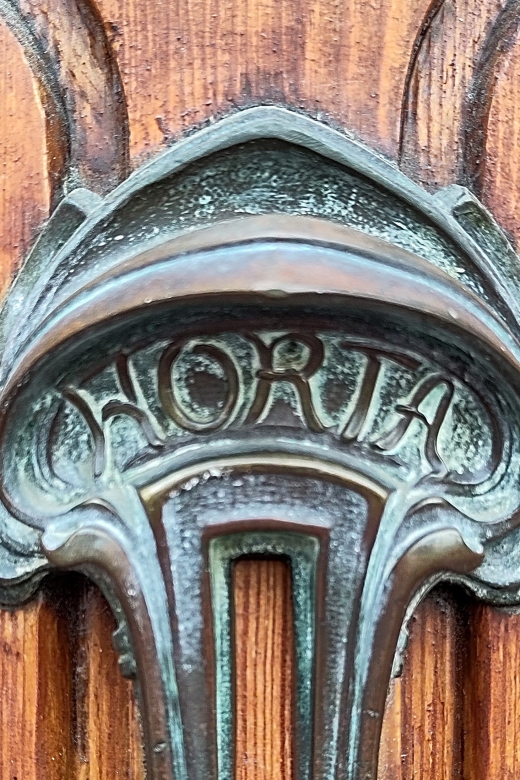
Art Nouveau in Brussels often circles back to Victor Horta, and this tour includes historical remains linked to his Maison du Peuple. Even though the tour focuses on a walking route rather than a museum visit, this stop gives the outing weight. You connect technique and style to a specific creator.
Why does that help you as a visitor? Because Horta is a shorthand for a design movement that was not just about ornament. When you see remains connected to his work, the tour’s earlier technique talk starts to feel grounded. It stops being just about surfaces and starts feeling like a design philosophy.
You also get a satisfying kind of historical pacing. The tour does not rely on one single photo moment. It layers context as you go: first the idea that Art Nouveau relies on methods, then a named connection to Horta’s Maison du Peuple remains. That makes the neighborhood walk feel like more than sightseeing, even if you never go inside any building.
If you are the type who likes to understand why a place is famous, this inclusion is a real plus. You leave with a stronger sense of why those streets were worth preserving and why certain areas, including Saint-Gilles and Ixelles, are watched for their Art Nouveau stock.
Saint-Gilles and Ixelles facades: reading Art Nouveau at street level
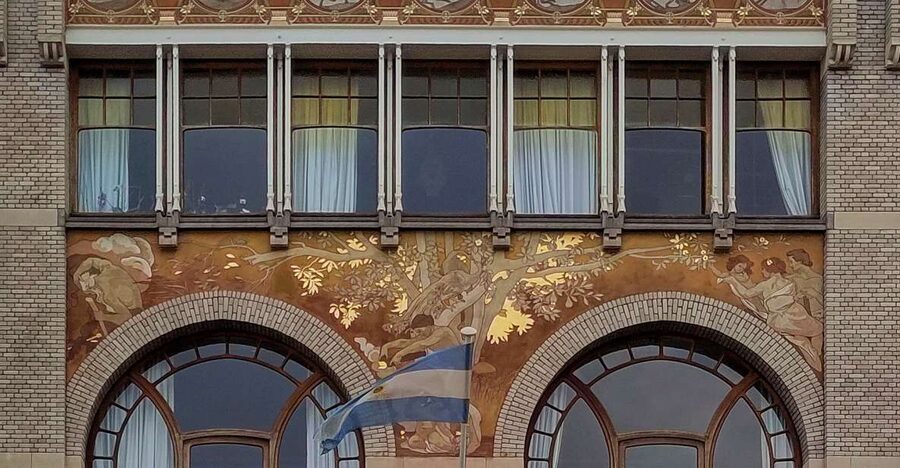
The tour focuses on stable Art Nouveau houses in Saint-Gilles and Ixelles. That specific neighborhood choice is practical. It increases the odds that you will find facades where the design is still legible, not just traces of something that once existed.
What you should expect is a guided route where you admire some of the most beautiful streets of Brussels. The emphasis is on looking closely at facades and understanding how the design is part of the building’s skin. Since Art Nouveau can be mistaken for only decorative painting, this tour’s stance is useful: it keeps bringing your attention back to structure, surface, and the technique behind the visual effect.
There is also a “fall and rise” vibe built into the concept. Even if the tour does not turn it into a lecture, you will likely feel the contrast as you move through outskirts streets and city lanes. You are not just in the most obvious tourist core. You see Brussels as it exists day to day, with Art Nouveau sitting among normal life. For many people, that is the most satisfying way to experience architecture, because it is not isolated behind glass.
A good tip for you: slow down mentally when the guide points out details. With this kind of tour, your memory is made in the first 30 seconds of each stop, when you decide what is important. If you keep your eyes on the surface work and listen for technique names like sgraffito, the rest will click.
The 3-kilometer outskirts walk: timing, pacing, and what to bring
This tour covers about three kilometers of walking. That is a sweet spot for architecture fans. You get multiple stops, but you are not stuck on foot for hours. At 150 minutes total, the pace typically leaves time to pause, look, and ask questions without feeling rushed.
The route includes charming streets around the outskirts of Brussels. That description may sound like marketing fluff, but the practical part matters: you should expect an outdoor walk where weather changes your comfort quickly.
So bring what the tour suggests: an umbrella and rain gear. If rain shows up, do not treat it like an optional annoyance. Plan to stay warm and dry enough to keep enjoying the street scenes. Having a poncho or a proper rain jacket makes it easier to stand still during explanations, especially when the guide is pointing out details on facades.
Also, because the tour is Spanish, you should expect stops to include short explanation segments. That means you will likely want to keep your phone battery for maps and photos, but do not let your camera take over the tour. The value is in the guidance for reading what you see.
Still got an afternoon? Try these:
Meeting point near Horta Metro: how to find your guide fast
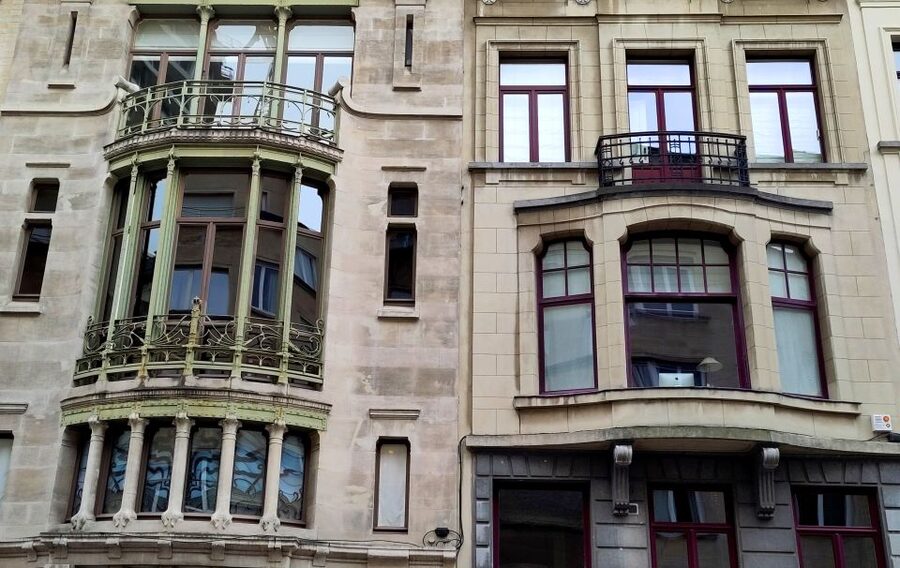
You will meet next to the Horta Metro station, lines 3 and 4, at Chaussée de Waterlo, at the height of number 187. Your guide will wear a Curiositas Mundus badge, so you will be able to spot them without guesswork.
This location is a smart choice for anyone using public transport. Lines 3 and 4 make it a convenient anchor point, and Chaussée de Waterlo is a main street area where you can also orient yourself if you arrive early.
If you want to make the start smoother, give yourself extra time to get to the exact height of number 187. Street numbering in European cities can be precise, and you do not want to be late and trying to match a face in the rain.
Once you find your guide, lean in right away. The tour’s technique focus works best when you start listening early, especially if sgraffito and frescoes are new terms for you.
Guide style and what the top ratings tell you to expect
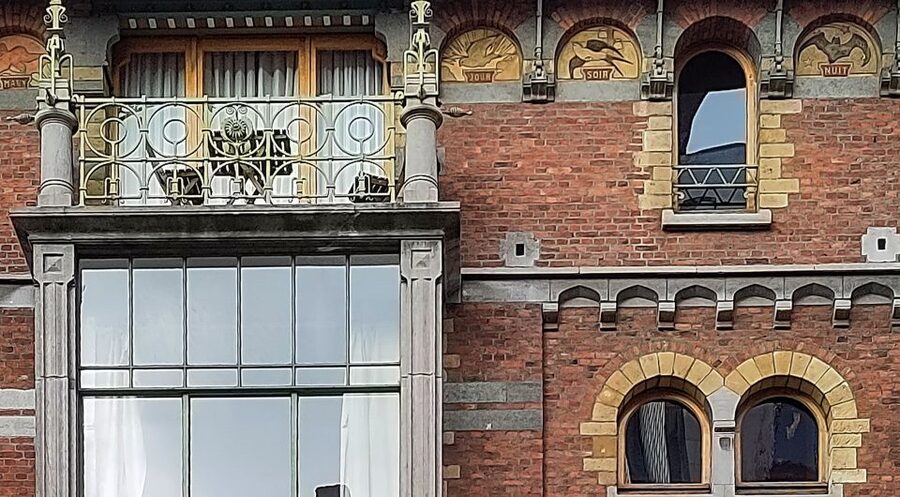
The tour has a perfect rating based on five reviews, and the feedback pattern is clear. People highlight the guide’s dedication, friendly approach, and solid knowledge, plus the feeling that the tour stays interactive.
A recurring positive detail is clarity. One Spanish review calls out that Samuel explained Art Nouveau in a very clear way while looking at different facades, and that he was willing to answer questions. Another review praises the guide’s pleasant, informative delivery and the enjoyment of seeing the buildings he chose.
This is exactly what you want on an architecture walk. You do not just want facts. You want a guide who can translate the visual language into something you can recognize on the next street. The mention of Samuel responding to doubts matters, because questions often happen when people get confused by a technique or a feature name. If the guide can handle that on the spot, the tour stays rewarding instead of turning into a slow blur.
Language note: the tour is live and guided in Spanish. If you speak Spanish comfortably, you will probably enjoy it more. If your Spanish is basic, you can still follow many points through visuals, but technique comparisons like sgraffito versus fresco will be harder to catch word for word.
Price and value: is $17 for 150 minutes a good deal?
At about $17 per person for a 150-minute guided walking tour, this is priced in the range that often makes sense for a focused neighborhood experience. The value comes from two things: time spent learning with a live guide and the practical walking route that helps you apply what you learn in real locations.
You are getting a guided walking tour plus additional audiovisual information. That pairing matters because technique learning can be easier with a visual aid, especially when you are comparing methods. If you have ever tried to learn architecture from a guidebook in your phone, you know how quickly it becomes unreadable on a rainy sidewalk. Having the tour’s visual support helps keep the information usable.
You also get the structure of a three kilometer route, which reduces the guesswork. You do not have to decide which facades are most worth stopping at. Your time is spent looking and learning, not searching.
If you are on a budget, this kind of price point is ideal for adding a high-signal activity on a day when you still want time for coffee, chocolate, and wandering. If you are looking for an in-depth museum level session, this may feel more like a street-level survey. But for understanding Art Nouveau techniques and connecting them to Victor Horta’s Maison du Peuple remains, it is strong value.
Who should book, and who might skip this one
This tour is a good fit if you:
- Enjoy learning how buildings are made, not just admiring what they look like
- Want an Art Nouveau introduction tied to real streets in Saint-Gilles and Ixelles
- Like guided walks where you can ask questions and get direct answers
- Want to focus on specific techniques like sgraffito, and understand how it differs from frescoes
You might consider a different option if:
- You need a tour in languages other than Spanish
- You do not want to walk about three kilometers outdoors, even if the tour is short and the route is manageable
- You only want a single major landmark visit, since this is distributed across multiple street views
Should you book the Brussels Fall and Rise of Art-Nouveau Guided Tour?
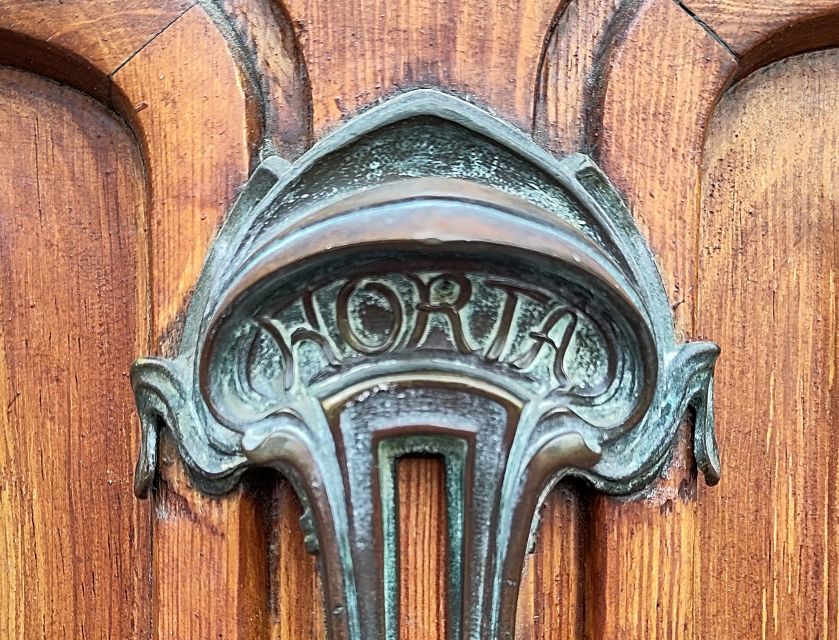
Yes, I think you should book it if you want a guided, technique-led way to see Brussels Art Nouveau. The combination of sgraffito explained, street-level viewing in Saint-Gilles and Ixelles, and the inclusion of Victor Horta’s Maison du Peuple remains gives you more than a typical photo walk. You will leave with names, comparisons, and a better eye for exterior craft.
Book it especially if Spanish is workable for you and you like tours where the guide answers questions, as reflected by the strong feedback and the mention of Samuel as the lead guide.
If you are coming in wet weather season, plan for rain. Bring the umbrella and rain gear and you will still enjoy the experience fully.
FAQ
Where is the meeting point for the tour?
You meet next to the Horta Metro station (lines 3 and 4), on Chaussée de Waterlo, at the height of number 187.
How long is the Brussels Art Nouveau guided tour?
The tour lasts 150 minutes.
How far do you walk during the tour?
The tour includes approximately three kilometers of walking.
What language is the live guide?
The tour is guided live in Spanish.
Is the tour wheelchair accessible?
Yes, the tour is wheelchair accessible.
What is included in the price?
The price includes a guided walking tour and additional audiovisual information.
How much does the tour cost?
The price is $17 per person.
What should I bring for weather?
Bring an umbrella and rain gear.
What is the cancellation policy?
Free cancellation is available up to 24 hours in advance for a full refund.
Who provides the tour?
The experience provider is Curiositas Mundus.
Latest from Brussels






Brussels Experiences, compared.
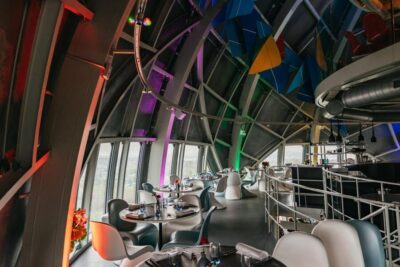
Atomium Entry Ticket with Design Museum Ticket
Read our review →
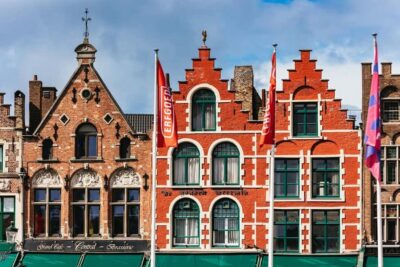

Choco-Story Brussels: Chocolate Museum Entrance with Tasting
Read our review →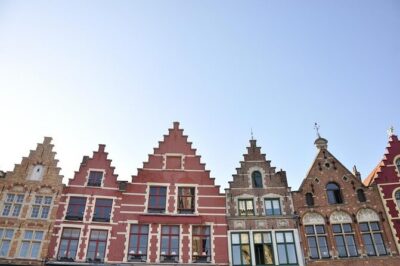
Bruges and Ghent – Belgium’s Fairytale Cities – from Brussels
Read our review →