
Reviewed · HIDDEN GEMS & LOCAL FAVOURITES
Brussels: a stroll to discover hidden gems
Side streets in Brussels have a voice. This 150-minute stroll is built around secret spots and stories you will not find in guidebooks, led by Eric, a Brussels-born guide. You will hear the city’s past through beheadings, vanished rivers, and the small details that shape how locals see Brussels.
I especially love the way the tour mixes history with hands-on looking, from pushing open doors to peeking through keyholes at facades you would miss on your own. It is also paced for real conversation, which makes the anecdotes land instead of turning into a lecture.
One thing to consider is the footwear. You will cover a decent amount of ground, and while the tour is listed as wheelchair accessible, Brussels sidewalks are not very wheelchair-friendly. Bring comfy shoes and you will be fine.
In This Review
- Key Highlights You’ll Want to Know Before You Walk
- Meeting at Hilton Entrance, Then Walking to the Grand Place
- Cathedral Light Tricks at St. Michael and St. Gudula
- Mont des Arts: Brussels as a Layer Cake
- Coudenberg Palace and the Power Stories Under the City
- Church of Our Blessed Lady of the Sablon: Devils, Saints, and Sunlight
- Rue des Alexiens: When Small Streets Hide Big Details
- Halles de Saint-Géry: Stories, Beer Tips, and the Fries That Started It All
- Price and Value: Is $100 Worth 150 Minutes?
- Pacing, Languages, and What to Bring for the Walk
- Who This Tour Suits Best (and Who Might Skip It)
- Should You Book This Stroll to Find Brussels Side Stories?
- FAQ
- Where do I meet the guide?
- Does the tour start at Gare Centrale or from your hotel?
- How long is the tour, and where does it end?
- How many people are in the group?
- What languages are offered?
- What should I bring?
- Is it wheelchair accessible?
Key Highlights You’ll Want to Know Before You Walk
- Eric, the Brussels-born guide shares stories and anecdotes not aimed at the usual tourist path
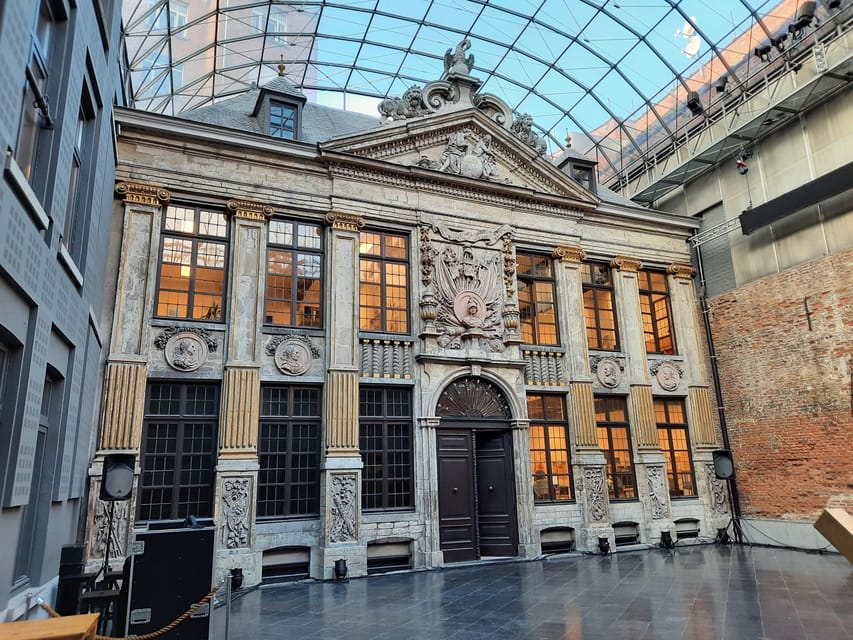
- Secret courtyards and hidden facades you can access up close, including doorways and keyholes
- Big, weird Brussels history like 16th-century beheadings and a river that disappeared twice
- Light, religion, and legend from how the sun penetrates a cathedral to a devil creating a saint
- A royal and civic side of the city with topics like a royal bunker, forgotten walls, and a fountain ennobled by an emperor
- A payoff finish at the Grand Place after a grounded walk through central Brussels
More Local Favourites in Brussels
- Brussels: City Highlights and Hidden Gems Bike Tour
★ 4.8 · 443 reviews - Brussels Highlights & Hidden Gems Private Tour with a Local Guide
★ 5.0 · 251 reviews - Brussels Highlights & Hidden Gems Bike Tour
★ 5.0 · 195 reviews - Brussels PRIVATE TOUR With Locals: Highlights & Hidden Gems
★ 5.0 · 177 reviews - Brussels Like a Local: Private & Personalized Experience 2-4 hrs
★ 5.0 · 111 reviews
Meeting at Hilton Entrance, Then Walking to the Grand Place
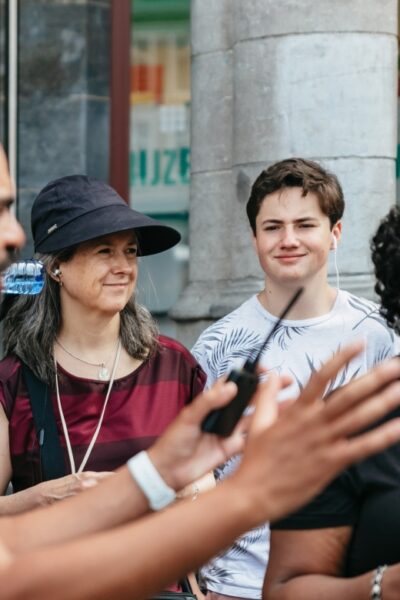
The tour starts in central Brussels and ends around the Grand Place, which is ideal because you finish with one of the most photogenic squares in Europe. Your guide meets the group in front of the Hilton Hotel entrance, and he wears a sky-blue lanyard so you can spot him quickly.
You can also expect the tour to connect you to where you already are. The experience is described as starting from Gare Centrale or from your hotel, which is helpful if you are not staying right beside the station. Either way, the goal is the same: keep you moving through compact central streets without the stress of planning each turn.
For this walk, plan like it is a mini city trek, not a museum visit. Comfortable clothes and comfortable shoes matter. Bring a camera if you like details, and do not forget to hydrate. This is a story tour, but you still need your energy.
Cathedral Light Tricks at St. Michael and St. Gudula
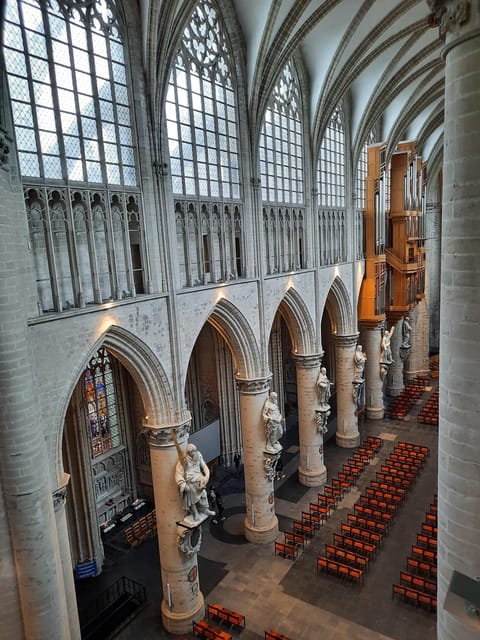
Your first guided stop sets the tone: Cathedral of St. Michael and St. Gudula. This is not just a pretty building to glance at. The tour focuses on what you can notice when someone points your eyes in the right direction.
One highlight is the way the sun penetrates the cathedral. That kind of description matters, because cathedrals can feel cold and distant until you understand how light and architecture work together. You will also get a sense of how the city’s oldest layers keep shaping what you see today.
A practical note: this is the kind of stop where you might want to slow down and look up, even if you have already seen similar churches elsewhere. The narration helps you read the space. You will leave with a clearer idea of how religious spaces in Brussels are tied to time, power, and daily life.
Mont des Arts: Brussels as a Layer Cake
Next comes Mont des Arts, which is a viewpoint area that can feel like a simple photo stop unless someone explains what you are actually looking at. Here, you are guided through the idea that Brussels is shaped by layers, not just one neat era.
This is where I like the tour’s method. Instead of treating the city like a museum timeline, it treats Brussels like a living place with scars, upgrades, and side effects. You will get the sense that people rebuilt, repurposed, and reimagined spaces over centuries.
What makes Mont des Arts a smart mid-walk point is the rhythm. After the cathedral, you get an elevation change, a wider view, and a reset for your eyes. Then you are ready for the more story-heavy stops that follow, where old structures and forgotten corners matter more than the postcard look.
Coudenberg Palace and the Power Stories Under the City
Coudenberg Palace is one of those places where the history feels close, even if you are not standing in a fully intact royal residence. This stop is all about what Brussels did with authority, and what changed when power shifted.
Expect stories with sharp edges, including why people were beheaded in the 16th century. That topic is heavy, but it gives context to a city that kept moving through cycles of rule and unrest. You are not just hearing dates, you are hearing what kinds of decisions and punishments shaped daily life.
Coudenberg also ties into the tour’s theme of disappearing and reappearing traces. You will hear about a river that disappeared twice, yet left a piece behind. That kind of explanation helps you understand why the city’s layout can look odd if you assume everything stayed in place.
And then there are the civic surprises the guide is known for sharing: royal bunker references, forgotten walls, and even the idea of a palace used as a parking lot. Those details might sound random, but they build a useful mental picture. Brussels does not freeze in time. It adapts.
Still got an afternoon? Try these:

Church of Our Blessed Lady of the Sablon: Devils, Saints, and Sunlight
At the Church of Our Blessed Lady of the Sablon, the tour leans into legend and symbolism. You will hear the little-known story of how the devil created a saint. That is exactly the sort of oddball tale that makes this experience different from a standard sightseeing walk.
This stop also connects back to light, because the tour description highlights how the sun penetrates a cathedral. In other words, you are not only learning religious history. You are learning how design and atmosphere can make people feel like something bigger than themselves is happening.
One thing I appreciate about this part is that it stays grounded. Even when the story gets strange, you are still in a real place with real architectural features. The guide is using myth and anecdote to help you pay attention to the building itself.
If you like spirituality, art, or local folklore, this is one of the best stops on the route. If you prefer strictly factual history, you can still enjoy it, because the stories point you toward why locals remember certain spots.
Rue des Alexiens: When Small Streets Hide Big Details
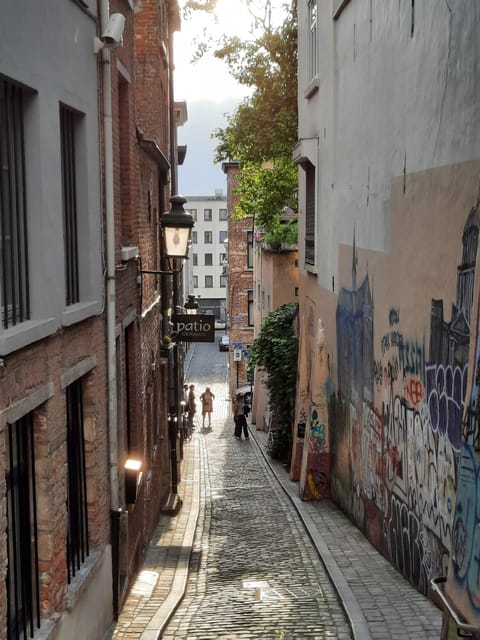
Rue des Alexiens is where the tour starts to feel like a proper local walk. This is less about grand monuments and more about the texture of the city, the kind that rarely makes it into brochures.
This section comes with one of the tour’s signature styles: you push open doors or peek through keyholes to discover spectacular hidden facades. That is the kind of moment that changes how you see a street. A normal wall becomes a clue. A doorway becomes a story.
You will also hear about the city through everyday oddities, including what remains of old boundaries and walls. Brussels has plenty of corners where the past is literally built into the present. Rue des Alexiens helps you understand that without turning it into a classroom.
Wear shoes you can trust here. Even if the route is manageable, these are the streets where you may end up stepping around uneven pavement. And if you are taking photos, you might want your camera ready, because the interesting details are often at eye level or just a little off to the side.
Halles de Saint-Géry: Stories, Beer Tips, and the Fries That Started It All
The tour leads you to Halles de Saint-Géry, which is a great way to end the middle section of the walk. Market-adjacent areas give you an immediate sense of what the city uses daily, not just what it worships or crowns.
This is where the guide’s local knowledge turns practical. You will get tips on where to go for a beer or some good fries in places that are authentically Brussels. That matters, because Brussels can be easy to get wrong if you chase the most obvious tourist menu.
You will also hear two food-related stories that locals treat like part of their identity: the true history of Belgian fries, and the little-known story of Brussels’ most famous bourgeois. Even if you think you already know Brussels trivia, these are the kinds of narratives that fill in the gaps, especially if you care about how food and civic pride travel together.
Halles de Saint-Géry is also a natural place to pause your brain. By now, you have taken in cathedrals, palace history, and legends. The market zone helps you connect the myths back to modern life, which is the real point of a story-focused walking tour. The city does not live in the past, it carries the past into what people eat and drink.
Price and Value: Is $100 Worth 150 Minutes?
The price is $100 per person, and the value comes from more than just the guide’s time. You are paying for a specific kind of access: secret spots, small facades, and doorways or keyholes you are directed to look at. You also get a guide who is from Brussels, with anecdotes and stories that are described as not appearing in guidebooks.
At 150 minutes, it is a tight, efficient window. You do not get dragged across multiple neighborhoods. You get central Brussels with a storyline. For first-timers, that is the big benefit, because you can leave with a sense of how the city thinks, not just what it looks like.
You do not get meals or drinks included, and there are no museum admissions included. That is fine. This is not a ticket-heavy tour. Think of it as buying time with a local storyteller, then using the information to pick your own dinner and snacks afterward.
If you already know Brussels well and prefer only major monuments, you might find it less focused. But if you want your sightseeing to feel personal, $100 can make sense when the stops are compact and the guide’s storytelling is the main product.
Pacing, Languages, and What to Bring for the Walk
This is a small group tour, limited to 10 participants. That size is not just about comfort. It helps the guide keep the group together and answer questions without rushing. It also makes it easier to hear the stories clearly while walking.
Live guiding is offered in French, English, Spanish, and Dutch. Some content may be shown in its original language, so if you are sensitive to mixed-language moments, consider that in your expectations. Still, you will have a live guide for the core narrative.
Plan around the fact that you are walking for about 150 minutes. You do not need a strenuous workout mindset, but you should treat it like a proper city stroll with stops. Comfortable shoes are your best investment.
Wheelchair access is listed, but there is also a reality check: Brussels sidewalks are not very wheelchair-friendly. If you need mobility support, you will likely want to factor in that street surfaces can be a limiting factor. The good news is that the tour is at least designed to be reachable by more than one kind of visitor.
Who This Tour Suits Best (and Who Might Skip It)
I think this tour is a strong fit if you enjoy stories with atmosphere, not just facts. If you like when a city’s past is explained through vivid scenes like 16th-century beheadings, legendary saints, and a river vanishing twice, you will get a lot out of it.
It also suits people who want local recommendations without asking strangers. The beer and fries guidance is part of the experience, and it pairs well with what you learn about Belgian fries history.
On the other hand, if you prefer long museum time, big-ticket attractions, or a strictly chronological route with no folklore, this might feel too anecdotal for your taste. It is also not a sit-and-stare format. You are walking, looking, and listening.
If you are traveling solo and want an easy way to meet a guide who knows Brussels intimately, the small group size helps. If you are with a larger group, you might want a different format.
Should You Book This Stroll to Find Brussels Side Stories?
Yes, you should book it if your goal is to understand Brussels through its lesser-known corners, not just its most obvious landmarks. The route from Cathedral of St. Michael and St. Gudula through Mont des Arts and Coudenberg Palace to the Church of Our Blessed Lady of the Sablon, then Rue des Alexiens and Halles de Saint-Géry, sets up a satisfying mix of architecture and narrative.
The strongest reason to go is the guide style. A Brussels-born guide brings stories that feel local, including details like how the devil created a saint and why the city remembers the true history of Belgian fries. Add in the practical payoff, beer and fries recommendations that are meant to feel authentically Brussels, and you get something more useful than another photo walk.
If you want a relaxed, short, high-story-density Brussels experience, this is a good match. Just commit to comfortable shoes and a curious mindset, because the best parts happen when you look where you normally would not.
FAQ
Where do I meet the guide?
You meet in front of the Hilton Hotel entrance. The guide wears a sky-blue lanyard around his neck.
Does the tour start at Gare Centrale or from your hotel?
The tour starts from Gare Centrale or from your hotel, depending on where your group is coming from.
How long is the tour, and where does it end?
The tour lasts about 150 minutes and ends around the Grand Place.
How many people are in the group?
The group is small, limited to 10 participants.
What languages are offered?
The live tour guide is available in French, English, Spanish, and Dutch.
What should I bring?
Wear comfortable shoes and comfortable clothes. Bringing a camera can help, and you should also plan to hydrate during the walk.
Is it wheelchair accessible?
The tour is listed as wheelchair accessible, but the guidance also notes that Brussels sidewalks are not very wheelchair-friendly.
Latest from Brussels




Hidden Gems & Local Favourites, compared.
Guided Retro Bike Tour of Highlights and Hidden Gems
Read our review →
Bruges, Guided Retro Biketour: Highlights and Hidden Gems
Read our review →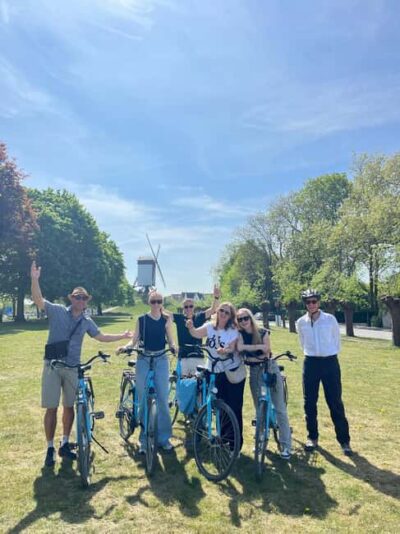
Guided Bike Tour with a Local to Sights & Secrets
Read our review →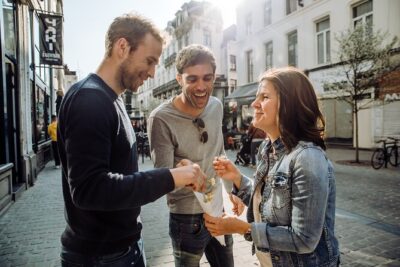
Brussels Highlights & Hidden Gems Private Tour with a Local Guide
Read our review →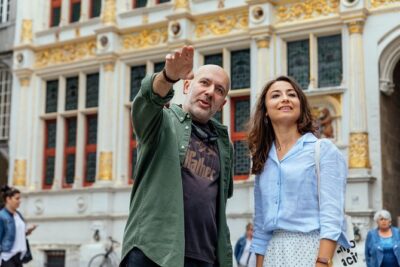
Highlights & Hidden Gems With Locals: Best of Bruges Private Tour
Read our review →
The 10 Tastings of Bruges With Locals: Private Food Tour
Read our review →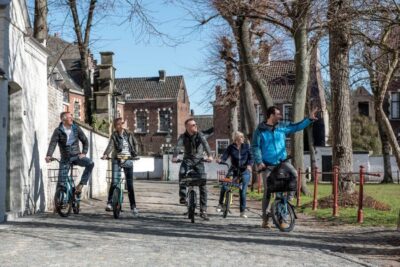
City Highlights and Hidden Gems Guided Bike Tour
Read our review →Browse the lists this tour appears in