
Reviewed · WALKING TOURS
Antwerp: Jewish Neighbourhood Guided Walking Tour
Antwerp’s Jewish quarter tells its story block by block. This two hour walk mixes street level sights with clear explanations about Jewish customs and how the community in Antwerp took shape. It’s not a museum tour, it’s a neighborhood tour, with you moving through the diamond district and the small back streets around Antwerp Central.
I especially like how the guide turns everyday details into real understanding, like kosher food and what the mezuzah by the door represents. I also like the pacing: you get enough time to follow the storyline, and there is room for questions without the whole thing turning into a lecture.
One drawback to consider is that group size can affect how much you get to ask and how personal it feels. Also, synagogues are passed from the outside, not visited inside, so this is more about context than architecture.
In This Review
- Key things that make this tour worth your time
- Walking into Antwerp’s Jewish neighborhood, one street at a time
- Meeting at De Keyserlei and finding your guide fast
- From the diamond district toward smaller Jewish streets
- How the Antwerp Jewish community came into being
- Kosher food, Sabbath, and the meaning of mezuzah
- Passing synagogues, shops, and bakeries without going inside
- Dutch guide, questions allowed, and the human pace
- What makes the guide’s storytelling style so effective
- Price and value: is $22 for a two hour walk worth it?
- Logistics that affect comfort and enjoyment
- Who this tour suits best
- Should you book this Antwerp Jewish neighborhood walking tour?
- FAQ
- Where does the tour start?
- How long is the walking tour?
- What language is the guide speaking?
- Is food or drinks included?
- Do you visit synagogues inside?
- How much does the tour cost?
- Is there free cancellation?
- Can I reserve now and pay later?
Key things that make this tour worth your time
- Two hour focus around Central Station, so you do not waste time getting “to the right area”
- Kosher, Sabbath, and mezuzah explained on the street, not in a classroom
- History first, then customs, which helps the neighborhood make sense
- You see bakeries, shops, and synagogues from the outside, with commentary that ties them together
- Dutch guided tour, with humor and lots of facts highlighted in multiple accounts
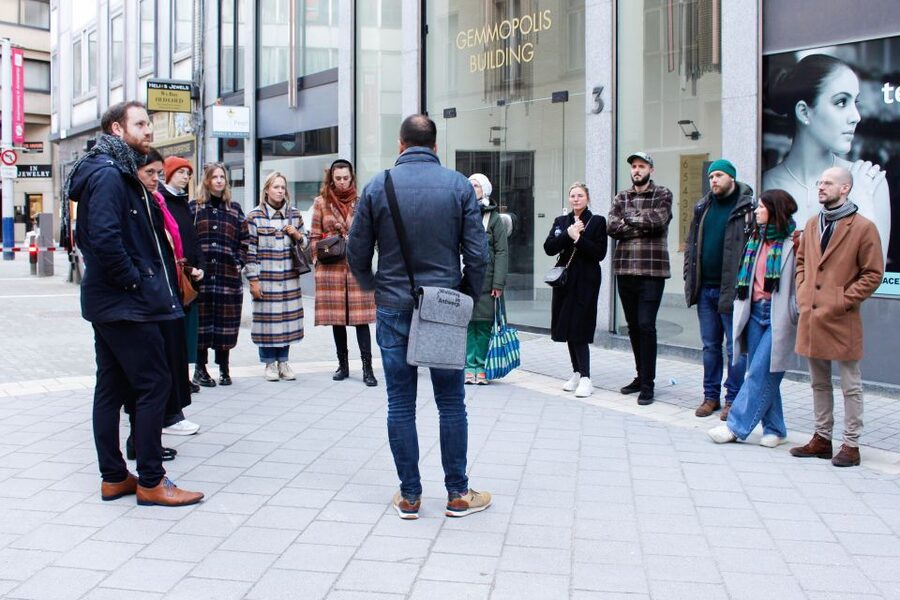
- A practical meeting point: De Keyserlei at the side entrance of Antwerp Central, with a guide in a grey shoulder bag and name tag
More Guided Walks in Antwerp
- Historical Walking Tour: Legends of Antwerp
★ 5.0 · 1,837 reviews - Antwerp: City Highlights Walking Tour
★ 4.7 · 816 reviews - Antwerp: Historical Walking Tour in the Old City
★ 4.8 · 373 reviews - Historical Walking Tour in Antwerp Old City
★ 5.0 · 277 reviews - Evening Walking Tour: The Dark Side of Antwerp
★ 5.0 · 193 reviews
Walking into Antwerp’s Jewish neighborhood, one street at a time
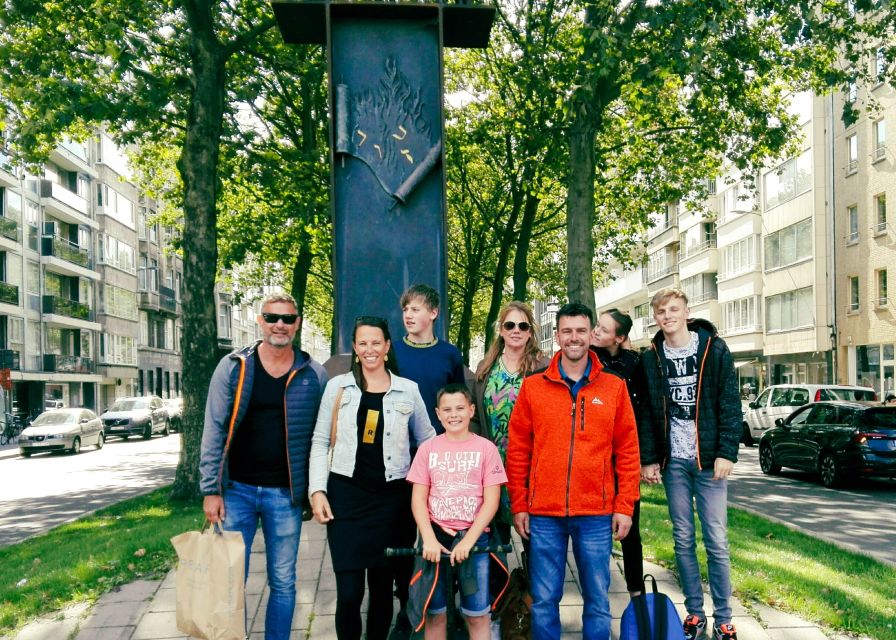
Antwerp has a talent for making history feel present. On this guided walk, you start where most people naturally pass through, near Antwerp Central Station, then you move toward the neighborhood lanes that feel quieter and more local. The whole point is simple: you learn how community life and religious customs show up in ordinary places.
You are also learning through contrast. First you are near the fast flow of the station and the business side of town, then you slide into smaller streets where daily rituals and traditions become the story. That shift matters. It turns “interesting facts” into something you can picture.
The tour is designed to be informative without being heavy. Expect a friendly guide who keeps things moving and uses humor along the way. In multiple accounts, people highlight the guide’s storytelling and ability to explain Jewish tradition in a way that stays clear and human.
Meeting at De Keyserlei and finding your guide fast
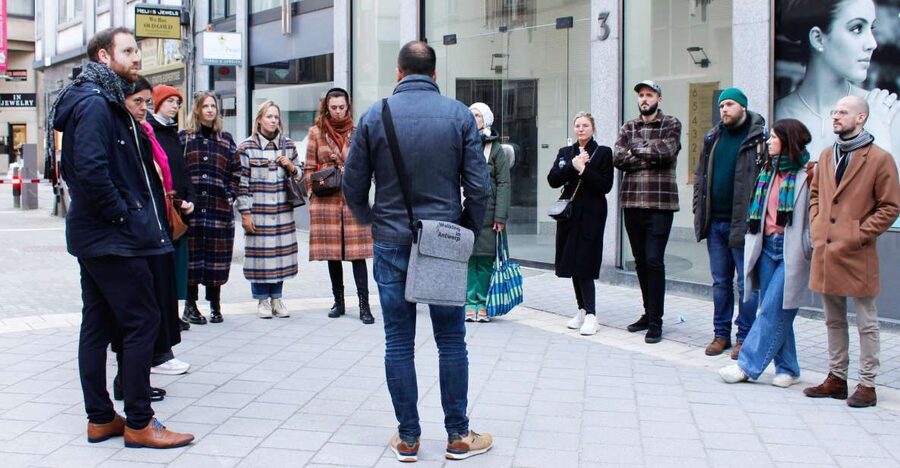
Your tour meeting point is De Keyserlei, at the side entrance of the Central Station. Look for a guide wearing a grey shoulder bag and a name tag. This is the kind of detail that can save you stress, because “Central Station” can mean many entrances and many crowding points.
I suggest you arrive a few minutes early and get oriented before the group forms. If you show up right on time, you might spend your first five minutes trying to spot the right person. Once you are lined up, you are off quickly and you stay on the walking rhythm for the full two hour experience.
One small consideration: a few comments point out that the meeting point could be even easier to understand. So, don’t treat this like you can wander in after checking your phone. Be on the right side of the station entrance and you’ll be fine.
From the diamond district toward smaller Jewish streets
The route takes you around the area surrounding Central Station, including time in the diamond district and then into the small streets of the Jewish quarter. That arc is practical. It helps you understand the neighborhood as part of the city’s larger economic story, not as an isolated pocket.
As you walk, the guide connects the neighborhood to the community’s arrival and growth in Antwerp. Then the commentary shifts into daily life: how kosher food choices show up, how Sabbath practice shapes timing, and how religious identity is marked on doorways.
Walking matters here more than it might on a sightseeing drive. When you move street by street, you naturally slow down at the places where the guide wants you to notice something. It’s the best way to connect “what people do” with “where people do it.”
You’ll also pass Jewish bakeries, shops, and synagogues. A key point: you will not go inside. That keeps the walk flowing and fits the two hour duration, but it also means you should expect exterior views and street level context rather than an interior visit.
How the Antwerp Jewish community came into being
A big part of the tour is the origin story. First you learn how the Jewish community in Antwerp came into being, then you connect that background to what you see today.
This historical framing is valuable for two reasons. One, it gives you a timeline so the customs feel connected instead of random facts. Two, it helps you see why certain types of businesses and community landmarks matter in the first place.
I like tours that start with “why this exists” before “what you are looking at.” Otherwise, you end up memorizing symbols with no emotional or cultural context. Here, the guide uses the walk to build that context, so the neighborhood feels like a living story rather than a list of stops.
Still got an afternoon? Try these:

Kosher food, Sabbath, and the meaning of mezuzah
The tour’s highlight is how it explains Jewish customs you might recognize in everyday life. Even if you are not deeply familiar with Jewish practice, you’ll get clear explanations of three specific ideas:
- Kosher food
You’ll learn about the kinds of customs around food that matter in Jewish life. On a walking tour like this, the point is not just religious trivia. It’s learning how food rules shape what kinds of shops and bakeries thrive in a community.
- Sabbath
You’ll learn about how Sabbath practice influences weekly rhythms. The guide’s explanations help you understand why a community organizes time differently, and why that can be seen in the way neighborhoods function.
- Mezuzah by the door
You’ll hear about the mezuzah, a tradition linked to doors and home life. Seeing this kind of detail in your mind’s eye makes the neighborhood more legible. It also turns a small element you might otherwise miss into something meaningful.
These topics are a strong mix because they cover home life, weekly routine, and food culture. That balance helps you remember the tour long after you are back at your hotel.
Passing synagogues, shops, and bakeries without going inside
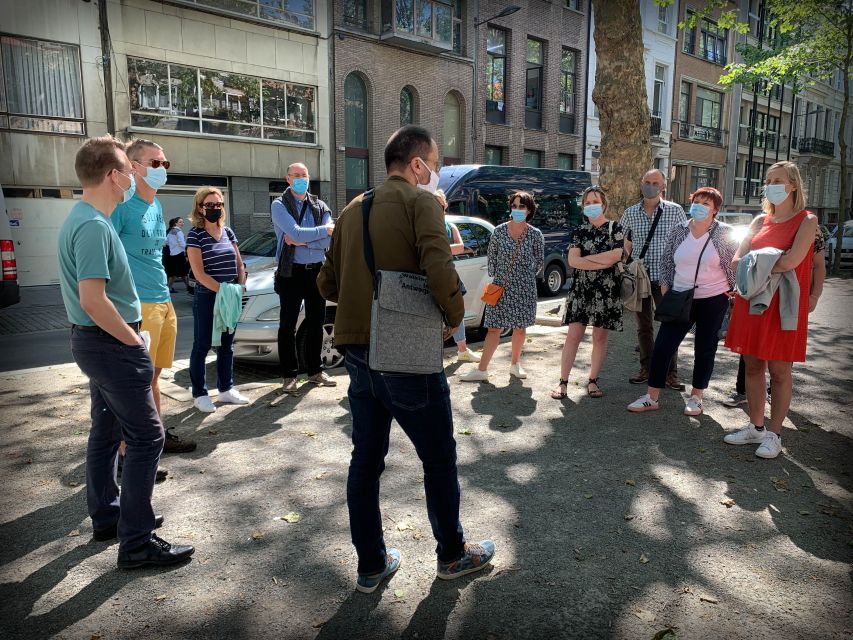
You’ll walk past synagogues and community businesses such as Jewish bakeries and shops. You will not enter them, so think of this as a neighborhood interpretation walk, not a sightseeing crawl with indoor visits.
This approach can be a plus. When you spend two hours outdoors with guidance, you keep the focus on the street. The guide can connect what you see with how people live, and you do not lose time on ticket lines or entry rules.
Still, if you are hoping to see the interior of a synagogue or get architectural details, you may feel a bit constrained. The best fit is someone who wants context, symbols, and community meaning more than interior access.
Dutch guide, questions allowed, and the human pace
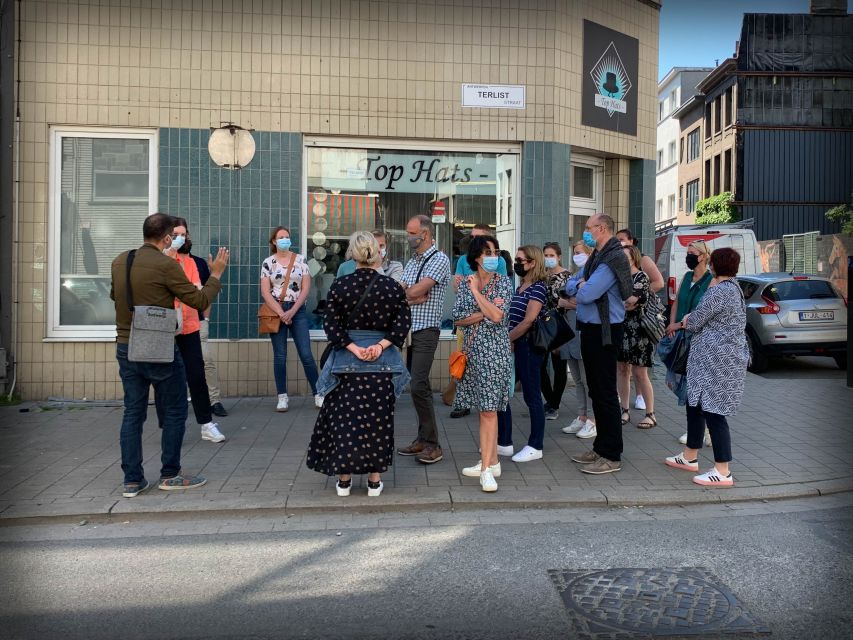
The tour runs with a live Dutch guide. If you do not speak Dutch well, you might still follow the rhythm and the big points, but your understanding will depend on your comfort level. There are no other language options listed, so plan accordingly.
The tone seems designed to stay friendly and engaging. Multiple comments mention humor, lots of facts, and the chance to ask questions. That combination matters. You want a guide who can explain without talking down. You also want a guide who gives you permission to stop and ask what you are genuinely curious about.
Group size is the wildcard. One account notes it was too large and that affected the experience. Other accounts say the group size was ideal. Here’s the practical takeaway: if you care about personal questions, you’ll prefer a smaller group.
What makes the guide’s storytelling style so effective
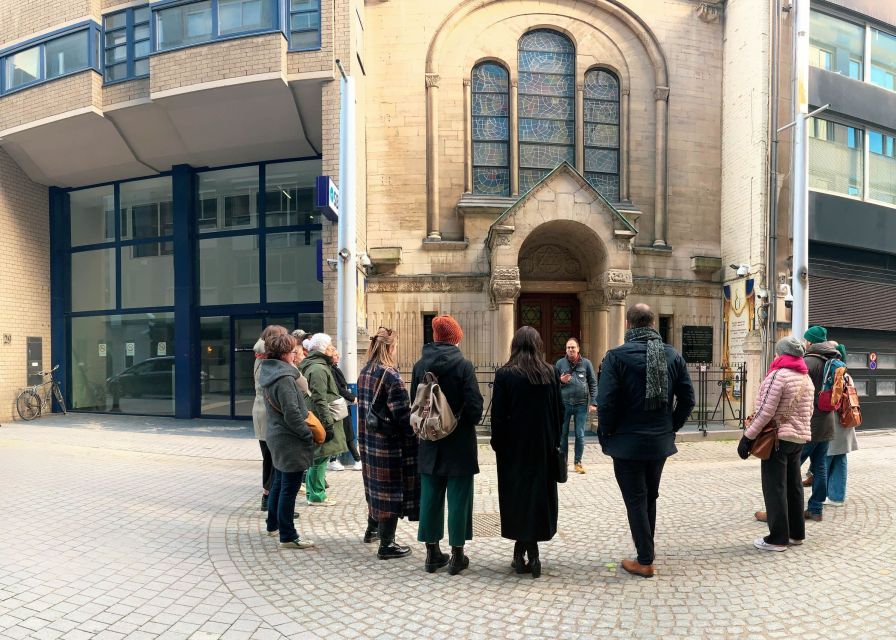
This tour stands or falls on the guide. The most praised elements in feedback point to the same themes: humor, clear explanations, and a sense of timing.
When a guide mixes context with custom details, you stop thinking in trivia and start thinking like a visitor who understands the rules of daily life. The customs the tour covers, kosher food, Sabbath, and mezuzah traditions, are not “big loud” topics. They are the kinds of things you might miss unless someone points them out and explains why they matter.
One name that comes up in comments is Ari, described as friendly and engaging. Even if your guide is not Ari, you can use the pattern as a clue. You want a guide who can keep the mood light while still teaching you something specific.
Price and value: is $22 for a two hour walk worth it?
At $22 per person for a two hour guided walking tour, you are paying for three things: a focused route, live interpretation, and a guided explanation of Jewish customs and neighborhood history.
Is it expensive? For a private or small group specialist tour, $22 is often in the reasonable zone for a city like Antwerp. The value comes from the fact that it is not just passing landmarks. You get guided storytelling about Jewish community formation and everyday traditions.
The bigger question is what you want most out of your day. If you love walking tours that explain “how people live” and you prefer culture over grand monuments, this price feels fair. If you only want photo stops and you dislike structured guides, you might feel like you could do the area on your own.
Also, note that food and drinks are not included. If you plan to snack during or after the tour, budget for that separately.
Logistics that affect comfort and enjoyment
This is a walking tour, so comfort matters. Wear shoes that handle uneven sidewalks and small turns. Antwerp weather can swing, even when it looks calm at first, so consider a light layer you can add or remove.
Plan your expectations about what you will see. The tour includes passing Jewish bakeries, shops, and synagogues, with commentary, but there is no mention of interior visits. If you want an indoor museum style experience, this might not match your idea of a full tour.
One more practical note: the meeting point is specific, De Keyserlei at the side entrance of Central Station. Central Station is big. Give yourself a few minutes extra so you do not start the walk stressed.
Who this tour suits best
This tour is a strong match for:
- People who like walking tours with context, not just landmarks
- Travelers who want a clearer understanding of Jewish tradition through real neighborhood examples
- Visitors comfortable with a Dutch guided experience
- Anyone who enjoys learning the “why” behind what you see, especially community history and customs
It might be a weaker fit if:
- You only want to enter sites and view interiors
- You cannot follow Dutch at all and prefer a language you do understand
- You dislike guided groups and would rather explore independently
If you’re the type who likes to pause and ask questions, this style should work well. The tour is built to leave space for that.
Should you book this Antwerp Jewish neighborhood walking tour?
If your goal is to understand Antwerp’s Jewish quarter through customs you can visualize, I think this is a smart booking. The tour covers core traditions like kosher food, Sabbath, and the mezuzah by the door, then ties them to how the community formed in Antwerp. Add in the convenient area around Central Station and the two hour format, and you get a focused cultural experience that does not eat your whole day.
Book it if you like guided storytelling and you are comfortable with a Dutch live guide. Skip it if you are only after indoor visits or you need multilingual interpretation.
FAQ
Where does the tour start?
It starts at De Keyserlei, at the side entrance of Antwerp Central Station.
How long is the walking tour?
The tour lasts about two hours.
What language is the guide speaking?
The live tour guide speaks Dutch.
Is food or drinks included?
No. Food and drinks are not included.
Do you visit synagogues inside?
No. The tour passes synagogues, but you will not go inside.
How much does the tour cost?
The price is listed as $22 per person.
Is there free cancellation?
Yes, you can cancel up to 24 hours in advance for a full refund.
Can I reserve now and pay later?
Yes, the option to reserve now and pay later is listed.
Latest from Antwerp



Walking Tours, compared.
Small Group Boat Cruise and Guided Walking Tour
Read our review →
Historical Walking Tour with Chocolate & Waffle Tasting
Read our review →
Brussels Walking and Tasting Tour (Beers,Chocolates&Fries/Waffle)
Read our review →
Browse the lists this tour appears in