
Reviewed · WALKING TOURS
Liège Self-Guided Walking Tour
Liège rewards slow strolling. This self-guided walk strings together major sights with smartphone audioguides so you can go at your pace, not a fixed group march. I especially like that the route keeps you moving through real neighborhoods, from the museum area to the river park, with several stops that cost nothing. One thing to consider: you’ll want a phone with reliable internet, since the tour is not fully offline.
Two big pluses for me. First, Le Grand Curtius and the Collegiate Church of Saint Bartholomew are major landmarks, but the tour still gives you time to pause, read, and look around. Second, you get a mix of built heritage and views, from the red-and-white church to the climb up Montagne de Bueren, then down to La Boverie for a calmer finish. The main catch is that some of the explanation text can feel long, and the phone map experience may not feel perfectly linked to the commentary.
If you like planning a little, walking a little, and letting the city do the rest, this is a solid way to see Liège in about 2.5 hours.
In This Review
- Key takeaways
- How the Liège smartphone tour works, no app needed
- Stop 1: Le Grand Curtius Museum, grand building time
- Stop 2: Collegiate Church of Saint Bartholomew, red and white Romanesque
- Stop 3: Montagne de Bueren, stairs with citywide views
- Stop 4: Coteaux de la Citadelle, green paths and quiet breaks
- Stop 5: Place Saint-Lambert, historic heart at street level
- Stop 6: Le Carré, cafés and nightlife energy
- Stop 7: Saint Paul’s Cathedral of Liège, Gothic facade focus
- Stop 8: La Boverie, end with a riverside stroll
- Timing and pace, how to make 2.5 hours feel unhurried
- Price and value, what you actually pay for
- The one thing to watch: phone flow and text length
- Who this tour suits best in Liège
- Should you book this Liège Self-Guided Walking Tour?
Key takeaways
- Smartphone self-guided format, no physical guide and no app required
- Audioguide at every stop, available in multiple languages
- 2 paid stops max, with the rest of the route free to visit
- Real views and real streets, from Montagne de Bueren to Le Carré
- Flexible pacing, built around short visits so you can pause for a coffee
More Guided Walks in Liege:
- Liege Walking Tours
★ 4.5 · 50 reviews - Liege Private Walking Tour
★ 4.3 · 10 reviews - Liege Highlights Half Day Private Walking Tour
★ 5.0 · 2 reviews - Bruges: Small Group Boat Cruise and Guided Walking Tour
★ 4.8 · 4,102 reviews - Brussels: Guided Walking Tour
★ 4.6 · 3,560 reviews
How the Liège smartphone tour works, no app needed
This is a self-guided walking tour on your smartphone. The headline is simple: no app required. You use your phone to follow along and hear the audioguide for each point of interest. That means you can start, stop, and take breaks whenever you want, instead of feeling rushed because the group has to stay together.
Plan on about 2 hours 30 minutes total. Each stop is paced around roughly 15 minutes, so you get enough time to look, listen, and take a few photos without spending your whole day in a single building. It also helps you keep your energy steady, because you know the climb is coming and you can pace yourself.
One practical consideration is that internet is needed on your phone. The tour is not described as something you can download for offline use, so if your mobile data is weak, it’s smart to think about where you’ll connect before you start.
Finally, the tour is offered in English and also includes multiple languages: Deutsch, Italiano, Français, Español, Português, and 中文. If you are the type who likes switching languages depending on how tired you feel, you can do that here.
Stop 1: Le Grand Curtius Museum, grand building time
Your walk starts at Le Grand Curtius Museum (Féronstrée 136, 4000 Liège). Even if you do not go inside for a full visit, the building itself sets the tone. Think of it as one of those places where the architecture signals you are in a city that cares about its past.
The tour gives you about 15 minutes here, and it’s explicitly noted that an admission ticket is not included. In other words, the audioguide helps you understand what you are looking at, but if you want the museum collections, you’ll need to handle tickets separately.
Value-wise, this is a nice opener because it anchors the rest of your walk. You are not jumping straight into random streets. You start with a landmark, then you move toward Romanesque church details, a steep viewpoint climb, and neighborhood life.
A tip: when a tour starts with a museum stop, you do not have to “finish the museum.” Use the time for orientation, photos, and any quick look you want, then commit the full attention of your walk to the outdoor sights.
Stop 2: Collegiate Church of Saint Bartholomew, red and white Romanesque
Next up is the Collegiate Church of Saint Bartholomew, also about 15 minutes. The big visual cue here is the distinctive red-and-white exterior, tied to Romanesque architecture. This is the kind of stop where you can slow down because the facade has enough detail to reward a careful look.
As with the museum, an admission ticket is not included, so you decide whether you want to do more than just the exterior and the immediate surrounding area. If you skip interior time, you can still get value out of the audioguide by using it as a “what am I seeing” guide for the facade.
Why I like this second stop in the sequence: it gives you variety without exhausting you. After a heavier museum start, you shift to architecture you can study from outside, then you head toward one of Liège’s best known stair-and-view experiences.
If you are sensitive to getting locked into long texts, keep an eye on your phone volume and screen time. The commentary is meant to be informative, but you can always pause or skim if you want.
Stop 3: Montagne de Bueren, stairs with citywide views
Now for the star energy: Montagne de Bueren. The tour schedules about 15 minutes, and it’s described as a famous staircase with spectacular views over Liège. Even if you do not consider yourself a “stairs person,” this is a sight worth planning for, because the payoff is location-based, not museum-based.
Practical advice: treat this as a pace test. Start slower than you think you need to, especially if the day is warm. You can pause on the way up and still count it as time on the route, since the tour is self-guided and designed for you to manage your own stopping points.
Also, this is one of those stops that benefits from doing it in the right light. If you can choose your walking time, late afternoon can give you nice contrast for the city view. If it is overcast, you still get the “you are high up now” feeling, just with softer colors.
The key value of this stop is that it turns your walking route into a viewpoint experience. You are not only moving from A to B, you are earning a view.
More Self-Guided Trails in Liege:
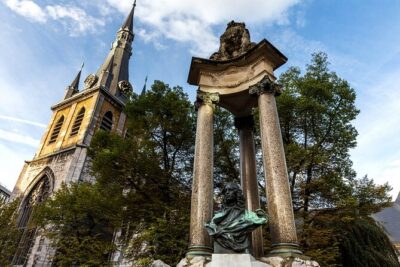
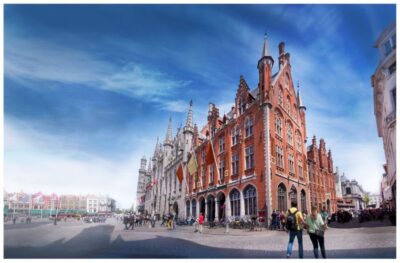
Stop 4: Coteaux de la Citadelle, green paths and quiet breaks
After stairs, you get a different kind of Liège: Coteaux de la Citadelle. The route describes it as a green haven with scenic surprises. You get another 15 minutes, and this is where the walk starts to feel more like a stroll than a checklist.
Even though the tour keeps each stop short, this kind of outdoor green area helps you reset. You are back to looking around at trees, slopes, and the calmer edges of the city. If you have been concentrating on architecture details, this is your chance to let your eyes wander.
Also, this stop sets you up psychologically for what comes next. You move from height and views into a softer pace, which makes the central squares feel more reachable instead of immediately tiring.
Stop 5: Place Saint-Lambert, historic heart at street level
Your next landmark is Place Saint-Lambert, described as the historic heart of the city. Expect about 15 minutes. A place like this is best approached with a simple mindset: arrive, look around, then decide where you want to stand for photos or people-watching.
The audioguide here is useful because square layouts can look obvious until someone explains why it matters historically. You do not need to take every word in. Use the guide to help you read what you are seeing.
One practical move that I think fits this tour: treat the square as a quick regroup point. If you want a coffee, this is a place where you can naturally pause without feeling like you are breaking the route.
Stop 6: Le Carré, cafés and nightlife energy
Then it’s Le Carré, known for cafés and nightlife. Again, your stop is around 15 minutes, and the aim is atmosphere plus street-level navigation. This is less about interiors and more about how the city feels when you are walking through it.
If you visit later in the day, you might notice the area shift from daytime browsing to evening social energy. The good part of having a self-guided format is that you can linger if the vibe suits you, then continue when you want.
A balanced note: if you prefer quiet sightseeing, you might not want to extend your time here too long. But for many visitors, this stop is where Liège stops feeling like a set of sights and starts feeling like a lived-in city.
Stop 7: Saint Paul’s Cathedral of Liège, Gothic facade focus
Next comes Saint Paul’s Cathedral of Liège, with about 15 minutes. The tour highlights the facade as Gothic architecture, so you know what to look for: the character you see on the outside rather than expecting a quick “grab and go” interior visit.
The tour notes that it is a free stop. That does not mean you have to skip everything inside if you choose to go further, but it does mean you can get the key cathedral experience without paying anything just to stand and look.
This stop works well after Le Carré because it gives your eyes something structured. Squares and café streets can be visually busy. A cathedral facade gives you lines, symmetry cues, and that “focus” feeling your brain likes after a social street.
If you are photographing: aim for a few angles rather than one shot. Cathedrals often change in character when you shift position by just a little.
Stop 8: La Boverie, end with a riverside stroll
Your walk finishes at La Boverie (Parc de la Boverie 3, 4020 Liège). The tour schedules about 15 minutes, and it describes the park as a tranquil riverside spot perfect for a relaxing stroll.
This ending matters more than you might think. Many city walks end right back where they started, which leaves you feeling like you are “done” instead of “released.” Here, you end on green space, water-adjacent scenery, and a slower pace. It’s a nice way to keep the last part of your day pleasant.
Also, the provided information lists opening hours for the date range shown as Monday through Sunday from 12:00 AM to 11:30 PM. In plain terms, the park is presented as available for late-day or evening wandering during that window.
Practical idea: use this ending to cool down, stretch your legs, and decide if you want to stay in the area for dinner. The walk has already guided you through the core sights, so you are free now.
Timing and pace, how to make 2.5 hours feel unhurried
The tour is built around short visits, roughly 15 minutes per stop. That’s ideal for people who like to see a lot without sprinting. It’s also helpful if you are traveling with mixed interests, because each stop has a clear visual hook: museum grandeur, red Romanesque facade, stairs and views, green paths, central square, café streets, cathedral facade, and then a park ending.
Still, be strategic. Montagne de Bueren is the point most people will feel in their legs. Plan to go slightly slower on the stairs so the rest of your walk does not feel like damage control.
If you want the day to flow smoothly, I suggest the simplest routine:
- Start with the museum stop, do what you want, then move on.
- Stay present at the church and the cathedral facades, since architecture rewards attention.
- Treat the stair stop like a mini workout with a viewpoint reward.
- Use the parks and squares as mental reset moments.
And if you need a break, you can take one without messing up the day. One review highlighted that you can fit in a coffee break in between, and that matches the self-guided structure here. The route is paced, not policed.
Price and value, what you actually pay for
There is no admission fee information for the overall tour itself in the provided details, so I cannot tell you a price number. But I can tell you how the value is built.
You do not pay for most of the route’s highlights. Several stops are explicitly listed as free to visit: Montagne de Bueren area, Coteaux de la Citadelle, Place Saint-Lambert, Le Carré, Saint Paul’s Cathedral, and La Boverie. That means your money goes mostly toward the self-guided experience: smartphone route guidance and audioguide content.
The two places where tickets are not included are the Le Grand Curtius Museum and the Collegiate Church of Saint Bartholomew. This is actually a good arrangement. It gives you flexibility. If you want the interior museum or deeper access, you can pay for that. If you prefer to keep it light, you can focus on what you can see on the outside and with the audioguide.
So the value question becomes: do you want at least a quick look inside those two sites? If yes, this tour can bundle a lot of structure into a short day. If no, you still get a very coherent route of major exterior landmarks and neighborhood vibes.
The one thing to watch: phone flow and text length
Here’s the drawback that could annoy some people. One feedback note said you cannot combine the commentary and the road on the map in a way that feels simple, and another concern was that the explanations can be far too extensive. Translation: if your ideal travel style is quick taps and minimal reading, the guide might feel like too much text on a small screen.
What I recommend to make this tour still work for your brain:
- Keep your phone volume on, so you do not have to stare at the screen.
- If a segment feels too long, pause the commentary and just look around for a minute.
- Use your eyes first, then let the audioguide add the context.
This is not a flaw that ruins the route. It just means you should adopt a flexible approach instead of expecting a perfectly frictionless “map plus audio equals one smooth thing” experience.
Who this tour suits best in Liège
This walk is best if you like:
- Self-paced sightseeing instead of waiting for a group
- A blend of architecture, views, parks, and city streets
- Short stops you can comfortably fit into a half-day plan
- Smartphone guidance in multiple languages
It also fits solo travelers, couples, and small groups because it is described as a private activity where only your group participates. That usually means fewer social interruptions and more control over where you pause.
If you are traveling with mobility limitations, the tour says most travelers can participate, but remember there is a staircase climb involved at Montagne de Bueren. If stairs are a deal-breaker, you might want to think carefully about whether you will be able to manage that part comfortably.
And if you travel with a service animal, it is allowed.
Should you book this Liège Self-Guided Walking Tour?
Book it if you want a smart, low-pressure way to cover Liège’s highlights in about 2.5 hours, without hunting down information on your own. The audioguide at every stop, the mix of paid and free attractions, and the ending at La Boverie make it a practical choice for first-timers or for anyone who wants a structured walk without rigid timing.
Skip or reconsider if you hate using your phone for navigation and you strongly prefer a map display that stays perfectly synchronized with audio text. If that sounds like you, plan to rely more on audio than on reading, and be ready to skim.
If you like cities that reward attention, this route is an efficient way to get the “Liège feel,” from red-and-white church details to stairway views, then out into the green calm of the riverside park.
Latest from Liege






Walking Tours, compared.
Small Group Boat Cruise and Guided Walking Tour
Read our review →
Historical Walking Tour with Chocolate & Waffle Tasting
Read our review →
Brussels Walking and Tasting Tour (Beers,Chocolates&Fries/Waffle)
Read our review →
Browse the lists this tour appears in