
Reviewed · GHENT EXPERIENCES
Ghent Running and Sightseeing Tour
Ghent gets better before breakfast. This 45-minute running and sightseeing experience lets you see big landmarks and quieter corners while the city is still waking up. Instead of a slow walking loop, you cover more ground with a guide who keeps it relaxed, with stops for stories and photos.
I really like the group-friendly pace. This is a leisure run or jog, not a competition, and the guide adjusts to you, with regular landmark pauses so you are sightseeing, not suffering.
The main drawback is simple: this is a running tour, and it is not suitable if you have mobility issues, back problems, or certain medical conditions. If you want a purely seated or slow walking option, plan something else.
In This Review
- Key points I would plan around
- Starting at Kouter near the Ghent Opera, before the crowds form
- The “run” part is an easy jog with frequent stops
- Why Kouter and the World Expo connection is more than trivia
- Korenlei, Graslei, and the medieval trade story by the water
- Portus Ganda and Ghent’s origins you can actually visualize
- Graffiti Street, cool pictures, and the value of being early
- The three towers: St. Bavo Cathedral, the Belfry, and St. Nicholas Church
- Ghent quarters, plus why the Opera and Handelsbeurs show up
- Price and value: $53 for 45 minutes of guided, moving sightseeing
- The guide matters: what to look for in the way they pace and explain
- Who this Ghent running tour is best for
- Practical tips before you go
- Should you book the Ghent Running and Sightseeing Tour?
- FAQ
- How long is the Ghent Running and Sightseeing Tour?
- Where do I meet for the tour?
- What pace is the run-jog?
- Is the tour in English?
- What’s included in the price?
- What should I bring?
- Is water included?
- Is the tour suitable for children or for people with mobility issues?
Key points I would plan around
- Starts at the Ghent Opera on Kouter, a prime square to orient yourself fast
- World Expo ties at Kouter, plus Middle Ages trade stories at nearby river viewpoints
- Portus Ganda to Ghent’s beginnings, linking geography to the city’s rise
- Graffiti Street photo moments, a quick route that feels more modern than the postcard route
- Three Ghent towers in one tour, St. Bavo Cathedral, the Belfry, and St. Nicholas Church
- A lively but easy format, enough movement to feel accomplished in 45 minutes
A few more Ghent afternoons to weigh up
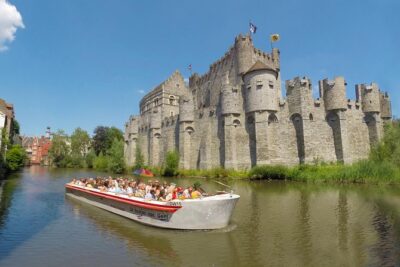
- Ghent: 50-Minute Medieval Center Guided Boat Trip
★ 4.5 · 5,637 reviews - Historical Walking Tour: Legends of Gent
★ 5.0 · 1,761 reviews - Ghent: 40 Minute Medieval Center Guided Boat Tour
★ 4.4 · 884 reviews - Evening Tour of the Dark Side of Gent
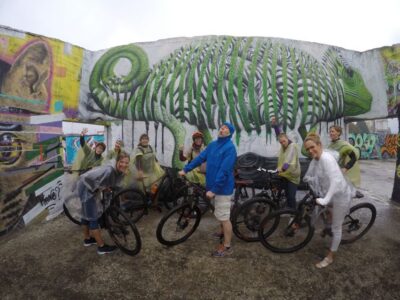
★ 5.0 · 646 reviews - Ghent Bike Tour Off-the-beaten-track
★ 5.0 · 505 reviews
Starting at Kouter near the Ghent Opera, before the crowds form
This tour begins outside the main entrance of the Ghent Opera, near Kouter, a large square that works like a natural launch pad. I love starting here because Kouter is central enough to make sense immediately, but not so cramped that you feel stuck in one narrow street.
Right at the start, there is a quick welcome and a brief warm-up. Then you head out to see Ghent as it shifts from quiet to active, which is exactly why this works well as a first-day activity. You will pick up orientation for later in your trip, even if you do not memorize every detail.
One more practical perk: the meeting point is easy to find in a “real city” way, outside a major landmark (the opera). That matters when you are trying to be on time and still enjoy the morning.
The “run” part is an easy jog with frequent stops
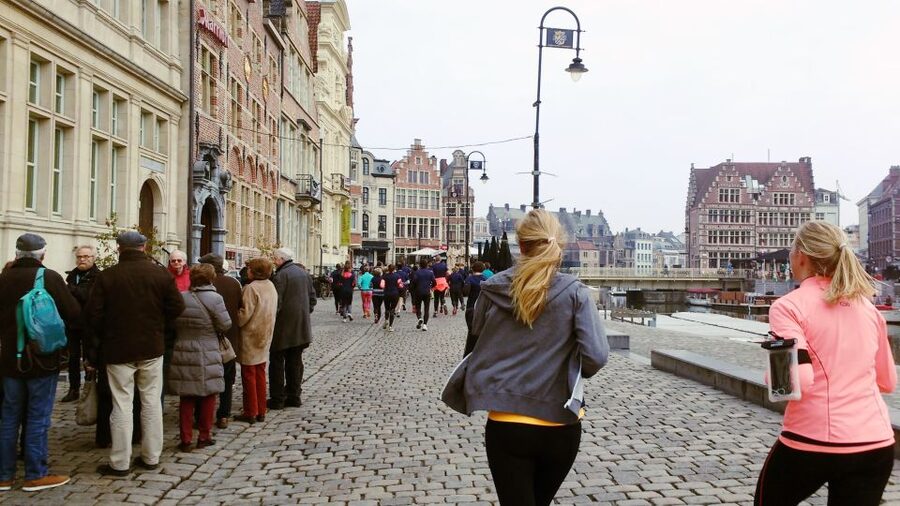
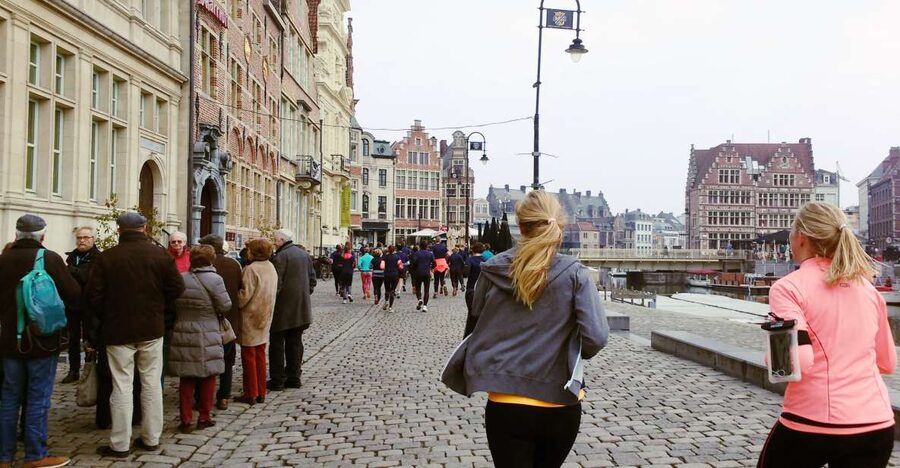
The biggest thing to understand is the tone. This is a leisurely run or jog designed to help you cover more ground than a typical walking tour, but it is not a race. The guide adjusts pace to the group, and you make regular stops to learn what you are seeing.
If you can jog comfortably for short stretches, you are likely fine. If you prefer a slower shuffle pace, you still get the benefit of moving through more areas without waiting in a traffic-like pace line.
I also like that the stops are part of the experience, not an interruption. You are not just running past sights, you are pausing at key points to get the “why it matters” version of Ghent. That makes the route feel like a story arc instead of a checklist.
You should wear sports shoes and sportswear. Water is not included, so if you know you get thirsty easily, bring a bottle anyway. This is one of those “small prep, big comfort” moments.
Why Kouter and the World Expo connection is more than trivia
Your first sightseeing theme is Kouter, and the guide explains how it relates to the World Expo. I like this kind of context early because it helps you read Ghent like a living place, not just a museum city.
Even if you only catch the main points, you will start noticing how Ghent’s central spaces connect to wider world events and trade over time. It is the sort of framing that makes later visits feel clearer. You are seeing the city’s layers, from medieval economy to modern cultural life.
Then you shift toward the river area and the medieval trade story, which is where Ghent suddenly feels very specific, very local, and very earned.
Korenlei, Graslei, and the medieval trade story by the water
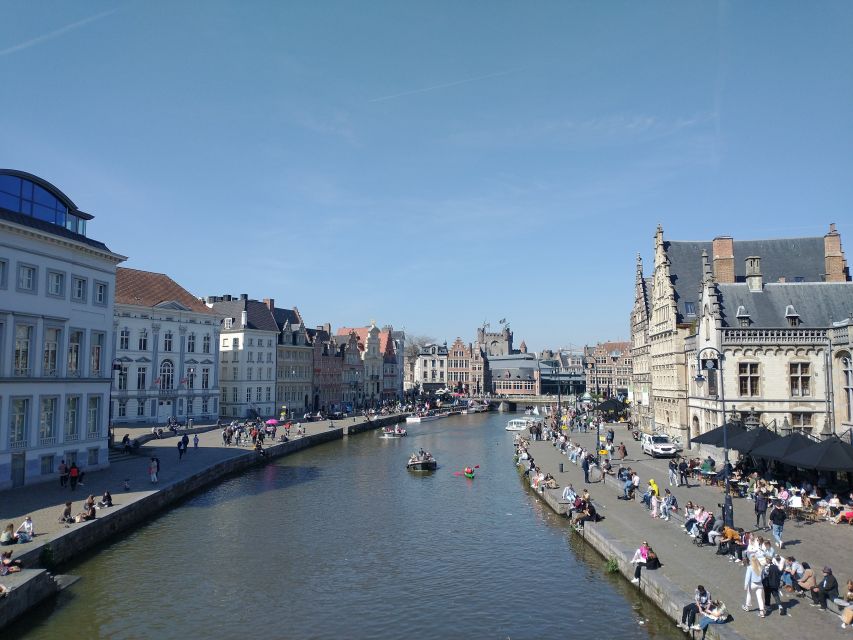
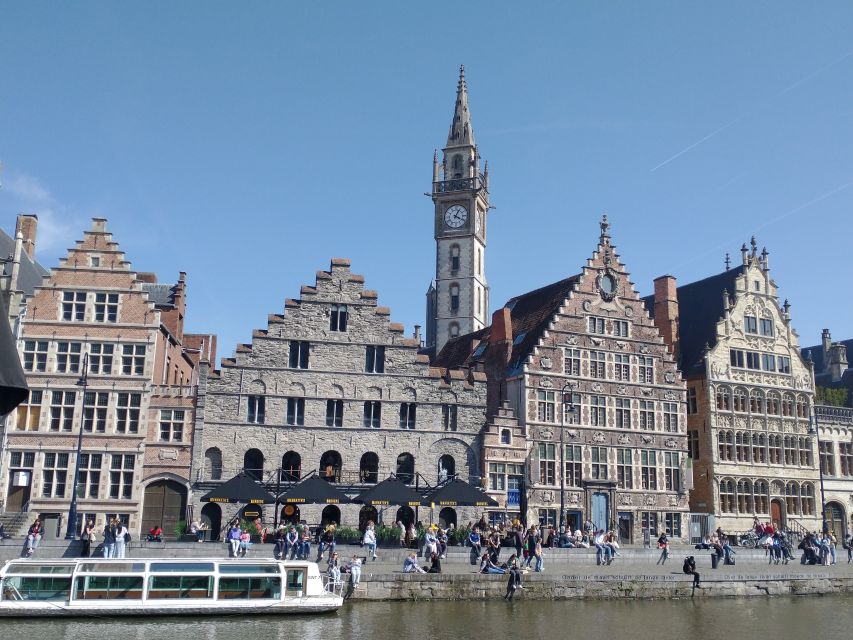
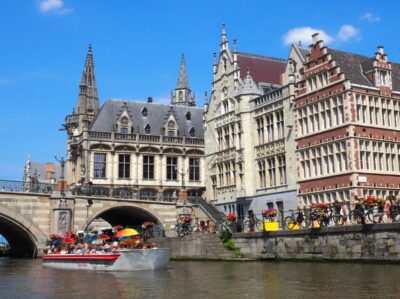
One of the early highlights is learning about trade at Korenlei and Graslei during the Middle Ages. These river viewpoints are famous now for their scenery, but on this tour you get the bigger picture: why people gathered there, and how the water shaped Ghent’s growth.
This is not just “pretty buildings.” You will connect the architecture and street angles to commerce and movement. It turns a scenic spot into a working-history explanation, and it helps you understand why the area looks the way it does.
I find that this approach gives you a better memory. After this, when you pass the same views later on your own, you are not only seeing the facade. You know what role it played.
Still got an afternoon? Try these:
Portus Ganda and Ghent’s origins you can actually visualize
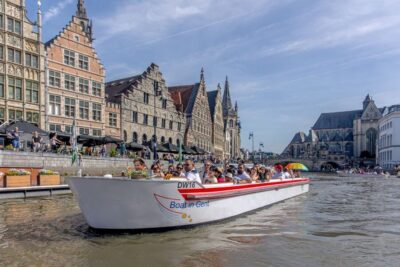
Next comes the fascinating link between Portus Ganda and the birth of Ghent. You are shown the relationship between the waterways, the settlement area, and why the city emerged where it did.
What I appreciate here is that it is tied to geography you will walk through. This is how you avoid the usual “history lecture” problem. You are moving, looking, and making connections at walking speed.
If Ghent history is one of your travel interests, this is a strong segment. If history is not your thing, you can still enjoy it because the guide keeps it grounded in places you can see.
Graffiti Street, cool pictures, and the value of being early
You will run through Graffiti Street and stop for some photo opportunities. This is a smart inclusion because it breaks up the classic landmark rhythm. You also get a modern, street-level feel that many “big sight” tours ignore.
Morning timing helps here. When you are early, you are more likely to get clean photo angles without everyone standing in the same exact spot. You also get that “city waking up” vibe that the tour promises, the one that makes photos look more natural and less staged.
Keep in mind that you will be sharing time with other group members at the stops. If you care about a specific shot, arrive ready with your phone or camera set and take it during the guide’s pause.
The three towers: St. Bavo Cathedral, the Belfry, and St. Nicholas Church
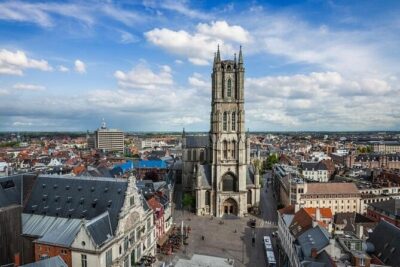
A big reason to choose this format is that you get three major towers within a short window. On this tour, you stop at:
- St. Bavo Cathedral
- Ghent Belfry
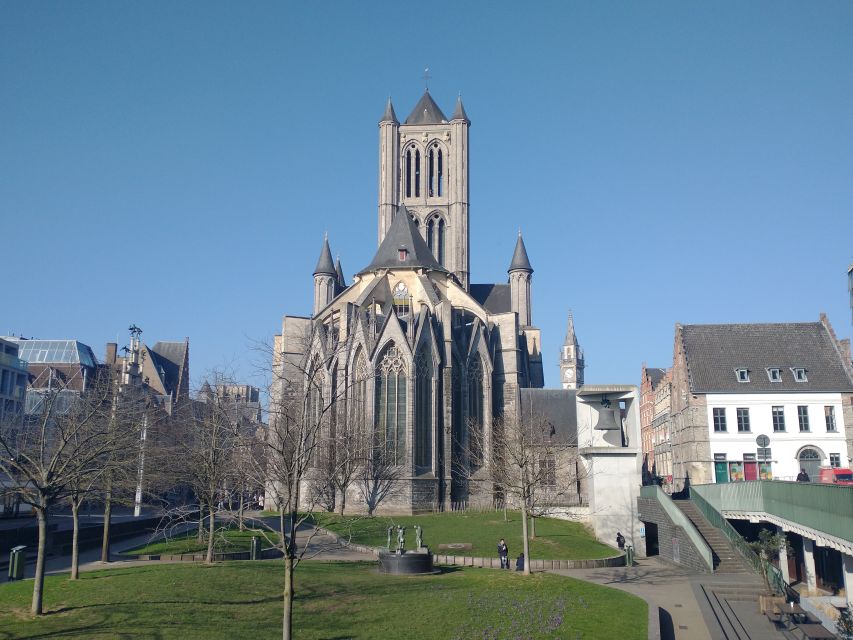
- St. Nicholas Church
I like grouping these because they teach you the city’s skyline language quickly. You start to see how Ghent uses towers as landmarks for different eras and functions.
St. Bavo Cathedral is often the kind of place you want to linger longer. Here, the stop is timed so you learn the essentials, then keep moving with a sense of what to look for if you return later.
The Ghent Belfry is the kind of tower that changes how you read Ghent’s civic identity. Even if you do not go deep into every detail, the guide’s explanation gives you a “this is why it matters” anchor.
Finally, St. Nicholas Church helps round out the tower trio, giving you a clearer sense of how religious buildings and civic symbols share the same horizon line.
One caution: because the tour is 45 minutes, each tower stop is not an all-you-can-eat visit. You will get highlights and story points, which is ideal for orientation and motivation. If you want a long interior experience, plan to come back separately.
Ghent quarters, plus why the Opera and Handelsbeurs show up
Between landmarks, the guide explains different quarters of Ghent and why the Opera and Handelsbeurs matter.
This is another part I appreciate because it connects the dots between “what you see” and “what the city does.” The Opera House is not just a pretty building on your route. You get context for why it is important in Ghent’s cultural life, and you learn how Handelsbeurs fits into the city’s business and public identity.
This segment helps you feel more confident navigating later. You stop seeing Ghent as a set of sights, and start seeing it as neighborhoods with roles.
Price and value: $53 for 45 minutes of guided, moving sightseeing
The price is listed at $53 per person for 45 minutes. On paper, that can look short. In practice, the value comes from the mix: you get a local guide, landmark storytelling, some non-touristy spots, and photo opportunities, all wrapped around the benefit of an easy run that covers more area than a straight walking tour.
Think of it as a “smart start” to your Ghent time. In one compact session, you get:
- A route that hits the city’s big landmarks
- A thread of history that makes the sights make sense
- A feel for which areas you will want to revisit at a slower pace
I also read the format as good value if you want exercise without planning a self-guided jog. You are not stuck figuring out what to see in what order. Your time is guided.
If you are traveling with limited time, this is especially useful. If you have a full day and prefer deep interiors, this might still be worth it, but you will likely add museum stops afterward.
The guide matters: what to look for in the way they pace and explain
The tour is run by Tours of Ghent with an English live guide. The pace adjustment is a core feature. One recent run was highlighted for how the guide, Sophie, adapted the tour to conditions of the day while keeping it enjoyable and well-paced.
What should you look for when booking this kind of tour? A guide who can explain history at walking speed, handle photo stops smoothly, and keep the group moving without pushing anyone. The format here is built around those needs, which is why it works for people who are not “fitness gurus.”
Who this Ghent running tour is best for
This experience is for you if you want:
- A way to see Ghent early, with that waking-up atmosphere
- A relaxed jog that still feels like a real outing
- Landmark stops plus history explanations at each pause
- A route that goes beyond only the most obvious tourist center spots
It is not suitable for:
- Pregnant women
- People with back problems
- People with mobility impairments
- Children under 18
- People with pre-existing medical conditions
So be honest with yourself about comfort and safety. If running is uncomfortable, pick a different sightseeing style.
Practical tips before you go
Bring:
- Your passport or ID card (having ID on you is mandatory in Belgium)
- Sports shoes and sportswear
Plan on:
- Bringing water since it is recommended but not included
- Skipping smoking during the tour, since it is not allowed
- No audio recording, since audio recording is not permitted
Also, check your start time availability. The tour is 45 minutes, so you will want to fit it into your morning schedule without rushing.
Should you book the Ghent Running and Sightseeing Tour?
Book it if you want a fast, friendly way to get oriented in Ghent, and you enjoy learning while moving. The mix of Kouter, river-area history like Korenlei and Graslei and Portus Ganda, plus the landmark trio of St. Bavo Cathedral, Ghent Belfry, and St. Nicholas Church makes this tour feel efficient without being rushed.
Skip it if you are looking for an easy walk only, or if running is not a good idea for your body. The pace and the format are part of the experience, so you would be paying for something you cannot use.
If you are the type who likes to start the day with momentum and ends up with a short list of places to return to, this one is a strong choice.
FAQ
How long is the Ghent Running and Sightseeing Tour?
The tour lasts 45 minutes.
Where do I meet for the tour?
You meet outside the main entrance of the Ghent Opera.
What pace is the run-jog?
It is a leisurely run or jog, not a competition. The guide adjusts the pace to the group and makes regular stops for sightseeing.
Is the tour in English?
Yes, the live tour guide speaks English.
What’s included in the price?
The tour includes a personal local guide, sightseeing of Ghent landmarks, discovery of non-touristy spots, photo opportunities, and Ghent history.
What should I bring?
Bring a passport or ID card, plus sports shoes and sportswear.
Is water included?
No, a bottle of water is not included, though it is recommended.
Is the tour suitable for children or for people with mobility issues?
No. It is not suitable for children under 18, and it is also not suitable for people with mobility impairments or people with back problems, or those with pre-existing medical conditions.
Latest from Ghent





Ghent Experiences, compared.
Browse the lists this tour appears in