
Reviewed · WALKING TOURS
Bruges Private 2-Hour Walking Tour
Bruges deserves a guided walk. In just two hours, this private route threads the UNESCO lanes and key squares like Jan Van Eyck Square, so you get the meaning behind the scenery instead of just snapping photos. I love the pace of a private guide format, where the story lands on your group’s rhythm.
I also like how the walk moves in a clean loop through the city’s most recognizable symbols, including the Market Square belfry and the Burg’s standout landmarks. One possible drawback to consider: with only 2 hours, you will mostly view big sights from the street and squares, so if you want long indoor stays, you will need extra time after the tour.
In This Review
- Key things that make this Bruges walk worth it
- Why Bruges works best with a 2-hour private route
- Meeting near ’t Zand and getting your bearings fast
- St. Savior Cathedral to Market Square, the city’s headline scenes
- Jan Van Eyck Square to the Burg, where commerce turns into government
- Fish Market, Tanners Square, and Dijver canals: the walk becomes a film scene
- St. John’s Hospital and the Minnewater finish, calm after the big squares
- Price and value: what $223 per group really buys you
- Making the most of your guide: ask for these practical extras
- Who this tour suits best in Bruges
- Should you book this Bruges Private 2-Hour Walking Tour?
- FAQ
- What is the duration of the Bruges Private 2-Hour Walking Tour?
- Where does the tour typically start?
- Is this tour private?
- How much does it cost?
- Is pickup included?
- What sights are included in the walking route?
- Are entrance fees included?
- Are meals included?
- What languages are available for the live guide?
- What is the cancellation and payment policy like?
Key things that make this Bruges walk worth it
- Private guide, priced per group up to 20, so you can keep it comfortable for your crew size
- UNESCO historic center route that strings together the major squares people actually come to see
- Princely Béguinage finish near Minnewater, a calm way to end a packed sightseeing loop
- Hanseatic Bruges stops like Huis ter Beurze and the Toll House that explain the city’s former power
- Burg landmarks in one stretch, including the Gothic City Hall and the Basilica of the Holy Blood
- Good guide match matters, and the names Jan, Theo, Paul, Erik, Dirk, and Paul show up for a reason in the feedback
More Guided Walks in Bruges
- Bruges: Small Group Boat Cruise and Guided Walking Tour
★ 4.8 · 4,102 reviews - Historical Walking Tour: Legends of Bruges
★ 5.0 · 2,541 reviews - Guided boat trip and walk
★ 4.5 · 703 reviews - Bruges: Guided Walking Tour
★ 4.5 · 682 reviews - Walking tour of Bruges with boat option and/or beer tasting
★ 4.0 · 416 reviews
Why Bruges works best with a 2-hour private route
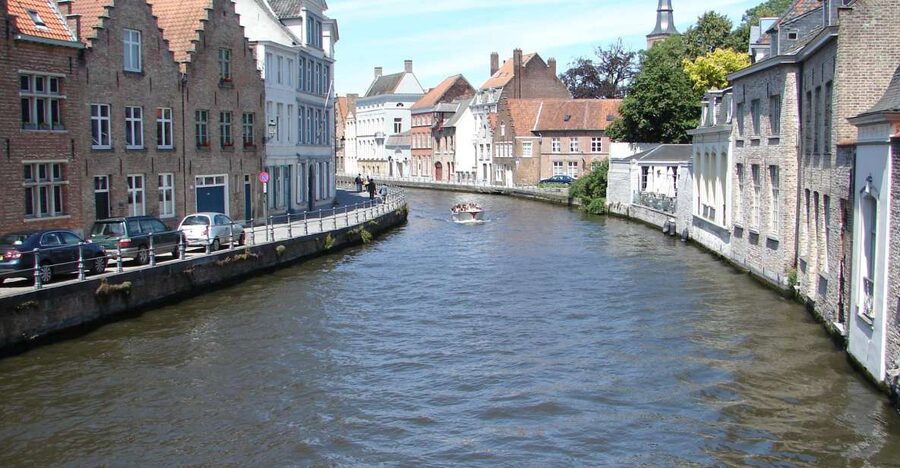
Bruges is the kind of city where every turn looks postcard-ready. The trick is knowing what you are looking at, and this tour is built for that. You spend your time on the most “Bruges” locations without wasting half your day trying to connect dots on your own.
The private setup is also the difference between wandering and learning. If your group has kids, you want pauses that keep attention. If you have older family members, you want less backtracking. In the feedback, guides like Jan and Theo get praised for keeping people engaged, and that matters in a place where cobblestones and crowds can test patience.
The tour runs 2 hours, which is long enough to get a full mental map of the historic center, but short enough that you do not feel stuck. That timing is the real value here: it helps you decide what to revisit later, instead of trying to “do everything” in one go.
Meeting near ’t Zand and getting your bearings fast
Most departures start from ’t Zand Square near the Concert Hall area. That is a smart choice because it sets you up to move naturally toward the busy core, with minimal zigzagging.
If you are staying in the historic center, you may be picked up at your hotel lobby. Otherwise, pickup can happen at the Bruges train station or at the Tourist Office In & Out at ’t Zand 34. This matters in Bruges because it is easy to overpay in time. If you have a base outside the center, getting dropped into the right starting point keeps the tour energy high.
You also get multilingual guidance. The guide can speak Spanish, Dutch, English, French, or German, so you are not stuck with translation-by-hand. In practice, it means you can ask questions right where the clues are visible, like at the Market Square belfry or along the canal streets.
What to bring: comfortable shoes are the obvious one. The not-so-obvious one is curiosity. A walking tour only feels effortless when you are ready to notice the details the guide points out.
St. Savior Cathedral to Market Square, the city’s headline scenes
The route starts by heading along the main shopping street toward Market Square, with a stop at St. Savior Cathedral along the way. Even if you only see it from outside, it helps you understand the big idea of the route: Bruges is not a single monument. It’s a whole network of religious, commercial, and civic places.
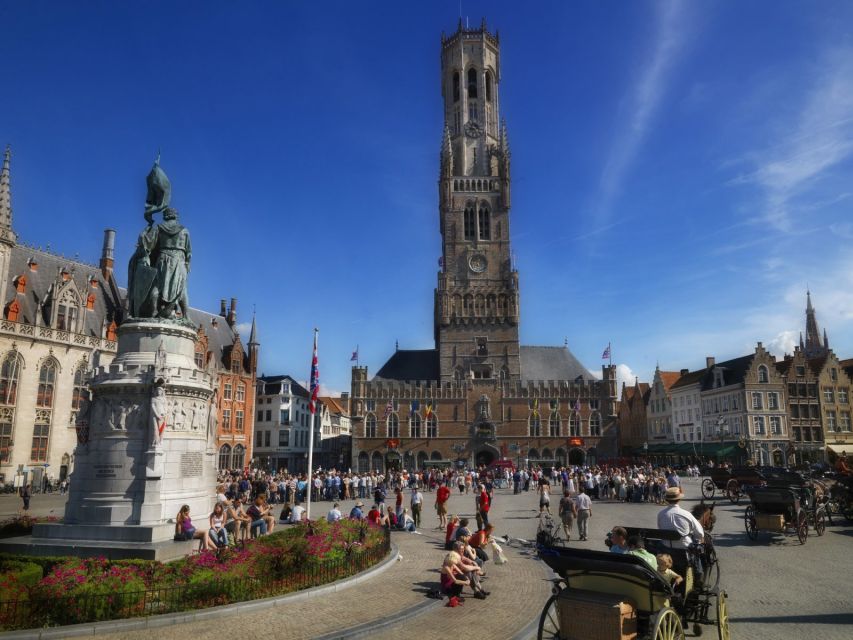
Then you hit the Market Square, defined by an 83-meter-tall belfry. This is one of those sights where the numbers help. A tall tower like this is not just decoration. It signals how the city organized itself, how it measured time, and how civic pride became architecture.
From there, you continue on toward Jan Van Eyck Square, once the center of Hanseatic Bruges. The key word here is Hanseatic. This is where the city’s merchant power becomes visible through streets, buildings, and how the square functioned in the economy.
The guide approach is what turns these stops from “pretty places” into something you can remember. In the feedback, Paul is singled out for building personalized answers from visitor questions. That is exactly what you want when you are looking at a belfry and then moving into financial-history spots ten minutes later.
Jan Van Eyck Square to the Burg, where commerce turns into government
After Jan Van Eyck Square, you walk through a section that traces Bruges’s commercial and financial hub from the 13th to the 15th centuries. The tour passes impressive reminders of that era, including the Saaihalle (1399), Huis ter Beurze (the first stock exchange), and the Toll House.
If you have ever wondered why Bruges feels so orderly, this is a major reason. These buildings show how trade shaped the city’s rules and routines. You start to see why certain squares feel like meeting points, and why certain streets feel like they were designed for movement of goods and information.
Then you reach the Burg, one of Bruges’s most charming squares. This is where the tour shifts from trade to civic life. You see the Gothic City Hall, the Basilica of the Holy Blood, and the Liberty of Bruges, once the city’s courthouse and now the Municipal Archives.
This is also where you get a practical benefit. After the Burg segment, you usually understand Bruges in layers: religious sites, civic power, and the legal-economic machinery underneath. That mental model helps you explore on your own afterward without getting lost in a sea of buildings.
A small note on expectations: the tour is designed around seeing and learning, not long museum-style time inside every building. If you want interior time, treat the tour as a map plus orientation, then return later where you care most.
Still got an afternoon? Try these:
Fish Market, Tanners Square, and Dijver canals: the walk becomes a film scene
Next you move through the Fish Market, Tanners Square, and the picturesque Dijver. These are the kinds of places where you feel daily life in the layout, even if you only experience it from street level.
The Fish Market and Tanners Square give you that “work city” sense. They show how different trades shaped the geography, which is a big part of why medieval cities feel so readable when you are with a guide.
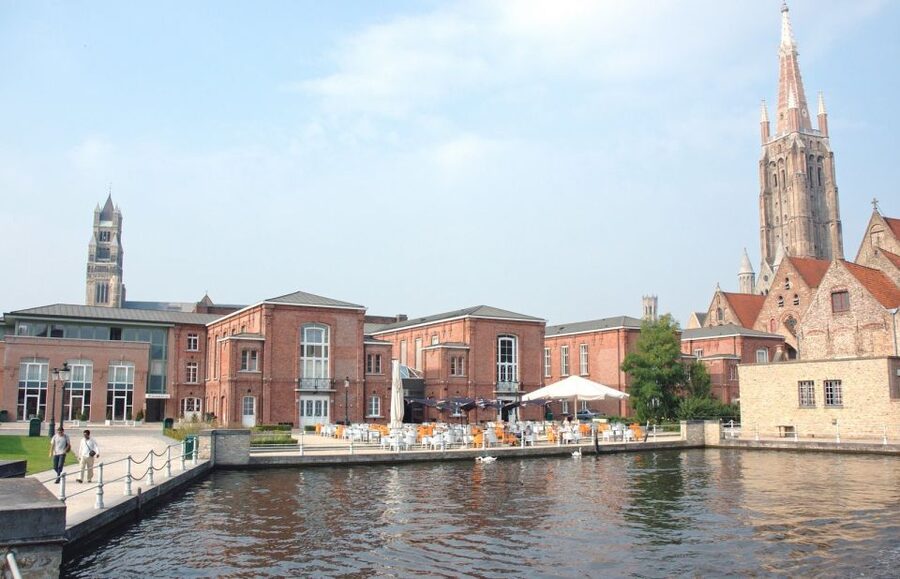
You then pass St. Mary’s Church. Depending on where your guide takes the conversation, you might also get pointed toward specific artworks or details inside, since the feedback includes examples of guides helping people locate things they care about. The goal is not to cram everything in. It’s to help you decide what you want to see longer once the tour ends.
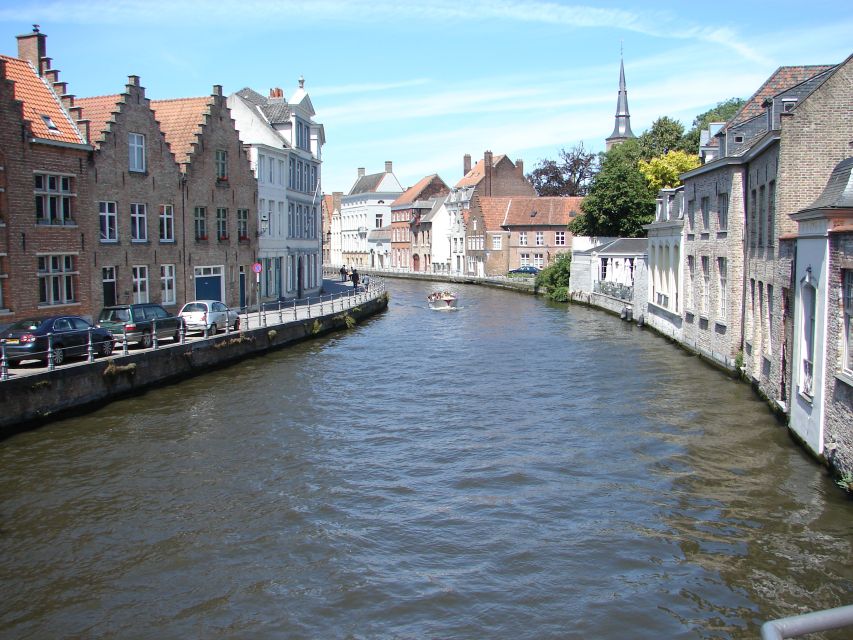
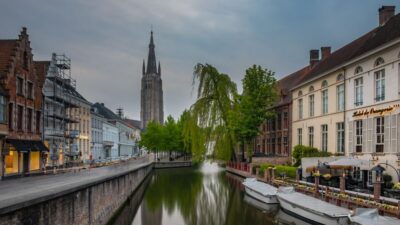
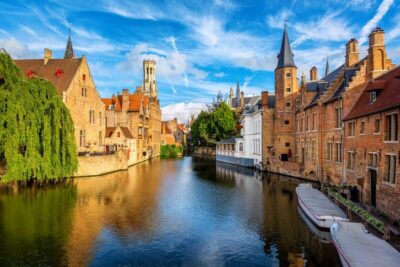
As you head toward the end stretch, you also get canal scenery near the Dijver area. One reason people love a guided walk in Bruges is that you do not just see canals, you understand why the canal network mattered to commerce and transportation.
St. John’s Hospital and the Minnewater finish, calm after the big squares
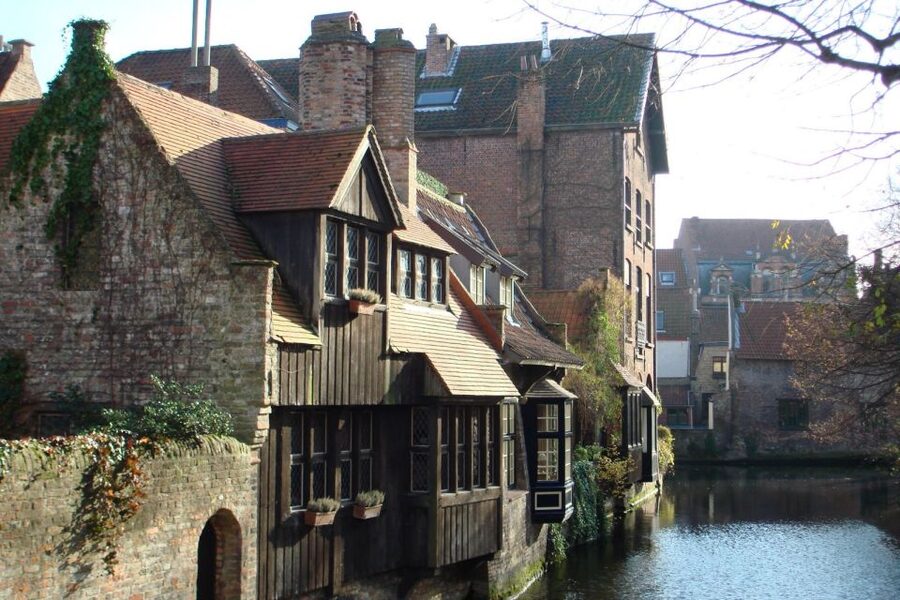
A brief stop comes at St. John’s Hospital, described as one of the oldest preserved hospital buildings in Europe. This stop adds a human scale. You see that a city is not only government and trade. It also has care systems that lasted long enough to become part of the historic fabric.
Then the walk ends at the Minnewater and the Princely Béguinage. This ending is a smart psychological move. After the civic and commercial clusters of the middle of the tour, you get a quieter finish zone where the vibe softens.
The Princely Béguinage is a standout for many people because it is a 13th-century site tied to the city’s social life. If you have any interest in how people lived beyond palaces and markets, this is where the walk starts to feel personal.
One more thing from the feedback that is worth your time: guides often use the final portion to connect your walk to what you can do next, like where to find museums, where to re-enter the center for a longer look, or where the best snacks are nearby. Even if you do not follow every suggestion, you leave with direction.
Price and value: what $223 per group really buys you
The price is $223 per group, up to 20 people, for a 2-hour private guided walk. The value calculation depends on how you book.
If your group fills close to 20, the per-person cost drops dramatically, and this becomes one of the better ways to get expert guidance without paying per ticket like a big-bus or museum add-on. If your group is smaller, the tour still can be worth it, because the guide does not just point. They help you make sense of what you would otherwise only partially notice.
Also consider timing. This tour covers many core sights in a short period. That can save you money indirectly by reducing taxi rides inside the center and reducing the time you would otherwise spend figuring out what to prioritize.
In the feedback, guides are repeatedly praised for flexibility, including adapting for pacing needs. If you are traveling with a mixed group, that kind of flexibility is often the difference between a “good idea” tour and a genuinely satisfying one.
Making the most of your guide: ask for these practical extras
A private tour only stays “private” if you actually use the fact that the guide is right there with you. Here are a few things that match what you see in the feedback, and that you can ask for politely.
- Ask about the best stop for food near the Burg. One guide recommendation mentioned a waffle house right outside the Burg, plus fries and chocolate. It is the kind of practical advice that saves time when you are deciding what to do next.
- Use your guide as a connector. Some guides have helped people plan a quick church interior stop and also pointed out museum options like Groeningemuseum for follow-up. Even if you do not do it immediately, having a short list makes your evening easier.
- Tell the guide what you care about. If you are focused on architecture, ask what to notice at the belfry, City Hall, or the Basilica of the Holy Blood. If you care about art, ask about what is worth your time at St. Mary’s Church.
- If rain hits, ask how they manage the route. One guide handled heavy rain by keeping the group mostly undercover, which is a reminder that the best guides know how to adjust in real conditions.
And a fun reality check: in Bruges, some sights are obvious and some are subtle. A great guide helps you see both, without making you feel like you are in a classroom.
Who this tour suits best in Bruges
This is an excellent fit if you:
- want a 2-hour orientation to the UNESCO-listed historic center
- are visiting for the first time and want the “big ticket” squares covered in a logical path
- travel with kids, because guides like Jan are praised for keeping teenage attention engaged
- have mobility concerns, since feedback includes examples of guides adapting routes and meeting points
It is also a good choice if you prefer planning that feels low-stress. You get a structure, but you are still free to explore on your own after.
Should you book this Bruges Private 2-Hour Walking Tour?
If you want a fast, high-value introduction to Bruges’s main sights, I think this booking makes sense. The route is designed to move from civic and religious landmarks to commerce landmarks to a calmer finish at Minnewater and the Princely Béguinage. That mix gives you both the dramatic and the quiet sides of the city.
Book it if you like walking with context and you want to leave with a map in your head. Consider adding extra time after the tour if you know you will want longer indoor visits, since the 2-hour window is built for seeing, not lingering.
If you are the type who likes to plan every minute alone, you might feel constrained by a guided format. But if you would rather let someone local guide your attention, this private walk is one of the most practical ways to experience Bruges in a short window.
FAQ
What is the duration of the Bruges Private 2-Hour Walking Tour?
The tour lasts 2 hours.
Where does the tour typically start?
A sample departure is from ’t Zand Square, at the Concert Hall. Pickup and meeting points can vary based on where you are located in the historic center.
Is this tour private?
Yes. It is a private group tour with a private guide for 2 hours.
How much does it cost?
The price is $223 per group, up to 20 persons.
Is pickup included?
Yes, pickup is included. You may be picked up at the hotel lobby if it is located in the historic center, or at the Bruges train station, or at the Tourist Office In & Out at ’t Zand 34, 8000 Brugge.
What sights are included in the walking route?
You’ll see highlights such as St. Savior Cathedral, Market Square and its 83-meter-tall belfry, Jan Van Eyck Square, Saaihalle (1399), Huis ter Beurze, the Toll House, the Burg, Gothic City Hall, the Basilica of the Holy Blood, the Liberty of Bruges, the Fish Market, Tanners Square, Dijver, St. Mary’s Church, St. John’s Hospital, and the Minnewater plus the Princely Béguinage.
Are entrance fees included?
No. Entrance fees are not included.
Are meals included?
No. Meals are not included.
What languages are available for the live guide?
The guide can speak Spanish, Dutch, English, French, and German.
What is the cancellation and payment policy like?
You can cancel up to 24 hours in advance for a full refund. You can reserve now and pay later.
Latest from Bruges
Walking Tours, compared.
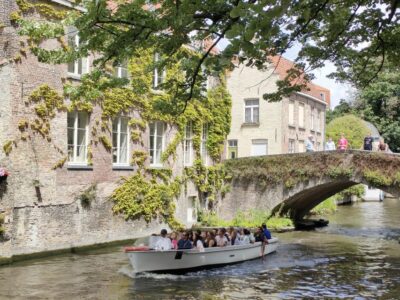
Small Group Boat Cruise and Guided Walking Tour
Read our review →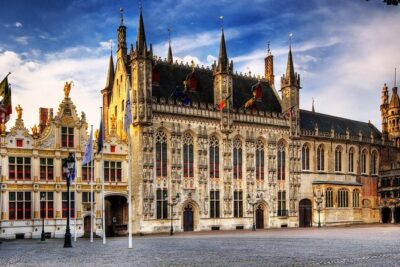
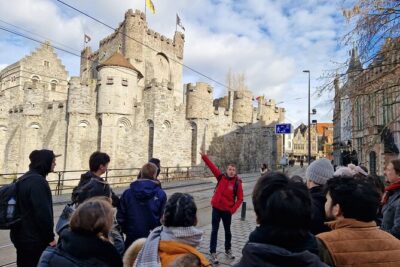
Historical Walking Tour with Chocolate & Waffle Tasting
Read our review →
Brussels Walking and Tasting Tour (Beers,Chocolates&Fries/Waffle)
Read our review →
Browse the lists this tour appears in