
Reviewed · BRUGES EXPERIENCES
Private Customizable Guided Tour: Explore at Your Own Pace
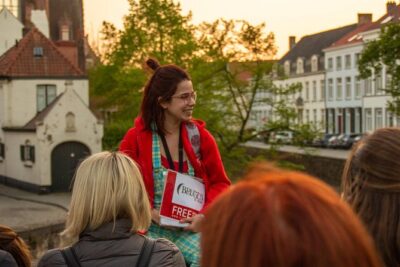
A guided Bruges walk, tailored to your pace, is hard to beat. You get private attention and an official licensed city guide, so you can steer the visit toward architecture, history, culture, or art.
I also like how the route works like a storyboard, starting with the big public squares and then moving toward the major art stops, from Jan Van Eyckplein to Groeningemuseum. And since most outdoor stops are free, you do not feel nickeled-and-dimed before lunch.
The main catch is simple: several highlights are museum visits, and museum admission is not included, so you should plan for extra entry fees if you want every indoor stop.
In This Review
- Key highlights at a glance
- How this private Bruges tour stays flexible without getting chaotic
- Starting at the Markt: the perfect place to understand Bruges
- The Italian and Spanish quarters: neighborhoods you can read on foot
- Pottenmakersstraat Toren: the city wall you can still picture
- Jan Van Eyckplein to Sint-Annakerk: art and architecture in the same breath
- Burg Square and Vismarkt: power and everyday life
- The museum block: what you get at Groeningemuseum, and what costs extra
- Onze-Lieve-Vrouwekerk and Site Oud Sint-Jan: two different kinds of guided learning
- Timing: how the 4 to 6 hour structure keeps you from rushing Bruges
- Price and value: what you’re paying for in Bruges
- Who this Bruges tour suits best (and who should rethink it)
- A real-world note about the guide experience
- Should you book this customizable Bruges guided tour?
- FAQ
- Is this a private tour or a group tour?
- How long is the Bruges tour?
- Where does the tour start and end?
- What is included, and are museum admissions covered?
- Do I get a ticket on my phone?
- What happens if the weather is bad?
Key highlights at a glance
- Official licensed city guide: you get expert context, not just a soundbite walk
- Private and customizable: your group sets the emphasis on architecture, culture, history, or arts
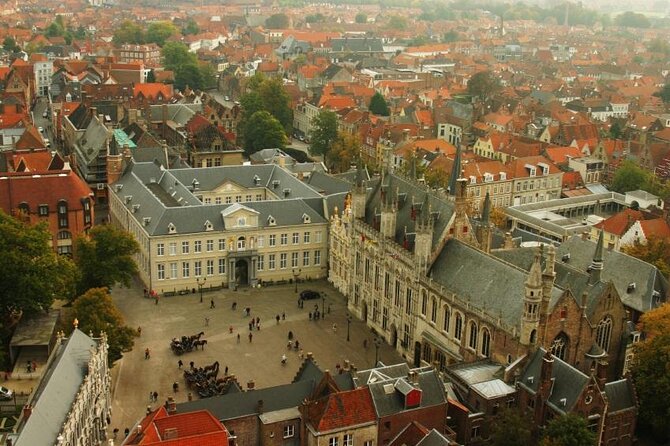
- Signature Bruges squares: Markt, Burg Square, Vismarkt, and the key church stops
- Art-focused museum sequence: Groeningemuseum, Gruuthusemuseum, and church and healthcare-site collections
- Good value structure: many exterior areas have free entry, while museums are clearly separated as paid add-ons
A few more Bruges afternoons to weigh up
- Bruges: Small Group Boat Cruise and Guided Walking Tour
★ 4.8 · 4,102 reviews - Bruges: Guided Tour & Boat Ride with Optional Beer Tasting
★ 4.4 · 3,894 reviews - Historical Walking Tour: Legends of Bruges
★ 5.0 · 2,541 reviews - Bruges: Choco-Story Museum with Audio Guide and Tastings
★ 4.2 · 1,825 reviews - From Bruges: Great War Flanders Fields Minibus Tour w/ Lunch
★ 4.9 · 1,257 reviews
How this private Bruges tour stays flexible without getting chaotic
Bruges can feel like a set from a fairy tale, but the city is also full of layers. What I like about this tour format is that it stays organized while still letting you slow down. You are not stuck to a rigid script. You choose what you care about most, and the guide helps you make smart tradeoffs in a limited half-day.
The “private” part matters more than it sounds. With only your group, you can ask follow-up questions, pause for photos, and adjust the rhythm when you run into cobblestone traffic, a rainy break, or a line you did not expect. It is also easier to keep everyone together when the walk includes multiple stops and indoor options.
That said, the flexible structure only works if you stay honest about time. This is a 4 to 6 hour experience, so you will want to decide early whether you want full museum time, quick photo time, or a careful mix.
Starting at the Markt: the perfect place to understand Bruges
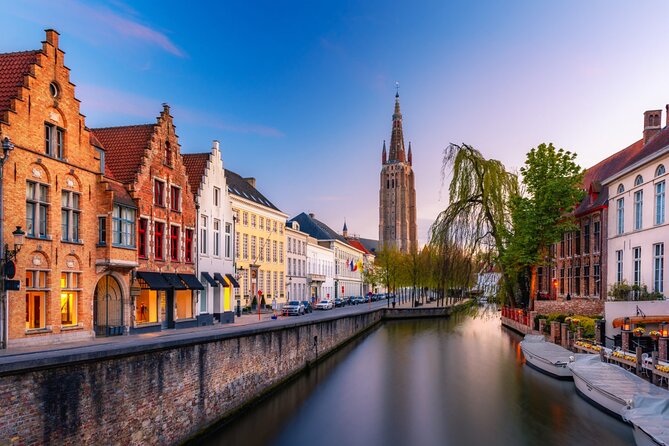
Most Bruges trips start with the Markt, and for good reason. It is the economical heart of the city and a natural anchor for orientation. When you stand here with a licensed guide, the square stops being just pretty stone and starts making sense as the political and commercial center that shaped daily life.
You get about 45 minutes at the Markt, and the focus is on how history played out in this space, including notable events. This is the kind of context that makes the rest of your walk click. After the Markt, it is easier to spot patterns, like where power sat, how neighborhoods developed, and why certain streets became important.
Tip: If you are a first-timer, use this first stop to set your priorities. Decide if you want more about churches and art, or more about city walls and quarters. You can still change your mind later, but starting here helps you steer faster.
The Italian and Spanish quarters: neighborhoods you can read on foot
Bruges has a way of turning geography into story. Two stops in the middle of the walk are designed to show you that the city was not one single culture. It had communities with their own ties and footprints.
Oude Beursplein is where the tour shifts to the Italian quarter. You spend around 40 minutes here, with a look at embassies and the stock exchange side of life. The point is not to memorize dates. It is to understand why trade and diplomacy landed in specific places, and why certain streets and buildings reflect that past.
Next comes Spanjaardstraat, about 30 minutes. This is the Spanish quarter, and the guide’s angle is on different citizens and how that identity shaped the street. You start seeing Bruges as a place where outsiders were not just temporary visitors. They became part of the city’s social map.
One practical consideration: these stops are shorter than the big museum blocks, so if you are the type who loves architecture details, you may want a few extra minutes here by trimming time elsewhere.
Pottenmakersstraat Toren: the city wall you can still picture
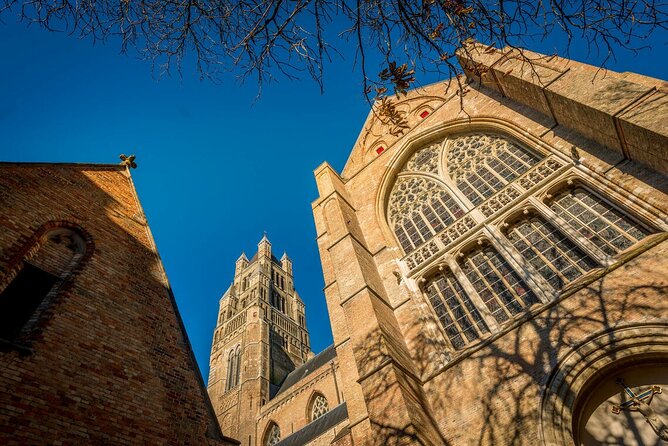
Before the tour moves toward art and churches, you get one of the most “tactile” moments: Pottenmakersstraat Toren, where you can see the remaining portion of the 13th century city wall. The stop is about 20 minutes.
What makes this brief stop valuable is that it gives you a physical boundary for the medieval city. Walls help you understand where growth happened, why streets formed where they did, and why Bruges still feels wrapped in a sense of enclosure even today.
If you like maps but hate carrying paper maps, this is a good substitute. Look at the wall remnants, then imagine where people passed in and out. It makes later squares and routes feel more intentional.
Still got an afternoon? Try these:
Jan Van Eyckplein to Sint-Annakerk: art and architecture in the same breath
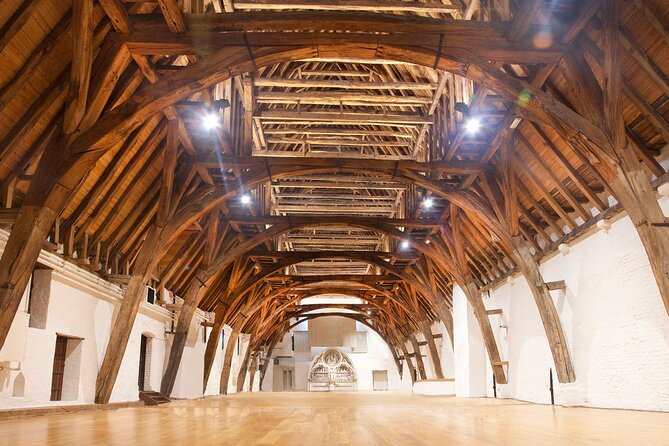
From Pottenmakersstraat Toren, the tour lands near Jan Van Eyckplein, the square linked to the famous painter. You get around 40 minutes here. The goal is to learn about Van Eyck and his significance, and to connect the name you see on postcards to the real person and the world that made him possible.
Then comes Sint-Annakerk, about 40 minutes. You are guided through its Baroque interior and learn about its biggest wall painting. Church interiors can feel overwhelming, especially when you want both architecture and storytelling. With a guide, you get a way to look at the space, not just stand in it.
Practical advice: If indoor art and churches are your top priority, do not rush your first indoor stop. This is where the tour can set your expectations for the rest of the day.
Burg Square and Vismarkt: power and everyday life
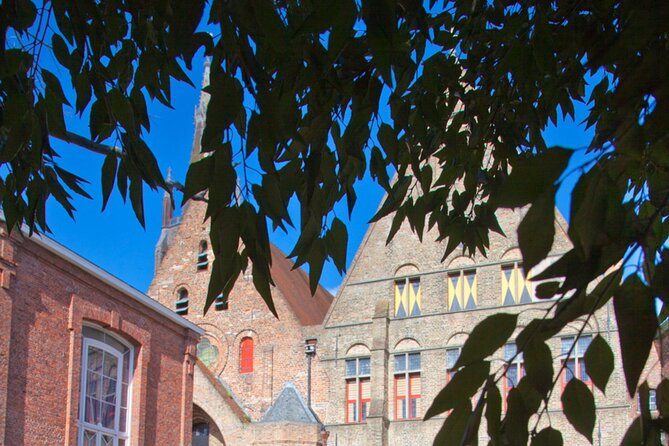
Burg Square is the political heart of Bruges. Plan on about 1 hour here. The guide focuses on the buildings and what their history says about governance and civic power. This is a different kind of Bruges than what you get from canals and facades. It answers why certain institutions mattered.
After that, you head to Vismarkt for about 25 minutes. This is the famous fish market, with history and design explained in a way that turns it from a scene into a system. Markets show you how people ate, worked, negotiated, and gathered. And in Bruges, those routines left visible traces.
If your group is split, this is a great compromise segment. Someone who wants art gets plenty of it later. Someone who loves everyday history gets it here, in a less academic format.
The museum block: what you get at Groeningemuseum, and what costs extra
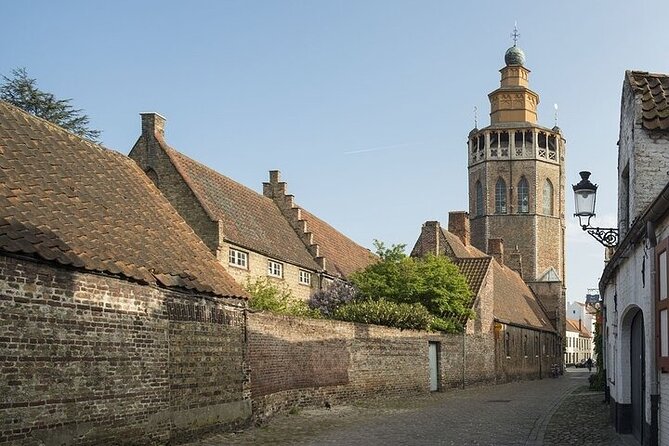
This is where your tour goes from “guided walk” to “guided art time.” Groeningemuseum is scheduled for about 1 hour 10 minutes. The big draw is Flemish art across five centuries, including famous works connected to Jan Van Eyck and other Flemish Primitives.
Admission for this museum is not included, so you will pay that separately if you choose to go in. I like that this is clearly handled as an add-on because it lets you control your total spend. If money is tight, you can still get plenty from the exterior stops and squares, but you would sacrifice some of the art-focused value.
Next is Gruuthusemuseum for about 1 hour. This museum is about five centuries of Bruges and the story of the Gruuthuse family. Again, admission is not included, so plan accordingly. This stop is a strong match if you want Bruges to feel personal, not just historic.
A small planning tip: if you know you want both Groeningemuseum and Gruuthusemuseum, it can help to keep your expectations realistic about how much “looking” you can do in a single morning or afternoon. You are on a half-day clock.
Onze-Lieve-Vrouwekerk and Site Oud Sint-Jan: two different kinds of guided learning
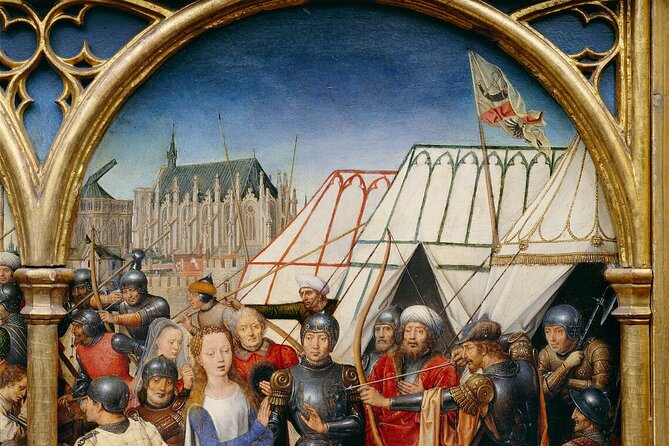
After the museum stops, you shift to major guided talks connected to buildings and collections.
Onze-Lieve-Vrouwekerk takes about 1 hour, and it is positioned as the most famous church of Bruges, with famous art and history. The emphasis is also on Gothic architecture of churches, guided so you learn what to look for as you move through the interior.
Then there is Site Oud Sint-Jan for about 1 hour. This is framed around the history of healthcare and includes five famous works by Hans Memling. Admission is not included here, which matters because it makes the stop more optional in practice, even if it feels like a “must.”
Why this pairing works: you get two meanings of the word history. One is about politics and art. The other is about care, institutions, and how people organized help in a medieval city. If you like stories that go beyond kings and painters, this part tends to land well.
Timing: how the 4 to 6 hour structure keeps you from rushing Bruges
The itinerary is built with a mix of 20 to 45 minute stops plus three longer museum or guided blocks around 1 hour to 1 hour 10 minutes. That is a helpful rhythm. Short segments keep energy up, while the longer segments give you breathing room for museums and church interiors.
The “customizable” promise is best when you pick a focus before the tour starts. If you say: we want architecture and big buildings, the guide can spend more time where it actually pays off, like the churches and the wall remnants. If you prefer art, you prioritize the museum sequence and still get the city context from the squares so the art does not feel random.
Also, remember you are using a mobile ticket, which is handy for entry. When you add museum admission costs, having everything in your phone can reduce stress when you reach the paid doors.
Price and value: what you’re paying for in Bruges
At $244.25 per person, this is not a “cheap and cheerful” Bruges walk. But the value logic is pretty clear.
You are paying for:
- a private guided experience (only your group)
- an official licensed city guide
- guided time at multiple major stops across neighborhoods, squares, churches, and museums
Whether it feels like a good deal depends on who you are traveling with. If you are two to four people and you would otherwise do separate self-guided walks plus pay for random audio guides and then still feel lost, this structured approach often wins.
It also helps that many exterior stops are free, so your money mainly goes to the museum admissions that you can choose to fully embrace. If you are strict about budget, you can treat museum entry as the optional splurge and keep the rest as free guided context.
Booking far ahead is also a sign of practical demand. If you are traveling in peak season or on limited dates, I would plan early so you have flexibility in choosing the day and time.
Who this Bruges tour suits best (and who should rethink it)
This tour fits best if you want Bruges to feel like a guided story, not just a photo hunt. It is especially good for:
- first-time visitors who want orientation plus art and major landmarks
- couples or small groups who prefer private pacing over joining a large group
- travelers who enjoy learning the “why” behind squares, churches, and neighborhoods
You might rethink it if:
- you want a fully self-paced day with no indoor planning at all
- you are strongly cost-sensitive and do not want to add museum admissions
- you have very limited mobility and want fewer stops and fewer transitions (the route includes multiple sightseeing areas, and the duration is still 4 to 6 hours)
A real-world note about the guide experience
One highlight that stands out in the feedback is the communication and the guide’s ability to pack a lot into a short window. Xavier, an official licensed city guide associated with this experience, has been praised for squeezing a ton of meaningful stops into just a few hours. That matters because Bruges can make time disappear. A good guide keeps you moving with purpose, and still gives enough context to make the day feel full, not rushed.
Should you book this customizable Bruges guided tour?
Yes, if you want a private Bruges experience that balances big-name sights with real context, and you like the idea of steering the day based on what you care about most. The combination of major squares, neighborhood reading, church architecture, and a museum sequence is the kind of structure that helps Bruges stick in your memory.
Skip or adjust your expectations if museum admissions are a deal-breaker for your budget, because several of the most famous stops in the plan do require separate entry. If you do book, decide early which museums are non-negotiable for your group. Then you can let the guide do what they do best, connecting each stop so it all feels like one coherent city walk.
FAQ
Is this a private tour or a group tour?
It is a private tour/activity, so only your group participates.
How long is the Bruges tour?
It runs about 4 to 6 hours.
Where does the tour start and end?
It starts at Markt 5, 8000 Brugge, Belgium. It ends at Minnewater Park, Minnewater 1/15, 8000 Brugge, Belgium.
What is included, and are museum admissions covered?
Many stops are free, but museum admissions are not included for the museum and some indoor guided stops.
Do I get a ticket on my phone?
Yes. A mobile ticket is included.
What happens if the weather is bad?
This experience requires good weather. If it is canceled due to poor weather, you will be offered a different date or a full refund.
Latest from Bruges
Bruges Experiences, compared.
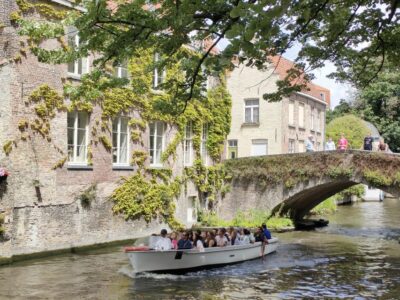
Small Group Boat Cruise and Guided Walking Tour
Read our review →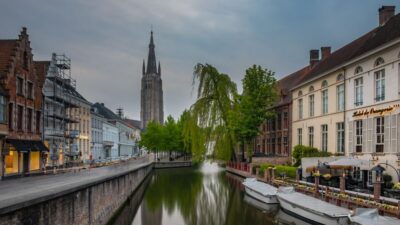
Guided Tour & Boat Ride with Optional Beer Tasting
Read our review →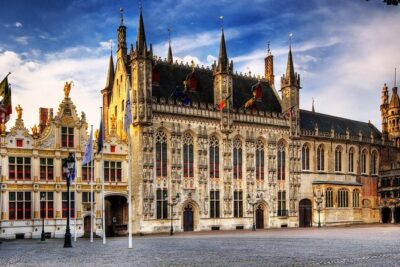
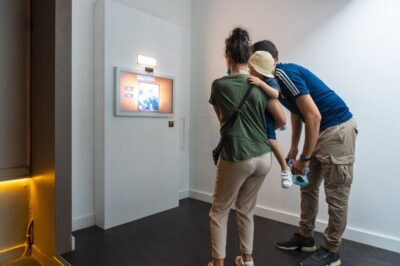
Choco-Story Museum with Audio Guide and Tastings
Read our review →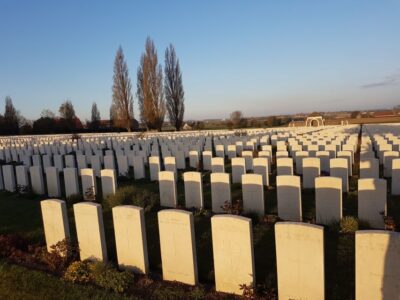
Great War Flanders Fields Minibus Tour w/ Lunch
Read our review →
Round-Trip Shuttle Service from Zeebrugge to Bruges
Read our review →
Belgian Waffle-Making Workshop with Beer Tasting
Read our review →Browse the lists this tour appears in