
Reviewed · PHOTOGRAPHY SESSIONS
Photo Tour “Jan van Eyck”
Bruges turns into a photo studio when you get a plan. This 2-hour guided photo tour takes you from Historium BrugesMarkt through some of the city’s most camera-friendly corners, with step-by-step ideas from guide Ivan and practical guidance as you walk. I especially loved the way the route quickly gets your bearings without making you study a map, and how the guide’s coaching helps you slow down for the good angles, not just snap and move on. One drawback to consider: the pace can feel a bit of a workout, especially if you want long pauses in every spot.
The best part is that this isn’t just a sightseeing loop. You’re moving between specific places tied to famous names and Bruges’ old harbor storylines, including Jan van Eyck Square and the legendary view at Rosary Quay. With a max group size of 12, you get more attention and less awkward crowding around the tripod points.
In This Review
- What you should know before you go
- Key things I’d prioritize on this photo tour
- Starting at Historium BrugesMarkt and learning how to see faster
- Stop-by-stop: the old harbor story from Poorters Loge to Jan van Eyckplein
- A quick tip you can use immediately
- Groenerei and Vismarkt: learning how to frame canal life
- Huidenvettersplein and the Tanners Place look: texture photos that feel real
- Rosary Quay, Rozenhoedkaai: the iconic view and how to make it more than a postcard
- Nepomucenus Bridge: the last frame professionals notice
- Price and value: what $47.50 gets you in real terms
- Who this photo tour fits best
- Practical photography tips to use after the tour
- Should you book the Jan van Eyck Photo Tour in Bruges?
- FAQ
- Where does the photo tour start and end?
- How long is the tour?
- What time does the tour run?
- How much does it cost?
- Is the ticket mobile or paper?
- Are admission tickets included during the tour?
- How big is the group?
- Do I need good weather?
- Is there any limit related to service animals or transportation?
- When do I get confirmation?
- What is the cancellation policy?
What you should know before you go
This is a mobile-ticket tour, and several stops include admission tickets, which means you won’t waste time figuring out where tickets are needed. It also works well in good light, but weather matters here, so you should be ready for rain or overcast conditions if the operator has to reschedule.
If you’re the type who wants better photos while you’re still enjoying the city, this format fits. If you want a completely unstructured wander with no instruction, you might find it a bit more guided than you expected.
More photo walks in Bruges:
- “Hidden Brugge” Photo Tour – 2hr open city tour & workshop
★ 5.0 · 27 reviews - “Edges of Brugge” Photo Tour – 2hr open city tour & workshop
★ 5.0 · 25 reviews - “Shades of Brugge” Photo Tour – 3hr private city tour & workshop
★ 5.0 · 13 reviews - Bruges : Your private 30min. photoshoot in the medieval city
★ 5.0 · 11 reviews - “Essential Brugge” Photo Tour – 3hr private city tour & workshop
★ 5.0 · 6 reviews
Key things I’d prioritize on this photo tour
- Small group size (max 12): easier to ask questions and find space at the best viewpoints.
- Guided coaching from Ivan: you get practical photo advice while you’re already standing in the right spot.
- Rosary Quay, Rozenhoedkaai views: this is the iconic “one-angle-perfection” Bruges postcard moment.
- Stop sequence built for variety: harbor, bridge, market squares, and canals, all in roughly 2 hours.
- Admission tickets included at multiple stops: you can focus on shooting instead of ticket logistics.
- Finish at Nepomucenus Bridge: a dramatic closing frame, with the stop listed as free.
Starting at Historium BrugesMarkt and learning how to see faster
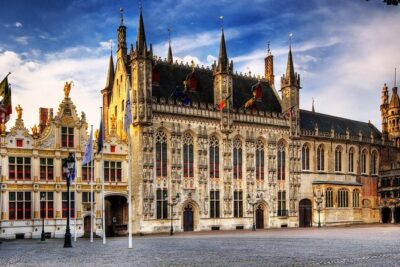
You’ll meet at Historium BrugesMarkt 1 around 1:30 pm. Even if you arrive early, it’s worth taking a minute to watch where the light hits the square and where pedestrians naturally flow. Bruges has a way of pulling your attention everywhere at once, so having a plan at the start makes the whole tour easier.
From the first minutes, the guide frames the walk as a photo route rather than a long lecture. That matters because you’re not only learning what things are, you’re learning how to approach them. I like the way the tour’s opening sets the expectation that you’ll look for the most romantic and picturesque areas, then move from there with purpose.
Stop-by-stop: the old harbor story from Poorters Loge to Jan van Eyckplein
The first stop is the Poorters Loge, also referred to as Burghers’ Lodge. This is the first office building in the world, and it’s the kind of detail that changes how you photograph a street scene. Instead of treating a building like background, you start treating it like a subject. You can aim for architectural lines, then switch to people-scale shots right after so you don’t lose the human Bruges feeling.
Next you move to Jan Van Eyckplein. The area connects to medieval harbor activity, which gives you more to work with than simple “pretty square” vibes. Harbor-adjacent scenes are great for photos because they naturally offer layers: the ground-level details, the building edges, and the way open space frames distant views.
In practice, this kind of stop ordering is smart. If you start with a stop that teaches structure and then move to a place that teaches context, your photos tend to look more intentional. You’re not just capturing landmarks, you’re building a visual story.
A quick tip you can use immediately
When you reach a new stop, don’t immediately lift your camera. Take ten seconds to choose your angle, then decide what you want sharp: the foreground texture, the building edges, or the distance. That simple choice will save you from a lot of near-identical shots.
A few more Bruges afternoons to weigh up
Groenerei and Vismarkt: learning how to frame canal life
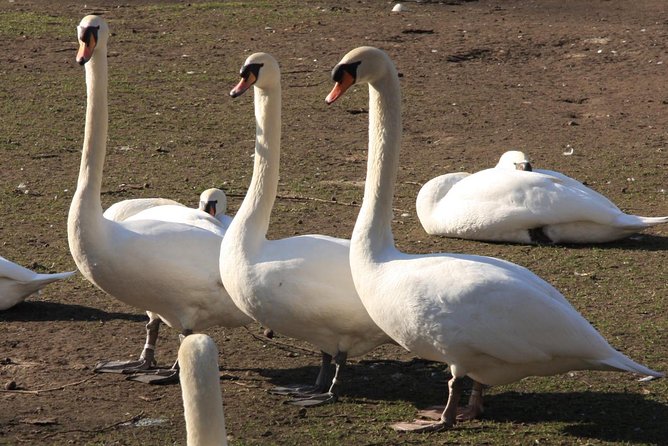
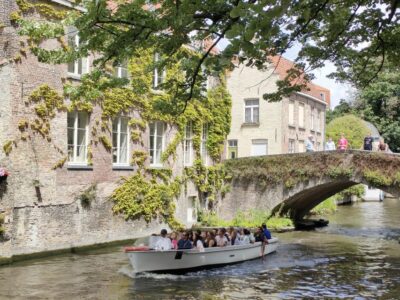
Your next push is through Groenerei, where the tour asks you to stand on a special spot. This is one of those stops where the instruction matters as much as the location. Canal edges and quay streets can look good from many places, but Bruges often has a “best viewpoint” that makes the composition click.
Then you head to Vismarkt, once a big fish market. Markets are often chaotic on your own, because you’re trying to catch the moment and the building at once. With a guide, you can slow down and shoot the scene in a cleaner way, focusing on signage textures, facades, and the lines that lead your eye toward the canal.
One reason I like including market-area stops in a photo tour is that they offer lots of micro-subjects. Even if you only stay a few minutes, you can still capture meaningful details, like the way stone and signage sit together. It also breaks up the walk so you’re not only dealing with wide panorama shots.
Huidenvettersplein and the Tanners Place look: texture photos that feel real
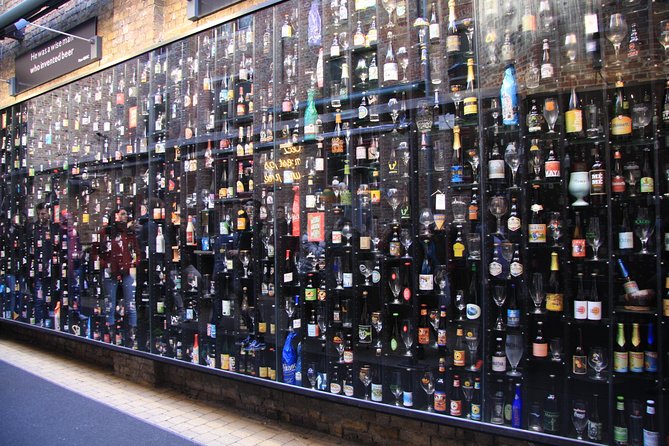
At Huidenvettersplein (the Tanners Place), you get another layer of Bruges life. The key here is not chasing one single grand view. Instead, you can build a set of shots that feel like Bruges lived-in, not staged.
Tanneries and trades bring texture: doorways, stonework, architectural rhythm, and street-level surfaces. This stop is short, but that’s a feature, not a flaw. Quick stops force you to find one strong shot, then move on. Long stops can tempt you to over-shoot the same angle for too long.
If you’re trying to get better photos, short guided windows are useful. They make you practice decision-making: what matters most at this spot, and what can wait for later?
Rosary Quay, Rozenhoedkaai: the iconic view and how to make it more than a postcard
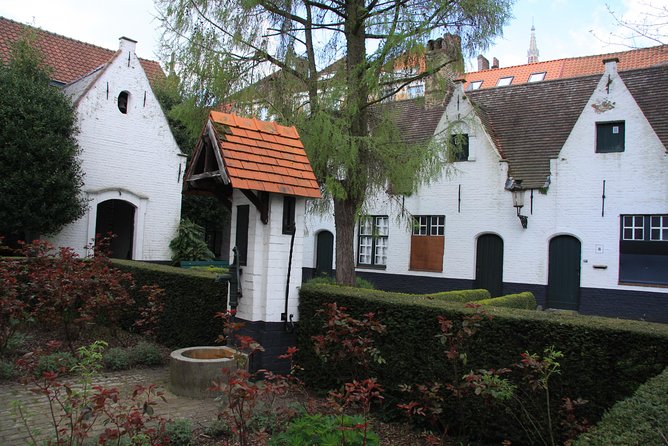
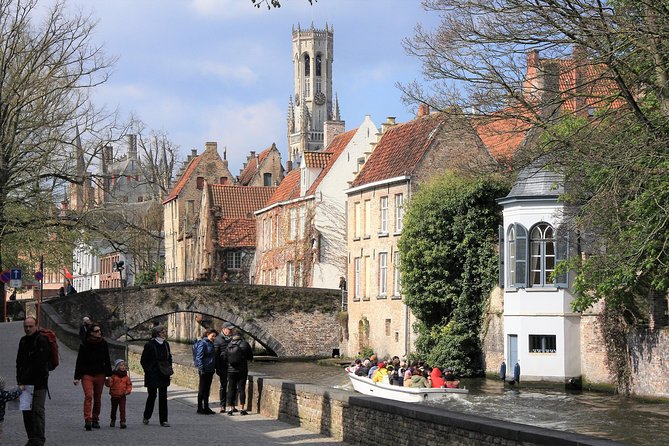
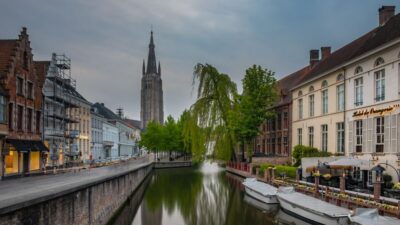
Then comes the moment everyone’s probably hoping for: Quai du Rosaire / Rozenhoedkaai. This is described as without a doubt the most photographed view of the city. Yes, it is that kind of place. But the photo tour angle is what turns it from tourist snap zone into an actual photo lesson.
Here’s the practical thinking you can apply: when you’re photographing a famous view, you need to find a fresh composition choice. That might be a different focal point, a low angle, or a framing trick that reduces the number of distracting elements. With the guide directing you to the right position, you can focus on refining rather than wandering.
This stop also works well for different styles. If you shoot wide, you can capture the full iconic composition. If you shoot more intimate, you can frame architectural edges and canal reflections. And if you care about people in photos, this is one of those moments where you can capture passers-by without making them the whole subject.
I like that the tour doesn’t treat this as a quick checkbox. It gives time, and it gives instruction. That combination is how you walk away with photos that look like you meant them.
Nepomucenus Bridge: the last frame professionals notice
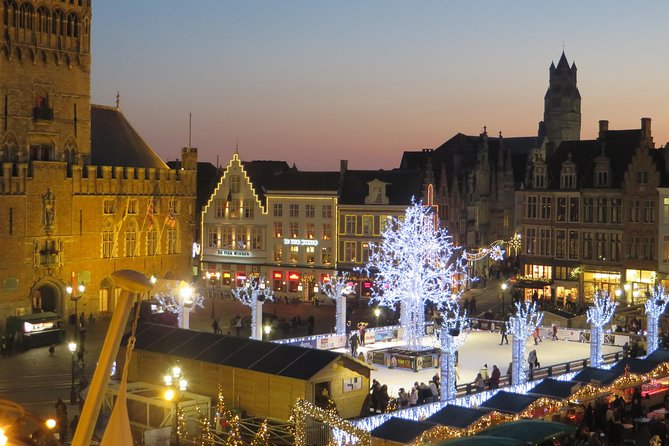
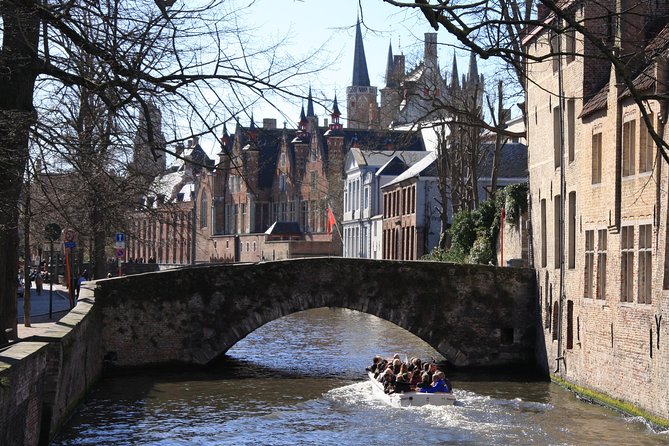
The final picture opportunity is at Nepomucenus Bridge (Nepomucenusbrug). The stop is listed as free, and it’s where the tour promises a last shot that only professionals see. I take that to mean it’s not just the bridge itself. It’s the position, the timing, and the composition choices that make the shot look cleaner and more deliberate.
If you want to maximize this ending, come in ready to shoot but also ready to adjust. Small changes in stance can dramatically affect how lines converge over the water. This is also a good time to check your camera basics, like exposure and focus mode, so you’re not still fiddling when the light shifts.
And since the itinerary ends at Dijver near where you started (about 200 meters from the start point), you’re not dealing with a complicated transport puzzle. You finish, you take your last frames, and you’re free to linger on your own or head back to your plans.
Price and value: what $47.50 gets you in real terms
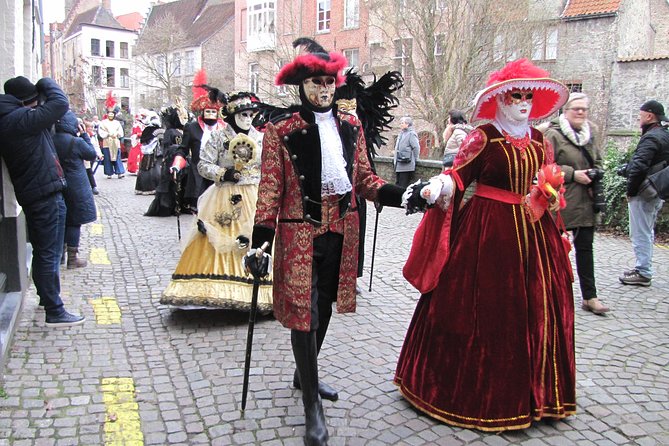
At $47.50 per person for about 2 hours, this tour is priced like a focused, guided walking experience, not a big bus trip. What makes it feel like decent value is the mix of instruction plus built-in logistics.
You’re paying for:
- a guided photo route, with tips and coaching along the way
- a maximum group size of 12, which helps you actually interact
- admission tickets included for multiple stops (several are listed as included)
- a mobile ticket, which keeps things simple
Is it expensive for Bruges standards? Sure, you could wander on your own and spend less. But if you care about better photos, the value comes from learning how to look while you’re standing in the right place. That beats trying to figure everything out later from your hotel room.
Also, the tour being scheduled at 1:30 pm helps. Midday to early afternoon often gives usable light for architecture and quay views. Still, Bruges is weather-dependent, so it’s smart to treat forecasts seriously.
Who this photo tour fits best
This tour is a great match if you:
- want a short Bruges photo walk with a clear route
- like learning simple composition tricks you can apply immediately
- enjoy history and place names, but prefer it tied to visuals
- prefer a small group where you can ask questions
It can also work for most people, since it’s designed as a walk through the historic center. That said, if you dislike steady walking, go in with realistic expectations. Some people found it fairly exhaustive and a bit tiring, so wear shoes you trust.
It’s also a smart idea if you’re traveling with a mix of photo skill levels. One person might focus on camera settings, while another focuses on getting the story. The guide can steer both.
Practical photography tips to use after the tour
Even though you’ll get guidance during the walk, you can make your photos better just by using a few habits.
- Pick one subject per stop. If you try to capture everything, your photos often look flat.
- Switch between wide and detail shots. Bruges rewards variety, and quick stops make it easy.
- Watch the edges, not just the center. In canal cities, the lines along buildings and quays do a lot of the work.
- Use the famous spots, then change the angle. Rosary Quay is iconic. Your job is to shoot it in a way that looks like you, not like everyone else.
- Be ready for light changes. The tour requires good weather, but even partly cloudy skies can shift how reflections look on the water.
If you leave with only one takeaway, make it this: you don’t need more time, you need better decisions at each spot.
Should you book the Jan van Eyck Photo Tour in Bruges?
I think it’s worth booking if you want a structured photo plan in a city that can feel overwhelming on foot. The combination of a small group, clear stop sequence, and hands-on coaching from Ivan makes it more than a casual walk. And the route is built around the exact kinds of scenes that typically produce your best Bruges photos: harbor corners, canal views, market-area textures, and a strong final frame at Nepomucenus Bridge.
Skip it if you’re trying to do Bruges at a slow, floating pace, or if you really hate guided instruction. This is a photo-focused tour with a steady flow, so you’ll get the most out of it when you show up ready to shoot, listen, and move.
If you like better photos without turning your day into homework, this is a solid way to spend a couple of hours in Bruges.
FAQ
Where does the photo tour start and end?
It starts at Historium BrugesMarkt 1, 8000 Brugge, Belgium, and ends at Nepomucenus Bridge on Dijver, 8000 Brugge. The end point is about 200 m from the starting area.
How long is the tour?
The duration is approximately 2 hours.
What time does the tour run?
The listed start time is 1:30 pm.
How much does it cost?
The price is $47.50 per person.
Is the ticket mobile or paper?
This experience uses a mobile ticket.
Are admission tickets included during the tour?
Admission tickets are included for several stops along the route, while the Nepomucenus Bridge stop is listed as free.
How big is the group?
The tour has a maximum of 12 travelers.
Do I need good weather?
Yes. The experience requires good weather. If it is canceled due to poor weather, you will be offered a different date or a full refund.
Is there any limit related to service animals or transportation?
Service animals are allowed, and the tour is near public transportation.
When do I get confirmation?
Confirmation is received at the time of booking.
What is the cancellation policy?
Free cancellation is available. You must cancel at least 24 hours in advance for a full refund, and changes within 24 hours of the start time are not accepted.
Latest from Bruges
Photography Sessions, compared.
“Hidden Brugge” Photo Tour – 2hr open city tour & workshop
Read our review →
“Edges of Brugge” Photo Tour – 2hr open city tour & workshop
Read our review →
Brussels City Photoshoot With a Professional Photographer
Read our review →
“Shades of Brugge” Photo Tour – 3hr private city tour & workshop
Read our review →
Your private 30min. photoshoot in the medieval city
Read our review →
Brussels Private Photoshoot with a Professional Photographer
Read our review →
“Essential Brugge” Photo Tour – 3hr private city tour & workshop
Read our review →
Your private 1 hour photoshoot in the medieval city
Read our review →Browse the lists this tour appears in