
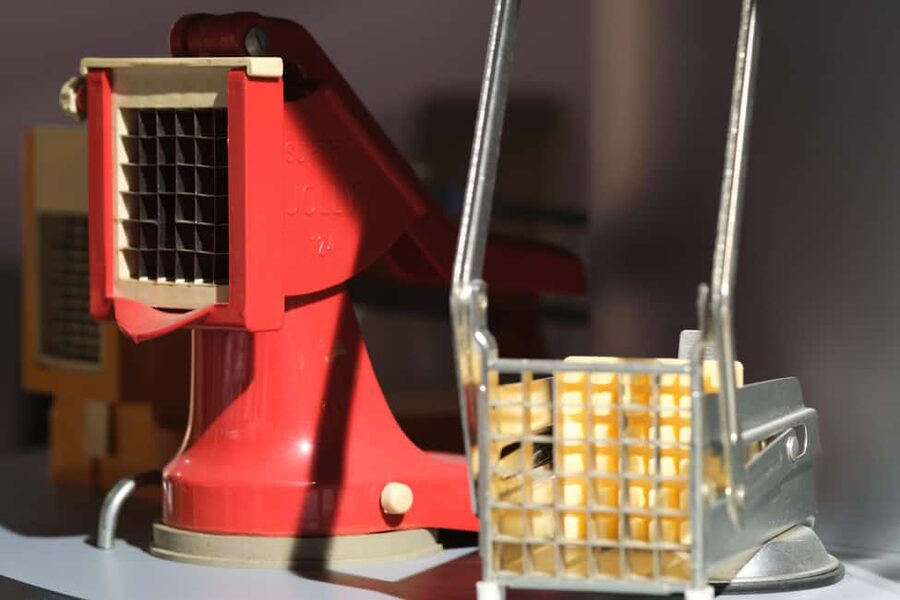
Reviewed · WAFFLE & FRIES TASTINGS
Frietmuseum Brussels: Entry to the fries museum with a tasty treat
Fries get their own museum, and it is way more fun than it sounds. At Frietmuseum Brussels, you get a hands-on look at the world of Belgian fries plus an audio guide that walks you through the story step by step.
Two things I really love: the museum packs in over 1,600 collectibles and interactive games so you are not just reading labels, and the ticket includes a cone of real Belgian fries with sauce at the end. One possible drawback is that this is self-guided, so if you want a live guide with back-and-forth Q&A, you may want to plan for that elsewhere.
In This Review
- Key highlights at Frietmuseum Brussels
- Fries museum basics: what this 1-day stop actually feels like
- Entering the potato story: Peru to Europe on your audio guide
- Over 1,600 collectibles and interactive games: how to enjoy it without missing the best bits
- Halfway stop in Frietland: traditions, folklore, and fry-cooking secrets
- Fries tasting moment: the included cone with sauce, beef fat or vegetable oil
- Photo spots and playful add-ons: how to make your visit memorable
- Price and value: does $16 per person pencil out?
- Timing it in your Brussels day: practical tips to avoid a rushed visit
- Who should book Frietmuseum Brussels, and who might not love it
- Should you book Frietmuseum Brussels?
- FAQ
- FAQ
- What is Frietmuseum Brussels?
- How much does it cost?
- How long should I plan for it?
- Is a guided tour included?
- What is included in the ticket?
- Which languages are available for the audio guide?
- Where does the audio tour begin?
- Is there a specific Belgian fries section?
- Are the fries cooked in beef fat or oil?
- Can I cancel if my plans change?
Key highlights at Frietmuseum Brussels
- 900 m² spread across three floors, focused entirely on fries and the potato
- Audio guide in 11 languages, starting in Peru and moving across South America and Europe
- Frietland for Belgian fries traditions, folklore, and cooking secrets
- A tasty payoff at the end: a cone of fries (+ sauce) cooked in beef fat or vegetable oil
- Photo moments, including a friterie selfie spot and oversized XXL specialties
More Museum Visits in Brussels
- Brussels: Atomium Entry Ticket with Design Museum Ticket
★ 4.4 · 9,254 reviews - Choco-Story Brussels: Chocolate Museum Entrance with Tasting
★ 4.3 · 4,883 reviews - Brussels: Chocolate Museum Visit with Workshop
★ 4.6 · 1,474 reviews - Brussels: Autoworld Museum Ticket
★ 4.7 · 1,301 reviews - Brussels: Museum of Illusions Entry Ticket
★ 4.4 · 815 reviews
Fries museum basics: what this 1-day stop actually feels like
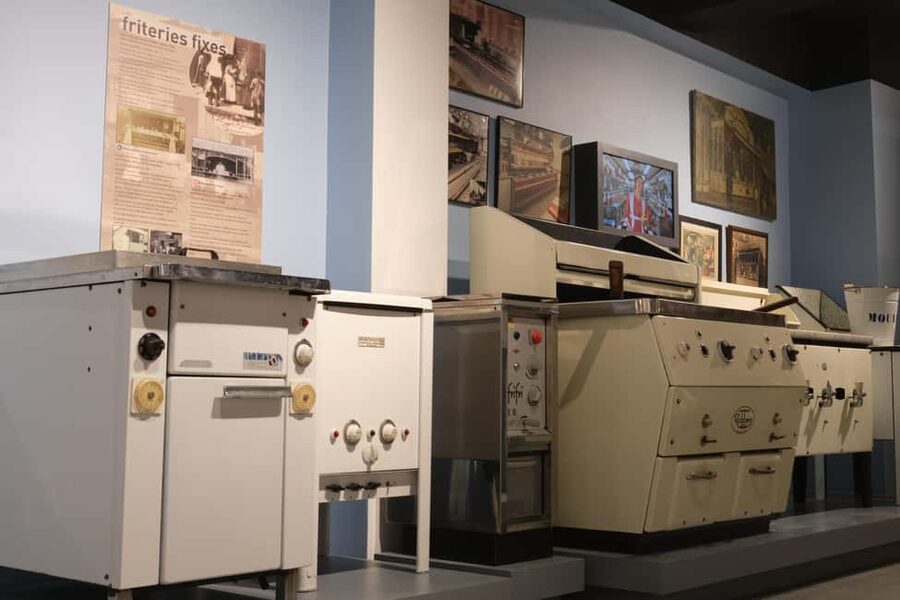
Frietmuseum Brussels is not a quiet museum where you stroll past glass cases and keep moving. It is built like a playful path through the history, culture, and cooking craft behind Belgian fries. The floor area is listed as 900 m², and the exhibit runs across three floors, which helps it feel like you are moving between themed zones rather than looping in place.
The big idea is simple: the potato comes first, then the fry. You start with how potatoes reached and shaped cultures, then you zoom in on how Belgian fries became a near-religion. If you love food history, you get real context. If you love snacks, you get the payoff.
One thing to know up front: because everything is audio-led, the experience moves at your pace. That is a plus for couples and solo visitors. It is also why the included fries at the end feel like an earned reward, not a gimmick.
Entering the potato story: Peru to Europe on your audio guide

Your route is guided by an audio tour available in Dutch, French, English, Spanish, Italian, Russian, Chinese, Japanese, Arabic, German, and Portuguese. The audio kicks off in Peru, described as the birthplace of the potato, and then it continues through a world path covering South America and Europe.
What I like about this approach is that you do not jump straight to Belgian streets and shortcuts. You build the “why” first. You learn how cultivation traveled and how the potato became a staple before it ever became a fry.
As you move through the early sections, you will see a mix of formats, including old posters, films, and testimonials from friturists. That matters because you get multiple ways to understand a food tradition, not just a timeline. It is also a good way to keep kids interested without turning the visit into pure play.
A practical note: audio tours work best when you pause just long enough to read what is around you. If you rush, you will miss the little cues that make the story click.
Over 1,600 collectibles and interactive games: how to enjoy it without missing the best bits
Frietmuseum Brussels leans hard into interactivity. The museum features over 1,600 collectibles, plus interactive games scattered through the experience. This is the part that often surprises people, because 1,600 is a lot when you are expecting a small snack museum.
I recommend you treat this like an “order matters” visit. Start with the audio route, then circle back for the games that catch your eye. Otherwise, you might spend too long playing early and arrive at the fries tasting zone feeling like you already used up your energy.
The collectibles and game areas also help for mixed groups. Food lovers can focus on the history and the cooking story. Families can spend time on hands-on parts. Even if you do not care about potato origins, the interactive elements keep the museum from feeling static.
From what I have seen works best, aim to spend at least a chunk of time wandering the middle floors, because that is where curiosity tends to spike. You are not just collecting facts, you are learning how fries became a cultural symbol.
Halfway stop in Frietland: traditions, folklore, and fry-cooking secrets
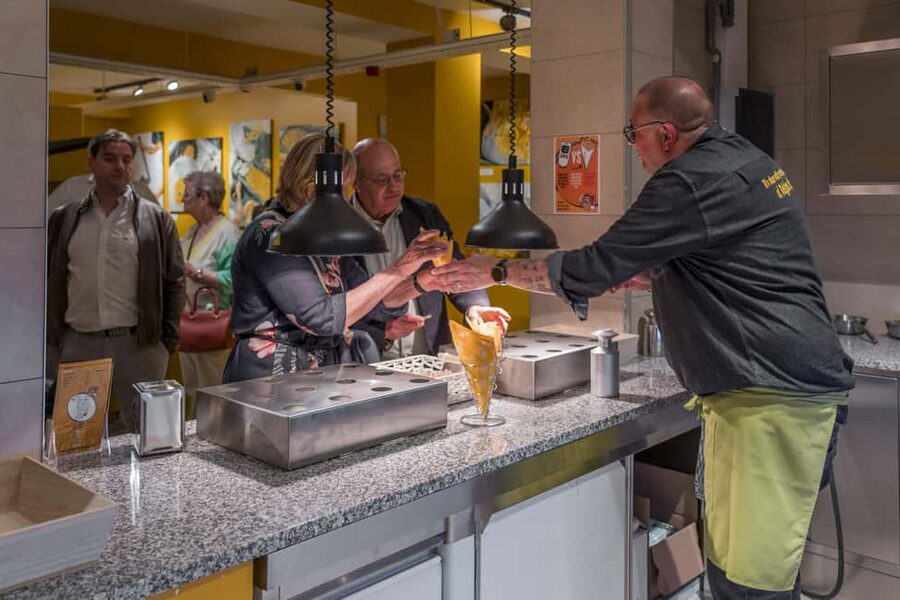
The experience has a clear turning point halfway through: head to Frietland, the area that focuses on Belgian fries specifically. This is where the story narrows from “potato around the world” to “Belgium and the art of fries.”
Frietland is described as covering traditions, folklore, and crispy anecdotes, which is a fun way of saying it is not only technical. You learn how people talk about fries, how the culture forms around them, and why certain methods became part of local identity.
I like this section because it turns the fries into more than food. The museum frames fries as something shaped by habit, pride, and consistency. You also get explanations tied to the “perfect cooking” idea, so it feels more grounded than a theme-park food stop.
If you are the type who enjoys practical food knowledge, this is the zone where you will likely pay attention longest. It is also a good moment to slow down and let the audio guide connect the earlier potato history to why the end result matters.
More waffles and frites in Brussels:
Fries tasting moment: the included cone with sauce, beef fat or vegetable oil

The payoff comes after you hand in your audio guide. You receive a cone of fries with sauce, cooked either in typical Belgian beef fat or vegetable oil. That choice is listed as part of the experience, and it is worth knowing because it changes the flavor profile.
Beef fat fries tend to taste richer and more savory. Vegetable oil fries can feel lighter. You are not choosing the cooking method in the information provided here, but you can still use this moment as a quick, low-effort taste test. Notice the difference in aroma and mouthfeel, then tie it back to what you learned about “secrets of perfect cooking.”
This included cone is one reason the ticket feels like fair value. A lot of museums try to tack on a small snack as a bonus. Here, the snack is part of the story’s ending, so you leave with both information and something you actually wanted.
Photo spots and playful add-ons: how to make your visit memorable
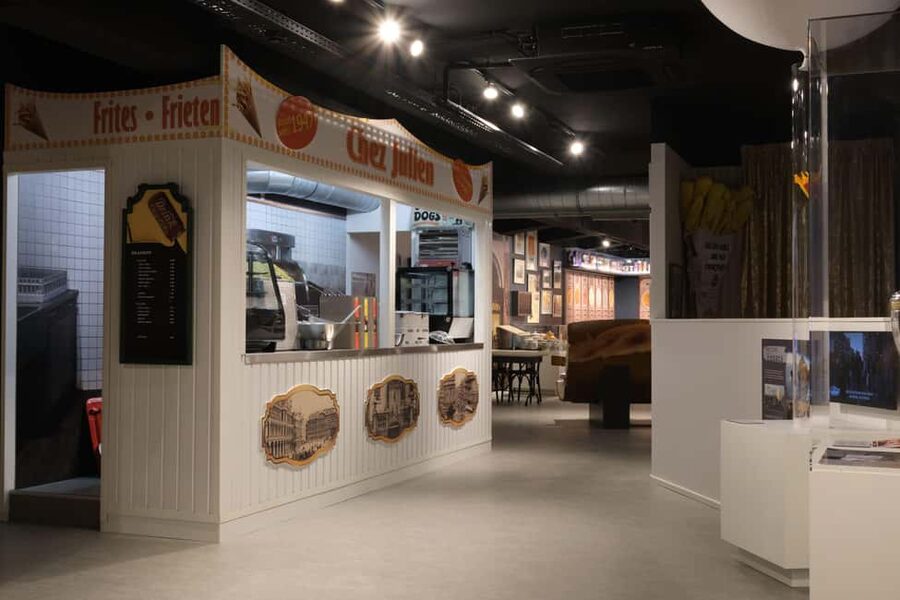
Even if you come mainly for fries history, Frietmuseum Brussels gives you multiple ways to capture your visit. There are photo opportunities described as:
- a selfie spot in a friterie setting
- a spot where you can harvest potatoes on a tractor
- chances to pose next to XXL specialties
I find these are useful, not just for social media. They also break up the walking and give your brain a reset between floors. If you are visiting with kids, they also create a natural “let’s do this now” rhythm that makes the museum feel lighter.
Keep in mind that this is a museum, so you do not want to turn every exhibit into a photo session. Pick one or two big photo moments and then keep moving with the audio.
Price and value: does $16 per person pencil out?
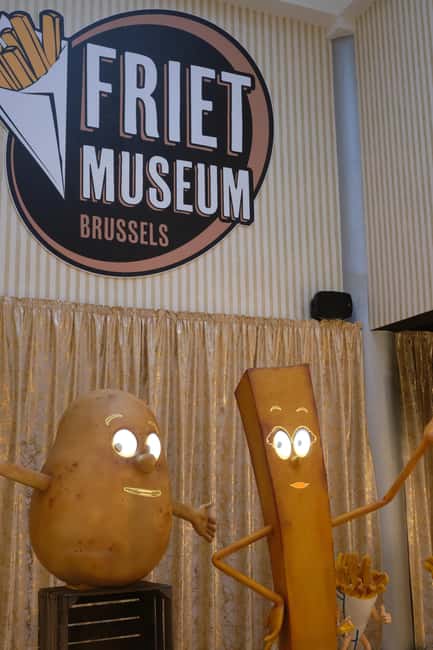
At around $16 per person, this ticket price can be a smart value if you like food culture and want a full activity, not just a quick snack stop. The reason is the package is doing more than one job.
You get:
- an audio guide included
- a cone of fries with sauce included
- a multi-floor exhibit with 1,600+ collectibles, interactive games, films, and testimonials
- a themed journey from potato origins to Belgian fry tradition
When you price it mentally, the included fries alone would be a separate purchase at many food stops. Add the learning content and the time-filling design, and $16 starts to look reasonable for a day activity in Brussels.
I also like that it is easy to pace. You can spend more time in areas you enjoy, then still reach the ending without feeling rushed. That makes it less risky than experiences that only work if you stay seated or follow a fixed timetable.
Timing it in your Brussels day: practical tips to avoid a rushed visit
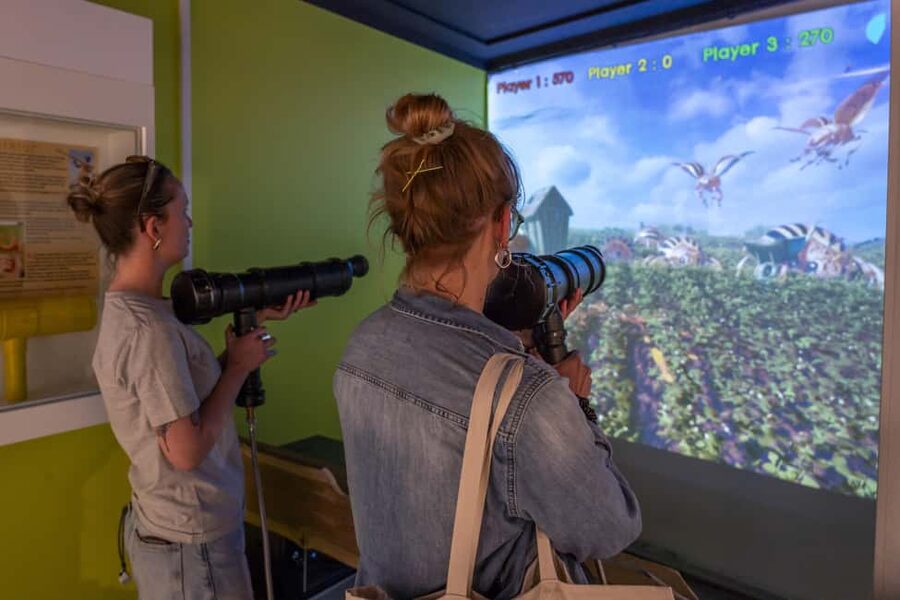
This is listed as valid for 1 day, with starting times based on availability. That matters because you can match it to the rest of your itinerary. If you are touring Brussels on a tight schedule, a museum that can absorb 1 to a few hours is often a good choice.
For planning, I suggest you build in a buffer. There are multiple interactive zones and several points where stopping to listen makes a difference. If you try to fit it between two long walking legs, you will likely feel rushed and miss the best connections between sections.
What to do when you arrive:
- grab your audio guide first
- take a quick look at where Frietland and the tasting end zone are so you mentally pace
- do the audio route, then treat the interactive games like optional add-ons once you understand the story
If you go with someone who thinks museums are boring, the interactivity is your insurance policy. And if you go with someone who is a food history fan, the Peru-to-Europe route plus friturist testimonials gives real substance.
Who should book Frietmuseum Brussels, and who might not love it
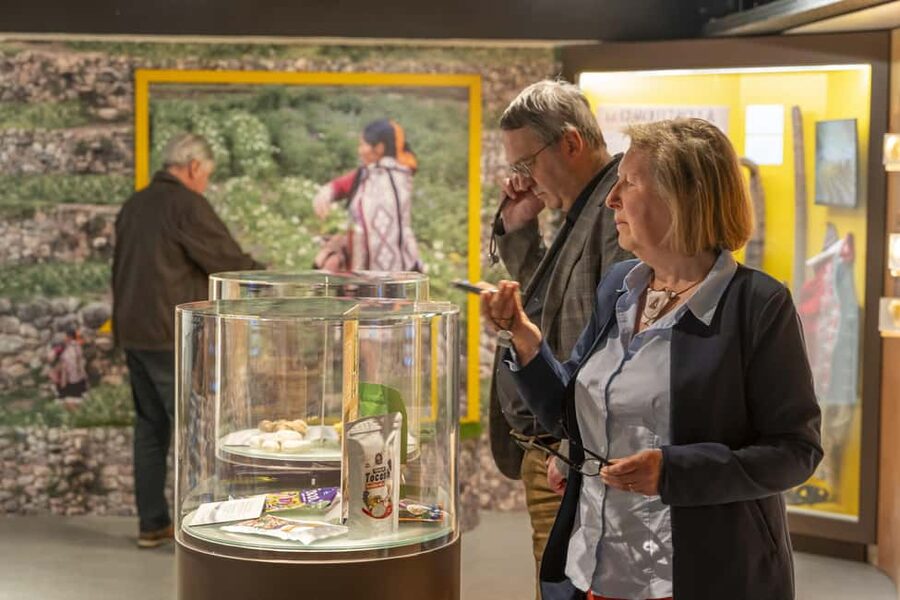
This fits best if you enjoy at least one of these:
- food history that is playful, not stuffy
- interactive museums where you push buttons and try things
- the culture angle, not just the recipe angle
It is also great for visitors who want a self-guided experience. You control the speed, you choose when to pause, and you do not need to synchronize with a group pace.
If you are only interested in eating Belgian fries and nothing else, you might find it feels like a lot of museum time. But even then, the included cone and the chance to learn why Belgian fries became iconic can turn a snack mission into a better story for your day.
From the guide and staff energy, you might even get a chance to meet fry experts. I liked hearing about staff such as Diamond and Flo as fry masters, with real enthusiasm and explanations. I would still frame it as a bonus, not a promise.
Should you book Frietmuseum Brussels?
Yes, book it if you want a fun, food-focused activity that lasts and gives you more than one bite of Belgian culture. The strongest reasons are the sheer scale of the collections, the hands-on vibe, and the fact that the ticket includes a cone of real fries with sauce after the audio tour.
If you dislike audio-guided museums, or you want a live guide explaining everything in real time, you may feel constrained. But if you are okay wandering at your own pace, Frietmuseum Brussels is a high-value, low-stress way to spend part of a day in Belgium.
FAQ
FAQ
What is Frietmuseum Brussels?
Frietmuseum Brussels is a museum experience focused on Belgian fries and the potato, with three floors of exhibits and interactive elements, plus an audio guide.
How much does it cost?
The price is listed as $16 per person.
How long should I plan for it?
The experience is listed as valid for 1 day. One of the most useful clues from experience is that the museum can take longer than you might expect once you start the interactive parts and games.
Is a guided tour included?
No. A guided tour is not included. You use the included audio guide.
What is included in the ticket?
Your ticket includes an audio guide (in multiple languages) and a cone of fries with sauce.
Which languages are available for the audio guide?
The audio guide is available in Dutch, French, English, Spanish, Italian, Russian, Chinese, Japanese, Arabic, German, and Portuguese.
Where does the audio tour begin?
The audio tour kicks off in Peru, described as the birthplace of the potato.
Is there a specific Belgian fries section?
Yes. Halfway through, the experience includes Frietland, focused on Belgian fries traditions, folklore, and cooking secrets.
Are the fries cooked in beef fat or oil?
The fries you receive at the end are cooked either in typical Belgian beef fat or vegetable oil.
Can I cancel if my plans change?
Free cancellation is listed, with the option to cancel up to 24 hours in advance for a full refund. Reserve and pay later is also listed.
Latest from Brussels




Waffle & Fries Tastings, compared.

Historical Tour with Chocolate & Waffle Tasting
Read our review →
Historical Walking Tour with Chocolate & Waffle Tasting
Read our review →
Belgian Waffle-Making Workshop with Beer Tasting
Read our review →
Brussels Walking and Tasting Tour (Beers,Chocolates&Fries/Waffle)
Read our review →
Brussels Chocolate Beer Waffle and Belgian Whiskey All-in-One (Small Group) Tour
Read our review →
Walking Food Tour with Chocolate, Beer, & Waffles
Read our review →Browse the lists this tour appears in