
Reviewed · CHOCOLATE MAKING WORKSHOPS
Discover authentic Ghent with historian & taste the best chocolate
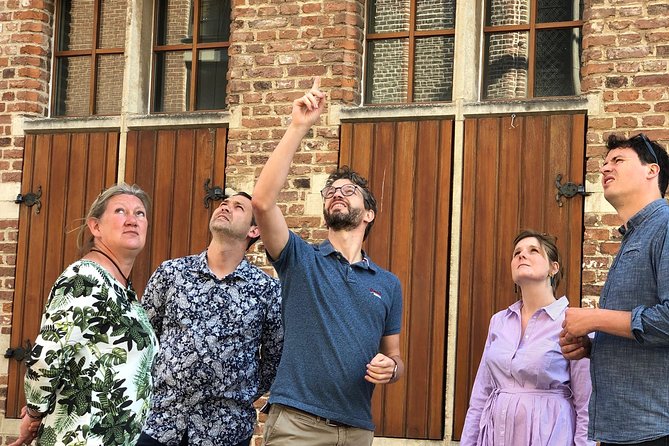
Ghent feels like a living textbook of power and trade. This guided walk, led by historian and teacher Wim, turns key squares and landmarks into a clear story, with the best part being a chocolate taste stop mixed in.
I like the way the route helps you get your bearings fast, starting in Sint-Baafsplein where the city’s economic, political, cultural, and religious threads all connect. I also like that the pace stays easy, about two hours, and the group is small, capped at 15.
One thing to consider: this is mainly a history-and-streets walk, not a long chocolate tour. If you want an hour of chocolate-focused shopping and tasting, you may wish the sweet stop lasted longer.
In This Review
- Key highlights worth your attention
- Entering Ghent Through Sint-Baafsplein
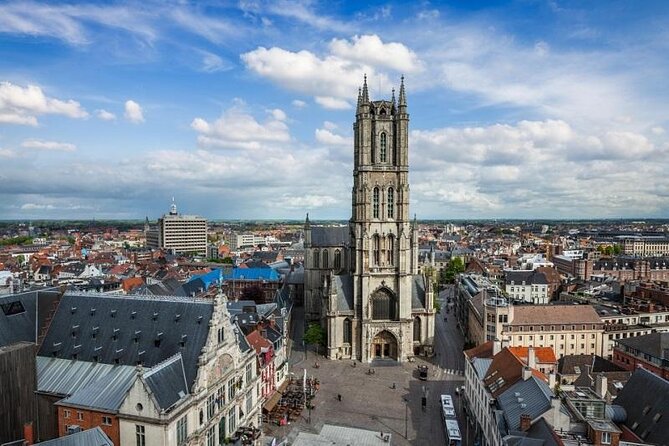
- St. Bavo’s Cathedral, quick walkaround, real payoff
- Maaseikplein and the Van Eyck visual clue
- Geeraard de Duivelsteen, the castle of villains on the Scheldt
- Hoogpoort and the 13th-century streets vibe
- Ghent Town Hall and Emperor Charles V
- Stadshal and the building with a contested nickname
- Korenmarkt, 800-year-old houses, mysterious inscriptions
- Het Groot Vleeshuis, meat quality without refrigeration
- Gravensteen, a small castle built to intimidate
- St. Veerleplein, Neptune and sea creatures
- Graslei and Korenlei, the harbor highlight
- Timing, group size, and how $42.05 turns into value
- The chocolate taste: small break, not a sugar marathon
- Who this tour suits best
- Should you book the Ghent historian and chocolate walk?
Key highlights worth your attention
- Sint-Baafsplein map-to-mind trick that links Ghent’s big history to the square you are standing in
- St. Bavo’s Cathedral walkaround focused on building history and major art treasures
- Van Eyck and city villains in quick hits at Maaseikplein and Geeraard de Duivelsteen
- Town Hall and Emperor Charles V plus the reason Ghent got the nickname noose bearers
- Harbor views at Graslei and Korenlei where centuries of skippers and work culture still feel present
- Chocolate taste built into the route so you get a break without derailing the story
More Chocolate Tastings in Ghent
- Ghent: Belgian Chocolate Walking Tour with Tastings
★ 4.9 · 259 reviews - Brussels: Bruges & Ghent Tour w/ Cruise & Chocolate Tasting
★ 4.2 · 144 reviews - Ghent: Famous Belgian Chocolate Walking Tour with Tastings
★ 5.0 · 131 reviews - Ghent: Guided City Tour with Chocolate Tastings
★ 4.8 · 36 reviews - Charlie’s Private Chocolate Tour (Ghent)
★ 5.0 · 34 reviews
Entering Ghent Through Sint-Baafsplein
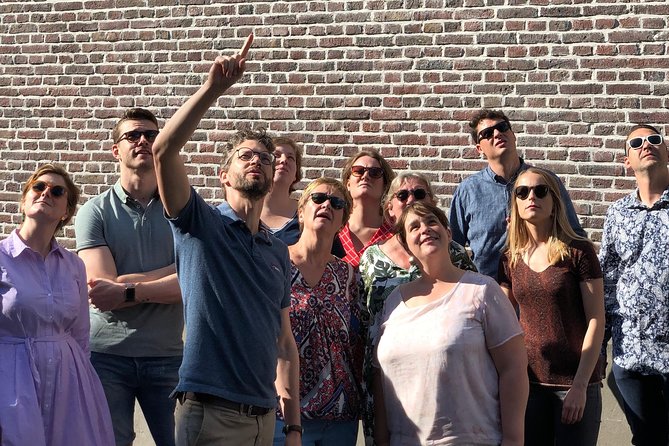
Your tour begins at Sint-Baafsplein, right in front of the white statue in the middle of the square. This is a smart starting point because Ghent is easier to understand when you start with a place where multiple forces overlap. Wim uses the square as your first “big picture” page, then he narrows in.
In practical terms, you are not just looking at pretty buildings. You are learning how Ghent functioned as a city where money, politics, culture, and religion pulled on each other. The square makes those themes feel less like memorizing dates and more like seeing causes in real space. I also appreciate that the introductory stop is short, around 20 minutes. You get the framework, then you keep moving while the story is still fresh.
And yes, you will likely notice how people treat the square day-to-day. That matters, because a good city tour should help you read what is in front of you, not just what is on a plaque.
St. Bavo’s Cathedral, quick walkaround, real payoff
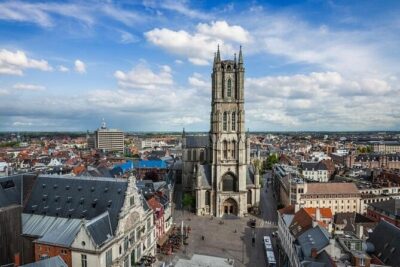
Next comes St. Bavo’s Cathedral. You circle the cathedral and zoom in on what shaped it over time, then Wim points out key art treasures without turning it into a lecture marathon.
This is one of those stops where you get value from a guide’s focus. From the outside, cathedrals can look like “big old buildings.” Inside or around them, the story becomes sharper: how it developed, what it was meant to signal, and why the art matters in the larger civic and religious picture of Ghent.
The stop is about 10 minutes, so you will not leave with every detail written in your notebook. But you should leave with a clearer sense of what to look for when you go back on your own later.
Maaseikplein and the Van Eyck visual clue
At Maaseikplein, the tour turns your attention to a very Ghent-specific landmark conversation: the Van Eyck brothers. Wim uses the area as a visual prompt so you can connect what you have heard about the artists with what you can actually see in the city streets.
This is a small stop, around 5 minutes, but it plays an important role. It keeps the tour from becoming “only architecture” and helps you remember that Ghent produced art and ideas alongside commerce and politics. If you like stories that link people and places, this kind of quick cue works well.
Geeraard de Duivelsteen, the castle of villains on the Scheldt
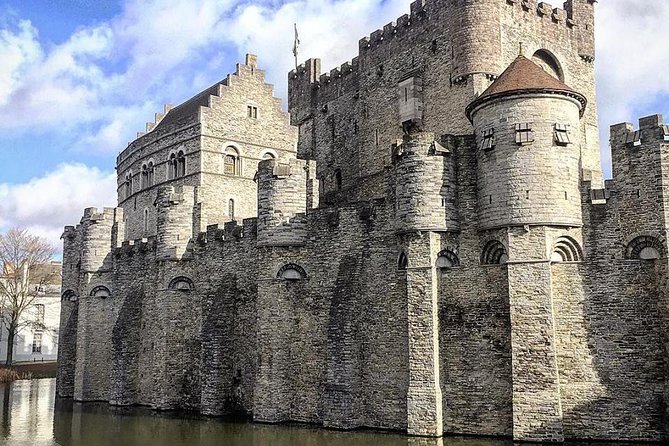
Then you get a mood shift in the best way. At Geeraard de Duivelsteen, also known as the Castle of Gerald the Devil, Wim mixes local legend with political reality.
You are near the Scheldt, so the setting feels tied to water and power, not just “a spooky building.” The stop is short, around 5 minutes, but you come away with a better sense of why that kind of fortress showed up in Ghent at all. It is a reminder that medieval cities were not gentle. They were competitive, strategic, and often defensive.
If you like your history with a bit of theater, this stop helps the whole walk feel more human.
Still got an afternoon? Try these:
Hoogpoort and the 13th-century streets vibe
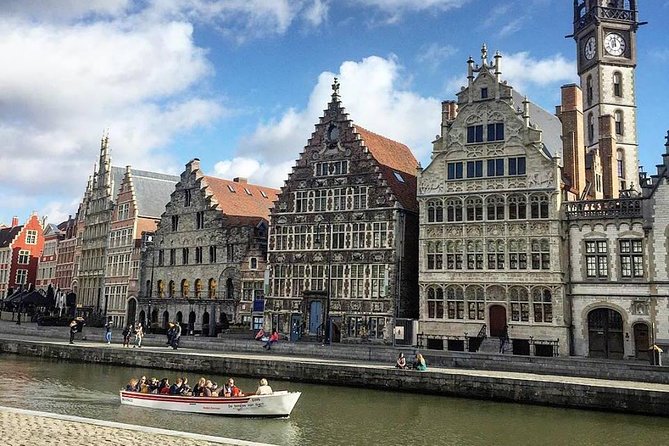
Hoogpoort is next, and this is where the tour starts to feel like walking through old Ghent rather than hopping between monuments. Wim asks you to reflect on ancient buildings dating back to the 13th century.
A lot of tours rush past streets like this. Here, you slow down for a few minutes. That tiny pause helps you notice details you would otherwise miss, like how long-lasting Ghent’s urban fabric is. Even when you think you are just walking, you are really learning how the city’s shape stayed consistent while leadership and lifestyles changed around it.
Ghent Town Hall and Emperor Charles V
At Ghent Town Hall, or Stadhuis, you spend about 10 minutes. This is a standout stop because it brings the political story into focus.
Wim connects the building’s long timeline with the conflict between Ghent citizens and Emperor Charles V. You also learn the city’s nickname tied to that revolt: noose bearers. I like this moment because it makes a municipal building feel personal. It is not just civic architecture. It is evidence of how the city argued with power.
If your travel style includes learning who negotiated, who resisted, and why the outcome shaped daily life, this is a good stop to pay attention at.
Stadshal and the building with a contested nickname
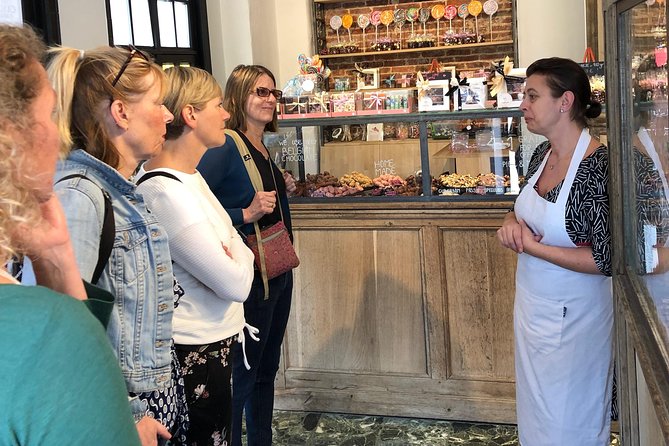
Stadshal is another quick, around 5-minute stop, but it is built for your curiosity. Wim points out what makes this building “most contested,” and he gives you the nickname idea so you can recognize it as more than a generic hall.
Even if you miss one word or name here, the purpose is clear: Ghent’s public buildings were frequently contested spaces. People fought over them because they represented authority, commerce, or control.
Korenmarkt, 800-year-old houses, mysterious inscriptions
Korenmarkt is one of the best places for a small “look closer” moment. Wim points out houses with about 800 years of history and mentions mysterious inscriptions tied to that area.
This is where you can switch from listening mode to noticing mode. If you enjoy reading architectural details, you will like Korenmarkt. If you prefer a more relaxed experience, just let Wim’s commentary give you a few targets. Either way, the time is short, about 5 minutes, so you are not standing around waiting.
Het Groot Vleeshuis, meat quality without refrigeration
At Het Groot Vleeshuis, you get a practical history story. How did butchers guarantee meat quality when there was no refrigeration? Wim explains the idea of how butchers worked together in one building.
This is a great example of how history can explain everyday logic. Quality control is not a modern invention. It is a system. In Ghent, the meat hall becomes the city’s answer to trust, standards, and enforcement.
The stop is about 5 minutes, but you may find yourself thinking about it later when you walk through markets in Belgium. It connects “medieval” to “real systems.”
Gravensteen, a small castle built to intimidate
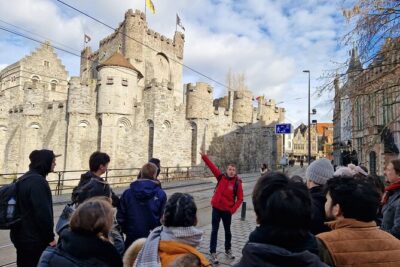
Next you reach Gravensteen, where the story turns dramatic. Wim explains how the Count of Flanders wanted to send a clear message to Ghent inhabitants and built a small castle.
This is about power projection. A fortress is not just a residence. It is a warning, a symbol, and a way to hold the city at arm’s length. The stop is brief, around 5 minutes, but it fits perfectly after the Town Hall and Stadshal moments. You see the same theme of authority, expressed differently.
If you are the kind of traveler who likes your photos to mean something, take a moment here. You should come away with a better reason for why the castle shape looks the way it does.
St. Veerleplein, Neptune and sea creatures
At St. Veerleplein, Wim turns your attention to sea themes, including Neptune, seahorses, and strange dolphins. This stop is also short, around 5 minutes.
This is one of those “tiny but memorable” moments that keeps the walk from becoming only heavy politics and cathedral stone. It also reminds you Ghent was a trading city. Water symbolism fits because the city’s livelihood depended on routes and transport.
Even if you only half-follow the mythology, the fact that it exists at all gives you a sense of how long people have been building meaning into public spaces.
Graslei and Korenlei, the harbor highlight
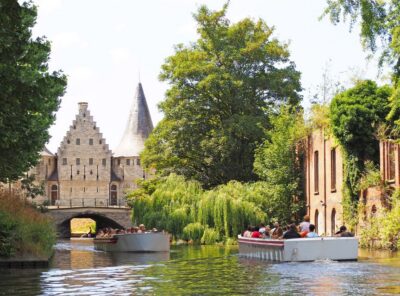
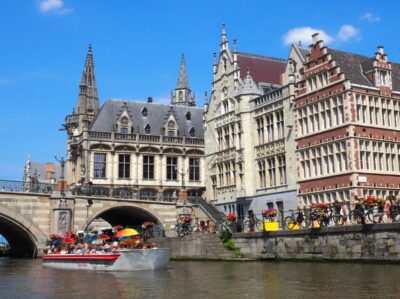
For many people, the highlight is the harbor area at Graslei and Korenlei. The tour spends about 5 minutes here, and it is easy to see why.
This is where Ghent feels like a working medieval port. Skippers worked here for centuries, and they also sought entertainment. That mix of labor and leisure is the sweet spot for understanding a city. It is not just what people did, it is how they lived while doing it.
When you stand by the water, the earlier stops start making more sense. You can connect the art, the politics, the buildings, and the trade systems back to the harbor where goods moved and money came in.
If you want a photo moment, this is it. You do not need a long pause, but you do want one clean look around before you move on.
Timing, group size, and how $42.05 turns into value
This tour runs about two hours and is offered in English, with a mobile ticket. The price is $42.05 per person, and the key value point is that site admissions you encounter along the route are free.
That means you are mainly paying for the guide, the storytelling, and the route structure that makes Ghent make sense quickly. For a city like Ghent, that is a good deal if you like learning while walking instead of spending hours reading on your own.
The group size stays small, up to 15 people. That matters because it keeps the experience from turning into a shuffle. You still move at a comfortable speed, but you get better interaction and less noise.
The tour is booked fairly far in advance on average, around 24 days. If you are traveling in a busy season or on a weekend, I would plan ahead so you can pick a time that fits your day.
The chocolate taste: small break, not a sugar marathon
The “best chocolate” angle is real, but it is not the entire mission. The tour weaves in a chocolate taste break as a refreshment between the history moments. People who love the city stories tend to enjoy this structure because the chocolate stop acts like punctuation, not the main sentence.
You should expect a taste break that leaves you satisfied, not a long chocolate education session or a full dessert crawl. One careful consideration from feedback is that some people wished the chocolatier time was longer.
Still, if you want chocolate without losing your focus on Ghent’s culture and landmarks, this works well. You get to enjoy something sweet while keeping the day moving.
Who this tour suits best
This walk is a strong match if you want:
- A clear, guided introduction to Ghent that connects the major themes, political, cultural, religious, and economic
- A history-focused approach led by an educator-style guide, with stories that help you visualize medieval city logic
- A compact route that covers a lot of recognizable spots without dragging on
It also suits people who are comfortable walking for about two hours and like short stops where you get a new angle, then move on.
If you are visiting with kids, it could be fun thanks to the villain castle story and the sea-creature stop, but the history tone may be heavier depending on your child’s attention span. If your main goal is a long chocolate binge, look at options that are more dessert-forward.
Should you book the Ghent historian and chocolate walk?
Book it if you want a smart first look at Ghent with a guide who teaches you how to see. The combination of themed city storytelling and a chocolate taste break gives you an easy win: you leave with context, not just photos.
Skip it or adjust expectations if you want chocolate to be the main event. This is a walk where chocolate is a sweet pause inside a city-history experience.
If you time it well, this tour is a great way to start your Ghent day. You will understand the squares, buildings, and waterfront much better when you keep exploring on your own afterward.
Sweet Stops in Ghent
- Chocolate history workshop Ghent
★ 5.0 · 34 reviews - Private Chocolate Experience in Ghent
★ 5.0 · 31 reviews - Ghent Chocolate Tasting and Sightseeing Tour
★ 5.0 · 21 reviews - Ghent: Belgian Chocolate Making Workshop with Beer Tasting
★ 4.3 · 15 reviews
Latest from Ghent





Chocolate Making Workshops, compared.

Choco-Story Brussels: Chocolate Museum Entrance with Tasting
Read our review →
Hungry Mary’s Famous Beer and Chocolate Tour in Brussels
Read our review →
Choco-Story Museum with Audio Guide and Tastings
Read our review →
Belgian Chocolate Making Workshop with Tastings
Read our review →
Historical Tour with Chocolate & Waffle Tasting
Read our review →
Historical Walking Tour with Chocolate & Waffle Tasting
Read our review →
Browse the lists this tour appears in