
Reviewed · MUSEUMS
Bruges: Ticket Groeningemuseum (Groeninge Museum)
Six centuries of art, under one roof. The Groeninge Museum turns Bruges into a time machine, with major names and changing artistic styles in one focused visit. I like that it covers the art you want to recognize, plus the supporting works and objects that explain how that art was made and why it mattered.
Two things I especially like: the museum’s audio guide is described as effective, and the visit supports QR codes and on-site info so you can slow down and read at your own pace. A thoughtful touch is the seating setup that lets you linger with artworks without feeling rushed.
One consideration: you’re expected to plan around your entry time, and the museum closes at 17 h, so you’ll want to manage your pace.
In This Review
- Key highlights you should know
- Groeninge Museum at a Glance: Six Centuries in One Ticket
- Getting Oriented Fast: Audio Guides, QR Codes, and Comfortable Viewing
- Flemish Primitives and Bruges Icons You’ll Recognize
- Jacob van Oost and the Joy of Flower Pieces and Artifacts
- Neo-Classical Artists of Bruges: Suvée and Duvivier in Focus
- 19th and 20th Century Belgium: From Expressionists to Magritte
- Temporary Exhibitions and Planning Around the 17 h Closing
- Practical Rules: Bags, Flash Photos, Pets, and Kids Tickets
- Price and Value: Is $17 a Good Deal?
- Should You Book the Groeninge Museum Ticket?
Key highlights you should know
- Six centuries of art in one visit, with Bruges connections from the late 1400s onward
- Flemish Primitives stars, including Jan van Eyck, Hans Memling, and Hieronymus Bosch
- Flower pieces and monumental canvases, with Jacob van Oost among the artists represented
- A clear timeline, from neo-classical Bruges artists to 20th-century Belgium
- Big-name modern art, including Magritte, Delvaux, and printed works by Marcel Broodthaers
- Comfort matters, with seating designed for taking your time
More Museum Visits in Bruges
- Bruges: Choco-Story Museum with Audio Guide and Tastings
★ 4.2 · 1,825 reviews - Choco-Story: The Chocolate Museum in Bruges
★ 4.0 · 544 reviews - Bruges: Chocolate Making Workshop and Chocolate Museum Entry
★ 4.6 · 395 reviews - Bruges: Musea Brugge Card with Entry to 11 Museums
★ 4.6 · 328 reviews - Bruges: Museum of the Church of Our Lady Entry Ticket
★ 4.6 · 213 reviews
Groeninge Museum at a Glance: Six Centuries in One Ticket
This ticket gets you into the Groeninge Museum for a one-day art journey in Bruges, in Flanders, Belgium. The museum is priced around $17 per person, which is a strong deal if you actually want depth, not just a quick museum selfie run.
You’re walking through roughly six centuries of art, centered on the Low Countries and especially the moment when Bruges was a major artistic hub, roughly the late 15th and early 16th centuries. And because the collection stretches forward in time, you can see how ideas shift as Europe moves from early Netherlandish detail to modern experimentation.
Also, this is set up to feel practical. You get skip the ticket line, and the space is wheelchair accessible. It’s the kind of ticket that fits either a standalone museum day or a day when you want one anchor activity and everything else can stay flexible.
Getting Oriented Fast: Audio Guides, QR Codes, and Comfortable Viewing
If you’re the type who likes to understand what you’re looking at, this museum is built for that. The visit is supported by an audio guide, and people also point out the documentation with QR codes, which helps you connect the dots while you’re in front of the work.
There’s another detail that matters more than you might expect: reviewers note the seating setup is designed so you can take your time and read comfortably. That changes the whole feel of a museum. Instead of hovering, you can settle in, look longer, and absorb what an artwork is doing.
What to do on your first hour: start at a pace that lets you spot the museum’s rhythm. You’ll notice the collection is organized so your eyes can move from major painters to related works and styles. Use the audio guide or QR codes early, not only for famous paintings. That way, when you hit the big names, you’re already primed for context.
Flemish Primitives and Bruges Icons You’ll Recognize
One of the best reasons to buy this ticket is the chance to see Flemish Primitives in a setting that stays grounded in place. The museum highlights artists who called the Low Countries home, with a focus on those active in Bruges during the late 1400s to early 1500s.
Among the names you’ll come across are Jan van Eyck, Hans Memling, and Hieronymus Bosch. Even if you only know them from reproductions, seeing them in person helps you understand why they became legends. These artists shaped a visual language tied to careful observation and storytelling through detail.
How to get more out of these works:
- Don’t sprint to the next gallery. Pick one or two works and use your audio guide to understand what you’re seeing.
- Look for how the artists balance realism and symbolism. With Primitives, the meaning often hides in the visual choices, not just the subject matter.
This is also a great stop if you want a museum that explains rather than just shows. The collection isn’t only about famous names. It’s about the artistic ecosystem that produced them.
Jacob van Oost and the Joy of Flower Pieces and Artifacts
Beyond the headline painters, the museum includes historical items, flower pieces, and grand canvases by Jacob van Oost. This is a section where you can slow down and enjoy the variety.
Flower pieces can be deceptively interesting. They’re not only decorative. In many art traditions, flowers carry coded meanings and reflect a world where collecting, gardens, and symbolism overlapped. In a museum like this, those works also help you connect the dots between everyday objects and formal painting.
Jacob van Oost’s monumental canvases add another layer. Instead of only looking at intimate detail, you get works designed to take up space and command attention. That shift is part of what makes the Groeninge Museum worth your time. It keeps the visit from becoming a single-theme museum day.
Still got an afternoon? Try these:

Neo-Classical Artists of Bruges: Suvée and Duvivier in Focus
The Groeninge Museum doesn’t stop in the early Netherlandish era. You’ll also meet neo-classical artists from the 18th and 19th centuries, including Joseph-Benoît Suvée and Jean Bernard Duvivier.
Why this matters: neo-classicism is often easier to understand when you see it as a continuation and reaction. Artists are responding to earlier traditions, but they also shift the focus toward refined portraiture and history pieces, using a different kind of seriousness than you see in earlier centuries.
If you enjoy how styles evolve, this section is a good checkpoint. You can ask yourself what changed:
- How does the painting style handle space?
- How do subjects feel more formal or more staged?
- Does the storytelling become more about grand narrative than close observation?
Suvée and Duvivier are especially interesting because their artistic journeys connect back to Bruges, then reach international recognition. That Bruges link helps the museum feel cohesive, not like random storage of artworks from everywhere.
19th and 20th Century Belgium: From Expressionists to Magritte
The later collection takes you from 19th-century art into the 20th century, and it’s not shy about variety. You’ll find works by artists such as Edmond van Hove, Ferdinand Khnopff, and Emile Claus. Then the museum goes further into Flemish expressionists, including Permeke, De Smet, Van de Woestyne, and Brusselmans.
This is the point where you’ll feel the museum widen. Expressionists bring a different emotional volume. Instead of painting that aims to be perfectly smooth, you get work shaped by mood, line, and a willingness to show the artist’s inner stance.
From there, the museum highlights major modern names and formats. It houses complete editions of Marcel Broodthaers printed works, and it includes masterpieces by Georges Van Tongerloo. You’ll also encounter striking paintings by Paul Delvaux and René Magritte, plus post-war works by Raoul De Keyser and Roger Raveel.
How to approach this modern stretch without feeling overwhelmed:
- Pick a single modern artist and commit to reading the gallery with them in mind.
- Use the audio guide strategically. Modern art often rewards understanding the artist’s intent, and the museum is clearly prepared for that kind of slower viewing.
If you think you only like one period, this part can surprise you. The best museum visits happen when you’re willing to let a painting change your expectations.
Temporary Exhibitions and Planning Around the 17 h Closing
The Groeninge Museum isn’t frozen in time. It regularly hosts temporary exhibitions, focus displays, and ongoing research that results in exhibitions with international appeal.
That’s good news, because it means your visit isn’t guaranteed to be identical to someone else’s visit weeks or months earlier. The practical takeaway for you is simple: before you arrive, quickly check what’s on during your dates, and don’t assume the main highlights are the only reason to go.
Also, pay attention to time. One review specifically notes the museum closes at 17 h. If you want a calm visit, plan to start earlier rather than later. The museum has enough range that if you arrive late, you’ll spend the last hour rushing through the exact sections you hoped to linger in.
Practical Rules: Bags, Flash Photos, Pets, and Kids Tickets
Museums with good collections often have strict house rules, and this one is clear.
- No luggage or large bags are allowed.
- Flash photography is not allowed.
- Pets are not allowed, but assistance dogs are allowed.
- If you’re visiting with children, bring the child’s passport or ID card.
- Children under 13 can get a free ticket at the box office.
This matters because it changes how you travel light. If you’re doing Bruges by foot (and many people do), pack minimal essentials and keep your hands free. You’ll move faster, and you won’t feel stressed at the entrance.
Languages aren’t listed as a long list here, but the experience does support multiple visitors, and the museum has information tools like QR codes. If you’re relying on audio or printed guidance, plan to spend a few minutes at the start getting comfortable with the format.
Price and Value: Is $17 a Good Deal?
At about $17 per person for a one-day museum ticket, the value looks good if you’re even slightly serious about art. The reason is the breadth. You’re not paying just for a single wing of famous painters. You’re getting a six-century sweep with major names across early art, neo-classicism, expressionism, and modern painting.
You also benefit from visit supports that make the experience more worthwhile than a plain walk-through:
- Skip the ticket line, which saves precious time in Bruges
- Audio guide described as effective
- QR codes that help you understand what you’re seeing
- Seating that supports slow looking
If you’re short on time in Bruges and want one museum experience that covers both famous artists and the transitions between periods, this is a practical choice. If you only want ultra-famous highlights and nothing else, you could still enjoy it, but you might feel you’re paying for depth you might not use.
Should You Book the Groeninge Museum Ticket?
Book it if you want a focused, one-day art visit with real range, from Jan van Eyck and Bosch to Magritte and Delvaux, plus the contextual works that help everything make sense. It’s especially worth it if you like guidance tools and you plan to slow down instead of sprint.
Skip it or think twice if you’re coming primarily for something very specific and you’re short on time. The museum closes at 17 h, and the collection is broad enough that arriving late can cut the experience you came for.
If you want a museum day that feels structured, comfortable, and packed with recognizable art names across centuries, this ticket is a solid bet.
Latest from Bruges

Museums, compared.
Atomium Entry Ticket with Design Museum Ticket
Read our review →
Choco-Story Brussels: Chocolate Museum Entrance with Tasting
Read our review →
Choco-Story Museum with Audio Guide and Tastings
Read our review →
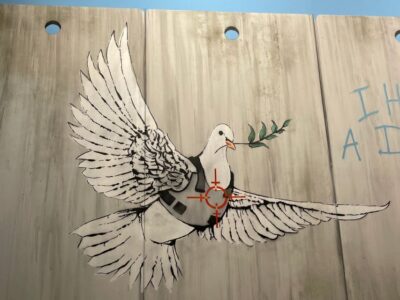
The World of Banksy Museum Permanent Exhibition
Read our review →
Browse the lists this tour appears in